Travel

How Destinations Can Become Climate Certified and Why It Matters - Green Initiative

How Destinations Can Become Climate Certified and Why It Matters

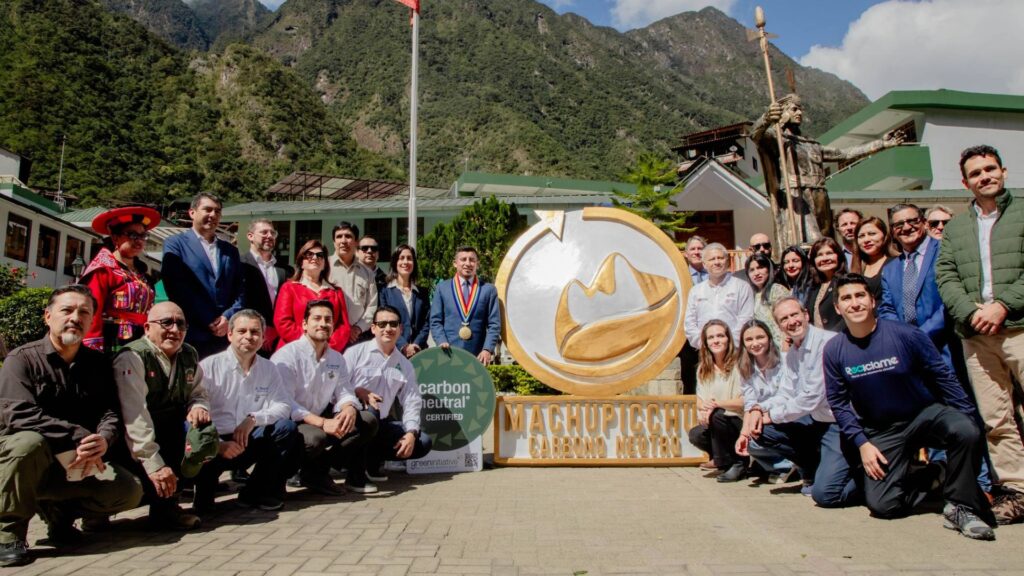
In today’s climate-conscious world, destinations seeking to be Climate Certified must follow a structured process, provided by Green Initiative. The certifications align them with international sustainability frameworks, including the Paris Agreement and Glasgow Declaration. Here’s how destinations can get certified, and why they should do so. Steps to Climate Certification Why Pursue Certification? Inspiration from Machu Picchu’s Journey A prime example of climate certification success is Machu Picchu, which was recently recertified as Carbon Neutral after achieving an impressive 18.47% reduction in carbon emissions since its 2021 certification. This ancient site has become a global leader in sustainable tourism by implementing comprehensive emission reduction measures, waste management systems, and reforestation projects. Machu Picchu’s journey proves that iconic destinations can effectively align their operations with climate goals while preserving their cultural and natural heritage. By achieving climate certification from Green Initiative, destinations contribute to the global fight against climate change and position themselves as top choices for responsible travelers and businesses. The certification process fosters resilience, ensures compliance with international standards, and paves the way for a sustainable future. You can read the full story here for more on Machu Picchu’s inspiring climate action. How UNESCO-Designated Sites Are Leading Climate Action Destinations looking to achieve climate certification can draw inspiration from UNESCO-designated sites, which are actively integrating climate action into their preservation efforts. As outlined by Green Initiative, UNESCO sites like natural reserves and cultural landmarks are adopting sustainable practices to safeguard both heritage and ecosystems. These sites are not only reducing emissions but also enhancing climate resilience by protecting biodiversity, demonstrating that climate-conscious tourism is feasible and essential for long-term conservation. For more on this topic, visit here. Bonito’s Leadership in Climate Action Another outstanding example of climate certification is Bonito, a renowned ecotourism destination in Brazil. Bonito achieved climate certification through its commitment to sustainability, implementing actions that have reduced its carbon footprint while preserving its natural wonders. Bonito’s certification underlines the importance of eco-friendly practices in tourism, proving that destinations can thrive while protecting their ecosystems. City mayors and tourism leaders can follow Bonito’s lead by engaging with Green Initiative to guide their climate action efforts. “We are here today because this is the result of work done by the destination for many years. Bonito is inherently responsible, and this certification is not just an award but a global commitment that Bonito makes to the world, to become an even more responsible destination. This achievement reflects decades of responsible management, environmental care, and the dedication of local businesses and guides. Celebrate, but also remember that we have an even greater commitment moving forward to achieve more in the coming years.” – Bruno Wendling, president director of Fundtur, emphasized the importance of Bonito’s long-standing efforts in achieving certification. For more information, see here. A Call to Action for City Mayors and Tourism Secretariats City mayors and secretariats play a critical role in shaping sustainable tourism and reducing their cities’ environmental impact. By partnering with Green Initiative, cities can embark on a journey toward climate certification, ensuring a resilient future while promoting eco-friendly tourism. Green Initiative offers expert advisory and guidance, resources, and certification programs to help cities reduce their carbon footprint, protect and restore ecosystems, and lead the way in global climate action. We encourage city leaders to contact us to explore how their destination can become climate-certified and set a benchmark for sustainable urban tourism. We strongly encourage downloading Green Initiative’s Climate Action Guide for Tourism Destinations here. This comprehensive guide provides essential tools and strategies for reducing emissions, improving resource efficiency, and aligning with global climate commitments. By following the steps outlined in the guide, destinations can build resilience, attract eco-conscious travelers, and lead the way in responsible tourism. It’s a critical resource for those ready to take meaningful action for the future. Reach out to us today to start your city’s climate journey!

How Destinations Can Become Climate Certified and Why It Matters Read More »
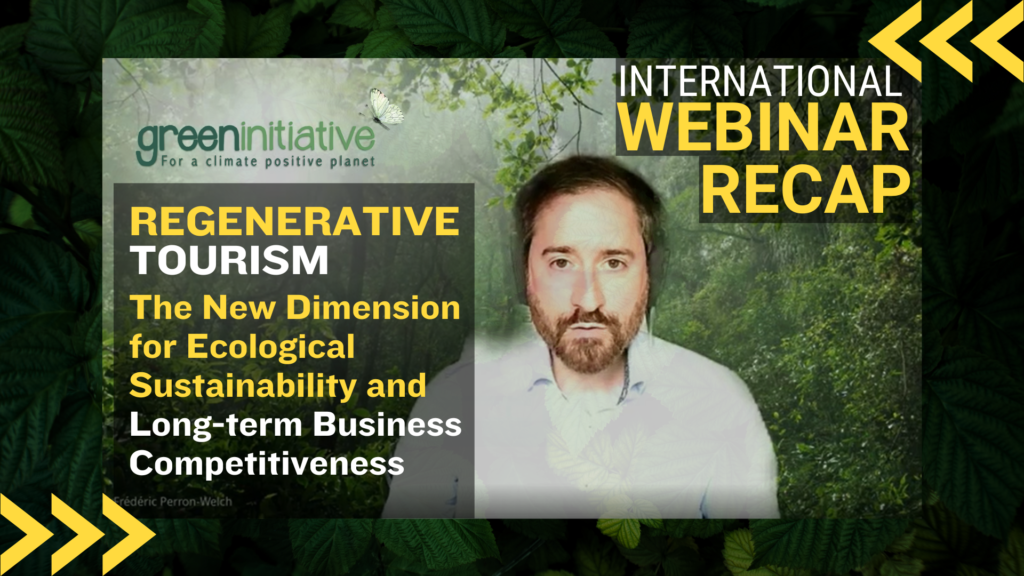
Recap - Webinar on Regenerative Tourism: The Key Dimension for Ecological Sustainability and Business Competitiveness

Recap – Webinar on Regenerative Tourism: The Key Dimension for Ecological Sustainability and Business Competitiveness

On August 28, 2024, the Green Initiative hosted an exceptional international webinar titled “Regenerative Tourism: The New Dimension for Ecological Sustainability and Long-Term Business Competitiveness.” The event brought together a diverse group of experts, industry professionals, and global stakeholders to discuss the transformative potential of regenerative tourism. The webinar provided attendees with invaluable insights into how regenerative tourism practices are not only reshaping the future of travel but also contributing to global sustainability goals. Frédéric Perron-Welch, Head of Climate and Nature Policy at Green Initiative, kicked off the webinar with a warm welcome. “Regenerative tourism is not just about sustainability; it’s about restoring and enhancing the ecosystems and communities that make tourism possible,” said Perron-Welch, emphasizing the core philosophy of the event. Keynote Presentations Marcos Vaena – Senior Executive at IFC Marcos Vaena provided a comprehensive overview of the International Finance Corporation’s (IFC) Environmental and Social Performance Standards, illustrating how they align with the principles of regenerative tourism. He highlighted the synergies between green finance and regenerative practices, particularly in emerging markets. “In today’s world, going beyond sustainability is crucial for destinations that want to differentiate themselves in a competitive marketplace. Regenerative tourism offers a blueprint for long-term success by ensuring that tourism projects do not adversely impact the natural assets that these countries possess,” Vaena stated. He also discussed how IFC’s performance standards, which include guidelines on labor conditions, community health, and biodiversity conservation, are critical in boosting competitiveness in the tourism sector. Virginia Fernandez-Trapa – Programme Coordinator, UN World Tourism Organization Virginia Fernandez-Trapa presented a compelling discussion on the “Regenerate Pathway” of The Glasgow Declaration. She emphasized that concept challenges conventional tourism practices by focusing on not only preserving but actively restoring ecosystems. “The regenerate pathway challenges us to go beyond conventional practices, focusing on restoring ecosystems and supporting nature’s ability to draw down carbon”, said Fernandez-Trapa She highlighted how the regenerate pathway is central to the goals of the Glasgow Declaration and emphasized the need for a balanced approach that incorporates environmental, social, and economic pillars of sustainable development. “At present and in alignment with the Glasgow Declaration pathways for us is clear, that regenerative can certainly play a role in accelerating the pace of change towards the needed balance, so that we can ultimately ensure sustainable development of our societies, and we need to integrate those regenerative arteries and policies and actions”, she added. Tenisha Brown-Williams – Senior Tourism Specialist, Inter-American Development Bank Tenisha Brown-Williams captivated the audience with compelling case studies from Barbados and Brazil, showcasing how regenerative tourism can lead to transformative change. She shared the story of Walker’s Reserve in Barbados, a former quarry transformed into a thriving ecotourism destination, and the IDB‘s Salvador program in Brazil, which empowers Afro-Brazilian communities through regenerative tourism. “I want to bring us all to one common point of agreement. We can all agree that in spite of the debates around sustainable turism and regenerative…. I think we could agree that given the climate crisis and other pressing vulnerabilities the global tourism industry must embrace in a new approach, so it is imperative for all stakeholders within the tourism value chain to adopt, what is called a transformative mindset, and this shift really involves moving beyond purely economic objectives to embrace the holistic reflections, which I have highlighted… On some rhetorical questions, we need to ponder: it’s tourism a benefit to the people at the destination or to the tourists?, said Brown-Williams. “I want to propose that a mind cannot be transformed without visible proof of change and tangible evidence of its impact. So the IDB’S Tourism sector framework has a line of action which deals with original knowledge agenda for the tourism sector that covers important issues for which there is a lack of information. We also need to continue to inspire by sharing examples which strengthen community based tourism enterprises such as the examples shared in Belize, the Bahamas and Dominica, with elements of regenerative tourism at it’s core”, she added. “I propose that the future of regenerative tourism hinges on our collective recognition that it is a mindset shift, brought to life through strategic policies and programs, and fully realized through robust partnerships across the entire tourism value chain. It is in this unified understanding and collaborative effort that we will shape a truly regenerated future for the global tourism industry. As we face unprecedented challenges, regenerative tourism offers a path forward that benefits both people and the planet. By fostering inclusive, community-driven initiatives, we can ensure that tourism serves as a powerful tool for positive change and long-term resilience,” she concluded. In closing, Tenisha Brown-Williams emphasized the critical importance of regenerative tourism as a transformative force within the industry. She called on all stakeholders to embrace this new approach, which prioritizes not only environmental sustainability but also social equity and cultural preservation. Inspiring Case Studies Gabriel Meseth – Project Manager, Inkaterra Hotels Gabriel Meseth presented Inkaterra’s pioneering efforts in ecotourism and sustainable development in Peru, focusing on their initiatives in the Amazon rainforest and the Machu Picchu cloud forest. He highlighted the successful restoration of these areas and the innovative waste management strategies that have made Machu Picchu the first carbon-neutral UNESCO Designated Site. “Inkaterra’s approach to regenerative tourism is deeply rooted in scientific research and community engagement. By restoring ecosystems and empowering local communities, we are not only preserving Peru’s natural heritage but also setting new standards for sustainable tourism worldwide,” Meseth explained. He also discussed the importance of public-private partnerships in achieving these ambitious goals, citing the collaboration between Inkaterra, the Green Initiative, and local communities as a model for other regions. André Fortunato – Program Manager, CEPA (Customized Educational Programs Abroad) André Fortunato shared CEPA’s innovative approach to regenerative tourism through their study abroad programs in Costa Rica and Guatemala. He emphasized the importance of service learning and climate-positive actions in educating students and supporting local communities. “Through our programs, students not only learn about sustainability but actively contribute

Recap – Webinar on Regenerative Tourism: The Key Dimension for Ecological Sustainability and Business Competitiveness Read More »

Kuoda Travel Obtains Climate Positive Certification, Reaffirming Its Leadership in Sustainable Tourism

Kuoda Travel Obtains Climate Positive Certification, Reaffirming Its Leadership in Sustainable Tourism

Kuoda Travel, a leading travel agency specializing in creating personalized experiences in South America, has achieved the prestigious Climate Positive certification by Green Initiative. This recognition goes beyond carbon-neutral status and positions the company as a pioneer in sustainable tourism in the region. Since 2014, Kuoda Travel has worked closely with Green Initiative to measure and manage its carbon footprint. This involves a comprehensive assessment of all the emissions generated by its operations, including transportation, accommodations, and activities. Furthermore, engaging in initiatives to offset and mitigate these emissions, such as supporting reforestation projects and investing in renewable energy. The agency had previously obtained Carbon Neutral certification after meticulously measuring and offsetting its carbon footprint through sustainable regional projects. With the recent attainment of the Climate Positive certification, Kuoda neutralizes its greenhouse gas emissions and creates a positive impact on the environment. The Climate Positive certification was obtained after measuring and offsetting 100% of the emissions generated in 2023, with the additional contribution of tree planting in critical areas for ecosystem restoration, such as in Madre de Dios, Peru. This achievement reflects Kuoda Travel’s unwavering commitment to protecting the natural environment and its long-term vision to drive positive change in the tourism industry. “At Kuoda Travel, we have always believed in the importance of traveling consciously, respecting, and preserving the natural wonders we explore with our clients” said Mery Calderón, founder and director of Kuoda Travel. “This commitment is reflected in our tourism operations and the events and activities we organize. By becoming a Climate Positive company, we are not only maintaining our commitment to carbon neutrality but also striving to create a real and lasting impact for future generations.“ Kuoda Travel continues solidifying its leadership in sustainable tourism with a range of initiatives. These include ecosystem restoration projects, supporting renewable energy projects by purchasing carbon credits, promoting regenerative tourism that benefits local communities and the environment, and implementing responsible practices in its operations, such as waste reduction and energy efficiency measures. These initiatives are part of their ongoing commitment to sustainability and belief that responsible tourism can make a positive impact on the world. About Kuoda Travel Founded in 2008, Kuoda Travel is a luxury travel agency based in Cusco, Peru, specializing in designing unique and personalized experiences in South America. The name Kuoda evokes expansion, improvement, learning, and growth, values that guide the company in its meticulous approach to attention to detail and sustainability. Over the years, they have been recognized for excellence in service and unwavering commitment to responsible tourism practices. This commitment has led them to set new standards in the industry, ensuring a responsible and sustainable travel experience for their clients. Their recent achievement of the Climate Positive certification is a testament to this commitment and long-term vision to drive positive change in the tourism industry.For more information, visit https://www.kuodatravel.com/about-us/. Written by Virna Chávez, from the Green Initiative Team.

Kuoda Travel Obtains Climate Positive Certification, Reaffirming Its Leadership in Sustainable Tourism Read More »

Green Initiative Regenerative Tourism International Webinar The New Dimension for Ecological Sustainability and Long-term Business Competitiveness

Reimagine Tourism: Register Now for the International Webinar ‘Regenerative Tourism – The New Dimension for Ecological Sustainability and Long-Term Business Competitiveness’

Hosted by leaders in sustainable tourism and environmental restoration, this webinar is your opportunity to dive deep into the principles and practices that are shaping a new era of tourism—one that not only sustains but regenerates the planet. Why Attend? Event Details Date: Wednesday, 28th AugustTime: 10:00 AM EDT / 16:00 CESTPlatform: Google MeetRegistration is FREE! Secure your spot now and join the movement towards a sustainable and regenerative future. 👉 Register Here This is your chance to connect with leading experts and discover how you can contribute to a tourism industry that regenerates the planet and remains competitive. By attending, you’ll take a significant step towards our planet’s protection and future. Let’s make a difference—together.

Reimagine Tourism: Register Now for the International Webinar ‘Regenerative Tourism – The New Dimension for Ecological Sustainability and Long-Term Business Competitiveness’ Read More »

How UNESCO Heritage Sites are Integrating Climate Action - Green Initiative

How UNESCO Designated Sites are Integrating Climate Action

Bonito and Machu Picchu: The Power of Twin UNESCO Designated Sites Pioneering Climate Action in Tourism In a time where climate change poses significant challenges to our planet, the tourism industry is stepping up to play a crucial role in mitigating its impact through the Glasgow Declaration for Climate Action in Tourism. In this context, two iconic cultural and ecotourism destinations are leading the way in climate action in tourism. Bonito, located in the Brazilian Pantanal and recognized as a UNESCO Biosphere Reserve, and Machu Picchu, situated in the Peruvian Andes and recognized as a UNESCO Mixed World Heritage Site, integrate climate mitigation best practices into their tourism development models. The results achieved so far, through the climate certification of both destinations, have consistently showcased that through well-informed and pragmatic action, the development of tourism in UNESCO Biosphere Reserves and Mixed World Heritage Sites can go hand in hand with the decarbonization of tourism destinations, generating positive impacts on both the local economy and the climate. Bonito and Machu Picchu: Laboratories for Climate Mitigation Action and Expertise Development Bonito, located in Mato Grosso do Sul, Brazil, was designated a UNESCO Biosphere Reserve in 2000. Bonito has long been a reference for sustainable tourism, known for its crystal-clear rivers, stunning waterfalls, and rich biodiversity. Similarly, Machu Picchu, the ancient Incan citadel nestled in the Andes Mountains of Peru, was declared a UNESCO Mixed World Heritage Site in 1983. In collaboration with the Green Initiative, both UNESCO destinations, Bonito and Machu Picchu, have embarked on a transformative journey to net-zero emissions through a rigorous climate-certification process that involves: In 2021, the tourism destination of Bonito had a total of 17,829.42 tCO2eq emissions. Around 51% of its footprint was related to the consumption of fuels by ground mobile sources, such as cars and buses used by tourists in their visits. The second largest emission was the decomposition of solid residues (22.32%), followed by electricity consumption (6.02%). In the development of Bonito’s Climate Action Plan, several actions were defined to address these core emissions, such as stimulating the use of biofuels, conversion and availability of electric vehicles, waste management improvements in the public system, community engagement in the circular economy, and carbon capture enhancements by promoting ecosystems restorations. On the other hand, in 2022, Machu Picchu successfully reduced its emissions to 7,117.55 tCO2eq, an 18.77% decrease from the 2019 base year. Four processes were implemented to reuse recoverable waste: Additionally, electric vehicles were introduced to transport the generated waste, and waste segregation points were established throughout the district, among other actions. The new waste management processes significantly reduced 40.80 tCO2eq, 2.5 times more than in 2019. Carbon capture from ecological restoration, where 6,596 native trees were planted in degraded areas, capturing 5,055.17 tCO2eq, led to a net emission balance of 2,062.38 tCO2eq. Machu Picchu’s carbon footprint has been fully offset with 2,155 carbon credits from the REDD+ Brazil Nut Concessions project by Bosques Amazónicos (BAM), which protects over 600,000 hectares of megadiverse forests and supports more than 800 Amazon Brazil nut harvesting families in Madre de Dios, Peru. By integrating climate action into their core business models, these destinations are setting new standards for sustainable tourism at UNESCO heritage sites. As Jose Salazar Ríos, Coordinator of the Culture Sector at UNESCO Peru, highlights: “Machu Picchu, one of the 13 World Heritage sites that Peru has, is an inspiring example of how tourism can be integrated with climate action, thus contributing to the sustainability and conservation of World Heritage.“ The Glasgow Declaration on Climate Action in Tourism The Glasgow Declaration on Climate Action in Tourism is a pivotal framework for mobilizing the tourism sector to act decisively on climate change. Launched at the UN Climate Change Conference (COP26) in Glasgow, the Declaration commits signatories to halve emissions by 2030 and achieve net zero by 2050 at the latest. By aligning with the pathways to the Paris Agreement, the Declaration provides a clear roadmap for tourism stakeholders to integrate climate action into their business models. It encourages collaboration across the industry, promoting the sharing of best practices, resources, and innovative solutions to accelerate decarbonization. Bonito and Machu Picchu are exemplary participants in this global movement, demonstrating how UNESCO heritage sites can lead by example in integrating comprehensive climate strategies into their tourism operations. Through initiatives such as these, the Glasgow Declaration aims to unify the tourism industry in the fight against climate change, fostering a collective effort to protect our planet for future generations. The Power of Twin UNESCO Designated Sites in Climate Mitigation The collaboration between Bonito and Machu Picchu, as climate-smart twin cities, holds immense potential for climate mitigation and expertise development worldwide. By sharing best practices, resources, and innovative solutions, they can amplify their impact on reducing tourism-related emissions and serve as a reference for other UNESCO Designated Sites worldwide. According to Sofia Gutierrez, Deputy Director of Sustainable Tourism at UN Tourism: “The experience of Machu Picchu as a signatory of the Glasgow Declaration can be a reference for other tourist destinations in Peru and around the world. In addition to being a natural and cultural treasure, Machu Picchu is also an inspiring example of how the growth of tourism and decarbonization can and should go hand in hand.“ Emerging Opportunities Final Reflections Bonito, as a UNESCO Biosphere Reserve, and Machu Picchu, as a UNESCO Mixed World Heritage Site, both as Carbon Neutral destinations, can provide the tourism industry significant insights into the fight against climate change. Their reinforcement of bilateral collaboration as climate-smart twin cities holds the potential to drive substantial progress in decarbonizing tourism and promoting sustainable development both locally and worldwide. By working together, they can inspire other destinations to follow suit, creating a ripple effect that contributes to a more sustainable and resilient planet. As we look to the future, Bonito’s and Machu Picchu’s partnership serves as a testament to the power of collaboration in addressing the pressing challenges of climate change. Together, they are preserving their natural and cultural

How UNESCO Designated Sites are Integrating Climate Action Read More »

Machu Picchu Achieves Significant Reduction in Carbon Emissions Since 2021 Certification

From Heritage to Habitats: The Journey of Sustainable Conservation from Machu Picchu to the Amazon

In 2014, UNESCO warned that Machu Picchu could be included on the list of endangered heritage sites due to poor waste management. In response, the Inkaterra Hotels Association, the Municipality of Machu Picchu, and the AJE Group implemented a circular economy model to manage waste locally. In 2015, four plants were established to process this waste. In Machu Picchu Pueblo, also known as Aguas Calientes, four tons of organic waste are generated daily due to the large influx of tourists, restaurants, and hotels. This waste is segregated and processed in a pyrolysis plant built in collaboration with Peruvian engineers and the University of Cusco. This plant converts the waste into biochar, a natural carbon that enriches the soil and helps retain carbon dioxide. Additionally, there are PET compaction plants, cardboard segregation plants, and glass processing plants. Plastic bottles are compacted and transported to a recycling plant in Lima, turning them into new bottles. These actions aim to raise awareness about the recyclable value of plastic bottles. Glass bottles are also recycled and pulverized, preventing them from ending up in the Vilcanota River. The resulting sand is mixed with concrete to create paving stones that beautify and reinforce the riverbanks. Some of these white paving stones have already been placed in Machu Picchu, marking certain areas and contributing to the beautification and strengthening of the local infrastructure. According to the World Tourism Organization, tourism activity accounts for around 8% of total CO2 emissions globally. In Peru, according to the Green Initiative, about 5% of total emissions are related to tourism. Therefore, the tourism industry worldwide and in Peru, in particular, must improve its practices and incorporate climate action as a standard between destinations and companies. A fundamental aspect of this change consists of implementing management for reducing carbon emissions (mitigation) and achieving the carbon-neutral certification promoted internationally by the Green Initiative. The certification was granted to Machu Picchu in 2021 by the Green Initiative after a certification cycle lasting five months. During this cycle, the Municipality formalized its climate commitment through the UN Climate Change – Climate Neutral Now program, aligning itself with the objectives of the Paris Climate Agreement and the recommendations for low-carbon tourism reactivation promoted by the One Planet program of the World Tourism Organization. These results confirm that tourism activity and the generation of carbon emissions are directly related, exhibiting a positive correlation. To reach its goal of reducing carbon emissions by 45% by 2030, Machu Picchu must promote tourism’s reactivation and economic recovery without increasing carbon emissions. Now, in June 2024, Machu Picchu has renewed its certification as the First Carbon Neutral UNESCO Designated Site, underscoring Machu Picchu’s commitment to sustainability and decarbonization, which continues to lead in sustainable tourism through innovative environmental initiatives and collaborative efforts. Moreover, Machu Picchu has made substantial progress in reducing carbon emissions. The total carbon footprint for 2022 was 7,117.55 tCO2eq, representing an 18.77% reduction compared to the 2019 baseline. REDD+ Brazil Nut Concessions: Pioneering Conservation and Sustainable Development in the Amazon Following the successful waste management initiatives in Machu Picchu, efforts to offset its carbon footprint led to the REDD+ Brazil Nut Concessions conservation project. Developed by the Peruvian company Bosques Amazónicos (BAM), an ally of Green Initiative, this project protects over 600,000 hectares of unique megadiverse forests in partnership with more than 800 castañeros families in Madre de Dios, Peru. The REDD+ Brazil Nut Concessions project stands out for its scale and impact. It safeguards the chestnut forests, which are home to incredible biodiversity. For over 14 years, BAM, the Green Initiative, and the concessionary families have been united in their mission to protect these forests from the looming threats of deforestation. Their approach combines sustainable economic development with environmental conservation, ensuring that the local community benefits alongside the environment. A core principle of the REDD+ Brazil Nut Concessions project is promoting economic development in harmony with nature. The project has implemented an integrated system for forest monitoring. It provides continuous technical and legal assistance to concessionary families. These families receive ongoing training in sustainable forest management, empowering them to protect their natural resources while enhancing their livelihoods. The project also offers direct economic benefits to the castañeros partners. It has developed sustainable, productive alternatives to improve the community’s quality of life. Photos by Walter H. Wust In addition to its economic and social impacts, the REDD+ Brazil Nut Concessions project makes significant strides in biodiversity conservation. Scientific expeditions as part of the BAM Science Program leverage technology and innovation to monitor the biodiversity of the chestnut forests with active participation from the castañeros community. This ensures that the conservation efforts are both scientifically robust and community-driven. Notable achievements include: These accomplishments highlight the project’s role in mitigating climate change, conserving biodiversity, and fostering sustainable development. It is a global model for integrating economic growth with environmental stewardship and community empowerment. A Model for Global Conservation The REDD+ Brazil Nut Concessions project serves as a model for conservation efforts worldwide. Integrating economic development with environmental stewardship and community empowerment demonstrates that protecting our planet’s natural resources can improve human well-being. As the world continues to grapple with climate change and environmental degradation challenges, initiatives like REDD+ Brazil Nut Concessions offer a beacon of hope. They show that innovative approaches and collaborative efforts can create a sustainable future for both people and the planet. To delve deeper into the remarkable work of the REDD+ Brazil Nut Concessions project, download the 2023 Annual Report here. Contact us for further information and supporting Green Initiative’s actions from the Andes to the Amazon. Useful links:

From Heritage to Habitats: The Journey of Sustainable Conservation from Machu Picchu to the Amazon Read More »

Machu Picchu - Reduce Carbon Emission Footprint - Carbon Neutral Climate Certification - Green Initiative

Machu Picchu Achieves Significant Reduction in Carbon Emissions Since 2021 Certification

Lima, June 2024 – Machu Picchu has renewed its certification as the First Carbon Neutral UNESCO Designated Site. This prestigious certification, awarded by Green Initiative, underscores Machu Picchu’s commitment to sustainability and decarbonization. Originally certified in 2021, Machu Picchu continues to lead in sustainable tourism through innovative environmental initiatives and collaborative efforts. Significant Reductions in Carbon Emissions Since its initial certification in 2021, Machu Picchu has made substantial progress in reducing carbon emissions. The total carbon footprint for 2022 was 7,117.55 tCO2eq, representing an 18.77% reduction compared to the 2019 baseline. This impressive reduction was achieved through several key strategies: Decarbonization Strategies, Innovative Waste Management and Circular Economy, and Nature Positive Initiatives Machu Picchu’s approach to waste management and circular economy has been integral to maintaining its carbon-neutral status. The renewal of Machu Picchu’s carbon-neutral certification highlights the success of various decarbonization strategies. These include: These measures have substantially reduced Machu Picchu’s carbon footprint, making it a model for sustainable tourism worldwide. Key Highlights: Collaborative Efforts for Sustainability This achievement was made possible through the collaboration of various stakeholders, including the Municipality of Machu Picchu, Grupo AJE, Inkaterra, and Tetra Pak. Support also came from World Xchange, Luz del Sur, Bosques Amazónicos (BAM), Latam, PROMPERÚ, and the National Chamber of Tourism of Peru (CANATUR). “We are proud to announce that Machupicchu renews its ‘First Carbon Neutral’ certificate. This achievement represents a significant milestone in our effort to promote circular economy models and sustainable cities, where for example, we give new life to bottles, such as Cielo Alcalina which is made 100% from recycled bottles,” says Jorge López-Doriga, Chief Communications and Sustentability Officer in AJE Group. “As a pioneer of regenerative tourism in Peru, Inkaterra is committed to conserving the natural heritage of Machupicchu,” states José Koechlin, founding president of Inkaterra. “This alliance is a success story about the goals that can be achieved when public and private sectors work hand in hand. With the support of the local community, the first destination in Latin America with a circular economy has been achieved. We Peruvians enjoy the privilege of having this cultural and natural heritage of humanity, which entails the great responsibility of caring for it for future generations.” “The result achieved in Machupicchu is the result of significant collaborative effort; however, it is necessary to attract more financial and intellectual capital, with the help of national and international actors, to expand and scale up the accumulated experience. The world needs references in climate action in tourism, and Machupicchu can be a great laboratory for climate action and circular economy of global interest,” states Tatiana Otaviano, Head of Relationship Management at Green Initiative. Mónica Montes, Sustainability Manager of Tetra Pak Andina, specifies the valuable role that the actors in the recycling chain in the country have played in achieving such an important achievement. “At Tetra Pak, we firmly believe in shared responsibility, so the contribution of major allies such as AJE, Inkaterra, the State, among others, allows the renewal of the certification of Machupicchu as a Carbon Neutral Destination to be a testimony of success. From Tetra Pak, we will continue with the commitment to make our packaging contribute to the circular economy and significantly reduce our carbon footprint, thus contributing to a better future,” commented the executive. Global Recognition and Future Goals Machu Picchu’s renewed carbon-neutral certification has received international recognition from UN Tourism, UNESCO, and UN Climate Change. Publications like Lonely Planet have also highlighted this achievement, naming Machu Picchu as one of the ‘Top 10 Best World Tourism News’ in 2021. The ongoing efforts to maintain and enhance Machu Picchu’s sustainability practices demonstrate a broader commitment to combating climate change. This milestone serves as an inspiration for other tourist destinations worldwide, showcasing the benefits of integrating climate action into tourism. As we celebrate this achievement, it is essential to continue fostering public and private partnerships and securing investments to sustain and expand these efforts. Machu Picchu’s journey towards a fully decarbonized future is a beacon of hope and a blueprint for sustainable tourism globally.

Machu Picchu Achieves Significant Reduction in Carbon Emissions Since 2021 Certification Read More »

Machu Picchu - The First UNESCO Designated Site To Renew Its 'Carbon Neutral' Certification - Green Initiative

Machu Picchu – The First UNESCO Designated Site – To Renew Its ‘Carbon Neutral’ Certification

On June 27th, 2024, Machu Picchu will proudly announce the renewal of its prestigious certification as the world’s first Carbon-Neutral UNESCO Designated Site, granted by the Green Initiative. This achievement follows a rigorous certification process that began in 2021, involving comprehensive analyses of scopes 1, 2, and 3 emissions. This time, the carbon footprint data will be compared to its baseline to verify its climate mitigation performance. Since its initial certification, Machu Picchu has been at the forefront of decarbonization efforts. Through a combination of innovative decarbonization practices such as the restoration of degraded areas, waste pyrolysis, biodiesel production from recycled oils, and the implementation of PET plastic and cardboard compactor plants, there are high expectations for the decarbonization results achieved. These efforts have also helped enhance local ecosystems by planting 6,596 native trees across 5 hectares. Recognized by UN Tourism, UNESCO, and other esteemed international bodies, Machu Picchu’s renewal as a Carbon-Neutral UNESCO Designated Site reaffirms its role as a global leader in climate action and circular economy practices. This achievement not only underscores Machu Picchu’s cultural and natural significance but also its unwavering dedication to preserving these treasures for future generations. Behind The Machu Picchu Certification In 2021, Green Initiative, in coordination with the District Municipality of Machu Picchu, along with the strategic collaboration from InkaTerra, AJE Group, SERNANP, and Promperu, certified Machu Picchu as the world’s first Carbon Neutral UNESCO Designated Site. The certification process included a comprehensive analysis of scopes 1, 2, and 3, totaling 7,143.51 tCO2. The certification aims to promote the decarbonization of Machu Picchu´s as as tourism destination, by enhancing public and private collaboration, positioning Machu Picchu as an international reference for climate action in tourism, aligned with the United Nations’ Glasgow Declaration. Additionally, the certification seeks to attract public and private financing to drive investment agendas that will enable the execution of Machu Picchu’s decarbonization plan. This plan will allow the destination to continue its journey towards decarbonization and fulfillment of international commitments under Green Initiative’s Carbon Neutral Certification. Moreover, the certification plays a crucial role in the international positioning of Machu Picchu and Peru as a leading destination, being the world’s first Carbon Neutral UNESCO Designated Site. The certification all generates additional opportunities that add value to Promperu’s and the private sector’s efforts to promote Machu Picchu nationally and internationally as the world’s first Carbon Neutral UNESCO Designated Site. For further updates on Machu Picchu’s journey towards carbon neutrality and sustainable tourism practices, visit greeninitiative.eco. Usefull links:

Machu Picchu – The First UNESCO Designated Site – To Renew Its ‘Carbon Neutral’ Certification Read More »

Continental Travel Peru Pioneering Carbon-Neutral Business Travel with Green Initiative

Continental Travel Peru: Pioneering Carbon-Neutral Business Travel with Green Initiative

Continental Travel is setting the bar high in the business travel industry in Peru with its global commitment to carbon neutrality. At Green Initiative, we are pleased to announce that Continental Travel has started its journey to decarbonize its corporate operations and services. This strategic leadership decision follows several years of investments in sustainability efforts. They have also increased their technical capacities for climate mitigation. “Starting this journey towards carbon neutrality is not just a strategic move for Continental Travel; It’s a way to show our commitment to leading the industry in responsible travel. By measuring, reducing, and offsetting our carbon emissions, we’re setting a new standard for corporate travel services in Peru. We want our clients to know that we are actively contributing to a more sustainable future, with clear, science-based reports on our decarbonization efforts.” As a result, Continental Travel will be positioned as the first corporate business travel operator to achieve Green Initiative’s Carbon Neutral Certification. This achievement will lead the sector into a new standard for low-carbon emissions in corporate travel. Continental Travel is a Peruvian travel operator with over two decades of experience. They have a deep understanding of the international business travel market. Their clients span various industries, including banking, mining, healthcare, energy, and textiles. How Business Travel is Leading the Charge Towards Net-Zero Emissions Business travelers are becoming more committed to achieving net-zero emissions. This includes their own corporate operations and value chains. Marcos Piera, General Director at Continental Travel, states that business travel agencies should not be part of the problem. Instead, they should add value to their corporate clients by measuring, reducing, and offsetting CO₂ emissions. They should also provide consistent and transparent reports with science-based evidence of decarbonization progress. The work led by Continental Travel is innovative but not isolated. Worldwide, the business travel industry is becoming more sophisticated in decarbonizing its services. The power of business travel is significant. Leading flight companies are putting additional pressure on Airbus, Boeing, and Embraer to accelerate progress towards cleaner fuels and more efficient engines. Corporations around the world may reduce business travel due to their need for public pledges and international carbon mitigation goals. By partnering with Green Initiative and undergoing the Carbon Neutral Certification process, Continental Travel is demonstrating its proactive stance in reducing carbon emissions associated with its operations. This initiative aligns with global efforts to combat climate change, such as the Glasgow Declaration for Climate Action in Tourism. This UN initiative aims to catalyze climate and nature-positive action. But what does this mean for business travel? Continental Travel Peru’s bold move toward climate-smart business travel in partnership with Green Initiative is not just about reducing carbon emissions. It’s about leading by example and inspiring positive change within the industry. Take the Next Step Toward Climate-Smart Business Travel Are you ready to elevate your business travel to the next level? Contact us to learn more about our expert advisory services and how your company can become a climate-smart leader in your industry. Join Continental Travel, Green Initiative, and many more businesses that are making a tangible difference for our planet. Written by Tatiana Otaviano, from the Green Initiative team.

Continental Travel Peru: Pioneering Carbon-Neutral Business Travel with Green Initiative Read More »

World's Leading Sustainable Organisation 2024 - Green Initiative

Green Initiative Nominated for World’s Leading Sustainable Organisation 2024

We are delighted to share the news that we have been selected as a 2024 nominee for World’s Leading Sustainable Organisation 2024 In an era where sustainability is more crucial than ever, we are honored to announce that Green Initiative has been nominated for the prestigious “World’s Leading Sustainable Organisation 2024” award by the World Sustainable Travel & Hospitality Awards (WSTHA). This nomination reflects our unwavering commitment to integrating climate action into business models and pioneering sustainable practices in the travel and hospitality industry. Why Your Vote Matters Your vote is not just a gesture of support; it is a powerful statement that sustainable business practices are essential for the future of our planet. By voting for Green Initiative, you are endorsing our efforts. The voting window is open and runs until 2 August. How to Vote Voting for Green Initiative is quick and easy. Simply follow this voting link, select Green Initiative, register and validate your e-mail and cast your vote for “World’s Leading Sustainable Organisation 2024.” Every vote brings us one step closer to achieving this honor and amplifying our impact on global sustainability. Spread the Word Help us spread the word by copying and sharing the link to this blog post with your network. 💚 Click the share buttons at the end of the page for quick and easy sharing in social media. Use the following hashtags to join the conversation and show your support: #VoteForGreenInitiative #SustainableTravel #SustainableTourism #RegenerativeTourism #GreenLeadership #ClimateAction #SustainabilityAwards #GreenInitiative #WorldSustainableTravel #EcoFriendly #ClimatePositive #SustainableBusiness #EcoAwards #GreenFuture #SustainabilityChampions About World Sustainable Travel & Hospitality Awards The World Sustainable Travel & Hospitality Awards, launched at COP28 in Dubai as a sister program to the World Travel Awards, aims to recognize and promote individuals and organizations driving sustainable change in travel and tourism. The initiative aspires for every travel sector entity to achieve a net positive impact and implement best practices to protect communities and destinations. The WSTHA Advisory Board, governs the program by setting standards, criteria, and award categories to reflect sustainable best practices in the travel and hospitality ecosystem. About Green Initiative Suppose you have yet to learn about us. In that case, Green Initiative is a leading organization dedicated to internalizing and promoting sustainable business practices. With a focus on nature and climate action, we partner with companies worldwide to integrate sustainability into their operations, ensuring a better future for our planet. Contact us to learn more about our work and impacts.

Green Initiative Nominated for World’s Leading Sustainable Organisation 2024 Read More »