Travel

Five Years of Building Together: Green Initiative’s Contributions to Climate-Smart Tourism

Five Years of Building Together: Green Initiative’s Contributions to Climate-Smart Tourism

Over the past five years, Green Initiative has evolved from a technical partner into a catalyst for the global movement toward climate-smart tourism. By working alongside United Nations partners and aligning with the Glasgow Declaration on Climate Action in Tourism, we have helped reshape how the industry perceives its role in achieving the goals of the Paris Agreement. Our philosophy is simple: we don’t just provide solutions; we build the architecture for others to lead. A Shared Architecture: Democratizing Climate Knowledge Our approach has always centered on partnership over imposition. We believe that for climate action to be effective, it must be accessible. This commitment led to the development of frameworks and practical guides designed to help destinations and businesses measure, monitor, and reduce their carbon footprints. Catalyzing Local Leadership The true measure of our success is the independence and resilience of our partners. We provide the technical rigor, but the destinations, communities, and businesses remain the true architects of their transformation. Milestones in Climate Excellence Partner Achievement Machu Picchu, Peru Three consecutive Carbon Neutral recertifications. Bonito, Brazil Established as the world’s first Carbon Neutral ecotourism destination. National Frameworks Collaborative policy development with the Brazilian government. Private Sector Leaders Kuoda Travel, Rio da Prata Group, and Estância Mimosa achieving Climate Positive status. “Our comparative advantage lies in the balance of deep technical rigor and humble partnership. We don’t compete by keeping expertise proprietary; we contribute to the knowledge commons.” From Carbon Measurement to Systemic Transformation The next phase of Green Initiative’s work reflects a maturing understanding of climate action. Transformation cannot happen in isolation; it happens when frameworks are embedded into policy and when knowledge spreads across borders. Our evolution toward Circular Economy principles represents this holistic shift. By addressing waste reduction and resource efficiency alongside carbon measurement, we help tourism systems build long-term economic resilience and align with the UN Sustainable Development Goals (SDGs). A Global Model for Stewardship The model we have refined over the last half-decade transcends geography. Whether it is the ancient stones of Angkor Wat in Cambodia, the iconic Cristo Redentor in Brazil, or the desert landscapes of Petra in Jordan, the demand for science-based, transparent climate action is universal. These destinations are not seeking “green” labels for marketing; they are institutions committed to legacy and stewardship. The Path Ahead: Measuring Resilience As we look to the future, Green Initiative remains focused on supporting others to succeed. Our impact is not measured by the number of certificates issued, but by: Five years in, the architecture for a climate-responsible future is being built. The tourism sector is no longer just observing the transition—it is becoming the solution. As we celebrate this five-year milestone, the global community’s recognition serves as both a validation and a catalyst for what lies ahead. From Green Initiative being named the World’s Leading Sustainable Organisation at the 2024 World Sustainable Travel & Hospitality Awards, to our partners at Bonito Carbon Neutral winning the prestigious FIDI 2025 Award and FUNDTUR-MS securing the Embratur Visit Brazil 2026 Award for Regenerative Tourism, the momentum is undeniable. This excellence is echoed in the private sector, with the Rio da Prata Group recently winning Gold at the 2026 WTM Latin America Responsible Tourism Awards, and Green Initiative being honored for Net Zero Progression at the Environmental Finance Sustainable Company Awards 2025. These accolades—alongside Machu Picchu’s continued dominance as the World’s Leading Tourist Attraction and its pioneering carbon-neutral status recognized by Lonely Planet and the UN Tourism Green Projects Challenge—prove that the architecture we have built together is no longer just a vision. It is a multi-award-winning reality that is redefining the future of a nature-positive planet. For more information on our frameworks or to download our Climate Action Guides, visit the Green Initiative resources portal or get in touch. Prepared by Yves Hemelryck from the Green Initiative Team. Related Reading

Five Years of Building Together: Green Initiative’s Contributions to Climate-Smart Tourism Read More »

Master the hotel energy transition with solar, wind, and hybrid systems. Learn how to integrate renewable energy into your property for cost savings and resilience.

Renewable Energy Integration for Hotels: Solar, Wind, and Hybrid Systems

For the hospitality sector, the transition to renewable energy is the most visible signal of climate leadership. While energy efficiency reduces the load, renewable integration eliminates the carbon intensity of the remaining energy demand. However, hotels face unique spatial and aesthetic challenges when deploying these technologies. This guide analyzes how to integrate solar, wind, and hybrid systems into hotel infrastructure to achieve energy independence and long-term cost stability. The Strategic Shift to On-Site Generation Modern hotels are no longer just energy consumers; they are becoming “prosumers”—entities that both consume and produce energy. Integrating renewable systems protects the property from the volatility of fossil fuel prices and grid instability. For example, for destinations in Peru, ranging from the Andean highlands to the Amazonian basin, decentralized renewable energy is often more reliable and cost-effective than traditional grid extensions. Financial and Regulatory Incentives Many jurisdictions offer accelerated depreciation, tax credits, or net-metering schemes for hotels that export excess renewable energy back to the grid. These financial mechanisms, combined with the plummeting cost of photovoltaic (PV) hardware, have brought the Return on Investment (ROI) for many hotel solar projects down to 4 to 6 years. Solar Energy: The Foundation of Hotel Renewables Solar Photovoltaic (PV) technology is the most common renewable choice for hotels due to its scalability and low maintenance requirements. Rooftop and Building-Integrated Photovoltaics (BIPV) Solar Thermal for Hot Water While PV generates electricity, solar thermal systems use the sun’s heat directly to warm water for guest rooms, laundries, and swimming pools. Solar thermal is significantly more efficient per square meter than PV for heating applications, making it a “quick win” for high-occupancy resorts. Wind Energy: Specialized Applications Wind energy is less common in urban hospitality but highly effective for coastal or remote highland properties with consistent wind profiles. Micro-Wind Turbines Unlike the massive turbines seen in industrial wind farms, micro-wind turbines are designed for building integration. Vertical Axis Wind Turbines (VAWTs) are quieter and can capture wind from any direction, making them suitable for coastal resorts where sea breezes are constant. Site Assessment Requirements Wind projects require at least 12 months of localized anemometer data to ensure viability. Because of the potential for noise and vibration, turbines must be strategically placed away from guest quiet zones. Hybrid Systems and Energy Storage The primary challenge of renewable energy is intermittency—solar does not work at night, and wind is variable. Hybrid systems solve this by combining multiple energy sources and storage. Solar-Wind Hybrids By combining solar and wind, hotels can achieve a more balanced generation profile. In many regions, wind speeds are higher at night or during cloudy days when solar production is low. Battery Energy Storage Systems (BESS) To achieve true energy independence or “Peak Shaving,” hotels are increasingly installing lithium-ion or flow batteries. Overcoming Implementation Barriers Aesthetic Integration Luxury hotels often hesitate to install renewables for fear of disrupting the “guest experience.” Modern design solves this by hiding panels behind parapet walls or using colored solar glass that mimics traditional building materials. Is your property suitable for solar or wind? Request a Renewable Energy Feasibility Study from Green Initiative’s technical experts. This article was written by Musye Lucen from the Green Initiative Team. Frequently Asked Questions (FAQ) for Hotel Renewable Energy Integration Related Reading

Renewable Energy Integration for Hotels: Solar, Wind, and Hybrid Systems Read More »

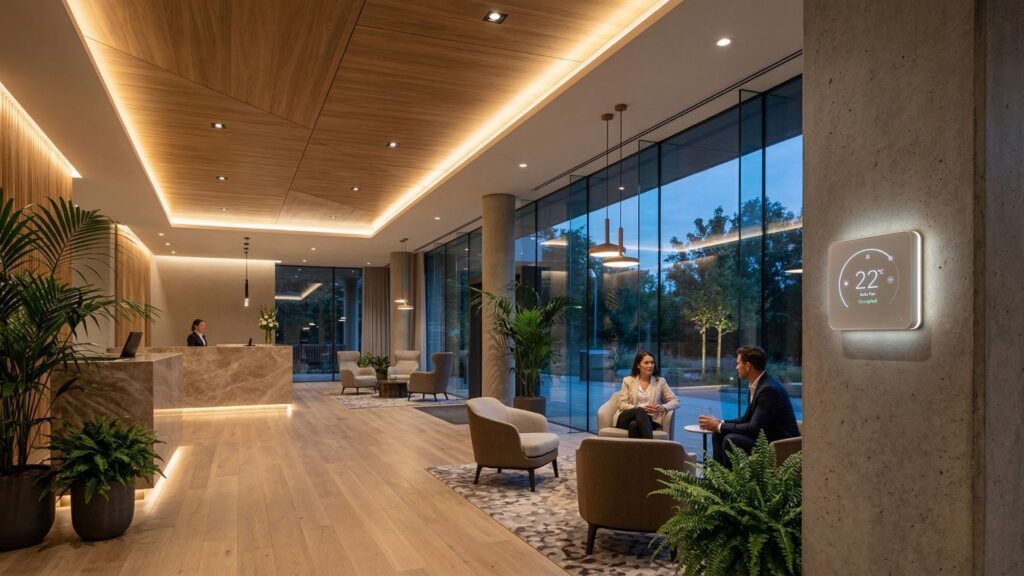
Modern luxury hotel lobby featuring energy-efficient LED lighting and a smart thermostat interface on a concrete pillar.

Hotel Lighting and HVAC Optimization: Quick Wins for Energy Reduction

Energy consumption represents one of the most significant operational costs for hotel owners and managers. Within a typical property, lighting and HVAC (Heating, Ventilation, and Air Conditioning) systems account for the vast majority of electricity use. Implementing targeted optimizations in these two areas provides immediate financial relief and serves as a foundational step toward broader decarbonization. This guide focuses on high-impact “quick wins” that deliver measurable results with minimal operational disruption. Implementing these quick wins is the first phase of a larger Complete Hotel Energy Transition Roadmap. The Financial Case for Rapid Energy Optimization Rising energy prices and increasing guest expectations for sustainable operations make efficiency a business imperative. Traditional lighting and unoptimized climate control systems waste significant resources through heating or cooling unoccupied spaces and using outdated technology. By focusing on lighting and HVAC, hotel operators can often see energy savings of 20% to 40% in these specific systems. These savings directly improve the property’s Net Operating Income (NOI) and increase overall asset value. These efficiency measures align with the broader Net Zero Roadmap for Travel & Tourism, providing a structured path toward total operational sustainability. Lighting Optimization: Illumination with Efficiency Lighting is often the most accessible area for rapid energy reduction. The transition to modern technology goes beyond simply changing bulbs; it involves intelligent control of the hotel’s environment. LED Retrofitting Replacing all incandescent, halogen, and fluorescent lamps with high-efficiency LED technology is the single most effective lighting intervention. Smart Controls and Automation Energy is frequently wasted in “back-of-house” areas and guest corridors that remain fully lit while empty. HVAC Optimization: Precision Climate Control HVAC systems are typically the largest energy consumers in any accommodation facility. Because these systems are complex, many hotels operate them inefficiently by default. Smart Thermostats and Occupancy Integration Heating or cooling a vacant guest room is a primary source of energy waste. Preventative Maintenance as an Efficiency Strategy A poorly maintained HVAC system can consume up to 30% more energy to provide the same level of comfort. Measuring Success and ROI The success of these “quick wins” is measured through utility bill reduction and improved equipment lifespans. Operators should establish a baseline of energy use per occupied room to track the specific impact of lighting and HVAC upgrades. These metrics are essential for demonstrating the value of efficiency projects to owners and investors. The potential for impact is significant; for instance, the Grande Hotel Sesc Itaparica efficiency results showed a 41.48% reduction in emissions intensity through strategic energy decisions. Ready to identify the specific savings available at your property? Book a Hotel Energy Efficiency Assessment with our technical team today. This article was written by Musye Lucen from the Green Initiative Team. Frequently Asked Questions: Hotel Energy Optimization Related Reading

Hotel Lighting and HVAC Optimization: Quick Wins for Energy Reduction Read More »

A modern eco-friendly hotel with rooftop solar panels, vertical green walls, and an electric vehicle charging station at sunset, illustrating the hospitality energy transition.A modern eco-friendly hotel with rooftop solar panels, vertical green walls, and an electric vehicle charging station at sunset, illustrating the hospitality energy transition.

Hotel Energy Transition: The Complete Decarbonization Roadmap for Accommodation Providers

The hospitality industry stands at a defining crossroads where economic growth must reconcile with the preservation of the ecosystems that sustain it. For hotels and accommodation providers, the energy transition represents the most significant opportunity to reduce operational costs while responding to a global demand for transparency and positive climate impacts. This roadmap provides a comprehensive strategic framework to transition from fossil-fuel dependency to climate-positive operations, utilizing the specialized guidelines established for the tourism sector. The Strategic Imperative for Hotel Decarbonization Decarbonizing the tourism sector is not merely a reputational exercise; it is a central dimension of modern industrial competitiveness. Accommodation providers face unique vulnerabilities to climate change, including extreme weather events that can damage infrastructure and disrupt service delivery. Economic Advantages and Risk Mitigation Transitioning to low-carbon models allows hotels to: Market Positioning and Guest Expectations Modern travelers increasingly prefer “climatically intelligent” options that reflect responsible practices. Demonstrating a verified commitment to action—such as through Carbon Neutral or Climate Positive certifications—provides a significant comparative advantage in international markets. Phase 1: Establishing the Carbon Baseline A credible energy transition begins with data. You must establish a rigorous Line Base of Emissions to quantify the impact of your operations. The Technical Audit Process Following international standards like ISO 14064-1 and the GHG Protocol, hotels must categorize emissions into three scopes: Measuring Methodology Quantification combines activity data (e.g., kWh consumed or liters of fuel) with emission factors—coefficients that estimate the total gases emitted per unit of activity. These calculations must include all primary greenhouse gases, primarily CO2, CH4, and N2O, expressed as CO2 equivalent (tCO2eq) for standardization. Phase 2: The Efficiency-First Framework Efficiency is the most cost-effective way to begin the transition. In the hospitality sector, the Accommodation category is a primary driver of emissions, largely due to electricity and heating requirements. Key immediate actions include optimizing HVAC systems and upgrading to LED lighting with motion sensors to achieve rapid energy reduction. HVAC and Building Optimization Heating, ventilation, and air conditioning systems are high-consumption areas. Phase 3: Implementing Circularity in Energy and Materials The energy transition is more effective when integrated with Circular Economy principles. Circularity moves away from the “extract-produce-discard” linear model to create resilient, closed-loop systems. The 10R Strategy for Hotels Hotels can apply the 10R Framework to minimize resource pressure: Case Study: Circularity in Peru Machu Picchu became a global reference by implementing an integrated circular architecture. Key interventions included: Phase 4: Electrification and Renewable Energy Once efficiency is maximized, the remaining load should transition to clean energy sources. Phasing Out Fossil Fuels Direct emissions can be lowered by switching from carbon-intensive cooking fuels to cleaner alternatives like natural gas or, ideally, full electrification. While electrification often produces the greatest net reduction, the local grid’s carbon content must be considered. Renewable Integration Phase 5: Monitoring, Reporting, and Verification (MRV) The transition is a continuous process of improvement. Reporting and diffusion of good practices generate the true value of climate investments. Principles of Reliable Reporting To ensure transparency and access to green finance, hotel reports must follow these principles: Maturity Levels Hotels can track their progress using the Climate Maturity Level (NM) framework: This article was written by Musye Lucen from the Green Initiative Team. Hotel Energy Transition FAQ Related Reading

Hotel Energy Transition: The Complete Decarbonization Roadmap for Accommodation Providers Read More »

Continental Travel Becomes Peru’s First Corporate Travel Agency to Achieve the “Carbon Measured” Certification

Continental Travel Becomes Peru’s First Corporate Travel Agency to Achieve the “Carbon Measured” Certification

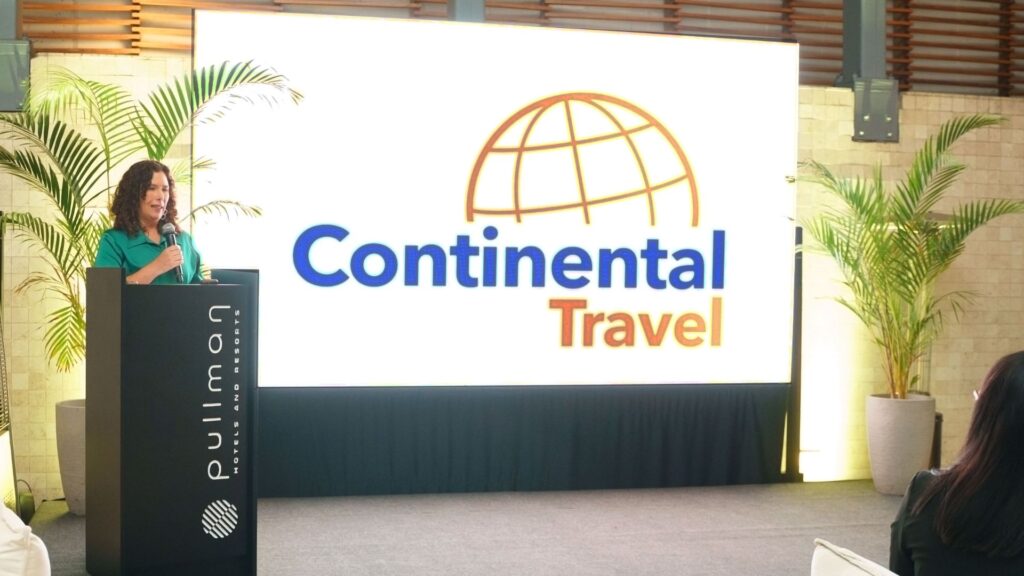
This milestone, granted by Green Initiative, reaffirms the agency’s commitment to climate management and the promotion of low-carbon corporate travel through the launch of its new solution, Climate Smart Travel. In a global context where companies are increasingly seeking to integrate climate-action criteria into their operations, the corporate travel sector is evolving toward more responsible practices. Marking a milestone in the local industry, Continental Travel—an agency with more than 30 years of experience—has become the first corporate travel agency in Peru to obtain the “Carbon Measured” certification, granted by Green Initiative. The certification ceremony took place on Tuesday, November 11, at the Pullman San Isidro Hotel, in an event attended by Sophia Dávila, Director of Tourism Environmental Affairs at MINCETUR, who highlighted the importance of this initiative for the sector. This achievement confirms that the company has quantified its greenhouse gas (GHG) emissions under international standards (Scopes 1, 2, and 3), validating its real commitment to climate action and its alignment with the objectives of the Glasgow Declaration. Key Insight: Over 90% of the Carbon Footprint Comes from Flights The rigorous measurement process not only evaluated the agency’s direct operations but also the services it manages for its clients, such as air travel and accommodation. The analysis revealed an important insight: more than 90% of Continental Travel’s carbon footprint comes precisely from the emissions generated by its clients’ air travel (classified under Scope 3). This finding was the main driver behind the creation of new value-added solutions. “Climate Smart Travel”: A Solution for Climate Management In direct response to these results, and recognizing its role in the value chain, the agency announced the launch of its new and innovative service: Climate Smart Travel. This solution will provide companies with transparent and timely information to accurately measure—and later access alternatives to compensate for—the CO₂ emissions from their flights, thus facilitating the management of their own sustainability indicators. “This decision stems from our conviction that the world of corporate travel can and must evolve. We want to support companies not only in the management of their travel but also in understanding and reducing their environmental impact.”— Joelma Galdós, Deputy General Manager of Continental Travel “Companies that understand that the climate agenda is not an ideological issue and move quickly have the opportunity to develop new competitive advantages. This is precisely the case of Continental Travel, a company that has understood the times and is committed to managing its carbon footprint and innovating with climate-smart services.”— Green Initiative Additionally, as part of its commitments, Continental Travel will implement a climate-action plan to reduce its own operational footprint. This plan will include progressive measures such as process optimization and increased digitalization. With this step, Continental Travel not only reaffirms its leadership in the sector but also strengthens its value proposition for corporate clients seeking strategic partners aligned with global climate goals. This article was written by Musye Lucen from the Green Initiative Team. Related Reading

Continental Travel Becomes Peru’s First Corporate Travel Agency to Achieve the “Carbon Measured” Certification Read More »

Braztoa Sustainability Award 2025: Green Initiative Among the Finalists

Braztoa Sustainability Award 2025: Green Initiative Among the Finalists

Belém, Brazil — November 2025. Green Initiative is honored to be among the finalists of the Braztoa Sustainability Award 2025, one of the most prestigious recognitions for responsible tourism in Brazil. The award celebrates organizations, destinations, and projects that are transforming Brazilian tourism through innovation, inclusion, and sustainable development. The award ceremony will take place on December 8th at the Teatro Estação Gasômetro, in Belém, Pará — a symbolic setting where the Amazon rainforest meets the future of sustainable tourism. The event will bring together visionary leaders, entrepreneurs, and institutions that are driving systemic change across the tourism sector. A Celebration of Innovation and Purpose As a finalist, Green Initiative joins an inspiring network of organizations that demonstrate how tourism can be a force for positive impact — empowering communities, protecting ecosystems, and advancing climate and nature-positive practices. Beyond the ceremony, participants will experience two days of activities designed to foster collaboration and exchange: Strengthening Brazil’s Leadership in Sustainable Tourism For Green Initiative, being recognized among the finalists reaffirms its commitment to supporting destinations, communities, and businesses in achieving climate and nature-positive tourism, through measurable certifications, circular economy practices, and ecosystem restoration programs across Latin America. This recognition reflects our shared mission to make sustainability not just a commitment, but a daily practice — from the Andes to the Amazon, from local communities to World Heritage sites,” said Karla de Melo, Global Head of Reputation at Green Initiative. The Braztoa Sustainability Award continues to play a key role in amplifying the voices and actions that are shaping the future of tourism in Brazil and beyond — rooted in responsibility, creativity, and genuine care for the planet. Toward a Climate-Positive Future for Tourism As the tourism sector accelerates its transition toward sustainability, Green Initiative invites destinations, companies, and travelers to take the next step. Download the Global Climate Action Guide for Tourism Businesses and Destinations, available in English and Portuguese, to explore practical pathways for achieving climate- and nature-positive impact — from carbon measurement and certification to ecosystem restoration and circular economy solutions. Together, we can build tourism back better — for people, for nature, and for the planet. Discover more about Braztoa here. This article was written by Yves Hemelryck from the Green Initiative Team. Related Reading
Braztoa Sustainability Award 2025: Green Initiative Among the Finalists Read More »

How Bonito, Brazil and FundTur (State Tourism Authority) Created the World's First Carbon Neutral Ecotourism Destination, And What It Means for Tourism Worldwide

How Bonito, Brazil and FundTur (State Tourism Authority) Created the World’s First Carbon Neutral Ecotourism Destination, And What It Means for Tourism Worldwide

A small Brazilian municipality and state-level vision proved that tourism growth and decarbonization aren’t just compatible, they’re mutually reinforcing When the UN declared climate urgency in March 2021, followed by the Glasgow Declaration on Climate Action in Tourism that November, the global tourism industry faced a fundamental challenge: how to reconcile economic growth with climate responsibility. The goals were clear, commitments were made, but concrete examples of practical implementation were scarce. Then came Bonito, a municipality of 24,761 inhabitants in Mato Grosso do Sul, Brazil. What happened there over the following three years would fundamentally change the conversation about sustainable tourism. Bonito built a replicable model that proves destinations can grow their visitor numbers while simultaneously reducing their carbon footprint. The results speak for themselves: 52.49% growth in visitor arrivals alongside a 4.65% reduction in emissions per tourist. For an industry searching for proof that climate action and economic development can coexist, Bonito became the living laboratory the world needed. The Vision That Started It All Bruno Wendling, Executive Director of the Mato Grosso do Sul Tourism Foundation (FUNDTUR), saw what others missed. While most destinations viewed climate certification as a cost center or marketing exercise, Wendling recognized a historic opportunity. Mato Grosso do Sul possessed unique conditions: three distinct biomes (Cerrado, Pantanal and Atlantic Forest) including areas in Bonito that are part of the core zone boundaries of the Atlantic Forest Biosphere Reserve, decades of consolidated ecotourism experience, and most importantly, Bonito, a global icon of sustainable tourism that had demonstrated for over 30 years how territorial organization could simultaneously promote environmental conservation, economic development, and effective governance. But the vision transcended simply certifying one municipality. The goal was to position Brazil as a global leader in climate solutions for tourism, establishing a demonstrative laboratory that would prove, with measurable data and replicable methodology, that tourism growth and decarbonization could walk hand in hand. A Partnership Model That Works The genius of the approach lies in its structure. Instead of a siloed initiative, a tripartite partnership was established that combined three complementary forces. FUNDTUR brought state-level institutional articulation, long-term strategic vision, and the capacity to create necessary political and technical conditions. Bonito’s certification represented the first step in the tourism sector’s contribution to a broader state strategy: making Mato Grosso do Sul carbon neutral by 2030. The Municipality of Bonito assumed local implementation, providing detailed operational data, infrastructure, and community engagement. The municipality already had decades of experience with carrying capacity control systems, mature collaborative governance, and solid international reputation in sustainability. Green Initiative completed the tripod with proven international technical expertise, having previously certified Machu Picchu (UNESCO World Heritage Site, Peru) as a carbon neutral destination. The organization offered methodology based on international standards (GHG Protocol, IPCC guidelines, ISO 14064-1:2018) with flexibility for adaptation to Brazilian reality while maintaining scientific rigor. This strategic convergence created exceptional conditions: a partner with systemic state vision, a territory with ideal conditions to serve as a pilot, and internationally proven technical expertise. A Vision for Brazilian Leadership Bruno Wendling, Executive Director of FundTur (Mato Grosso do Sul State Tourism Foundation), reflects on the strategic vision behind the initiative: “When we launched this project in 2021, we weren’t just thinking about certifying one destination. We were thinking about positioning Mato Grosso do Sul as a global leader in climate solutions for tourism. Mato Grosso do Sul has unique conditions: three strategic biomes, decades of ecotourism excellence, and Bonito as a living laboratory. But what really matters is proving that sustainable tourism isn’t a cost, it’s an investment that generates measurable returns. Our goal extends far beyond Bonito. We’re building the foundation for Mato Grosso do Sul to become carbon neutral by 2030, and creating a replicable model that can transform tourism across Brazil and internationally. The results speak for themselves: more visitors, less emissions per tourist, international recognition, and most importantly, a clear pathway for other destinations to follow. Climate action isn’t optional anymore. Destinations that act now will lead tomorrow’s tourism market. Those that wait will find themselves left behind. It’s important to emphasize that this all began as a state-level strategy. Mato Grosso do Sul has been increasing its productivity while simultaneously expanding planted forest areas on lands that were previously degraded pastures. Tourism has become a powerful force for giving visibility to this transformation. We’re leading by example, and the private sector is responding. Local entrepreneurs are embracing the climate agenda, with businesses like Grupo Rio da Prata certifying their attractions. What started as a public sector initiative has inspired the entire tourism industry. FundTur became a reference point for entrepreneurs themselves, demonstrating that when government leads with concrete action, the market follows.” The Results That Changed Everything Let’s talk numbers, but more importantly, let’s understand what they really mean. Environmental Impact Between 2021 and 2023, Bonito achieved: This last figure transformed the entire narrative about forest conservation. It’s no longer just about protecting the environment for ethical or regulatory reasons; preserved forests became a measurable economic asset, an integral part of the local tourism business model. In waste management, 758 tons of organic waste were composted between 2022 and 2024, producing 189 tons of compost and avoiding methane emissions. This circular economy doesn’t just reduce emissions — it creates value and transforms problems into solutions. International Recognition The work didn’t go unnoticed: More than trophies, these recognitions represent something crucial: internationally established technical credibility. This credibility opens doors to future access to international climate financing resources like the Green Climate Fund (GCF) and Global Environment Facility (GEF), while attracting private investments from the growing ESG market. Spontaneous media coverage exceeded one million dollars in equivalent value, positioning Bonito, and by extension, Brazil, as a global protagonist in climate solutions for tourism. Social and Economic Impact The 313,316 tourists who visited Bonito in 2023 experienced carbon neutral tourism and participated in climate education programs, becoming multipliers of the message that different tourism is possible. Over 100 professionals were trained

How Bonito, Brazil and FundTur (State Tourism Authority) Created the World’s First Carbon Neutral Ecotourism Destination, And What It Means for Tourism Worldwide Read More »

The New Face of Luxury: How Inkaterra and the Koechlin Legacy Are Redefining Travel in South America

The New Face of Luxury: How Inkaterra and the Koechlin Legacy Are Redefining Travel in South America

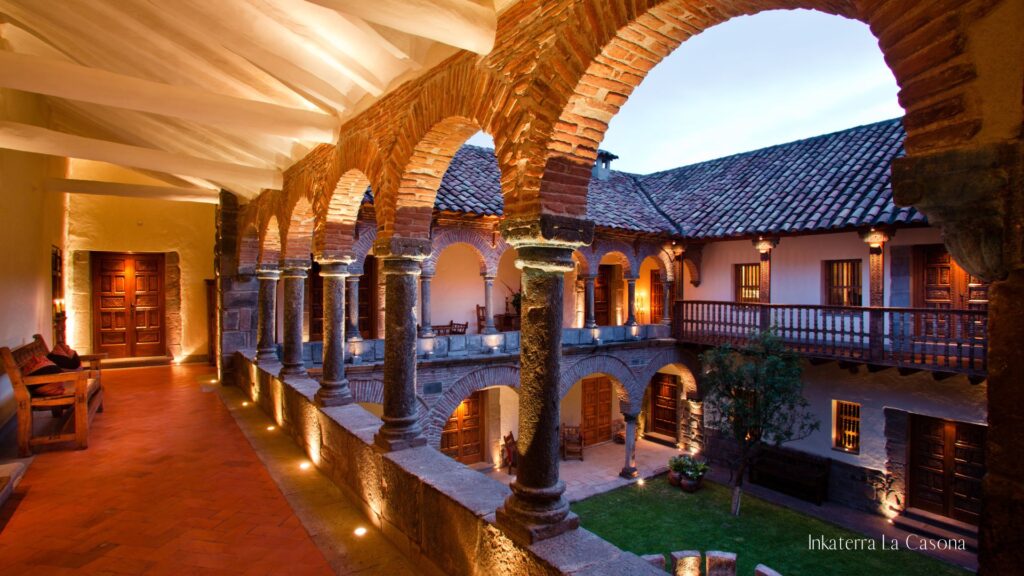
When Condé Nast Traveller unveiled its list of the Best Hotels in South America 2025, one truth became undeniable: the future of travel is already taking shape in Peru. Of the twenty hotels featured, two are part of the Koechlin family’s collection — Inkaterra La Casona and Inkaterra Machu Picchu Pueblo Hotel — among eight from Peru. This is more than recognition; it’s a revelation. It confirms what discerning travelers and sustainability experts have been saying for years: authenticity, purpose, and humility are the new pillars of luxury. A Legacy Rooted in Simplicity and Soul For nearly five decades, José Koechlin and his family have built not just hotels, but sanctuaries of meaning. The philosophy has always been deceptively simple — celebrate nature, empower local communities, and preserve cultural heritage. Yet within that simplicity lies a mastery that no marketing campaign can manufacture: genuine care, quiet excellence, and an unwavering vocation to serve both people and planet. Each property tells a story: The World Is Listening — and Learning In an era when travelers are turning away from excess, these hotels remind us that true hospitality begins with humility. The Koechlin family’s approach reflects a quiet revolution: sustainability not as an obligation, but as a natural extension of respect — for place, for people, for the passage of time. This recognition by Condé Nast Traveller is not only a triumph for the family, but for Latin America. It signals that our region’s authenticity is no longer a niche attraction — it’s the global benchmark. A Call to Conscious Travelers To those seeking experiences that heal rather than consume, Peru stands as an open invitation. Visit not just to see, but to learn — how tourism can restore, how communities can thrive, and how simplicity can once again feel extraordinary. Because in a world that celebrates noise, these places whisper what truly matters: Love for nature. Respect for culture. A sense of belonging. At Green Initiative, we celebrate the Koechlin family and the entire Inkaterra team for reminding us that sustainability and elegance are not opposites — they are, in fact, inseparable. Their success redefines what it means to be climate and nature positive: not through promises, but through practice — in every smile, every garden, every carefully restored stone. Read the full list of winners at Condé Nast Traveller, and discover how Inkaterra continues to inspire the world’s transition toward a more conscious, regenerative way of travel. This article was written by Yves Hemelryck from the Green Initiative Team. Related Reading
The New Face of Luxury: How Inkaterra and the Koechlin Legacy Are Redefining Travel in South America Read More »

Cabo Blanco Launches Workshops on Circular Tourism and Carbon Management Skills, Jobs, and Growth for a Sustainable Future

Cabo Blanco Launches Workshops on Circular Tourism and Carbon Management: Skills, Jobs, and Growth for a Sustainable Future

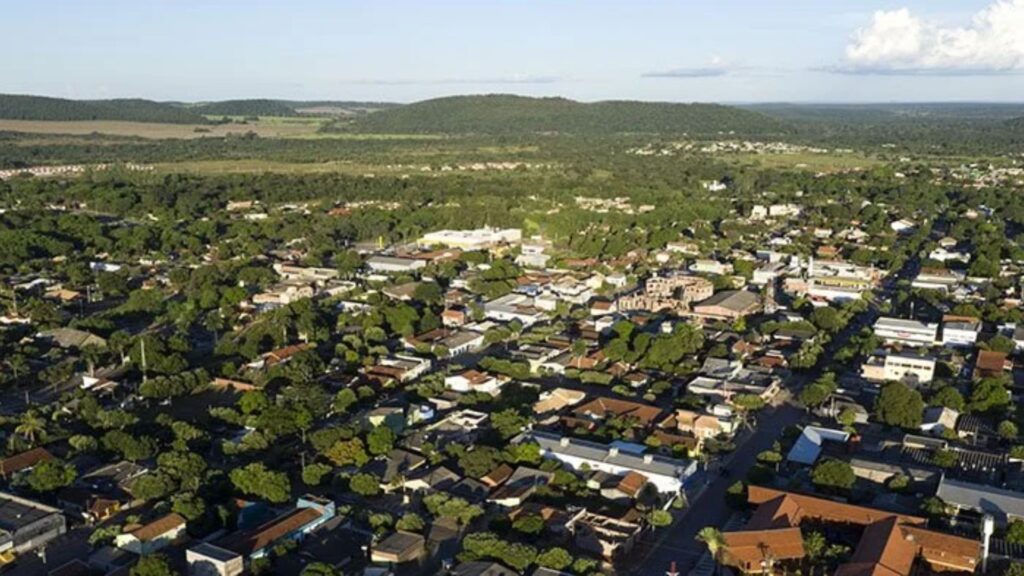
The Cabo Blanco Carbon Neutral Certification Project—led by the Municipalidad Distrital El Alto, CANATUR, AECID (Cooperación Española), the European Union, and organized by Green Initiative, responsible for the technical assistance of the Circular Tourism Peru project, with funding from AECID and the European Union, and with the valuable support of partners including Inkaterra Hotels, ITA Inkaterra Asociación andOlas Perú—is setting a new benchmark for sustainable tourism in northern Peru. At the core of this initiative is the creation of specialized training workshops designed to strengthen the technical and operational capacities of local tourism actors, both public and private. These sessions will enable stakeholders to adopt circular economy practices and implement carbon management tools, ensuring that Cabo Blanco advances toward becoming a climate-neutral and internationally competitive destination. Building Local Skills for Global Competitiveness The workshops—organized under the Turismo Circular Perú project, led by CANATUR with the support of AECID (Spanish Cooperation), the European Union, and carried out by Green Initiative —will combine technical training with practical application. Participants will learn how to: As Carlos Loayza, General Manager of CANATUR, notes:“These workshops are not just about knowledge transfer—they are about giving our communities the tools to become leaders in sustainable tourism, generating opportunities for business and employment while caring for the environment.” Driving Socio-Economic Benefits Investing in sustainability has clear economic advantages. Studies of certified sustainable hotels have shown measurable benefits, including higher revenue per available room (RevPAR) and stronger competitiveness. At the same time, niche markets such as surf tourism are already delivering significant local impact: in nearby Lobitos, surf tourism injects an estimated US$3.6 million annually into the local economy through visitor spending. By equipping Cabo Blanco’s stakeholders with the right skills, the workshops are expected to: As Tatiana Otaviano, Head of Relationships of Green Initiative, explains:“Sustainability is no longer just an environmental responsibility—it is an engine for prosperity. By training local actors in circularity and carbon management, we ensure that Cabo Blanco’s communities benefit directly from tourism growth.” A Shared Commitment The Cabo Blanco Carbon Neutral Certification Project represents a collective effort: As Mayor Reedy Bancayán Palomino of El Alto affirms:“For Cabo Blanco, this project is about more than tourism—it is about shaping a sustainable future, creating opportunities for our youth, and positioning our community as a global example.” Agenda – Cabo Blanco Carbon Neutral Certification Project Launch Location: Cabo Blanco, El Alto District, Piura – Peru Date: October 1, 2025Time: 14:00 hrs 1. Welcome and Introduction – 20 min Cultural activity: traditional local performance 2. Workshop: Circular Tourism Peru Project – 45 minOrganized by CANATUR, with funding from AECID – European Union and technical support from Green Initiative. 3. Cabo Blanco / El Alto Destination Development – 30 min Closing: Signing of the Glasgow Declaration on Climate Action in Tourism Looking Ahead These workshops are not isolated events; they are catalysts of transformation. By investing in capacity-building, Cabo Blanco is laying the foundation for a climate-positive, circular, and inclusive tourism model that delivers measurable environmental benefits while driving socio-economic growth.From training to action, from local empowerment to global recognition—Cabo Blanco is proving that sustainable tourism can create jobs, strengthen communities, and protect the planet. This article was written by Musye Lucen from the Green Initiative Team. Related Reading
Cabo Blanco Launches Workshops on Circular Tourism and Carbon Management: Skills, Jobs, and Growth for a Sustainable Future Read More »

Inkaterra: 50 Years of Pioneering Sustainable Tourism and Global Climate Action

Inkaterra: 50 Years of Pioneering Sustainable Tourism and Global Climate Action

Few organizations have done as much to redefine the future of tourism as Inkaterra, a true pioneer in sustainability, Peru ecotourism, and biodiversity conservation across Latin America. This year, as Inkaterra celebrates its 50th anniversary, the Green Initiative team is honored to recognize and celebrate our partner’s extraordinary journey — one that has transformed not only the way we experience travel, but also the way we connect with nature and contribute to a more climate positive and nature positive future. Joe Koechlin: A Visionary Behind Inkaterra’s 50 Years At the heart of Inkaterra’s 50-year journey is Joe Koechlin, its founder and driving force. Since establishing Inkaterra in 1975, Koechlin has redefined what tourism can mean for both travelers and the planet. His conviction was clear from the start: hospitality must be inseparable from conservation, scientific research, and cultural preservation. Guided by this vision, Koechlin transformed Inkaterra into one of the world’s most respected models of sustainable hotels and regenerative tourism. Under his leadership: Koechlin’s work has also had profound international resonance. His voice has been instrumental in showing how the private sector can align with global climate goals while delivering unforgettable travel experiences. With Inkaterra soon reaching its 50th anniversary in 2025, his leadership continues to inspire new generations of hoteliers, conservationists, and travelers committed to a climate and nature positive future. Inkaterra: A Legacy of Conservation and Innovation Since its founding in 1975, Inkaterra has been at the forefront of ecotourism and environmental preservation. Through scientific research, reforestation, and community engagement, the organization has created a model where hospitality, ecotourism, and conservation walk hand in hand. Over the decades, their projects have become international milestones, showing the world that protecting biodiversity and generating social value are not only possible, but essential. The August edition of Inkaterra’s newsletter highlights this remarkable legacy in the article “Inkaterra 50th Anniversary Milestones”, celebrating half a century of achievements in protecting Peru’s natural and cultural heritage. From pioneering sustainable tourism in the Amazon to creating conservation projects in Cusco and Cabo Blanco, Inkaterra continues to inspire destinations worldwide. A Strategic Alliance for a Climate Positive Future Our collaboration with Inkaterra is built on a shared vision: that the tourism industry can be a driver of climate action and ecosystem regeneration. Together, we have celebrated achievements that resonated across the globe: Forest Friends at the Economy of Francesco We are deeply grateful to Inkaterra for highlighting our project Forest Friends in their newsletter article “INKATERRA AND GREEN INITIATIVE: GLOBAL RECOGNITION FOR ECOSYSTEM RESTORATION”. Forest Friends was recently selected to be showcased at the Economy of Francesco Extraordinary Ideas Global Event 2025, a gathering inspired by Pope Francis that brings together leaders, entrepreneurs, and changemakers to build a new economy rooted in social justice, environmental sustainability, and the common good. This recognition is not just about our work — it is a testament to a shared commitment with Inkaterra: proving that tourism can be a powerful tool for climate and nature positive transformation. Facilitate your businesses journey towards value-driven climate and nature positive impacts with Forest Friends. Through Forest Friends, individuals, companies, and institutions can calculate and offset their carbon footprint by planting native trees, protecting biodiversity, and generating social benefits in regions of high ecological importance such as the Osa Peninsula (Costa Rica), Madre de Dios (Peru), and beyond. Looking Ahead: A Shared Path Toward 2050 As Inkaterra steps into its next 50 years, we celebrate their pioneering role in uniting science, tourism, and conservation. Together, we are building replicable models for sustainable tourism that inspire global action and directly support the goals of the UN Decade on Ecosystem Restoration. On behalf of the Green Initiative and our global Forest Friends community, we congratulate Inkaterra on this historic milestone. May the next decades bring even greater achievements in climate action, biodiversity conservation, and regenerative tourism — for Peru, Latin America, and the world. This article was written by Yves Hemelryck from the Green Initiative team

Inkaterra: 50 Years of Pioneering Sustainable Tourism and Global Climate Action Read More »