Green Initiative

Prepare for the September 2026 EU Green Claims Directive. Learn the new requirements for scientific substantiation, verification, and how to avoid greenwashing.

The EU Green Claims Directive: What Companies Need to Know About Environmental Accountability in 2026

On May 29, 2024, the European Union adopted the Green Claims Directive—the world’s most comprehensive regulation on environmental claims. Starting September 27, 2026, this directive will reshape how companies communicate about their climate and environmental performance. Yet perhaps its most substantial contribution to the global fight against greenwashing lies beyond communication itself. By demanding scientific substantiation and independent verification, the directive creates a powerful catalytic effect on how organizations actually manage climate and environmental aspects within their internal processes and business models. Rigorous measurement, transparent reporting, and credible verification require companies to build genuine institutional capacity—embedding climate and nature-positive practices into operations, governance, and strategic planning. In this way, the directive becomes far more than a communication standard. It becomes a driver of authentic, long-term business transformation toward more responsible and resilient models of growth. Why Now? The Greenwashing Crisis For years, companies have made sweeping environmental claims with little to back them up. “Eco-friendly,” “sustainable,” “carbon neutral”—these terms became marketing tools rather than meaningful commitments. Consumers were misled. Investors couldn’t trust corporate climate disclosures. And organizations genuinely committed to environmental action found themselves competing on unequal terms against those simply telling a better story. The scale of the problem demanded a response. Studies show that over 50 percent of environmental claims lack adequate scientific backing. Companies making unsubstantiated claims gained unfair competitive advantage, while those investing seriously in real climate action struggled to differentiate themselves in crowded markets. The EU Green Claims Directive exists to end this dynamic—rewarding authentic environmental leadership and holding greenwashing accountable. What Changes on September 27, 2026 Starting that date, environmental claims must meet three non-negotiable requirements: These three requirements together signal something important: compliance is a management challenge as much as a communication challenge. Organizations that approach the directive as a reporting exercise will struggle. Those that embed its principles into governance, operations, and business strategy will thrive. Prohibited Claims: What Companies Can No Longer Say The directive explicitly prohibits claims that cannot meet these standards. Understanding these prohibitions is essential for any organization currently making environmental statements: Restrictions on “Carbon Neutral” and “Climate Positive” Addressing Vague and Partial Claims Why This Matters: The Competitive Opportunity The Green Claims Directive is a compliance requirement—but organizations that understand its deeper logic will recognize it as a market opportunity of significant proportions. Companies that move now—establishing rigorous environmental measurement, embedding climate and nature-positive governance into their operations, and securing independent verification before September 2026—gain first-mover advantage in markets increasingly demanding authenticity. Early adopters gain market trust, investor confidence, and regulatory resilience simultaneously. Organizations that build genuine internal capacity for environmental management emerge as the trusted leaders in their sectors. The Global Ripple Effect The EU is establishing the global standard, but it will not remain alone for long. Similar frameworks are already emerging in the United Kingdom, Canada, and other major economies. Organizations that build robust, verified environmental programs now will be positioned for global compliance rather than scrambling market by market as regulations tighten worldwide. What This Means for Your Organization If your organization makes environmental claims, the time to act is now. Start by auditing your current claims honestly: Which are scientifically substantiated? Which have been independently verified? Then build the foundation: * Rigorous baseline measurement across all scopes. The most important investment is organizational. Build the internal governance structures and technical capacities that make climate and nature-positive action a permanent part of how your organization operates. Green Initiative: A Partner for Authentic Transformation At Green Initiative, we support companies and destinations in building the internal institutional capacity to measure, manage, and verify their environmental impact rigorously. We help organizations understand that decarbonization and nature restoration are investments that strengthen long-term resilience and open access to sustainability-driven markets. Through science-based frameworks and independent certification, we walk alongside organizations on this journey. The standard is rising. The opportunity belongs to those who rise with it. This article was prepared by Yves Hemelryck from the Green Initiative Team. Related Reading

The EU Green Claims Directive: What Companies Need to Know About Environmental Accountability in 2026 Read More »

The Forest Friends and SERNANP Collaboration for Machu Picchu

Green Initiative and Peru’s National Protected Areas Authority (SERNANP) Sign Collaboration Agreement to Support Ecosystem Restoration, Biodiversity, and Local Communities Through the One Million Trees for Machu Picchu Initiative

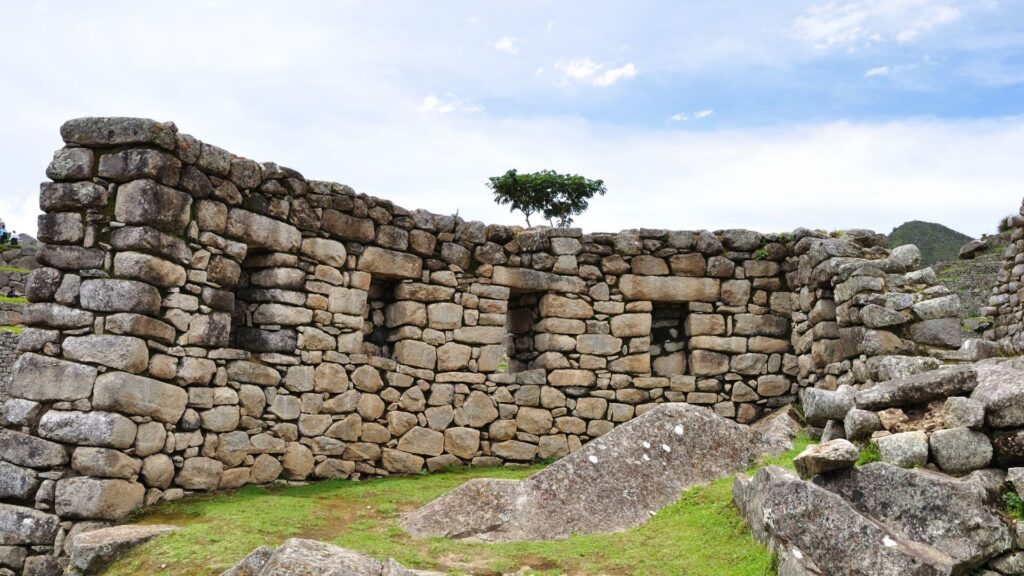
The Historic Sanctuary of Machu Picchu is universally recognized as an architectural masterpiece and a symbol of the Inca civilization. However, beyond its profound cultural and historical significance, it is also a highly valuable and fragile ecosystem. Nestled at the convergence of the Andes and the Amazon basin, its cloud forests harbor exceptional biodiversity and play a critical role in regional water regulation. Today, this iconic landscape faces mounting environmental pressures, including forest degradation, the escalating impacts of climate change, biodiversity loss, and an increased risk of wildfires. Protecting Machu Picchu requires more than preserving its stone terraces; it requires the active restoration and defense of its surrounding natural habitats. Recognizing this imperative, Forest Friends (a Green Initiative program) and the National Service of Natural Protected Areas by the State (SERNANP) have signed a formal agreement to support the agenda behind the “One Million Trees for Machu Picchu” initiative. This collaboration represents a vital convergence of public sector conservation mandates and private sector technical expertise, designed to ensure the long-term conservation and resilience of one of the world’s most significant heritage sites. Beyond Planting: The “One Million Trees” Initiative The “One Million Trees for Machu Picchu” initiative is a landscape-scale conservation effort aimed at revitalizing the degraded areas within and surrounding the Historic Sanctuary. However, to view this solely as a tree-planting campaign is to misunderstand its scope. The initiative is a comprehensive ecological intervention designed to: Strengthening the Technical Agenda: The Role of Forest Friends A restoration project of this magnitude requires rigorous scientific planning and meticulous execution. Forest Friends, drawing on Green Initiative’s extensive expertise in climate advisory and environmental measurement, is supporting SERNANP in the initiative’s technical agenda. The collaboration focuses on integrating advanced restoration monitoring, strategic planning, and alignment with international best practices. By bringing robust technical methodologies to the forefront, Forest Friends helps the initiative align with the principles of the UN Decade on Ecosystem Restoration and other recognized global standards. This collaboration represents a scaling up of the experience we have built through our work with organizations in the tourism and travel sector, including CEPA Study Abroad, Tulu Travel, Swetours, KUODA Travel, WorldXChange, as well as other key partners such as MAPFRE, Mediterranean Shipping Company, and adidas. A Credible Opportunity for Corporate Contribution The preservation of global heritage sites is a shared responsibility. Through this collaboration, Forest Friends serves as a vital bridge, connecting companies and organizations around the world with high-quality restoration opportunities. For the private sector, supporting the “One Million Trees for Machu Picchu” initiative offers a unique proposition. It allows organizations to participate in a project that is not only emotionally resonant and rich in storytelling value, but also technically rigorous, validated, and measurable. By anchoring corporate contributions to a scientifically monitored framework, Forest Friends ensures that investments translate into tangible, verifiable environmental outcomes, safeguarding the reputations of supporting partners. Partner in the Restoration of a Global Icon and become a Machu Picchu Forest Friends Accelerator – Join the Forest Friends & SERNANP alliance. We offer companies a scientifically rigorous, measurable, and transparent way to support the “One Million Trees for Machu Picchu” initiative. The Imperative of Transparent Claims in a Regulated Landscape The necessity for such rigorous, technically backed restoration frameworks has never been more urgent. In today’s corporate landscape—particularly within European markets and other highly regulated jurisdictions—the scrutiny surrounding corporate sustainability claims is intensifying rapidly. With the introduction of regulations such as the EU Green Claims Directive and evolving global ESG disclosure expectations, the era of broad, unsubstantiated environmental messaging has ended. Companies are now required to back their environmental investments with empirical data, transparent monitoring, and standardized reporting. The Forest Friends and SERNANP collaboration is fundamentally designed to meet these modern compliance demands. It aligns not only with international restoration standards but also with the highest best practices for transparency and impact disclosure. Organizations that support this initiative are equipped to make credible, evidence-based claims linked to verifiable restoration outcomes. Ultimately, this partnership demonstrates that the future of environmental action lies at the intersection of ecological integrity and corporate accountability. By supporting structured, monitored, and internationally aligned restoration in Machu Picchu, forward-thinking organizations can protect a global treasure while confidently navigating the new standard of transparent, responsible sustainability reporting. This article was written by Marc Tristant from the GI International Team. Related Reading

Green Initiative and Peru’s National Protected Areas Authority (SERNANP) Sign Collaboration Agreement to Support Ecosystem Restoration, Biodiversity, and Local Communities Through the One Million Trees for Machu Picchu Initiative Read More »

Five Years of Building Together: Green Initiative’s Contributions to Climate-Smart Tourism

Five Years of Building Together: Green Initiative’s Contributions to Climate-Smart Tourism

Over the past five years, Green Initiative has evolved from a technical partner into a catalyst for the global movement toward climate-smart tourism. By working alongside United Nations partners and aligning with the Glasgow Declaration on Climate Action in Tourism, we have helped reshape how the industry perceives its role in achieving the goals of the Paris Agreement. Our philosophy is simple: we don’t just provide solutions; we build the architecture for others to lead. A Shared Architecture: Democratizing Climate Knowledge Our approach has always centered on partnership over imposition. We believe that for climate action to be effective, it must be accessible. This commitment led to the development of frameworks and practical guides designed to help destinations and businesses measure, monitor, and reduce their carbon footprints. Catalyzing Local Leadership The true measure of our success is the independence and resilience of our partners. We provide the technical rigor, but the destinations, communities, and businesses remain the true architects of their transformation. Milestones in Climate Excellence Partner Achievement Machu Picchu, Peru Three consecutive Carbon Neutral recertifications. Bonito, Brazil Established as the world’s first Carbon Neutral ecotourism destination. National Frameworks Collaborative policy development with the Brazilian government. Private Sector Leaders Kuoda Travel, Rio da Prata Group, and Estância Mimosa achieving Climate Positive status. “Our comparative advantage lies in the balance of deep technical rigor and humble partnership. We don’t compete by keeping expertise proprietary; we contribute to the knowledge commons.” From Carbon Measurement to Systemic Transformation The next phase of Green Initiative’s work reflects a maturing understanding of climate action. Transformation cannot happen in isolation; it happens when frameworks are embedded into policy and when knowledge spreads across borders. Our evolution toward Circular Economy principles represents this holistic shift. By addressing waste reduction and resource efficiency alongside carbon measurement, we help tourism systems build long-term economic resilience and align with the UN Sustainable Development Goals (SDGs). A Global Model for Stewardship The model we have refined over the last half-decade transcends geography. Whether it is the ancient stones of Angkor Wat in Cambodia, the iconic Cristo Redentor in Brazil, or the desert landscapes of Petra in Jordan, the demand for science-based, transparent climate action is universal. These destinations are not seeking “green” labels for marketing; they are institutions committed to legacy and stewardship. The Path Ahead: Measuring Resilience As we look to the future, Green Initiative remains focused on supporting others to succeed. Our impact is not measured by the number of certificates issued, but by: Five years in, the architecture for a climate-responsible future is being built. The tourism sector is no longer just observing the transition—it is becoming the solution. As we celebrate this five-year milestone, the global community’s recognition serves as both a validation and a catalyst for what lies ahead. From Green Initiative being named the World’s Leading Sustainable Organisation at the 2024 World Sustainable Travel & Hospitality Awards, to our partners at Bonito Carbon Neutral winning the prestigious FIDI 2025 Award and FUNDTUR-MS securing the Embratur Visit Brazil 2026 Award for Regenerative Tourism, the momentum is undeniable. This excellence is echoed in the private sector, with the Rio da Prata Group recently winning Gold at the 2026 WTM Latin America Responsible Tourism Awards, and Green Initiative being honored for Net Zero Progression at the Environmental Finance Sustainable Company Awards 2025. These accolades—alongside Machu Picchu’s continued dominance as the World’s Leading Tourist Attraction and its pioneering carbon-neutral status recognized by Lonely Planet and the UN Tourism Green Projects Challenge—prove that the architecture we have built together is no longer just a vision. It is a multi-award-winning reality that is redefining the future of a nature-positive planet. For more information on our frameworks or to download our Climate Action Guides, visit the Green Initiative resources portal or get in touch. Prepared by Yves Hemelryck from the Green Initiative Team. Related Reading

Five Years of Building Together: Green Initiative’s Contributions to Climate-Smart Tourism Read More »

Peru First in Latin America to Enshrine Circular Economy Roadmap for Tourism

Sustainable Tourism: The First Mover

Peru has become the first country in Latin America to enshrine a circular-economy roadmap as part of its climate action in tourism national policy. On March 27th, by executive decree, Peru quietly made history. The government of José María Balcázar Zelada signed Decree Supreme N° 003-2026-MINCETUR, approving the Circular Economy Roadmap for Tourism to 2030 — the first legally binding instrument of its kind in Latin America. The timing was not accidental. With Peru`s tourism sector preparing for COP31 in Turkey, and the Glasgow Declaration on Climate Action in Tourism — the sector’s most ambitious collective climate commitment, with over 850 signatory organizations — advocating  for exactly this kind of national policy architecture, Peru stepped forward as the region’s standard-bearer. The declaration, launched at COP26, calls on all signatories to halve tourism emissions by 2030 and reach net zero before 2050. What had been a global pledge now has, for the first time in the Americas, a national legal framework behind it. The numbers attached to the roadmap outline a significant future opportunity. While circularity is not currently a major contributor to the tourism GDP, the government projects that by 2030, the implementation of these practices could inject 1.2 billion soles (roughly $345m) into the sector’s economy. Alongside this growth, nearly 31,000 new jobs are expected to be created in sustainable tourism activities along circular value chains. The environmental targets according to MINCETUR are equally ambitious: the mitigation of 74m tonnes of CO₂ equivalent and the restoration of more than 2m hectares of ecosystems and natural and cultural heritage. For Minister of Trade and Tourism José Reyes Llanos, the logic is straightforward. “Tourism is one of the activities with the greatest capacity to generate opportunity,” he said at the roadmap’s official launch. “But it also faces an obvious challenge: to grow without compromising the very resources that make its own development possible.” That tension — between growth and the environmental foundations that sustain it — is precisely what the roadmap is designed to manage. From Declaration to Decree The roadmap emerge from one year of technical and participatory work, bringing together public agencies, private operators, academia, civil society and communities. The legal architecture is equally robust: implementation is co-supervised by both MINCETUR and the Ministry of Environment (MINAM), with a built-in mechanism for periodic revision and a sectoral commission — designed to lock in multi-stakeholders’ governance platform. For the UN Tourism Office of the Americas, the significance of Peru’s move extends well beyond its borders. Heitor Kadri, the office’s regional representative, was unambiguous about what this moment represents for the global agenda: “We applaud Peru’s effort to position circularity as a strategy for climate action, sustainability, and competitiveness by translating its commitment into an actionable policy instrument, in line with the requirements of the Glasgow Declaration. For the Americas, this serves as a relevant reference that may inspire other countries in the region and globally. UN Tourism will continue to actively support Peru in implementation and in sharing its expertise.” — Heitor Kadri, UN Tourism Office Representative of the Americas Competitiveness, Not Just Compliance Sophia Dávila, Director of Environmental Tourism Affairs at MINCETUR, and the official who led the roadmap’s technical construction, is at pains to frame the instrument in competitive rather than regulatory terms: “This roadmap is the result of a wide participatory process. By 2030, Peru will not only be known for its wonders but for its circularity in tourism. We are transforming the entire value chain—from waste reduction to water efficiency, ensuring that every tourist’s visit leaves a positive footprint on our territory.” – Sophia Dávila, Director of Environmental Tourism Affairs, MINCETUR That framing reflects a deliberate strategic choice. In a region where private operators have long dismissed environmental mandates as sunk costs, Peru is anchoring its broader climate-action goals directly to the bottom line. Positioning circularity as a driver of business competitiveness, rather than a regulatory compliance burden, is the surest way to accelerate the industry investments in low-carbon business models. The Coalition Behind the Policy The roadmap’s journey from concept to decree was led by MINCETUR and supported by the Spanish Agency for International Development Cooperation (AECID) through the “Turismo Circular Perú” project — officially titled the Coalition for a Circular, Inclusive and Climate-Smart Tourism — which CANATUR, Peru’s national tourism chamber, led as its executing organization, with Green Initiative as its technical partner. Carlos Loayza, CANATUR’s General Manager, described the ambition behind the transformation the project seeks to drive: “We are looking to transform the sector with a new tourism model, where recycling, energy efficiency, sustainable design and climate commitment are part of the DNA of micro, small and medium-sized tourism enterprises. We believe there is enormous opportunity here, and this project will consolidate it ahead of 2030.” Within the Turismo Circular project specifically, technical execution relied on a strategic collaboration between MINCETUR, CANATUR and Green Initiative. Acting as a key advisory partner, Green Initiative supported core aspects of the process by providing the methodological frameworks required for consistent and well-informed decision-making. This advisory role is part of the firm’s broader commitment to support Peru’s climate action policy and practice, guiding circular and climate-smart tourism strategies across destinations including Machu Picchu, Ollantaytambo, Choquequirao and Cabo Blanco. The Road to Turkey With COP31 on the horizon and tourism now embedded in the global climate roadmap for the first time, the question is no longer whether the sector can contribute to climate action — but which countries will help define how. Peru’s accumulated expertise and recent policy commitments position it as a credible reference for the region, and potentially beyond, if ambition continues to translate into implementation. The circular-economy roadmap carries meaningful institutional weight: its targets are binding rather than aspirational, and its governance structure is built around a commission with a formal mandate rather than an advisory body. For a region that has historically struggled to convert environmental ambition into durable policy, that distinction matters — and is worth watching closely. Prepared by Yves

Sustainable Tourism: The First Mover Read More »

A young Peruvian girl in the Andes mountains looking at a drop of water on a spoon, symbolizing the link between water quality and childhood anemia.

Childhood Anemia in Peru: The Invisible Crisis We Are Choosing to Ignore

By Gianmarco Nizzola Director of Valores Tecnológicos Verdes S.A.C. In Peru, childhood anemia continues to be treated as a simple equation: a lack of iron. For years, the system’s response has been to double down on supplementation and nutritional campaigns. Yet, the numbers refuse to budge as expected. An uncomfortable question remains: Why does a child with access to iron supplements remain anemic? The answer is more complex—and more troubling—than we are willing to admit. Anemia is not always a problem of intake; often, it is a problem of absorption, utilization, or the biological blocking of iron within the body. The Hidden Blocker: Heavy Metal Exposure There is a systematically underestimated factor in our public health crisis: exposure to heavy metals such as lead, arsenic, and cadmium. Across the country—aggravated by mineral-rich environments, contaminated soils, and polluted water sources—children and pregnant mothers are breathing and drinking toxins that hijack their metabolism. This is not a fringe theory. It has been extensively documented by the National Academy of Medicine of Peru, warning about the impact of heavy metals on vulnerable populations. These elements are not just toxic on their own; they directly sabotage how the body processes iron. How Toxins “Steal” Nutrition The result is perverse: Children are consuming iron, but their bodies are physically unable to use it. A Threat to National Development Childhood anemia is inextricably linked to cognitive development. Iron is the fuel for a developing brain. When you combine a functional iron deficiency with the neurotoxicity of heavy metals, you create a catastrophic scenario: children with diminished learning capacity and fewer future opportunities. This isn’t just a health metric; it’s a national development crisis. Insisting solely on iron drops is no longer enough. We need a fundamental shift in perspective. A Three-Pillar Solution To address the root cause, we must focus on the environment, not just the symptoms: From Debate to Demonstration: The Social Pilot The time for theoretical discussion has passed. Peru needs concrete, measurable, and unquestionable evidence. I propose the implementation of a large-scale Social Pilot Program to objectively measure the impact of water quality on childhood nutrition. The cost of such a pilot is marginal compared to the “country cost” of doing nothing. A nation cannot thrive if its future workforce grows up with preventable physical and cognitive limitations. The Choice Before Us Today, Peru has the opportunity to lead an innovative, evidence-based approach to childhood anemia. We must improve the environment in which nutrition occurs, starting with the water our children drink. The true cost is not intervention. The true cost is silence. In the end, the question is not whether we can do this. The question is whether we can afford not to. To learn more about our initiatives and technologies to combat water contamination, follow the conversation at Valores Tecnológicos Verdes S.A.C.

Childhood Anemia in Peru: The Invisible Crisis We Are Choosing to Ignore Read More »

Learn how financial institutions assess SME emission boundaries, calculate financed emissions, and evaluate portfolio climate risk across Scopes 1, 2, and 3.

Understanding Scope 1, 2, and 3 Emissions: A Financial Institution’s Guide

For financial institutions, evaluating climate risk is no longer a peripheral ESG exercise; it is a core component of credit risk assessment. As banks and asset managers commit to net-zero portfolios, the ability to accurately measure and manage scope 1 2 3 emissions finance data has become critical. However, when dealing with Small and Medium-sized Enterprises (SMEs), financial institutions frequently encounter a significant data gap. SMEs often struggle to define their organizational and operational boundaries, leading to incomplete or inaccurate greenhouse gas (GHG) inventories. If a lender bases a Sustainability-Linked Loan (SLL) on flawed emissions data, they expose the institution to severe greenwashing risks and mispriced credit. This guide provides risk managers and credit officers with a practical framework for evaluating SME emission boundaries, understanding data collection methodologies, and managing portfolio climate risk across all three scopes. (Learn more about comprehensive SME evaluation in our parent guide: GHG Inventory Development for SMEs: A Financial Institution’s Framework to Climate-Ready Portfolios) Why Emission Boundaries Matter for SME Climate Loans Before diving into specific scopes, lenders must verify that the SME has correctly established its organizational boundaries. The foundational rule of carbon accounting (following ISO 14064 and the GHG Protocol) is that a company must consistently apply either the equity share or control approach (financial or operational) to consolidate its GHG emissions. The Risk for Lenders: If an SME uses the operational control approach for its headquarters but ignores a heavily polluting manufacturing subsidiary where it holds a 60% equity stake, the resulting GHG inventory is fundamentally flawed. For boundary setting for SME climate loans, financial institutions must cross-reference the corporate structure outlined in the loan application with the boundaries defined in the GHG inventory report. Breaking Down the Scopes for Risk Managers Scope 1: Direct Emissions and Asset Risk Scope 1 covers direct emissions from owned or controlled sources. For SMEs, this typically includes fuel combustion in owned boilers, furnaces, and company vehicles, as well as fugitive emissions (like refrigerant leaks from air conditioning systems). Scope 2: Indirect Emissions and Energy Exposure Scope 2 encompasses indirect emissions from the generation of purchased electricity, steam, heating, and cooling consumed by the reporting company. Scope 3: Value Chain and Financed Emissions Assessment Scope 3 includes all other indirect emissions that occur in a company’s value chain. For most businesses, Scope 3 accounts for 70% to 90% of their total carbon footprint. Crucially for banks, Category 15 of Scope 3 represents financed emissions—the emissions associated with your lending and investment portfolios. How do banks calculate scope 3 financed emissions? Lenders must aggregate the proportional emissions of their borrowers. If you finance 10% of an SME’s enterprise value, 10% of their total emissions (Scopes 1, 2, and 3) become your Scope 3, Category 15 emissions. Struggling to standardize your SME climate data requirements? Contact us to receive the Green Initiative’s Climate Mitigation Finance Guide for detailed ISO 14064 reference tables and sector-specific baseline frameworks. Common Boundary Errors in SME GHG Inventories When conducting a financed emissions assessment, credit officers should actively screen for these common SME reporting errors: Pro Tips: Data Collection Methodologies for Portfolios To accurately assess portfolio climate risk, financial institutions cannot rely on a fragmented collection of PDF reports from SMEs. You must implement standardized data collection methodologies: Conclusion: Transforming Data into Financial Strategy Understanding SME emission boundaries is the crucial first step in deploying credible climate finance. By rigorously evaluating Scope 1 direct risks, Scope 2 energy exposures, and Scope 3 value-chain vulnerabilities, financial institutions can protect their portfolios against transition risks while identifying lucrative opportunities for green lending. Accurate emissions data is the currency of the net-zero transition. When lenders standardise their demands for high-quality, verified GHG inventories, they empower SMEs to take meaningful climate action while securing the integrity of their own financed emissions targets. Are your credit officers equipped to evaluate SME climate data? Green Initiative provides specialized technical assistance and GHG verification services for financial institutions. Contact us today to schedule a climate finance advisory consultation and ensure your portfolio is built on investment-grade data. This article was written by Marc Tristant from the GI International Team. Frequently Asked Questions Related Articles

Understanding Scope 1, 2, and 3 Emissions: A Financial Institution’s Guide Read More »

Peru Advances Global Climate Agenda New Signatories Join the Glasgow Declaration

Peru Advances Global Climate Agenda: New Signatories Join the Glasgow Declaration

In a significant step forward for international climate action, Peru has strengthened its position as a leader in sustainable tourism. As recently highlighted by UN Tourism’s One Planet Network, the country is expanding its commitment to the Glasgow Declaration through the inclusion of four new strategic actors. This milestone follows the technical standard set by Machu Picchu, which recently achieved its third Carbon Neutral certification. The new signatories—Continental Travel, the District of El Alto (Piura), Parque de las Leyendas (Lima), and Ollantaytambo (Cusco)—represent a multi-sectoral commitment to decarbonization, biodiversity, and cultural heritage. Strategic Pathways By joining the declaration, these entities commit to the five strategic pathways: Measure, Decarbonize, Regenerate, Collaborate, and Finance. This collective effort aims to halve global tourism emissions by 2030 and reach Net Zero as soon as possible before 2050. The transition is supported by technical frameworks provided by Green Initiative, ensuring that climate goals are met with technical rigor and measurable results. The official announcement and detailed insights can be found at the One Planet Network / UN Tourism website here. Prepared by Yves Hemelryck from the Green Initiative Team. FAQ: Understanding Climate Action in Global Tourism Related Reading

Peru Advances Global Climate Agenda: New Signatories Join the Glasgow Declaration Read More »

A diverse group of Destination Management Organization stakeholders analyzing sustainability maps and shared infrastructure blueprints at Machu Picchu, representing territory-wide climate action governance.

Destination-Level Climate Action: Governance Frameworks for Sustainable Tourism

Individual businesses like hotels and restaurants drive essential progress when they reduce their own footprints and implement sustainable practices. These small changes contribute directly to local conservation and set a high standard for service. However, the most significant impact occurs when an entire destination aligns under a unified sustainability vision. Strategic governance transforms these isolated successes into a territory-wide movement, ensuring that every participant works toward shared climate goals. The Foundation of Destination Sustainability Governance Governance in the context of sustainable tourism refers to the systems and processes used to make decisions and hold stakeholders accountable. A robust framework ensures that environmental goals do not conflict with economic growth. Instead, it integrates climate resilience into the core identity of the destination. The most effective models involve a centralized Destination Management Organization (DMO) that acts as a bridge between the public sector and private enterprises. This entity coordinates the implementation of climate strategies, ensuring that every participant—from large resorts to small tour operators—works toward the same carbon reduction targets. Essential Components of a Climate Action Roadmap Building a sustainable destination requires a phased approach that moves from initial assessment to long-term monitoring. Let’s take a look at Machu Picchu’s extraordinary case. Stakeholder Mapping and Engagement Identifying every actor in the tourism value chain is the first step. This includes local government agencies, transport providers, hospitality leaders, and the resident community. The Machu Picchu experience highlights the importance of multi-level collaboration, involving local, regional, national, and international sectors to drive change. Policy Alignment and Goal Setting Destinations must align their local sustainability targets with international standards, such as the Paris Agreement, Global Sustainable Tourism Council (GSTC) or the Glasgow Declaration on Climate Action in Tourism. Setting clear time-bound objectives for carbon neutrality or waste reduction provides a benchmark for success.  Monitoring and Data Collection  You cannot manage what you do not measure. Implementing destination-wide Monitoring, Reporting, and Verification (MRV) systems allows governance bodies to track progress in real-time. This data informs policy adjustments and proves the credibility of the destination’s climate claims to international investors and travelers. Machu Picchu demonstrates this through its consistent carbon footprint measurements since 2019, which led to its validation as the first carbon-neutral UNESCO site in the world. Fragmentation in Tourism Management Fragmentation is the primary barrier to destination-level success. When businesses act in isolation, they often duplicate efforts or overlook shared infrastructure needs. A governance framework solves this by creating “sustainability clusters” where resources are pooled for maximum efficiency. For example, a coordinated governance body can facilitate shared renewable energy projects or centralized waste-to-energy plants that a single SME could not afford alone. This collective approach reduces the cost of entry for smaller players and accelerates the entire territory’s transition to a low-carbon economy. A governance framework solves this by facilitating shared projects that a single business could not afford alone. Practical examples from the Machu Picchu model include: Driving Competitive Advantage Through Transparency Destinations that demonstrate strong climate governance attract a higher caliber of travelers and investors. Transparency in climate reporting builds trust and protects the destination from accusations of greenwashing. By establishing a clear governance structure, a region positions itself as a forward-thinking leader in the global tourism market. Destinations that demonstrate strong climate governance attract a higher caliber of travelers and investors. Transparency in climate reporting builds trust and protects the destination from accusations of greenwashing. By establishing a clear governance structure, a region positions itself as a forward-thinking leader in the global tourism market. Since 2021, Machu Picchu’s carbon-neutral status has generated an estimated $5 million to $12 million in reputational and ESG signaling value. Transparency in climate reporting builds trust and positions a region as a forward-thinking leader in the global tourism market.Learn more about managing complex destination relationships in our guide to Multi-Stakeholder Coordination for Destination Sustainability Initiatives. Ready to transition from isolated efforts to collective impact? Contact us to discover more about managing complex destination relationships and for expert advice. This article was written by Virna Chávez from the Green Initiative Team. FAQ: Understanding Destination Governance References Related Reading

Destination-Level Climate Action: Governance Frameworks for Sustainable Tourism Read More »

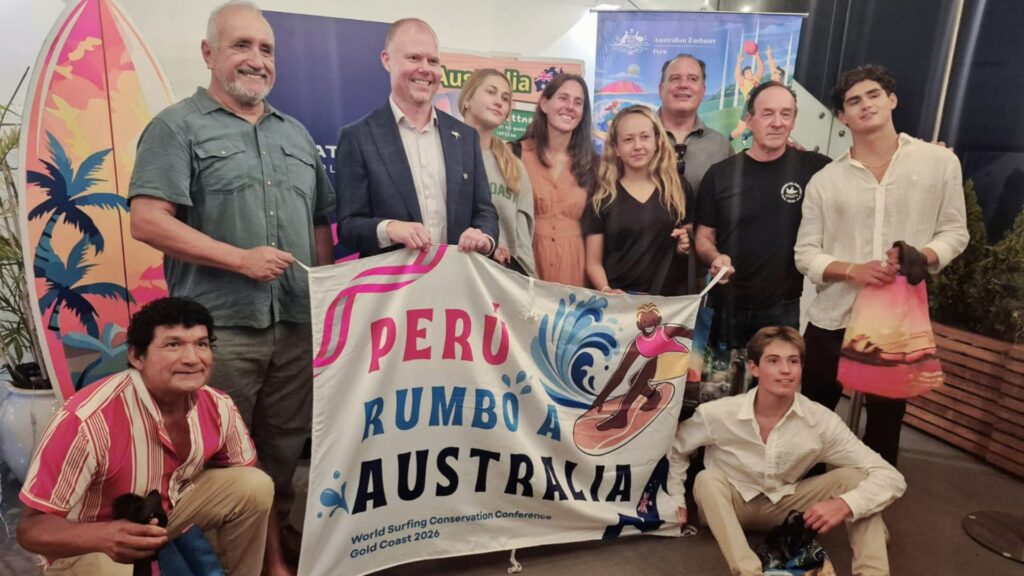
Peruvian delegation with official banner for the World Surfing Conservation Conference 2026.

WSCC 2026: A Global Summit for Ocean Protection and Surf Culture

In February 2026, the global surfing community and leading ocean conservationists will descend upon Australia’s Gold Coast for a landmark event: the World Surfing Conservation Conference (WSCC 2026). Hosted by the Gold Coast World Surfing Reserve (GCWSR) and Southern Cross University, this four-day inaugural event aims to unite science, culture, and sport to safeguard the world’s waves for future generations. A World-First Milestone: Olas Perú and Carbon Neutrality The conference will showcase a global-first for the surfing industry: the participation of Roberto “Muelas” Meza and his school, Olas Perú, the first surf school in the world to be Carbon Neutral Certified. As a legendary coach and eight-time national champion, Meza is leading a delegation of students to the Gold Coast to demonstrate how the next generation of “semilleros” can balance high-performance sport with rigorous environmental standards. By achieving certification through the Green Initiative and following international ISO standards, Olas Perú provides a strategic blueprint for how surf businesses can actively measure and offset their carbon footprint. History in the Making: The San Bartolo Club Arrives The Peruvian presence at the conference is further bolstered by the arrival of the San Bartolo Club from Punta Hermosa, who recently landed on the Gold Coast to make sporting history. While veteran leaders like Muelas (Roberto Meza) and Magoo de la Rosa are returning to Australian shores, the delegation includes a talented group of “groms”—Catalina, Brianna, Alejandro, and Bastian—marking their very first visit to the region. This group is set to become the first-ever South American team to compete in the World Club Championship at Snapper Rocks, a milestone that perfectly complements the conference’s mission of fostering global surfing heritage and youth leadership. A Legacy of Champions: Felipe Pomar at Kirra The momentum for the Peruvian delegation is at an all-time high following an inspiring morning at Kirra with Felipe Pomar, Peru’s first World Champion (1965). At 82 years old, Pomar continues to be a global ambassador for the “surfing for life” philosophy, recently appearing on the Today TV morning show to discuss his enduring connection to the ocean. His presence provides a legendary backdrop for the San Bartolo Club as they prepare for their historic debut at Snapper Rocks. Event Overview A Convergence of Legends and Experts The conference features a “stacked” lineup of over 100 speakers from 20 countries. Attendees will hear from icons like seven-time World Champion Layne Beachley AO, three-time Pipe Master Tom Carroll, and surfing pioneer Wayne “Rabbit” Bartholomew. Beyond the professional athletes, the stage will be shared with world-class coastal engineers, climate scientists, and representatives from global NGOs like Save The Waves Coalition, Surfrider Foundation, and Surfers for Climate. Key Themes and Highlights WSCC 2026 isn’t just an academic gathering; it’s a movement that blends rigorous research with cultural celebration. Key topics include: Immersive Experiences The event is designed to be as vibrant as the coast itself: How to Get Involved Whether you are a researcher, a student, a professional surfer, or an ocean advocate, WSCC 2026 offers a unique platform to exchange ideas and find workable solutions for the future of our coastlines. Registration is now open. Early bird rates are available, and attendees have the chance to win prizes, including surf trips to Fiji and Indonesia. Visit wscc2026.com.au to secure your spot, view the full program, or inquire about sponsorship opportunities. Join the movement to ensure that the waves we love today are still breaking for the surfers of tomorrow. This article was prepared by the Green Initiative Team. Related Reading

WSCC 2026: A Global Summit for Ocean Protection and Surf Culture Read More »

Professionals reviewing a digital dashboard of real-time energy efficiency data in a sustainable industrial facility, representing the forward-looking climate methodology.

Forward-Looking Climate Methodology: A Guide for SMEs

The transition to a low-carbon economy requires practical, actionable strategies that align with the current operational realities of a business. For many small and medium-sized enterprises (SMEs), the forward-looking climate methodology provides a realistic entry point into climate action. This approach focuses on what a company can achieve today based on its existing technical capacity and financial resources. Financial institutions increasingly favor this pragmatic path for their SME clients. It allows businesses to build momentum through immediate efficiency gains while establishing the data foundations necessary for more ambitious future targets. By focusing on tangible improvements, the forward-looking methodology turns climate mitigation into a driver of operational excellence. Understanding the Forward-Looking Climate Methodology The forward-looking approach differs from traditional science-based targets by starting with the present state of the organization. While science-based targets work backward from a future goal, this methodology looks forward from current capabilities. It prioritizes the identification of technical interventions that offer the highest greenhouse gas (GHG) reductions relative to their implementation cost. This capability-based planning is particularly effective for sectors with high operational variability. It allows managers to integrate climate goals directly into their annual capital expenditure cycles. This ensures that every sustainability initiative supports the overall financial health of the company. Step 1: Establish Your Technical Baseline Implementation begins with a thorough understanding of your current emissions profile. You must conduct a professional GHG inventory to identify the primary sources of carbon within your operations. Step 2: Identify “Quick-Win” Efficiency Gains The core of a pragmatist climate action plan is the prioritization of projects with short payback periods. These “quick wins” generate the internal buy-in and financial savings needed to fund more complex future interventions. Step 3: Conduct Technical Feasibility Studies Once you identify potential projects, you must validate their viability. Technical feasibility studies ensure that proposed interventions are compatible with your existing infrastructure. Step 4: Map Financial ROI and Carbon Impact A forward-looking climate methodology requires a clear link between environmental performance and financial sustainability. You must quantify the expected results of each intervention. Step 5: Draft the 5-Year Implementation Roadmap The final step is the creation of a Climate-Mitigation Action Plan (CMAP). This document serves as your strategic guide for the next several years. Pro Tips for Implementation Successful capability-based planning relies on continuous improvement. You should treat your first implementation cycle as a learning period. As your team gains technical expertise and your data systems become more robust, you can gradually increase the ambition of your targets. Integrating these results into your annual corporate reporting builds long-term trust with investors and clients. Conclusion The forward-looking climate methodology offers a stable and profitable pathway for SMEs to join the green transition. By starting with current capabilities and focusing on operational efficiency, businesses transform climate action into a competitive advantage. This pragmatic approach ensures that every step toward decarbonization also strengthens the financial foundation of the company. Ready to build your pragmatic climate roadmap? Contact our Team to identify your first five “quick-win” efficiency projects today. This article was written by Matheus Mendes from the Green Initiative Team. Related Reading

Forward-Looking Climate Methodology: A Guide for SMEs Read More »