Sustainable Destinations

World Heritage Sites Call to Net for Climate Action in Tourism

Machu Picchu and Christ the Redeemer Lead Global Call to Climate Action in Tourism

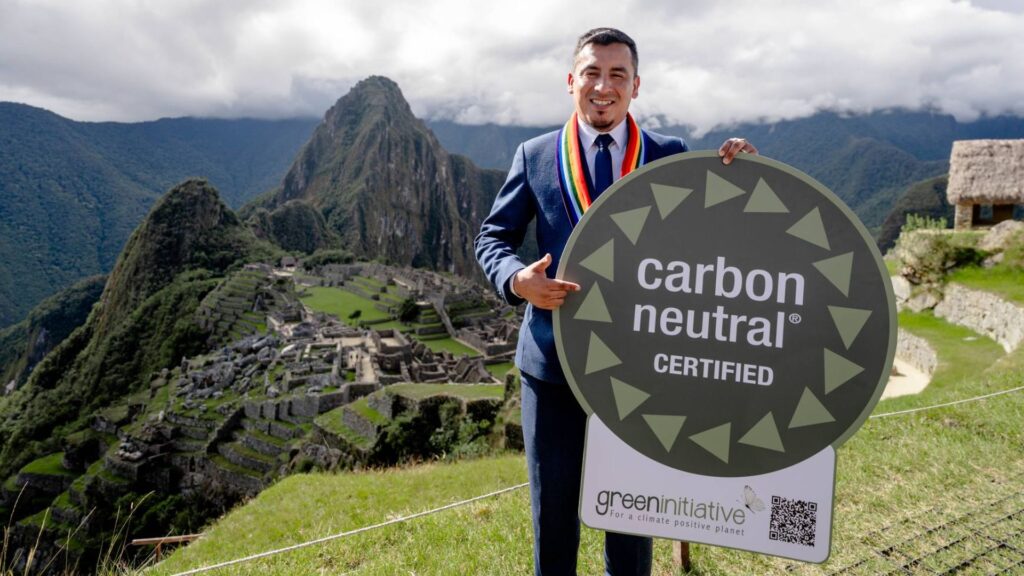
A New Boost to Global Collaboration among World Heritage Sites Inspired by Machu Picchu — and a Call for More to Join Machu Picchu, the world’s most iconic mountain sanctuary, has once again become a source of inspiration for global climate action in tourism. During the celebration of its third consecutive Carbon Neutral Certification, leaders and representatives from emblematic heritage destinations gathered to reaffirm a shared commitment to sustainability and climate responsibility. Inspired by the words and vision of Gustavo Santos, Regional Director for the Americas at UN Tourism, and guided by the transformative energy felt in Machu Picchu, the historic “World Heritage Sites: Call to Net for Climate Action in Tourism” was signed — a collective declaration by heritage destinations determined to accelerate measurable and impactful climate action through tourism. Heritage as a Living Force for Change Heritage sites are more than cultural or natural landmarks — they are living symbols of ecological richness and human achievement. Every day, they welcome thousands of visitors, offering a powerful platform to influence awareness, behavior, and policy implementation on a global scale. Far from being passive backdrops for tourism, heritage sites are active agents of change. Many of the civilizations that built them once thrived in harmony with nature, but the absence of preservation and adaptation over time led to deterioration and loss. Today, these places remind us that preserving heritage is preserving humanity itself — and that climate action in tourism is one of the most effective ways to ensure their protection for generations to come. The Call to Net: From Heritage to Hope The World Heritage Sites: Call to Net for Climate Action in Tourism, supported by Green Initiative, brings together managers and stakeholders from emblematic destinations in a global call to action. As sites of exceptional cultural and natural value, these destinations hold a unique position to demonstrate that tourism can be both a source of economic vitality and a driver of climate- and nature-positive transformation. The initiative aligns with the principles of the UN Tourism Glasgow Declaration, advancing measurable climate strategies that integrate low-emission operations, ecosystem conservation, community engagement, and visitor education across participating sites. The first signatories include representatives of Machu Picchu (Peru), Tikal (Guatemala), the Galápagos Islands (Ecuador), Foz do Iguaçu, Bonito, the Pantanal and Christ the Redeemer (Brazil), along with delegations from Belize, UN Tourism and UNCTAD, marking the beginning of a powerful movement for climate action in tourism. Networking together — by sharing best practices, engaging local communities, and amplifying visible climate action — the initiative aims to catalyze a broader shift across the tourism industry, moving from isolated sustainability efforts to coordinated and large-scale mitigation and preservation strategies. This network is conceived as a grassroots movement led by the Global South, grounded in equity, transparency, and the collective urgency to respond to the climate crisis. And it is open for more heritage sites worldwide to join — from the Andes to Angkor, from Petra to Patagonia — amplifying the shared mission of transforming tourism into a true force for regeneration. Scaling Climate Action Through Tourism As Gustavo Santos emphasized: “This achievement demonstrates that through public–private and multilateral collaboration we can achieve remarkable results in decarbonizing the economy, moving closer to the climate goals humanity must reach. The certification experience accumulated here — and which we seek to scale across the Americas and worldwide — shows that tourism and climate action can and must go hand in hand.” Through collaboration among governments, private organizations, and local communities, the Call to Net sets a roadmap for transformative action — one where heritage destinations become living laboratories for sustainable development and climate innovation. A Pathway to Achieving National Climate Goals This initiative extends beyond the tourism sector. It represents a scalable model for countries striving to meet their Nationally Determined Contributions (NDCs) under the Paris Agreement. By measuring and reducing emissions, restoring ecosystems, and promoting circular economy solutions, heritage destinations can contribute directly to national and global climate targets while enhancing local livelihoods and resilience. A Legacy for the Planet From the heart of the Andes, Machu Picchu demonstrates that heritage preservation and climate action are deeply intertwined — two sides of the same mission to protect our planet and our shared future. As this movement expands, each participating destination adds its voice, its innovation, and its hope — proving that the places that defined our past can also lead the way toward a climate-positive future. 🌍 The Call to Net is open — heritage sites worldwide are invited to join. 📍 Machu Picchu, November 6, 2025 🔗 Read the full declaration: World Heritage Sites: Call to Net for Climate Action in Tourism This article was written by Tatiana Otaviano from the Green Initiative Team. Related Reading

Machu Picchu and Christ the Redeemer Lead Global Call to Climate Action in Tourism Read More »

Circular Tourism Peru A Model for Climate & Nature Positive Destinations

Circular Tourism Peru: A Model for Climate & Nature Positive Destinations

The Circular Tourism Peru project, led by the National Chamber of Tourism of Peru (CANATUR), with the support of the Spanish Agency for International Development Cooperation (AECID), the European Union, and the technical partnership of Green Initiative, has emerged as a pioneering model for integrating circular economy principles, climate action, and sustainability into tourism. Cabo Blanco and Machu Picchu: Living Laboratories for Circular Tourism In emblematic destinations such as Cabo Blanco and Machu Picchu, the project has developed technical workshops, carbon footprint assessments, and capacity-building programs for public, private, and community stakeholders. These efforts aim to reduce environmental impacts, promote regenerative practices, and establish replicable models of low-emission, climate-smart tourism across Peru and beyond. Key achievements include: Technical Impacts: From Measurement to Action From a technical standpoint, the project has developed climate performance indicators to measure, reduce, and offset greenhouse gas emissions. It also introduced a methodological guide for circular tourism tailored to Peru’s coastal and marine ecosystems. Initiatives include the promotion of energy, water, and waste efficiency, alongside eco-design practices, material revalorization, and blue economy principles, reinforcing the sustainable tourism value chain across the region. Circular Economy and Sustainability: A New Paradigm for Tourism The circular economy framework seeks to keep resources in use for as long as possible, reduce waste, and regenerate natural systems — replacing the traditional linear model of “take–make–dispose.” Aligned with the principles of sustainability, this approach balances economic, social, and environmental well-being while ensuring resource conservation for future generations. It also strengthens climate action, advancing tangible solutions to mitigate emissions and enhance resilience to climate change. Multisectoral Collaboration: Connecting Tourism, Science, and Community At the heart of the project lies multisectoral collaboration, bringing together diverse actors to drive systemic change: Toward a Replicable Model for the Future of Tourism Circular Tourism Peru demonstrates that sustainability and profitability are not opposing goals, but complementary pillars of the tourism of the future. By integrating science, community, culture, and conservation, the project redefines how destinations engage with climate challenges. With Cabo Blanco and Machu Picchu as living examples, Peru is setting a precedent for climate- and nature-positive tourism — one that not only drives economic prosperity but also restores ecosystems and empowers people. This article was written by Tatiana Otaviano from the Green Initiative Team. Related Reading

Circular Tourism Peru: A Model for Climate & Nature Positive Destinations Read More »

Reputation, Soft Power, and Multilevel Governance Tourism as a driver of the decarbonization economy

Reputation, Soft Power, and Multilevel Governance: Tourism as a driver of the decarbonization economy

The Paris Agreement set an ambitious target: limiting global warming to 1.5°C by 2050. To achieve this, governments, companies, and society must act in coordination — and tourism, responsible for nearly 8% of global greenhouse gas emissions, is a critical part of the equation. At Green Initiative, we believe climate action goes beyond carbon accounting. It is also about reputation, soft power, and regenerative prosperity. As we often say: “We translate carbon into reputation, connecting territories to narratives of impact, and building bridges between climate action, trust, and the future.” The Reputation Economy in action We live in the era of the Reputation Economy: organizations and territories are evaluated by the trust they inspire, the consistency between discourse and practice, and their ability to generate positive impact. In this context, decarbonization is also a reputational strategy. Destinations that commit to transparent climate action not only reduce emissions but also earn legitimacy and influence. Reputation is the bridge that connects climate ambition, governance, and long-term competitiveness. Multilevel Governance as a differentiator & Soft Power The transition to carbon-neutral destinations requires multilevel governance: aligning local community commitments with national policies, multilateral frameworks, and global investors. This is the foundation of the Climate Action Guide for Tourism Businesses and Destinations, launched by Green Initiative in collaboration with UNEP, UN Tourism, UNCTAD, UNFCCC, and Brazilian partners. More than a technical tool, the guide is a political instrument: by strengthening collective commitments, it enhances the reputation of destinations and opens access to climate finance. Bonito, Brazil (MS) became the world’s first ecotourism destination to achieve carbon-neutral certification. Machu Picchu, Peru has also reached this milestone and will reaffirm it in November during the Climate Talks Machu Picchu 2025. More than a ceremony, the event will serve as a platform to discuss governance, sustainable logistics, and international reputation, showing how tourism can lead in decarbonization. The reputation challenge in Carbon markets A recent Nasdaq study stressed the urgency of scaling and ensuring liquidity in carbon markets. For tourism, this means the viability of decarbonization models depends not only on emission reductions but also on credible compensation mechanisms. The reputation of carbon credits will be the key dividing line between projects that deliver real impact and those at risk of greenwashing. This is why Green Initiative ensures certified, traceable, and internationally recognized credits, aligning tourism destinations with robust governance practices and investor expectations. November in Machu Picchu: a global milestone From November 4–6, 2025, Machu Picchu will host the 3rd Carbon Neutral Certification Ceremony, alongside the launch of Peru’s first Carbon Neutral Tourism Corridor, connecting Cusco, Machu Picchu, and Choquequirao. This moment comes at the right time: while operational challenges highlight the need to enhance visitor experience, the event demonstrates how to move forward with structured responses — combining decarbonization, reliable logistics, and transparent governance. The World Heritage and Emblemátic Sites Coalition – Climate Action in Tourism will be more than a climate commitment: it will be an invitation to continuous improvement in destination management, balancing preservation, access, and reputation. Held just days before COP30 in Belém, Brazil, the event will reinforce that cultural and natural heritage sites can lead the global climate agenda, translating soft power into cooperation and regenerative prosperity. According to UNESCO, climate change is already threatening many of the planet’s most iconic cultural and natural heritage sites. One in six World Heritage properties faces direct risks from climate impacts, while a third of World Heritage cities are located in coastal zones exposed to sea-level rise and extreme weather. By 2050, one third of the glaciers in these sites may disappear, and nearly all coral reefs within World Heritage areas are projected to experience major bleaching events. These alarming figures underscore the urgency of integrating climate governance and sustainable tourism into preservation strategies, ensuring that destinations like Machu Picchu not only safeguard their heritage but also lead global adaptation and mitigation efforts. Three reputation lessons for tourism destinations By integrating governance, reputation, and climate action, Green Initiative positions itself as a leader in a pioneering movement: turning destinations into ambassadors of the transition toward a climate-positive planet. In November, Machu Picchu will consolidate this model — and in Belém, during COP30, tourism can assert itself as a powerful platform for influence, trust, and sustainable competitiveness. This article was written by Karla de Melo from the Green Initiative Team. Related Reading

Reputation, Soft Power, and Multilevel Governance: Tourism as a driver of the decarbonization economy Read More »

Machu Picchu Achieves Significant Reduction in Carbon Emissions Since 2021 Certification

Machu Picchu’s Journey to Carbon Neutrality: Acelerating public and private decarbonization investments

Machu Picchu, Peru – Leading Climate Action in Tourism Amidst the lush Peruvian Andes, Machu Picchu—one of the world’s most iconic cultural and natural landmarks—is redefining what it means to be a sustainable travel destination. With over 1.5 million visitors each year, the challenge was immense—but the will to act was even greater. In a recent interview for the Observatorio de Descarbonización y Economía Circular of the Cámara Nacional de Turismo (CANATUR), Elvis La Torre, Mayor of the District Municipality of Machu Picchu, shared the region’s ambitious climate goals, achievements to date, and critical lessons for the global tourism sector. A Bold Start: Why Machu Picchu Chose Decarbonization The decarbonization project officially began in 2021, led by the District Municipality of Machu Picchu, in collaboration with Inkaterra Asociación and Green Initiative. The decision was made in response to the urgent need to reduce the environmental impact of mass tourism and to shape a more resilient, sustainable development model following the COVID-19 crisis. Using 2019 as the baseline year, Machu Picchu began the Carbon Neutral Certification process and soon became the first UNESCO World Heritage Site to earn this recognition. In 2022, the destination became a signatory of the Glasgow Declaration on Climate Action in Tourism, further reinforcing its leadership in climate-smart tourism. “This certification, led by Green Initiative, gave us the opportunity to position Machu Picchu as a global leader in climate-intelligent tourism,” said Mayor La Torre in the CANATUR interview. Tangible Climate Results: From Waste to Regeneration To date, the outcomes have been remarkable: These milestones were achieved through robust collaboration among public and private stakeholders. Notably, Inkaterra, Grupo AJE, WorldXchange and Tetra Pak played key roles in implementing circular solutions. Luz del Sur provided technical assistance, while CANATUR offered strategic support, reinforcing strong climate governance. Additionally, Machu Picchu’s carbon footprint has been fully offset with 2,155 carbon credits from the REDD+ Brazil Nut Concessions project by Bosques Amazónicos (BAM), which protects over 600,000 hectares of megadiverse forests and supports more than 800 Amazon Brazil nut harvesting families in Madre de Dios, Peru. What’s Next: Scaling Impact and Inclusion Despite significant progress, major challenges remain. Chief among them is the need to expand both public and private financing to scale up the most impactful decarbonization initiatives—such as energy efficiency in tourism services and large-scale ecosystem restoration. Equally important is the continuous strengthening of existing programs, particularly those involving waste management through circular economy principles and the transition to clean energy. Most critically, there is a growing need to increase the active participation of local communities and businesses. Their involvement will be essential to ensure that this regenerative and carbon-neutral tourism model becomes permanent and self-sustaining. “The active participation of all stakeholders will be key to consolidating a regenerative and carbon-neutral tourism model that stands the test of time,” affirmed Mayor La Torre. A Model for the World Machu Picchu’s decarbonization journey is more than a local success story—it is a global call to action. As destinations worldwide face the escalating impacts of climate change, Machu Picchu proves that protecting heritage, supporting local livelihoods, and leading in climate action can go hand in hand. By embracing bold decisions, inclusive governance, and science-based climate solutions, Machu Picchu is charting a path toward a climate and nature-positive future—one that others can follow. 📌 Learn More & Get Involved Is your destination or organization ready to take the next step toward climate and nature-positive leadership? Discover how our certification and advisory services can help you generate measurable impact. 📩 Contact our team This article was written by Yves Hemelryck from the Green Initiative team Related Reading

Machu Picchu’s Journey to Carbon Neutrality: Acelerating public and private decarbonization investments Read More »