Markets

Embratur and Green Initiative collaborate for climate action

Brazilian Agency for Tourism Promotion – Embratur and Green Initiative Partner to Accelerate Climate Action

Unveiling the “GUIA BRASILEIRO DE AÇÃO CLIMÁTICA PARA EMPRESAS E DESTINOS TURÍSTICOS” In an exciting development aimed at propelling climate action within the tourism industry, the Brazilian Agency for Tourism Promotion, Embratur, has collaborated with the Green Initiative, alongside the Brazilian Ministry of Tourism and FUNDTUR – MS. Together, they are proud to unveil the “GUIA BRASILEIRO DE AÇÃO CLIMÁTICA PARA EMPRESAS E DESTINOS TURÍSTICOS” (Brazilian Guide to Climate Action for Businesses and Tourist Destinations). This comprehensive guide is set to be a valuable resource for all stakeholders in the tourism sector, both within Brazil and worldwide. Official Launch at Abav Expo 23 The “GUIA BRASILEIRO DE AÇÃO CLIMÁTICA PARA EMPRESAS E DESTINOS TURÍSTICOS” is a groundbreaking publication that encapsulates the commitment of these organizations to combat climate change and foster climate action within the tourism sector in Brazil. This guide the way businesses and destinations approach sustainability within the tourism sector. On the 28th., during the ABAV EXPO 23, Embratur will launch the Climate Action Guide for Tourism, a product of Fundtur and Green Initiative, which will be promoted by Embratur to the entire national tourism trade – Marcelo Freixo, President of Embratur, signs the preface of the guide. “And the Climate Action Guide becomes our reference for the trade, indicating the path we must follow to make our destinations and services increasingly sustainable.” – Marcelo Freixo – President, Embratur The launch of the “GUIA BRASILEIRO DE AÇÃO CLIMÁTICA PARA EMPRESAS E DESTINOS TURÍSTICOS” underscores the commitment of Embratur, the Green Initiative, and the Brazilian Ministry of Tourism to drive positive climate action the tourism sector. This initiative is a significant step toward aligning the tourism value chain with the strategic recomendations provided by the Glasgow Declaration for Climate Action in Tourism. “The Glasgow Declaration is a catalyst for increased urgency about the need to accelerate climate action in tourism and to secure strong commitments to support the global goals to halve emissions over the next decade and reach Net Zero emissions as soon as possible before 2050.“ By providing practical and accessible resources, this guide empowers stakeholders in the tourism value chain industry to take meaningful steps towards decarbonization of their activities ensuring that tourism sector in Brazil remains competitive in the long run and directly contributes to the achievement of the Paris Agreement recommendations

Brazilian Agency for Tourism Promotion – Embratur and Green Initiative Partner to Accelerate Climate Action Read More »

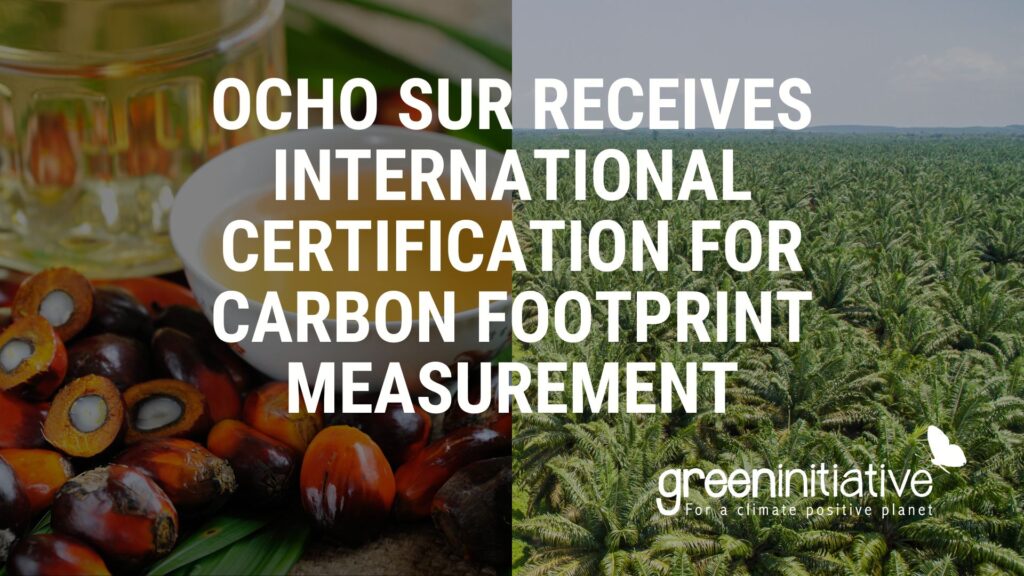
Ocho Sur receives 'Carbon Measured' Certification Leading the Way in Sustainable Palm Oil with Green Initiative

Ocho Sur receives ‘Carbon Measured’ Certification: Leading the Way in Sustainable Palm Oil with Green Initiative

A Landmark in Sustainable Palm Oil Ocho Sur, a company dedicated to sustainable palm oil production in Ucayali, has achieved a significant milestone by obtaining the international certification “Carbon Measured” from Green Initiative. The certification process completed by Ocho Sur complies with the international standards promoted by the United Nations, ensuring consistency and transparency in the measurement of the company’s carbon footprint and its commitment to sustainable development. “The Carbon Measured certification from Green Initiative acknowledges that Ocho Sur has conducted a comprehensive measurement of all greenhouse gas emissions throughout its value chain,” stated Michael Spoor, CEO of Ocho Sur. It is essential for organizations to measure their carbon footprint, as this allows them to identify mitigation measures and establish action plans to achieve carbon neutrality. This initiative drives the company to develop a new generation of products with low carbon emissions or climate-smart attributes, thereby enhancing its market positioning and fostering innovation. Furthermore, it commits the company to accelerate the decarbonization of its activities and to protect local ecosystems in Pucallpa. The work carried out enabled Ocho Sur to strike a balance between generated emissions and emissions captured in its plantations, providing the company with a holistic perspective on mitigation opportunities and positive climate impact. Ocho Sur’s Carbon Measured Journey: Rigorous Certification Process and Impactful CO2 Reduction Initiatives Obtaining the “Carbon Measured” certification is a rigorous process consisting of three main stages: calculate, mitigate, and certify, each with specific sub-stages that ensure the rigor and quality of the study. Since the beginning of its operations, Ocho Sur has been developing strategies and implementing notable initiatives that have allowed it to reduce its CO2. Examples include the implementation of circular economy practices and the utilization of palm waste, such as fiber and husks, to generate biofuel used in boilers. Subsequently, in 2021, they chose to capture the biogas emanating from the stabilization ponds of industrial wastewater treatment. This action represents the second mitigation measure, which enabled the combustion of methane present in the biogas, thus preventing its direct release into the atmosphere. With these initiatives, Ocho Sur is becoming a benchmark for green businesses in the Peruvian Amazon due to its comprehensive focus on sustainable development, centered around forest protection and improvement in the quality of life for the local population. The Peruvian company implements awareness programs for the local population (monitoring workshops), ecosystem protection policies, and mitigation actions as part of its business model, thereby leading a positive change in the region. Partner with Green Initiative for a Sustainable and Impactful Future This achievement calls out to all kinds of businesses that want to help the Earth and society in a good way. At Green Initiative, we stand ready to collaborate with organizations that seek to make a difference in the world. Together, we can drive change, foster innovation, and lead the way to a greener and more sustainable future. Reach out to us today, and let us work hand in hand to forge a path of environmental stewardship and excellence. To learn more about the Green Initiative Certifications and certifying your business, please contact our team of specialists here.

Ocho Sur receives ‘Carbon Measured’ Certification: Leading the Way in Sustainable Palm Oil with Green Initiative Read More »

Sustainable Business Leadership Through Climate Positive Certification

Sustainable Business Leadership Through Climate Positive Certification

Becoming climate positive certified can offer several benefits for a company, both in terms of its environmental impact and its business operations. Here are some reasons why a company might consider obtaining climate positive certification: Environmental Responsibility Climate positive certification signifies a company’s commitment to taking meaningful action to address climate change, meaning that your climate action has gone beyond neutrality, actually creating an environmental and climate benefit by removing additional carbon dioxide from the atmosphere. This can help enhance the company’s reputation as an environmentally responsible entity, appealing to environmentally conscious consumers, investors, and partners. Competitive Advantage In a market where sustainability is becoming increasingly important, being climate positive certified can give a company a competitive edge. Consumers and clients are more likely to support and engage with businesses that are taking concrete steps to reduce their carbon footprint and contribute to a more sustainable future. Risk Management Climate change poses significant risks to businesses, including supply chain disruptions, regulatory changes, and physical impacts. By becoming climate positive certified, a company can demonstrate to stakeholders that it is actively managing these risks and adapting to a changing climate. Innovation and Creativity Pursuing climate positive certification often requires a company to innovate and develop new processes, products, and technologies. This can lead to enhanced creativity within the organization and potentially open up new revenue streams from sustainable products and services. Attracting Talent Many employees, especially those from younger generations, are concerned about climate change and seek employment with companies that share their values. Being climate positive certified can help attract and retain top talent who are passionate about sustainability. Investor Appeal Climate positive certification can make a company more attractive to socially responsible investors who consider environmental performance as part of their investment criteria. This could potentially lead to increased access to funding and improved investor relations. Long-Term Viability Addressing climate change isn’t just about short-term gains; it’s about ensuring the long-term viability of the company in a world affected by climate-related challenges. By obtaining certification, a company demonstrates its commitment to being part of the solution, which can contribute to its overall sustainability and success. Regulatory Compliance As governments and international bodies implement more stringent regulations to mitigate climate change, being climate positive certified can position a company ahead of regulatory requirements, reducing the risk of non-compliance penalties. Stakeholder Engagement Climate positive certification can foster stronger relationships with various stakeholders, including customers, suppliers, communities, and NGOs. This engagement can lead to collaborative efforts and partnerships to address shared sustainability goals. Positive Brand Image Climate positive certification can significantly enhance a company’s brand image, showcasing its dedication to environmental stewardship and inspiring other businesses and industries to follow suit. Ultimately, becoming climate positive certified is not only a responsible decision for the planet but can also yield tangible business benefits by aligning a company’s operations with sustainability goals and positioning it as a leader in its industry. Empower Your Business Journey Towards Climate Positive Certification Today! Calling all visionary business owners and leaders! Unlock the transformative power of sustainability with our expert guidance towards climate positive certification. Elevate your business’s reputation as an environmental leader, gain a competitive edge in the sustainability-focused market, actively manage climate-related risks, foster innovation, attract top talent and investors, and strengthen stakeholder engagement. Let us guide you in shaping a more sustainable and successful future – contact us today to embark on the journey toward climate positive certification.

Sustainable Business Leadership Through Climate Positive Certification Read More »

Estância Mimosa is the first Climate Positive certified ecotourism attraction in the world

Estância Mimosa is the first Climate Positive certified ecotourism attraction in the world

Addressing Climate Change in Tourism: The Glasgow Declaration’s Strategic Framework Climate change is one of the major problems faced by humanity today. Since 2021, the Glasgow Declaration has offered all actors in the tourism sector a strategic framework that encourages the internalization of climate actions in all areas of the tourism value chain: destinations, attractions, companies, and tourists. In this context, Estância Mimosa, a renowned ecotourism tour in Bonito, Mato Grosso do Sul, celebrates an unprecedented achievement for the world tourism sector. It became the first tourist attraction in the world to receive the Climate Positive Certification, granted by the international organization Green Initiative. This achievement highlights Estância Mimosa’s commitment and hard work since its foundation in 1999, not only towards environmental sustainability and the preservation of local biodiversity but also with the climate action goals proposed by the United Nations and the Glasgow Declaration for Tourism. To obtain this prestigious certification, Estância Mimosa started the Green Initiative Certification Cycle in 2023, demonstrating compliance with the organization’s strict criteria of sustainability and environmental responsibility. With this perspective in mind, the INTERNATIONAL SEMINAR ON CLIMATE ACTION IN TOURISM took place in Bonito on July 27, 2023. The event featured the participation of Dr. Saulo Rodrigues, Sustainability and Climate Action Manager, representing the Ministry of Tourism, Edson Barros, as well as Dr. Daniel Galvan from UNFCCC, and Virginia Fernandez-Trapa from the World Tourism Organization, among other stakeholders from the national tourism sector. Estância Mimosa: Leading the Way as a Climate Positive Certified Attraction The Climate Positive Certification demonstrates that Estância Mimosa not only has a neutral balance between its emissions, captures, and offsets but also actively contributes to the mitigation of climate change by preserving and recovering native forests within the limits of the attraction, which account for more than 84 % of the total area of ​​the property. The preservation of these forests guarantees that the carbon in their biomass is not released into the atmosphere through exploitation, and it allows more carbon to be captured by plants during forest restoration. Sustainable Ecotourism Throughout the project, all sources of greenhouse gas emissions from the attraction were quantified for the year 2022 and classified into four categories proposed by the ISO 14064 methodology, namely: The carbon footprint calculation was carried out following the principles of Relevance, Completeness, Consistency, Transparency, and Precision, considering the complete scope 1, 2, and 3 of the attraction. This means that all emissions relating to the operation and the business value chain were assessed in a detailed and standardized manner to allow the comparison of results in the coming years and show the effect of the reduction measures that will be taken. All raw materials used in the attraction were accounted for, from the consumption of fuel and paper to the consumption of rice, meat, and beans. Among the results, we have that the emissions of Estância Mimosa in 2022 were 277.76 tons of CO2 equivalent, which results in 12.46kg of CO2 per visitor received in 2022. The analysis of carbon capture in 2022 was carried out by combining detailed maps of the property’s vegetation cover using UAV technology, satellite images, and studies of forest inventory and carbon capture. ​​Estância Mimosa is a rural property with a significant extension of primary forests and forest regeneration areas, also officially protected by a private reserve – RPPN. This survey found that the forest regeneration areas, equivalent to 89 hectares, captured a total of 460.36 tons of CO2 in their aerial biomass throughout 2022, which is greater than the total emissions of the attraction. Regeneration areas have an accelerated accumulation of biomass in their initial phase of development, which then tends to decrease as the forest becomes more mature. In addition, the carbon stock present in primary forest areas was estimated, which in addition to avoiding greenhouse gas emissions, has an apparent effect on environmental additionality in the region since it is home to a wide range of birds, mammals, and other animals, already identified on the property. Luiza Coelho, Sustainability Director at Estância Mimosa, expressed her gratitude for the recognition and highlighted the attraction’s ongoing commitment to promoting sustainable practices and inspiring other companies in the sector to follow this path. “The Carbon Neutral Certification in the Climate Positive category is an extraordinary milestone for Estância Mimosa and an incentive for us to continue our work in the pursuit of excellence in sustainable ecotourism. We are proud to be leaders in this journey, and we thank all those involved who made it possible “. The Award The Climate Positive Certification was awarded to Eduardo and Simone Coelho, Directors of the Rio da Prata Group (www.gruporiodaprata.com.br), of which Estância Mimosa is part, during the Seminar on Climate Action in Tourism: Global Challenges and Local Opportunities for Innovation, an event held at Sebrae, Bonito, MS on July 27, 2023. About Estância Mimosa Located in Bonito, Mato Grosso do Sul, Estância Mimosa is an acclaimed ecotourism tour known for its lush nature, well-preserved trails, and stunning waterfalls. Committed to sustainability, it offers visitors memorable experiences in harmony with nature. The site is the only tourist attraction in Bonito (MS) that offers trails and waterfalls within a private reserve – RPPN in which it is possible to enjoy direct contact with preserved nature, walk along trails through the forest, see more than 255 species of birds or come across one of the 32 species of cataloged mammals. More information: http://www.estanciamimosa.eco.br Press Contact Name: Luiza Coelho Position: Director of Sustainability of Grupo Rio da Prata E-mail: [email protected] Phone: 5567999389064 Become a Climate and Nature Positive Business Green Initiative Certifications are a crucial step towards promoting sustainability and responsible environmental practices across various industries. These certifications are awarded to organizations and businesses that demonstrate a genuine commitment to reducing their carbon footprint, conserving natural resources, and mitigating the impacts of their operations on the environment. By adhering to rigorous standards and guidelines, companies can quantify their greenhouse gas emissions, identify areas for improvement, and implement

Estância Mimosa is the first Climate Positive certified ecotourism attraction in the world Read More »

Milagros - the first climate positive animated film - Green Initiative - Forest Friends

A new standard for animated film production: milagros an extraordinary bear – the world’s first climate-positive animated film

“Milagros: An Extraordinary Bear” sets a new standard in the global film industry, demonstrating that all economic sectors, including entertainment, can contribute to the decarbonization of the economy. The film “Milagros: An Extraordinary Bear” is a Peruvian production by Chaska Entertainment, directed by renowned filmmaker Eduardo Schuldt and based on the work of Peruvian writer Hernán Garrido-Lecca, winner of the prestigious National Environmental Award in 2014. The film’s plot revolves around Milagros, an intelligent and brave bear with the fantastic ability to understand human language. Milagros and her friends face the challenges of nature and human cruelty as she fights to protect her brother and preserve her species. “Milagros: An Extraordinary Bear” combines exciting adventures and funny moments, touching the hearts of young and old alike. It goes beyond mere entertainment, however, as it conveys a powerful message about the importance of ecological restoration and the need to protect our precious environment. CLIMATE POSITIVE CERTIFICATION The Peruvian film “Milagros: An Extraordinary Bear” has obtained the distinguished “Climate Positive” certification by Green Initiative, marking a milestone by becoming the first animated film worldwide to achieve a beneficial impact on the environment. During its production, it strictly adhered to the rigorous international procedures and standards for climate action established by the United Nations. Obtaining Climate Positive certification from Green Initiative means its climate-related actions have gone beyond neutrality, actively contributing to significant environmental and climate benefits by reducing additional carbon dioxide in the atmosphere. CERTIFICATION PROCESS In February 2023, the climate certification process began, comprising three complementary stages: Leading companies supported the film production to obtain its climate-positive impacts,  showcasing through their participation in the Forest Friends project their engagement in enhancing nature and climate-positive impacts. FOREST FRIENDS CERTIFICATION: AN INITIATIVE TO SUPPORT REFORESTATION AND ECOSYSTEM RESTORATION Forest Friends is a Nature Positive Certification developed by Green Initiative, designed to actively support reforestation efforts that contribute to wildlife and ecosystem restoration. This certification is awarded to organizations committed to nature positive impacts through ecosystem restoration following the United Nations Decade of Ecosystem Restoration Standards. Learn all about the Science Based Milagros Nature Positive Forest Friends Ecosystem Restoration Project and Goals here https://greeninitiative.eco/milagros-and-friends/ . You too, can support this beautiful initiative! Contact us to learn about our certifications and how we can help your business become Nature and Climate Positive.

A new standard for animated film production: milagros an extraordinary bear – the world’s first climate-positive animated film Read More »

Social Solutions International partners with Green Initiative to develop its climate action strategy and demonstrates a clear commitment to impactful change (3)

Social Solutions International Partners with Green Initiative

SSi Demonstrates Clear Commitment to Impactful Change by Developing Climate Action Strategy Washington D.C. – Social Solutions International (SSi), a woman-owned, full-service consulting firm dedicated to improving the health and well-being of underserved populations in the United States and abroad, has partnered with Green Initiative (GI), a leading provider of climate action solutions for businesses, to strengthen its sustainability practices and reduce the carbon footprint of its operations. Social Solutions International and Green Initiative Collaborate to Reduce Carbon Footprint The partnership aims to help SSi assess tracking emissions from their operations, including electricity use, transportation, and waste disposal, and ultimately reduce their carbon footprint with a clear and sustainable global reduction action plan. This includes outlining specific steps they will take to visibly reduce their emissions, improve their sustainability practices, and harmonize their holistic climate strategy with business strategy. “We’re excited to partner with Green Initiative and its climate action experts to strengthen our sustainability practices,” said Jenny Namur Karp, President of SSi. “This partnership reflects our commitment to reducing our environmental impact, while advancing sustainable practices across all of our business operations in full alignment to who we are as an organization. We recognize the impacts of climate change affect certain parts of the world, women, and the poor disproportionately, and that has driven our focus as always, to those most vulnerable.” SSi’s Commitment to Sustainability: Working Towards a Greener Future with Ongoing Climate Action Efforts SSi been working to understand the risks, both to our business and our communities, and we will continue to take actions to drive impact where needed. This partnership is only part of its ongoing efforts to reduce its carbon footprint and promote sustainable practices. By working with Green Initiative on its climate action strategy, SSi is better positioned to create a more sustainable future for themselves and their clients. We’re thrilled to have the opportunity to work with Social Solutions and to provide them with a comprehensive climate action plan. This partnership reflects our commitment to promoting sustainability across all industries and to creating a more sustainable future for all. For more information about Social Solutions International, please visit their website at www.socialsolutions.biz. Media Contact: Brandy Jones, SVP, Social Solutions International [email protected]

Social Solutions International Partners with Green Initiative Read More »

Carbon Neutral Logistics A Business Opportunity and Climate Imperative

Carbon Neutral Logistics: A Business Opportunity and Climate Imperative

The context The logistics industry plays a significant role in the economy. The global logistics market is projected to reach USD 12.68 trillion by 2027, driven by the growth of e-commerce, globalization, and increasing demand for the efficient supply chain management. Furthermore, international trade and logistics create significant employment opportunities. In the United States alone, the logistics industry employs over 10 million people, with employment in the sector expected to grow by 7% between 2019 and 2029. Similarly, in Europe, the logistics sector employs over 11 million people, making it one of the largest employers in the region. Why is carbon-neutral logistics necessary? Decarbonizing logistics is important for several reasons. Firstly, logistics is a significant contributor to global greenhouse gas emissions. According to the International Energy Agency (IEA), the global transportation sector, which includes logistics and international trade, is responsible for approximately 24% of energy-related CO2 emissions.  Additionally, the United Nations Conference on Trade and Development (UNCTAD) estimates that maritime shipping alone accounts for around 2.5% of global greenhouse gas emissions, projected to increase by up to 250% by 2050 without additional action.  Decarbonizing logistics is essential for achieving global emissions reduction targets and addressing the climate crisis. An emerging demand for carbon neutral logistical services There are several reasons why logistic companies should invest in carbon neutral service. First and foremost, it is essential to address the urgent need to reduce greenhouse gas emissions to mitigate the impacts of climate change. With the transportation sector responsible for a significant portion of global greenhouse gas emissions, reducing emissions from logistics operations is crucial for meeting global climate goals. Moreover, investing in carbon neutral services can also be a business opportunity for logistics companies. Many businesses and consumers are becoming increasingly aware of the environmental impact of their supply chain and are looking to reduce their carbon footprint. By offering carbon neutral services, logistics companies can differentiate themselves from competitors, appeal to environmentally conscious customers, and potentially increase revenue. In fact, there is growing evidence to suggest that there is a significant demand for climate smart or carbon neutral logistical services. • A survey conducted by UNCTAD found that 70% of respondents plan to purchase more products and services from companies with a lower carbon footprint.• A report by DHL found that 69% of companies surveyed have implemented or plan to implement a carbon reduction strategy in their supply chain (DHL, 2019).• McKinsey also found that 47% of companies surveyed have set a carbon reduction target for their supply chain, and 87% of these companies believe their suppliers can help them achieve their targets.• A study by EcoVadis found that 62% of companies surveyed said that sustainability is a key factor in their purchasing decisions, and 38% have implemented sustainability criteria in their supplier selection process.• The International Transport Forum estimated that there will be a demand for up to 60% lower emissions in the global logistics sector by 2050 (International Transport Forum, 2018). In summary, investing in climate smart logistical services is essential for reducing greenhouse gas emissions, meeting global climate goals, and addressing customer demand for more sustainable products and services. Climate neutral logistics on practice DHL DHL is committed to becoming carbon neutral by 2050 and offers a range of carbon neutral shipping options to its customers. These options include carbon offsetting, biofuel, and electric vehicles. Maersk Maersk, the world’s largest container shipping company, has set a goal to become carbon neutral by 2050 and offers carbon neutral shipping options to customers through its “Carbon Neutral Programme.” UPS UPS has set a goal to reduce its greenhouse gas emissions by 12% by 2025 and offers carbon neutral shipping options to customers through its “UPS Carbon Neutral” program. FedEx FedEx has set a goal to reduce its greenhouse gas emissions by 50% by 2030 and offers carbon neutral shipping options to customers through its “FedEx Carbon Neutral” program. Amazon Amazon has committed to becoming carbon neutral by 2040 and offers carbon neutral shipping options to customers through its “Shipment Zero” program. These companies are just a few examples of logistics providers that are actively working to reduce their carbon footprint and offering carbon neutral options to their customers. By investing in these services, customers can offset the carbon emissions associated with their shipments and support companies that are leading the way in sustainability through decarbonizing their value chain. Who is leading this change? Some of the key players promoting the decarbonization of international trade and logistics are: IMO The International Maritime Organization (IMO) has set a target of reducing emissions from the sector by at least 50% by 2050 compared to 2008 levels. Global Maritime Forum Is leading a global call to action with the aim to accelerating maritime shipping’s decarbonization with the development and deployment of commercially viable deep sea zero emission vessels by 2030 towards full decarbonization by 2050. World Economic Forum Through the Supply Chain & Transport CEO Statement, the World Economic Forum is promoting a coalition of business leader in the transportation supply chain to run entirely on net-zero energy sources by 2050. Why Green Initiative? At Green Initiative we are working with leading global shippers and carriers to reduce their carbon footprint and improve climate performance in freight transportation. Our aim is to support the decarbonization of national and international trade by 30% by 2030 and to support the transition to zero emissions freight sector.  We collaborate with our global partners to quantify impacts, identify solutions, and advocate logistics decarbonization strategies.

Carbon Neutral Logistics: A Business Opportunity and Climate Imperative Read More »

Walking the Talk Why USAID Contractors Should Care About Carbon Footprints

Walking the Talk: Why USAID Contractors Should Care About Carbon Footprints?

US Government’s OASIS+ Contract Vehicle Promotes Sustainability and Reducing Greenhouse Gas Emissions As the world grapples with the effects of climate change, governments, and organizations are increasingly focusing on reducing greenhouse gas emissions and promoting sustainability. The US government is no exception and has taken steps to address climate change through various initiatives, including the OASIS+ contract vehicle. This contract vehicle, developed by the General Services Administration (GSA), streamlines access to professional services, including sustainability-related services like carbon footprint management. US Government Agencies Now Require Scope 1 and 2 Disclosures from Contractors for Sustainability Initiatives Many US government agencies, such as EPA (Environmental Protection Agency), DOD (Department of Defense), and USAID (United States Agency for International Development), are now requesting Scope 1 and 2 disclosures from their contractors as part of their sustainability initiatives. Scope 1 emissions are directly generated by an organization, while Scope 2 emissions are indirect emissions generated by the organization’s consumption of purchased electricity, heat, or steam. Disclosure of Scopes 1 and 2 Emissions Helps Contractors Reduce Carbon Footprint and Boosts Business Performance Disclosing Scopes 1 and 2 emissions can help contractors identify opportunities for carbon footprint mitigation, crucial to reducing greenhouse gas emissions and slowing down global warming. In addition to reducing climate impact, a study by the UN found that companies that disclose their climate performance have a 67% higher return on equity than those that do not. This suggests that reducing carbon footprint can lead to lower operating costs, improved efficiency, and a more competitive market position. Emissions Reporting Crucial for Contractors Seeking Government Contracts, Particularly with USAID’s Focus on Sustainable Development Reporting on emissions can also improve contractors’ climate performance, which is increasingly important to many government agencies when evaluating contractors. This is particularly relevant to USAID, which invests millions of dollars in international aid to promote sustainable development in emerging economies. USAID contractors should therefore be accountable for their climate impact to demonstrate a commitment to sustainability. Partner with Green Initiative to Reduce Carbon Footprint and Improve Sustainability Performance: Position Yourself as a Climate Leader in International Development. Contact us Today! Green Initiative is a certification and climate advisory that specializes in helping organizations reduce their carbon footprint and improve their sustainability performance. By partnering with Green Initiative, USAID contractors can access expert advice and support to identify opportunities for carbon footprint mitigation, implement sustainability initiatives, and improve their climate performance. Green Initiative’s services can also help contractors meet the increasing demand for sustainability from government agencies like USAID and position themselves as leaders in the climate-smart international development arena. In addition to the benefits to contractors, reporting on Scopes 1 and 2 emissions can contribute to the US government’s broader efforts to address climate change. President Biden’s recent Executive Order on “Climate-Related Financial Risk” directs federal agencies, including USG contracting agencies such as USAID, to identify and disclose the climate-related financial risks their programs, assets, and liabilities face.  The Order also requires federal agencies to integrate climate-related risk analysis into their procurement processes. By disclosing their carbon footprint, USAID contractors can help federal agencies like USAID meet these requirements and contribute to the broader goal of promoting sustainability and mitigating the impacts of climate change. In conclusion, USAID contractors should walk the talk, when it comes to promoting sustainable and climate-smart development. By disclosing Scopes 1 and 2 emissions, contractors can identify opportunities for carbon footprint mitigation and improve their sustainability performance. Green Initiative can provide expert advice and support to help contractors achieve their climate-performance goals and meet the increasing demand for climate action from government agencies like USAID. Contact us today to learn how we can assist you in achieving your climate performance goals.

Walking the Talk: Why USAID Contractors Should Care About Carbon Footprints? Read More »

29-03-23 From Fast Fashion to Sustainable Style The Urgent Need to Decarbonize the Fashion Industry - img blog post

From Fast Fashion to Sustainable Style: The Urgent Need to Decarbonize the Fashion Industry

Fashion Industry Valued at Over $2.5 Trillion, but will it remain competitive? The global fashion industry was valued at over $2.5 trillion in 2020 and is projected to grow to $3.3 trillion by 2025. However, the industry’s rapid growth has come at a cost to the environment. According to data, the fashion industry accounts for 10% of global carbon emissions and is the second-largest consumer of water worldwide. Climate Change’s Economic Toll: Fashion Industry Loses Over $4 Billion in 2019 The economic cost of climate change is significant and affects many industries, including fashion. Extreme weather events, such as floods and droughts, disrupt global supply chains, affecting the production and transportation of goods. In 2019, the fashion industry suffered losses of over $4 billion due to the impact of climate change on cotton production. Climate Change Sparks Rise in Sustainable Fashion Market, Valued at $9.81 Billion by 2025 Rising temperatures can also significantly impact fashion customers’ behavior, which in turn can affect the fashion industry’s bottom line. According to a survey by McKinsey & Company, 66% of global consumers are willing to pay more for sustainable products, including clothing. This shift towards sustainability is also reflected in the growth of the global sustainable fashion market, which is projected to reach $9.81 billion by 2025. Transforming the Fashion Industry: Climate Action as a Key Business Strategy to Reduce Environmental Impact Although the fashion industry’s environmental impact is significant, from the production of synthetic fibers to the use of toxic chemicals in textile manufacturing, not to mention that the industry is also known for its high-water consumption, with an estimated 2,700 liters of water required to produce one cotton shirt, introducing climate action at the core of the industry business model, would reduce its carbon footprint, water consumption, and waste generation. Climate Inaction Could Cost Fashion Industry’s Financial and Reputational Losses One compelling argument for the fashion industry to engage in climate action is that failure could lead to significant financial and reputational risks. As climate change becomes an increasingly pressing issue for consumers, investors, and regulators, fashion companies that do not take action to reduce their environmental impact may face negative consequences such as consumer boycotts, regulatory penalties, and decreased investor confidence. Leading Fashion Brands Take Action to Mitigate Environmental Impact and Reap Long-Term Benefits In contrast, companies that take proactive steps to mitigate their environmental impact and demonstrate a commitment to sustainability are more likely to attract consumers and investors who value responsible business practices, potentially leading to long-term financial and reputational benefits.Here are a few recommendations and examples of how lead fashion brands are progressively engaging in serious decarbonization: Overall, strong market arguments exist for the fashion industry to shift towards low carbon emissions and sustainable fashion. By doing so, fashion brands can reduce their environmental impact and appeal to consumers, mitigate risks, improve their reputation, and realize cost savings. Green Initiative Empowers the Fashion Industry to Embrace Sustainability, Mitigate Risks, and Save Costs At Green Initiative, we are working with the Fashion and Textile industry to support them in adopting climate-action best practices that are helping them adapt to intense climate regulation and a net-zero emissions economy. Click here to contact our team of experts and find out how we can help empower your fashion business.

From Fast Fashion to Sustainable Style: The Urgent Need to Decarbonize the Fashion Industry Read More »

Why should the Wine Industry in Latin America Integrate Climate Action at the core of their business models?

Why should the Wine Industry in Latin America Integrate Climate Action at the core of their business models?

The wine industry is one of Latin America’s most important export sectors, especially for countries like Argentina, Chile, and Uruguay. Wine production in Latin America has grown rapidly over the past few decades, accounting for a significant share of global wine production. For example, in 2019, Argentina was the fifth largest wine-producing country in the world, with a production of over 14 million hectoliters, while Chile was the ninth largest, with a production of over 10 million hectoliters (OIV, 2020). On the other hand, Uruguay is a small but significant player in the premium wine market, focusing on high-quality wines (Uruguay XXI, 2021). The Economic Impact of the Wine Industry in Latin America: Job Creation, Tourism, and Export Growth According to a report by the Inter-American Development Bank (IDB), the wine industry in Latin America is an important driver of economic growth, generating jobs and income for rural communities and contributing to the development of the local economy (IDB, 2019). In Argentina, for example, the wine industry generates over 20,000 jobs and contributes to the country’s tourism industry (Wines of Argentina, 2021). In Chile, the wine industry is a significant source of exports, accounting for over 2% of the country’s total exports (Chilean Wine, 2021). Similarly, in Uruguay, the wine industry contributes to the country’s exports and tourism industry, focusing on high-end wines (Uruguay XXI, 2021). Challenges and Opportunities: Why Integrating Climate Action is Essential for the Future of the Wine Industry in Latin America The wine industry in Latin America is facing significant challenges due to climate change. As a result, grape yields, quality, and the industry’s overall sustainability are being affected. In order to address these challenges, it is essential for the wine industry in Latin America to integrate climate action and promote sustainability. In addition to the environmental and social benefits, integrating climate action in the wine industry in Latin America can have economic benefits.  By integrating climate action at the core of their business models, Latin American wine producers can mitigate climate risk and benefit from opportunities to reduce costs, increase efficiency, promote product innovation, and tap into emerging net-zero emissions value chains. EU’s Carbon Border Adjustment Mechanism and Its Implications for the Wine Industry in Latin America The European Union has introduced the Carbon Border Adjustment Mechanism (CBAM) to ensure that imported goods meet the same environmental standards as those produced within the EU. The CBAM is expected to significantly impact the wine industry in Latin America, as it will require exporters from Latin America to pay a carbon price based on the carbon footprint of the exported product. This mechanism will encourage exporters to reduce their carbon footprint and ensure that companies that take proactive measures to reduce their emissions and promote sustainability are more likely to succeed in the European market. Green Initiative: Partnering with Latin American Wine Producers to Implement Climate-Smart Business Strategies Latin American wine producers seeking to integrate climate action into their business models can benefit from expert guidance and support from Green Initiative. Green Initiative’s advisory services specialize in helping companies develop and implement climate action strategies that reduce their carbon footprint, promote climate-smart practices, and connect to emerging net-zero emissions value chains. Through a comprehensive approach that includes science-based carbon footprint assessments, strategy development, and implementation support, Green Initiative can help Latin American wine producers navigate the complex landscape of climate action and take concrete steps to achieve their decarbonization goals. Are you a wine producer in Latin America looking to reduce your carbon footprint and promote climate-smart practices? Contact Green Initiative today and benefit from our expert advisory services. Our team of experienced climate advisors can help you develop and implement customized climate action strategies that meet your business needs and align with emerging net-zero emissions value chains. Take the first step towards a sustainable future – contact us now to learn more!

Why should the Wine Industry in Latin America Integrate Climate Action at the core of their business models? Read More »