
Carbon Measured

Taking Care of Earth's Breathing Why Removing Carbon Dioxide Matters

Taking Care of Earth’s Breathing: Why Removing Carbon Dioxide Matters

Imagine Earth as a big, living puzzle. It’s old and always changing, with everything connected in a never-ending cycle. Things like carbon and nitrogen, super important for life, keep moving around between living stuff, oceans, land, and the air. Even the hard outer layer of the Earth gets recycled, just like how old stuff gets reused to make something new. But sometimes, things don’t go smoothly in this cycle. The rocky tops of eastern Arabia show that there are hiccups, interruptions in how the Earth usually works. Fixing Too Much CO₂: Why Removing Extra Carbon Matters for Earth One of the big problems causing trouble is too much carbon dioxide in the air. It’s happening way too fast because of what people are doing. This extra CO₂ messes up the Earth’s natural balance, causing big problems for the climate and the places where living things survive. Taking out this extra carbon dioxide from the air is super important. It’s like fixing a part of the Earth’s natural rhythm that’s gotten messed up. But not enough attention is given to this solution, even though it’s really crucial for fixing the mess we made with too much CO₂. Getting rid of this extra carbon dioxide means using different ways to trap it and keep it away safely. Some of these ways are pretty natural, like planting more trees or finding better ways to keep carbon in the ground. Others use fancy tech to suck carbon dioxide out of the air or store it underground. But doing these things on a big scale is tough. It costs a lot of money, and we’re not sure if it’ll work for a really long time. United for Change: Restoring Earth’s Balance by Removing CO₂ There’s not enough push from leaders or enough people knowing how urgent it is to start doing these things. But the picture of arrows in a circle against mountains shows how everything is connected and keeps going around. It’s a reminder that we need to fix this part of the Earth’s cycle that’s been thrown off. We can’t wait. We have to start caring more about taking out extra carbon dioxide to fix our climate. We need to use these methods to balance things out and make sure the Earth stays healthy for the future. Giving attention to removing carbon dioxide is crucial for us to fight climate change and keep our planet safe. Businesses and Organizations have a significant role to play in addressing carbon dioxide removal and mitigating climate change Here are some initiatives to take: By taking these steps, companies not only contribute to addressing the urgent need for carbon dioxide removal but also demonstrate corporate responsibility and sustainability, setting an example for others to follow suit in the fight against climate change. Conclusion The battle against climate change demands collective action, and companies stand at the forefront of this crucial fight. Embracing initiatives for carbon dioxide removal isn’t just a choice; it’s an urgent necessity for the health of our planet and the future of all life upon it. At Green Initiative, we’re committed to supporting businesses in their journey towards sustainability and carbon neutrality. Our expertise and tailored solutions can assist companies in implementing effective strategies for carbon dioxide removal, reducing their environmental impact, and leading the way towards a greener future. We understand the challenges and complexities involved in this endeavor, and we’re here to provide guidance, innovative solutions, and dedicated support to make a real difference. Contact us today to explore how we can work together towards a world where responsible corporate practices pave the way for a healthier, more sustainable planet. Together, let’s make a lasting impact and shape a better tomorrow.

Taking Care of Earth’s Breathing: Why Removing Carbon Dioxide Matters Read More »

Partnerships Transforming Global Sustainability - Green Initiative

Empowering Public-Private-Philanthropic Partnerships for Global Challenges: A Framework for Collaborative Solutions

In an era marked by escalating climate change, biodiversity loss, and pressing sustainability concerns, the call for innovative, collaborative solutions has never been more urgent. Amidst these challenges, the emergence of public–private–philanthropic partnerships (4P models) stands as a beacon of hope, offering a transformative approach to address these complex, interconnected issues. The collaborative power of the public, private, and philanthropic sectors working in tandem has been increasingly recognized as a potent force capable of driving meaningful change. These partnerships, however, are not without their complexities. They demand significant effort, commitment, and a strategic framework to deliver impactful outcomes. Understanding the Essence of 4P Models The crux of 4P models lies in their ability to amalgamate diverse resources, expertise, and perspectives to tackle multifaceted challenges. They represent an evolving landscape of collaboration, boasting over 50 models established in the past two decades alone. Examples range from innovative marine conservation initiatives funded by debt-for-nature swaps to expansive energy access programs in sub-Saharan Africa led by governmental bodies. The Framework: Identifying Priority Focus Areas A cornerstone of leveraging the potential of 4P models lies in a comprehensive framework for identifying priority focus areas. This framework revolves around three pivotal pillars: materiality, suitability, and feasibility. Materiality: This criterion directs attention toward areas that exhibit the greatest societal needs and potential benefits. It transcends the mere scale of a solution, focusing instead on countries, systems, and sectors with the lowest capacity to respond, yet holding significant potential for positive impacts on livelihoods and well-being. Suitability: Matching solutions to the strengths of collaborative efforts is crucial. It involves selecting focus areas beyond initial development stages but not yet widely adopted commercially. Prioritization here hinges on high impact potential, scalability, and additional socio-economic benefits. Feasibility: The feasibility assessment ensures that the model’s scope aligns with intended outcomes. It necessitates a balance between breadth and achievability, attracting key stakeholders, and addressing questions of risk, return, and impact alignment among partners. Identified Solution Focus Areas A comprehensive analysis rooted in recent studies of this framework has highlighted some solution focus areas, notably in power, agriculture/forestry, and land conservation sectors. These areas, accounting for 30% of global emissions and land area, include initiatives such as phasing out coal power, restoring degraded ecosystems, and enhancing clean energy endeavors. Key Insights for Implementation Insights gleaned from these studies underscore critical aspects for successful implementation. Establishing an anchor partner for robust governance, blending short-term opportunities with a long-term strategic vision, leveraging existing initiatives, and aligning climate and nature solutions with broader sustainable development goals are crucial. Moreover, they acknowledge the resource-intensive nature of initiating pioneering 4P models. Evolving Perspectives and Global Impact Focus areas are dynamic and will evolve over time. Geographical variations may dictate different priorities, and the adaptability will be crucial in addressing specific regional challenges. In conclusion, the resonance and potential impact of 4P models in tackling global challenges are indisputable. This structured approach to collaboration not only signifies a beacon of hope but also serves as a blueprint for innovative problem-solving in an era where collective action is imperative. As we navigate this complex landscape, the synergy of public, private, and philanthropic sectors holds the key to forging a sustainable future for generations to come. Connect with us to explore collaborative opportunities that drive sustainable innovation. Whether you’re seeking guidance, strategic insight, or partnership opportunities, our team stands ready to empower your efforts towards a more sustainable future. Contact us here.

Empowering Public-Private-Philanthropic Partnerships for Global Challenges: A Framework for Collaborative Solutions Read More »

Comprehensive Sustainability Strategies Transforming Across Sectors - Power, Transport, Agriculture, and Industry - Green Initiative

Comprehensive Sustainability Strategies: Transforming Across Sectors

The modern world operates within a complex web of sectors, each crucial to sustaining our way of life. From Power to Agriculture, Transport to Forestry and Tourism, each facet plays a vital role in the functioning of society and the economy. However, the challenge we face today is to transform these sectors into more sustainable, eco-friendly entities. Power Sector and Energy Transition Decarbonization of fossil fuels is at the forefront of change. The aim is clear: to phase out unabated coal electricity generation, increasing utility-scale solar capacity, onshore and offshore wind capacity, and the prevalence of microgrids. These steps are pivotal in reshaping our energy landscape. Transport Evolution The shift toward electric vehicles (EVs) is gaining momentum. From passenger cars to heavy-duty commercial vehicles, the goal is to expand adoption and improve the charging infrastructure. This move promises a significant reduction in carbon emissions. Agriculture, Forestry and Tourism Improving animal health, seed efficiency, irrigation methods, and forest management are key steps. Preventing forest fires and reducing food waste and loss are equally vital. Additionally, embracing regenerative agriculture practices, such as cover crops and crop rotation, promises more sustainable farming. Regenerative agriculture and reducing food waste promise sustainability. In tourism, eco-conscious practices foster preservation. Industry and Industrial Innovation Industries like cement, iron, and steel are pivotal but environmentally taxing. The focus is on reducing demand for cement through alternative building materials, promoting electric arc furnaces and recycled scrap in steel production, and intensifying leak detection to reduce emissions. Water Supply and Conservation Efficiency in water use through techniques like drip irrigation and reservoir covers, coupled with expanding water conservation practices, remains a priority. Enabling Technologies and Infrastructure Developing enabling technologies and infrastructure is the backbone of this transformation. This includes expanding credit markets, rainwater harvesting, and improving management effectiveness in protected areas and conservation measures. Land Protection and Restoration Restoring degraded land, expanding protected areas, controlling invasive species, and bolstering ecosystem protection against external threats are imperative steps toward preserving our natural habitats. Land Restoration and Pollution Reduction Restoring degraded land, tackling pollution, and protecting ecosystems are vital steps toward preserving our world. Reducing pollution across all sectors is a core objective, encompassing everything from emission reduction to the responsible use of fertilizers and nitrogen inhibitors in agriculture. Each step outlined in this comprehensive approach is a piece of the puzzle—a puzzle that, when complete, will shape a more sustainable future for generations to come. Green Initiative’s Business Model Integration for Catalyzing Climate and Nature Positivity We can help your organization Accelerate Progress toward Climate and Nature Positive Impacts. At Green Initiative, we empower organizations to integrate climate action at the core of their business models, helping achieve decarbonization targets and comply with international standards. Contact us here.

Comprehensive Sustainability Strategies: Transforming Across Sectors Read More »

Circular Economy Innovations Transforming Business Sustainability for Climate Action

Circular Economy Innovations: Transforming Business Sustainability for Climate Action

The circular economy is consolidating itself as a highly relevant business strategy in reducing carbon footprint, costs, and boosting competitiveness in the market. Its focus lies in closing the product lifecycle to minimize waste generation and optimize resource utilization. The relationship between the circular economy and climate action is undeniable. By reusing, recycling, and sharing existing resources instead of relying on continuous extraction, there is a significant reduction in emissions. This transition not only decreases the need for new materials but also alleviates pressure on ecosystems and contributes to reducing emissions associated with resource extraction. Reusing materials or products and extending their lifespan are essential elements in the circular economy. By prolonging the life of materials, the need for constant production decreases, thereby reducing emissions linked to manufacturing. Repairing and upgrading electronic devices, for instance, not only reduce electronic waste generation but also contribute to decreasing greenhouse gas emissions related to the production of new devices. At Green Initiative, we take satisfaction in introducing circular economy best practices in various companies, thereby contributing to climate change mitigation goals. For example, we have been collaborating with Machu Picchu on several actions to mitigate its environmental impact caused by tourism activities in the area. Embarking on Circular Sustainability: Transformative Innovations One of the standout actions in this effort is the ‘Organic Waste Pyrolysis.’ Since 2019, the town of Machu Picchu has initiated a pyrolysis plant designed to convert organic waste into a product called Biochar. This initiative has been achieved through the joint work of Grupo AJE, InkaTerra, and the District Municipality of Machu Picchu. Biochar not only serves as an effective fertilizer but also significantly improves soil properties while potentially capturing carbon dioxide (CO2) from the atmosphere on its surface. The waste utilized mainly comprises food remnants, diverting them from landfills and consequently reducing methane (CH4) production derived from their decomposition. The generated biochar conspicuously exemplifies circular economy principles by giving waste a new purpose instead of being discarded. Moreover, this product aids in strengthening reforestation in Machu Picchu’s Andean cloud forest, simultaneously promoting agricultural productivity in the region. Another crucial mitigation action in Machu Picchu is ‘Biodiesel Production.’ Since 2018, in partnership with InkaTerra, a specialized transformation plant has been established to convert oils into biodiesel, representing another noteworthy example of the circular economy. It’s important to note that just one liter of oil can contaminate over 1000 liters of water. This initiative helps avoid inappropriate disposal of large quantities of highly polluting oils while promoting the production of a biofuel with significantly reduced greenhouse gas emissions, decreasing these emissions by over 95% compared to fossil fuels. In the textile industry, adidas stands out as a company that has integrated the circular economy into its processes, especially in its sustainable fashion line. The brand uses recycled materials obtained from ocean plastic waste and fabrics manufactured from recycled materials. Additionally, they’ve adopted cruelty-free alternatives and eliminated the use of virgin materials. In essence, they have achieved a significant reduction in their carbon footprint by avoiding the manufacture of new materials. Green Initiative has collaborated with adidas Peru in several efforts aimed at raising awareness and promoting the circular economy. In the gastronomy sector, we’ve collaborated with the SENAC School Restaurant (National Service for Commercial Learning) which recently participated in the 8th World Forum on Gastronomic Tourism by the UNWTO in Donostia-San Sebastián, Spain. At this event, SENAC presented an exemplary case of sustainable practices regarding climate change, showcasing profitable and environmentally responsible strategies within the tourism sector. Their primary focus was on reducing food waste through prevention measures, redistribution, and implementing revaluation processes that transform waste into valuable resources through recycling, composting, or other actions. This not only promotes economic growth through new income sources but also leads to a reduction in greenhouse gas emissions and contributes to a more sustainable food system. Initiatives and practices that exemplify the principles of the circular economy Product Lifecycle Extension Sharing Platforms Waste-to-Resource Innovation Circular Supply Chains Renewable Energy and Resource Efficiency Regenerative Agriculture These examples illustrate diverse approaches within the circular economy framework, showcasing how businesses, communities, and industries can implement strategies to reduce waste, preserve resources, and create a more sustainable and regenerative economy. Sustainable Innovation Driving Efficiency and Collaboration In summary, the circular economy not only represents an environmentally sustainable solution but also positions itself as an innovative strategy that drives efficiency, reduces costs, and carbon emissions. This approach benefits not only businesses but also significantly contributes to sustainability by allowing the connection between different sectors; in other words, one company’s waste can become another’s raw material. It’s expected that these mitigation actions can expand through cooperation with a greater number of companies. The circular economy becomes a key element in transitioning to a more sustainable future, and it’s important to consider that the decisions we make in the next 50 years will have an impact influencing the next 10,000 years. This article was writen by Alberto Urteaga and Erika Rumiche, from the Green Initiative Team.

Circular Economy Innovations: Transforming Business Sustainability for Climate Action Read More »

Lima Airport Partners Leads the Way in Sustainable Aviation Recognized at ACI-LAC Annual Assembly 2023

Lima Airport Partners Leads the Way in Sustainable Aviation: Recognized at ACI-LAC Annual Assembly 2023

The recent ACI-LAC Annual Assembly, Conference & Exhibition 2023 held in Miami showcased the dedication of Latin American and Caribbean airports towards pioneering projects in the aviation industry. The spotlight was on two critical areas – decarbonization and enhancing the passenger experience. Among the standouts was Lima Airport Partners (LAP), whose innovative project, “Sustainable Management of Waste and Materials in the New Jorge Chávez Expansion Project,” earned them the prestigious Green Airport Recognition 2023. Green Airport Recognition 2023 The Green Airport Recognition program is designed to spotlight and promote environmentally sustainable initiatives by airports in the Latin American and Caribbean region. Covering a range of aspects like waste management, energy efficiency, carbon emissions management, and climate change adaptation, this year’s edition was backed by TAV Technologies, a key technology provider in the airport market. Lima Airport Partners was among the fourteen distinguished airport operators recognized for their commitment to sustainable practices. LAP’s winning project, focusing on the sustainable management of waste and materials in the expansion of the Jorge Chávez Airport in Lima, Peru, was a standout example of their dedication to eco-friendly airport development. A Winning Project The “Sustainable Management of Waste and Materials in the New Jorge Chávez Expansion Project” is a testament to Lima Airport Partners’ commitment to setting new standards in airport sustainability. As a new airport city takes shape, LAP is determined to build a future that adheres to the highest national and international socio-environmental standards. This project not only reflects LAP’s dedication to environmental stewardship but also marks a pivotal step towards a sustainable and resilient future. ESG Award 2023 and ACI-LAC Green Airport Award 2023 In addition to the Green Airport Recognition, Lima Airport Partners was also honored with the ESG Award 2023, showcasing their commitment to Environmental, Social, and Governance (ESG) principles. These accolades serve as powerful motivators for LAP, reinforcing their dedication to the development of the new Jorge Chávez Airport with the highest standards and a positive impact on both people and the environment. WorldXChange – A Beacon of Sustainable Innovation Within the Jorge Chávez Airport, LAP’s commitment to green initiatives extends beyond the airport expansion project. A notable example is WorldXChange, a currency exchange office that holds both Carbon Neutral and Forest Friends certifications. Through actively managing and compensating its greenhouse gas emissions, WorldXChange goes a step further by supporting ecosystem restoration in Peru, showcasing LAP’s dedication to not only carbon neutrality, but also to contributing to the restoration of local fauna and flora. Conclusion Lima Airport Partners’ success at the ACI-LAC Annual Assembly 2023 exemplifies the pivotal role airports play in driving sustainable practices within the aviation industry. LAP’s dedication to eco-friendly initiatives, as demonstrated by their winning project and the recognition from industry awards, positions them as a leader in sustainable airport development. As the aviation sector continues to grapple with environmental challenges, LAP’s achievements serve as an inspiring model for other airports in the region and around the world, illustrating that a commitment to sustainability can lead to both operational excellence and positive impacts on the environment To contact us click here.

Lima Airport Partners Leads the Way in Sustainable Aviation: Recognized at ACI-LAC Annual Assembly 2023 Read More »

Green Initiative National Tourism Award Prêmio Nacional Do Turismo

Green Initiative Two Brazilian Partners as Finalists in the National Tourism Award 2023

We are thrilled to announce that two of our esteemed partners have been selected as finalists for the prestigious National Tourism Award 2023: Tourism Transforming Lives (“Prêmio Nacional Do Turismo 2023: O Turismo Transformando Vidas”), held by the Brazilian Ministry of Tourism. The Green Initiative team is proud to showcase the outstanding initiatives of: We are immensely proud of our partners for their remarkable contributions to Brazilian tourism, such as the “Guia Brasileiro De Ação Climática Para Empresas e Destinos Turísticos” (Brazilian Climate Action Guide For Tourism Businesses and Destinations), developed by Green Initiative in alliance with the brazilian Ministry of Tourism and EMBRATUR (Brazilian Agency for International Tourism Promotion), promoting sustainability, and setting global benchmarks. These initiatives not only represent excellence in the field but also demonstrate a commitment to environmental responsibility and positive climate action. Congratulations to Fundação de Turismo de Mato Grosso do Sul and Estância Mimosa Ecoturismo LTDA! Your dedication to transforming tourism and the environment is truly commendable, and we look forward to witnessing your success in the upcoming awards ceremony. We encourage everyone to support and celebrate these remarkable initiatives. To contact us, please click here.

Green Initiative Two Brazilian Partners as Finalists in the National Tourism Award 2023 Read More »

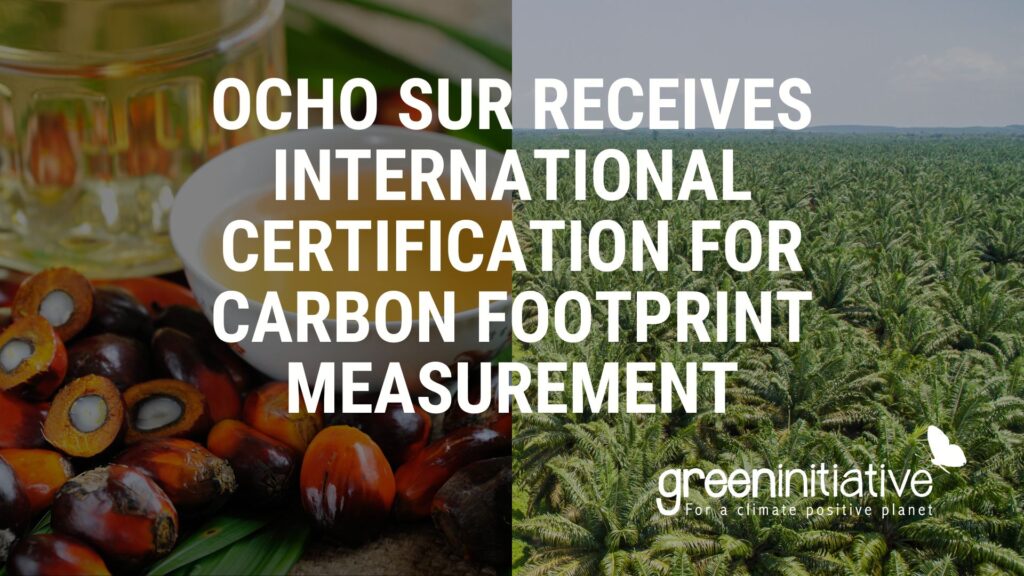
Ocho Sur receives 'Carbon Measured' Certification Leading the Way in Sustainable Palm Oil with Green Initiative

Ocho Sur receives ‘Carbon Measured’ Certification: Leading the Way in Sustainable Palm Oil with Green Initiative

A Landmark in Sustainable Palm Oil Ocho Sur, a company dedicated to sustainable palm oil production in Ucayali, has achieved a significant milestone by obtaining the international certification “Carbon Measured” from Green Initiative. The certification process completed by Ocho Sur complies with the international standards promoted by the United Nations, ensuring consistency and transparency in the measurement of the company’s carbon footprint and its commitment to sustainable development. “The Carbon Measured certification from Green Initiative acknowledges that Ocho Sur has conducted a comprehensive measurement of all greenhouse gas emissions throughout its value chain,” stated Michael Spoor, CEO of Ocho Sur. It is essential for organizations to measure their carbon footprint, as this allows them to identify mitigation measures and establish action plans to achieve carbon neutrality. This initiative drives the company to develop a new generation of products with low carbon emissions or climate-smart attributes, thereby enhancing its market positioning and fostering innovation. Furthermore, it commits the company to accelerate the decarbonization of its activities and to protect local ecosystems in Pucallpa. The work carried out enabled Ocho Sur to strike a balance between generated emissions and emissions captured in its plantations, providing the company with a holistic perspective on mitigation opportunities and positive climate impact. Ocho Sur’s Carbon Measured Journey: Rigorous Certification Process and Impactful CO2 Reduction Initiatives Obtaining the “Carbon Measured” certification is a rigorous process consisting of three main stages: calculate, mitigate, and certify, each with specific sub-stages that ensure the rigor and quality of the study. Since the beginning of its operations, Ocho Sur has been developing strategies and implementing notable initiatives that have allowed it to reduce its CO2. Examples include the implementation of circular economy practices and the utilization of palm waste, such as fiber and husks, to generate biofuel used in boilers. Subsequently, in 2021, they chose to capture the biogas emanating from the stabilization ponds of industrial wastewater treatment. This action represents the second mitigation measure, which enabled the combustion of methane present in the biogas, thus preventing its direct release into the atmosphere. With these initiatives, Ocho Sur is becoming a benchmark for green businesses in the Peruvian Amazon due to its comprehensive focus on sustainable development, centered around forest protection and improvement in the quality of life for the local population. The Peruvian company implements awareness programs for the local population (monitoring workshops), ecosystem protection policies, and mitigation actions as part of its business model, thereby leading a positive change in the region. Partner with Green Initiative for a Sustainable and Impactful Future This achievement calls out to all kinds of businesses that want to help the Earth and society in a good way. At Green Initiative, we stand ready to collaborate with organizations that seek to make a difference in the world. Together, we can drive change, foster innovation, and lead the way to a greener and more sustainable future. Reach out to us today, and let us work hand in hand to forge a path of environmental stewardship and excellence. To learn more about the Green Initiative Certifications and certifying your business, please contact our team of specialists here.

Ocho Sur receives ‘Carbon Measured’ Certification: Leading the Way in Sustainable Palm Oil with Green Initiative Read More »

Limatours Tourism in Peru and Carbon Neutrality in Action - LimaTours Sets a New Standard for Sustainable Tourism in Peru

LimaTours Sets a New Standard for Sustainable Tourism in Peru

Tourism in Peru and Carbon Neutrality in Action With its tremendous growth and global reach, the tourism industry has become a significant contributor to carbon emissions and environmental degradation. As the world grapples with the pressing challenges of climate change, tourism operations must embrace sustainable practices and take the lead in mitigating their impact. LimaTours, a prominent Peruvian tour operator, has emerged as a trailblazer in this endeavor by becoming Peru’s first Carbon Neutral tourism operator and one of the pioneers worldwide. Their commitment to climate action, as embodied by their participation in the Glasgow Declaration for Tourism and Climate Action, is a testament to their dedication to supporting the goals of the Climate Paris Agreement. Recognized by the United Nations Framework Convention on Climate Change (UNFCCC) and certified by Green Initiative, LimaTours is now poised to transform the industry by decarbonizing its value chain and offering innovative carbon-neutral tourism services. The Urgent Need for Climate Action in Tourism The tourism industry’s rapid growth has come at a cost to the environment. The carbon footprint of transportation, accommodation, and various tourism-related activities has contributed significantly to greenhouse gas emissions. With climate change posing unprecedented risks to natural and cultural heritage sites, biodiversity, and local communities, the tourism sector must positively collaborate and act urgently to reduce its climate impact. The industry can play a vital role in mitigating climate change and safeguarding destinations for future generations by introducing climate action measures, such as carbon neutrality. LimaTours: Pioneering Climate Action in Tourism LimaTours, a renowned tour operator deeply rooted in Peruvian hospitality, has emerged as a leading force in sustainable tourism. Their recognition as Peru’s first Carbon Neutral tourism operator and one of the global pioneers highlights their unwavering commitment to sustainability and climate responsibility. By actively participating in the Glasgow Declaration for Tourism and Climate Action, LimaTours has joined hands with other industry stakeholders to address the urgent need to mitigate the tourism industry’s carbon footprint. Leading the Charge with Carbon Neutrality LimaTours’ achievement of being certified as the first Carbon Neutral tourism operator in Peru is a significant milestone in the industry’s journey toward sustainability. Recognized by the UNFCCC and certified by Green Initiative, LimaTours has become a shining example for other tourism operators. LimaTours has engaged in a solid carbon footprint management process by measuring, reducing, and offsetting its carbon emissions, internalizing climate action at the DNA of its business model. This milestone catalyzes change, promoting innovation in LimaTourism services and efficiency in their overall tourism operations. Decarbonizing the Value Chain LimaTours understands that true sustainability extends beyond achieving carbon neutrality. They are committed to decarbonizing their entire value chain by implementing innovative practices that reduce emissions at every stage of their operations. By addressing transportation, accommodation, and activities, LimaTours aims to minimize its carbon footprint while ensuring exceptional experiences for its customers. Through collaboration with partners and suppliers, they are driving the adoption of climate-smart practices throughout the tourism ecosystem. LimaTours climate action proposition focuses on reducing its carbon emissions and providing innovative, carbon-neutral tourism services. They are on the way to revolutionizing the industry by introducing climate-friendly initiatives and offering unique experiences that prioritize carbon-neutral tourism. From eco-lodges powered by renewable energy to carefully curated tours promoting local culture and conservation, LimaTours is reshaping how travelers explore Peru. Are you looking for support to achieve Carbon Neutrality for your tourism business? Look no further! The Green Initiative team is here to help you on your sustainability journey. Our dedicated experts are committed to assisting companies like yours in reducing carbon emissions and working towards achieving Carbon Neutrality. With our extensive knowledge and experience in green initiatives, we provide customized solutions tailored to your specific needs. Whether you need guidance on measuring your carbon footprint, implementing energy-efficient practices, or exploring renewable energy options, our team will work closely with you to develop a comprehensive plan. By partnering with the Green Initiative team, you will gain access to a network of sustainability experts, industry best practices, and cutting-edge technologies. Our team will provide ongoing support, monitoring progress, and offering guidance to ensure your journey towards Carbon Neutrality is successful. Together, let’s make a positive impact on the environment and demonstrate your commitment to sustainability. Contact us today to learn more about how the Green Initiative team can support your company on its path to achieving Carbon Neutrality. Contact us here today!

LimaTours Sets a New Standard for Sustainable Tourism in Peru Read More »

Achieving Carbon Neutrality The Race to Transform Last-Mile Delivery

Achieving Carbon Neutrality

The Race to Transform Last-Mile Delivery The rapid growth of e-commerce and online shopping has led to a significant increase in last-mile delivery. Last-mile delivery refers to the final stage of the delivery process, where packages are transported from local distribution centers to the end consumer. While this has made shopping more convenient for consumers, it has also increased carbon emissions, contributing to climate change. Last-mile delivery is a critical component of the supply chain and accounts for a significant portion of a company’s carbon footprint. According to a report by the World Economic Forum, last-mile delivery accounts for up to 53% of a product’s total carbon footprint. This is due to inefficient routing, multiple trips to the same location, and the use of vehicles powered by fossil fuels. As the demand for online shopping continues to grow, so does the number of delivery vehicles on the road, leading to an increase in carbon emissions. According to a report by the European Environment Agency, the transport sector accounts for approximately 25% of global greenhouse gas emissions. This highlights the urgent need for companies to adopt sustainable practices in their last-mile delivery operations. Strategies for Achieving Carbon Neutrality in Last-Mile Delivery Operations Companies can adopt various strategies to achieve carbon neutrality in their last-mile delivery operations. One of the most effective strategies is replacing traditional delivery vehicles with electric ones. Electric vehicles are a low-carbon emissions alternative with lower operating costs than traditional ones. Companies like Amazon, UPS, and DHL have already started integrating electric vehicles into their fleets. Amazon, for example, plans to have 100,000 electric delivery vehicles on the road by 2030. Another strategy is to use alternative fuels such as biofuels or hydrogen fuel cells. Biofuels are derived from renewable sources such as vegetable oil, while hydrogen fuel cells produce electricity by converting hydrogen and oxygen into water. Both alternatives have significantly fewer emissions than traditional fossil fuels.Optimizing delivery routes can also help reduce carbon emissions. Using technology such as route optimization software, companies can plan the most efficient routes for their delivery vehicles, reducing the miles traveled and the emissions produced. In addition, some companies are exploring innovative climate-smart solutions to reduce the carbon footprint of last-mile delivery. For example, the Dutch company Bubble Post uses cargo bikes and electric vehicles for last-mile delivery in urban areas, reducing emissions and traffic congestion. Delfin Logistics provides last-mile delivery for key clients through electric trucks. The startup Volta Trucks is developing an electric delivery vehicle specifically designed for last-mile delivery in urban areas, with a range of up to 95 miles on a single charge. Despite the progress made by some companies, there are significant challenges to achieving carbon neutrality in last-mile delivery. One of the main challenges is the cost of implementing sustainable practices. Electric vehicles, for example, are currently more expensive than traditional vehicles, and companies may need more resources to invest in them. Also, another challenge is the lack of infrastructure to support sustainable practices. This includes the lack of charging stations for electric vehicles and the limited availability of alternative fuels. Another example that can be mentioned is Origem, a Brazilian startup that specializes in the production and manufacturing of electric motorcycles for professional use. Its innovative approach to electric mobility is revolutionizing the industry in Brazil. By providing affordable zero-emissions vehicles , developing route optimization software, and implementing a convenient battery swap system, the company is spearheading the transformation toward sustainable and efficient transportation. With its commitment to democratizing access to electric mobility, Origem is paving the way for a greener future while supporting the operational needs of its clients. The future of last-mile delivery looks promising. With technological advancements and a growing focus on sustainability, companies are increasingly adopting climate-smart practices in their delivery operations. Green Initiative: Empowering Last-Mile Delivery Services Towards Carbon Neutrality At Green Initiative, we proudly support last-mile delivery services in this fundamental transition to carbon neutrality. Through our advisory and climate certification services, we support logistic companies worldwide to introduce climate action at the core of their business model, developing the technical capacities they need to remain competitive in what we hope will be a much greener and net-zero emissions economy.

Achieving Carbon Neutrality Read More »

Methane GAS Emissions and climate change

Methane Emissions and climate change

Anthropogenic methane emissions and their implications for climate change within the next decade The Sixth Assessment Report from the Intergovernmental Panel on Climate Change (IPCC) stresses with high confidence that net greenhouse gas (GHG) emissions since 2010 are characterized by an increasing trend. Particularly, estimates in 2019 state the agricultural sector and other land-use activities are responsible for 22% of anthropogenic, or human-induced, global greenhouse emissions (IPCC, 2022). In this context, carbon dioxide and methane emissions have been identified to be significant contributors to global warming. Carbon dioxide, for example, once emitted into the atmosphere has been estimated to linger for roughly 300 to 1000 years (Buis, 2019) before it is fixed into biomass or mineralized into ocean or land sediments by natural processes. Thus, carbon’s multigenerational lifespan in the atmosphere often leads to a trend in climate action projects centered on reducing carbon dioxide emissions exclusively. However, methane has been found to have 84-87 times the global warming potential (GWP) than carbon dioxide on a 20-year timescale (IPCC, 2022), while estimates using the 100-year timescale, which is commonly adopted by organizations across the globe, shows a mere 24 times difference between the GWP of methane and carbon dioxide. As a result, scientists often stress the need to use cumulative metrics, that do not operate on a timescale, to accurately represent the impact of short-lived climate pollutants, like methane, on global temperatures within the next decade and consequently use this understanding to develop more efficient policies to reduce the negative effects of climate change in the near future (Allen et al., 2018). Governmental policies on methane emissions Due to alarming estimates of methane’s contribution to 30% of global warming to date (IEA, 2022), global methane initiatives strive to promote the use of methane as a clean energy source along with governmental organizations like the Environmental Protection Agency (EPA) that are opting to strengthen their policies against methane emissions, and the European Union (EU), that have set ambitious goals to reduce 30% of their methane emissions by 2030. Particularly, there is increasing scientific and analytical evidence that reducing anthropogenic methane emission by 50% over the next 30 years could help to maintain the global average temperature increase below 2 degrees Celsius and therefore, contribute to the climate goals established in the Paris Agreement. (Mckinsey, 2021; Arndt, 2022) Solutions to the anthropogenic emission of methane in the agriculture sector Promoting the industry switch to reduced methane emissions is not as simple as establishing governmental sanctions across the globe for many reasons, including concerns related to food security. Hence, several solutions are being implemented to reduce methane emissions from the agriculture sector, particularly for livestock, which have been estimated to account for 32% of human-induced methane emissions (UNEP, n.d.). These solutions include: Feed additives Such as garlic, clove, and seaweed, have been found to reduce methane emissions from ruminant animals. These additives can reduce the amount of methane produced during digestion, ultimately leading to lower emissions. Alternative feeds Like oilseed crops or legumes, can improve the quality of feed and reduce the amount of methane produced by animals. Alternative feeds can also help to reduce the amount of land required for grazing and improve soil quality. Breeding and genetics Specialized programs can be used to produce animals that are more efficient in their digestion, thereby reducing the amount of methane produced during digestion. Methane capture and reuse Methane can be captured from livestock manure and reused as a source of energy. This can be done through the use of anaerobic digesters, which can convert manure into biogas that can be used for electricity or heat. Precision livestock monitoring Technologies such as remote monitoring and smart feeding and watering systems can help to improve the efficiency of livestock production and reduce methane emissions. Novel Research in Molecular Engineering: Promising Strategies for Reducing Methane Emissions in Livestock Furthermore, novel research in the field of molecular engineering has a significant potential to reduce methane emissions by manipulating the metabolic pathways of livestock and the microbial communities in their digestive tracts. One solution involves the use of feed supplements that inhibit the activity of methanogens, which are the microorganisms in the rumen of livestock that produce methane during digestion. The results observed a consistent reduction in methane gas emissions by up to 30% for dairy cows and 90% for meat cows in experimental conditions (Palangi & Lackner, 2022). In addition, other studies explored the use of RNA interference molecules (Bradford et al., 2017) to inhibit the expression of certain genes in methanogens, blocking the production of proteins involved in methane production. Other similar approaches use the well-known, and often less costly CRISPR-CAS9 gene-editing tool (Subdei et al., 2022). Although more research is needed to understand the biological mechanisms underlying methanogens, the cost-effectiveness on a large scale, and some ethical considerations involved in gene manipulation, these developments outline a promising future for the reduction of methane emissions in the agricultural industry. Comprehensive Climate Action: Accounting for GWP Metrics and Developing Cost-effective Solutions to Reduce Emissions Despite Green Initiatives’ focus on removing carbon dioxide from the atmosphere, we understand the importance of fighting climate change on all fronts and thus, we consider Global Warming Potential (GWP) metrics to account for the short- and long-lived effects of carbon dioxide, methane, and nitrous oxide. Furthermore, we take climate action to the next level by advising our clients on developing cost-effective, climate-friendly solutions to reduce harmful emissions. Contact us to learn more and become a part of our climate champions. This article was writen by Marc Tristant, from the Green Inititative team. References: Allen, M. R., Shine, K. P., Fuglestvedt, J. S., Millar, R. J., Cain, M., Frame, D. J., & Macey, A. (2018). A solution to the misrepresentations of CO2-equivalent emissions of short-lived climate pollutants under ambitious mitigation. Npj Climate and Atmospheric Science, 1(1). https://doi.org/10.1038/s41612-018-0026-8 Arndt, C., Hristov, A. N., Price, W. J., McClelland, S. C., Pelaez, A. M., Cueva, S. F., Oh, J., Dijkstra, J., Bannink, A., Bayat, A. R.,

Methane Emissions and climate change Read More »