News

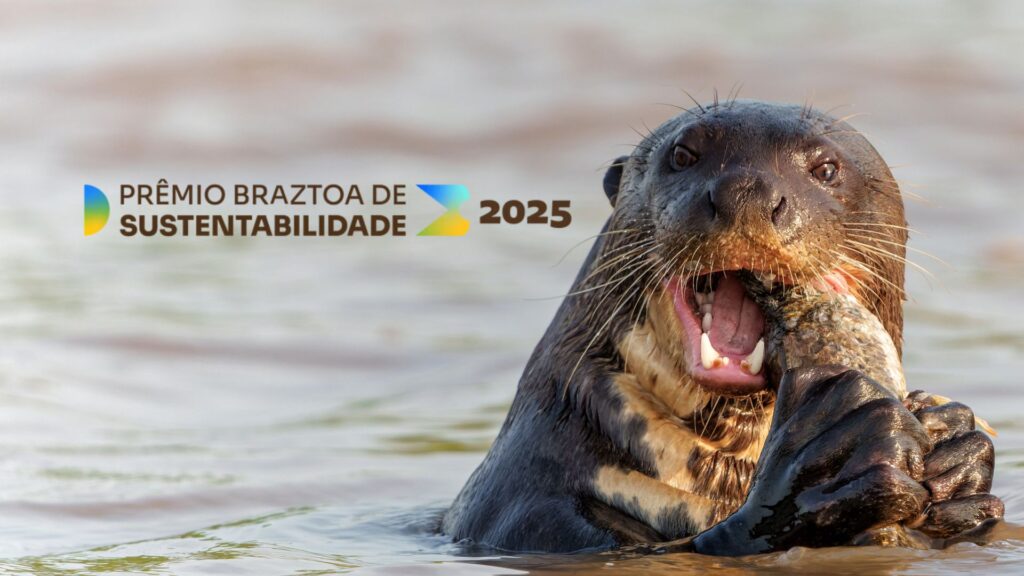
Braztoa Sustainability Award 2025: Green Initiative Among the Finalists

Braztoa Sustainability Award 2025: Green Initiative Among the Finalists

Belém, Brazil — November 2025. Green Initiative is honored to be among the finalists of the Braztoa Sustainability Award 2025, one of the most prestigious recognitions for responsible tourism in Brazil. The award celebrates organizations, destinations, and projects that are transforming Brazilian tourism through innovation, inclusion, and sustainable development. The award ceremony will take place on December 8th at the Teatro Estação Gasômetro, in Belém, Pará — a symbolic setting where the Amazon rainforest meets the future of sustainable tourism. The event will bring together visionary leaders, entrepreneurs, and institutions that are driving systemic change across the tourism sector. A Celebration of Innovation and Purpose As a finalist, Green Initiative joins an inspiring network of organizations that demonstrate how tourism can be a force for positive impact — empowering communities, protecting ecosystems, and advancing climate and nature-positive practices. Beyond the ceremony, participants will experience two days of activities designed to foster collaboration and exchange: Strengthening Brazil’s Leadership in Sustainable Tourism For Green Initiative, being recognized among the finalists reaffirms its commitment to supporting destinations, communities, and businesses in achieving climate and nature-positive tourism, through measurable certifications, circular economy practices, and ecosystem restoration programs across Latin America. This recognition reflects our shared mission to make sustainability not just a commitment, but a daily practice — from the Andes to the Amazon, from local communities to World Heritage sites,” said Karla de Melo, Global Head of Reputation at Green Initiative. The Braztoa Sustainability Award continues to play a key role in amplifying the voices and actions that are shaping the future of tourism in Brazil and beyond — rooted in responsibility, creativity, and genuine care for the planet. Toward a Climate-Positive Future for Tourism As the tourism sector accelerates its transition toward sustainability, Green Initiative invites destinations, companies, and travelers to take the next step. Download the Global Climate Action Guide for Tourism Businesses and Destinations, available in English and Portuguese, to explore practical pathways for achieving climate- and nature-positive impact — from carbon measurement and certification to ecosystem restoration and circular economy solutions. Together, we can build tourism back better — for people, for nature, and for the planet. Discover more about Braztoa here. This article was written by Yves Hemelryck from the Green Initiative Team. Related Reading

Braztoa Sustainability Award 2025: Green Initiative Among the Finalists Read More »

COP30 in Brazil: The Moment to Deliver on Climate Promises

COP30 in Brazil: The Moment to Deliver on Climate Promises

The Conference of the Parties (COP) brings together governments, international organizations, and non-state actors to assess global progress and negotiate collective measures under the Paris Climate Agreement The 30th United Nations Climate Change Conference (COP30) begins today in Belém do Pará and, for the first time, the opening takes place on schedule. After intense negotiations over the weekend, the agenda was confirmed, signaling diplomatic maturity and a renewed sense of collective purpose. Three central themes will guide the coming days: At the heart of these discussions lies a key challenge: multilevel governance how to turn political commitments into mechanisms that are executable, measurable, and comparable across countries and sectors. Ten Years After Paris: From Ambition to Action The Conference of the Parties (COP) brings together governments, international organizations, and non-state actors to assess global progress and negotiate collective measures under the Paris Climate Agreement Ten years after the signing of that agreement, experience shows that the transition toward a low-emission economy is no longer a utopia but a strategic priority driving a global race for innovation, productivity, and competitiveness. However, this race advances unevenly largely reflecting the typical dynamics of any (r)evolutionary industrial shift: a struggle between those striving for a future powered by new opportunities and technologies, and those seeking to preserve the status quo, delaying technological and sociocultural change as long as possible to avoid transformation. Beyond the motives or interests, strategic or otherwise, the goals and commitments assumed by different sectors of society have not achieved the necessary level of progress, and the results remain far from those originally pledged.. The Urgent Reality of a Warming Planet According to the IPCC, the planet has already warmed by approximately 1.1°C above pre-industrial levels, and current projections indicate that keeping warming below the 1.5°C threshold set by the Paris Agreement will be difficult before mid-century. Recent data from the Copernicus Climate Change Service (C3S) further underscores this urgency. These data confirm that the current framework of regulatory and voluntary commitments — along with existing performance systems  is insufficient when faced with the speed and scale of the climate challenge. The gap between promises and real implementation often translated into greenwashing has, in many cases, become the main obstacle to achieving an effective transition. At Green Initiative, we see this credibility gap as the defining test of our time. Climate action is no longer about announcing goals, but about demonstrating verifiable progress — where measurement, certification, and transparency become the true language of trust. COP30: Brazil Takes the Lead in Turning Words into Results In this context, COP30 — to be held in Belém do Pará, Brazil, from 10 to 21 November 2025 — assumes a decisive role by promoting a shift in approach: complementing statements and ambitions, which remain essential, with concrete and pragmatic action, which is now urgent. As the host nation, Brazil intends to place forests and nature-based solutions at the heart of the global debate, highlighting the Amazon as a living symbol of both vulnerability and opportunity in the fight against climate change. “A successful COP30 will depend on the ability to translate ambition into credible delivery.” Companies and governments alike are expected to strengthen climate disclosure and performance standards, aligning them with national regulatory frameworks — especially in emerging markets — and demonstrating traceable, verifiable progress across their value chains. At the same time, the expansion of climate finance, particularly through blended instruments and public-private investment vehicles, will be key to mobilizing capital toward sectors vital for decarbonization and resilience. Financing Adaptation and the Just Transition The conversation will also broaden to include adaptation financing, a critical gap as global needs — estimated at over US$ 300 billion per year by 2035 — far exceed current commitments. In parallel, energy transition debates are expected to gain momentum, with biofuels, renewable energy, and infrastructure modernization taking center stage. The principle of a “just transition” will continue to gain prominence, integrating social equity, workforce adaptation, and community engagement as fundamental components of climate credibility. The Private Sector: From Ideology to Competitiveness For the private sector which increasingly recognizes that the climate agenda extends beyond ideology COP30 should reinforce the logic of competitiveness and the advantages of early movers: those who anticipate market shifts, invest in resilience, and position their organizations as leaders in the emerging low-carbon economy. At Green Initiative, we have witnessed how companies and destinations that embed transparency into their climate journey gain both reputation and resilience. The capacity to measure, verify, and communicate progress is no longer a differentiator — it is a prerequisite for participation in the next economy. Green Initiative: Bridging Ambition and Impact At Green Initiative, we share this conviction. Through our Climate Certification Programs, Climate Performance Platform, and strategic advisory services, we help organizations and destinations: By turning commitments into measurable, verifiable, and transparent climate action, we advance a climate- and nature-positive global economy — one where progress and prosperity align with the protection of our planet. This article was written by Karla de Melo from the Green Initiative Team. Related Reading

COP30 in Brazil: The Moment to Deliver on Climate Promises Read More »

COP30 in Belém

COP30 in Belém: When Climate Action Meets Social Justice

As the 30th United Nations Climate Change Conference (COP30) unfolds in Belém do Pará, the world is witnessing more than another round of climate negotiations. Brazil’s Amazonian capital has become the epicenter of a broader conversation — one that positions the climate emergency not only as an environmental crisis, but as a crisis of inequality. From Promises to Implementation For years, global summits have revolved around targets and pledges. COP30, however, marks a turning point. The host country is insisting that implementation must now take center stage. President Lula reminded delegates that climate change is “no longer a threat of the future — it is a tragedy of the present,” pointing to unprecedented floods, hurricanes, and droughts across Latin America and beyond. The call echoes a sentiment shared by UN Secretary-General António Guterres, who told delegates that missing the 1.5 °C target is “a moral failure” (The Guardian). Brazil’s presidency of COP30 is therefore centered on “turning commitments into reality.” The country’s national plan, AdaptAÇÃO, unveiled at the conference, aims to strengthen climate resilience across municipalities — particularly those most vulnerable to extreme weather events in Brazil’s North and Northeast. With more than 92 % of Brazilian cities having experienced climate-related disasters between 1991 and 2024, adaptation is not an option; it is survival. Inequality at the Core of Climate Action The framing of COP30 as a climate-justice summit is no coincidence. The Belém Declaration, adopted by 43 countries and the EU, links climate action explicitly with the fight against hunger and poverty. It recognizes that those who contributed least to global emissions are suffering the most — from farmers in semi-arid regions to coastal and Amazonian communities displaced by floods. In a year marked by widening inequality and deepening migration crises, this message resonates strongly. “To be climate-positive,” said one delegate, “we must first be equity-positive.” At Green Initiative, this principle aligns deeply with our mission: ensuring that climate certifications, ecosystem restoration, and sustainable tourism models not only reduce emissions but also strengthen the livelihoods of those protecting nature on the frontlines. The Amazon as a Living Laboratory Holding COP30 in the heart of the Amazon carries profound symbolism. It is a reminder that global climate stability depends on local ecosystems — and on the communities that inhabit and safeguard them. Indigenous leaders from across Brazil and the region took the stage to emphasize their role as guardians of biodiversity and culture. Their presence is a corrective to decades of marginalization: a clear statement that there can be no climate justice without indigenous justice. Brazil’s Amazon strategy, while ambitious, faces contradictions. While the government showcases renewable energy, forest conservation, and indigenous engagement, critics point to ongoing debates about oil exploration near the Amazon delta — a reminder of the tension between development and planetary boundaries (Le Monde). Global Momentum, Local Realities Beyond Brazil, COP30 has drawn urgent interventions from leaders worldwide. Spanish Prime Minister Pedro Sánchez reminded delegates that climate change has already “claimed more than 20,000 lives in Spain over the past five years,” while small-island nations again demanded debt relief and loss-and-damage funding mechanisms to adapt to rising seas. Despite this progress — with the UN’s latest NDC Synthesis Report projecting a 12 % global emissions drop by 2035 — scientists warn that the world remains on track for at least 2.3 °C of warming. The gap between ambition and implementation remains the defining challenge of our time. A Call for Action and Partnership For the Green Initiative, COP30 underscores the need for verified, community-led, and traceable climate solutions — from climate-positive travel to certified ecosystem restoration. Every tree planted, every destination decarbonized, and every partnership forged contributes to aligning climate- and nature-positive action with social inclusion. As the summit’s debates unfold in Belém, one truth stands out: the path to net-zero must also be a path to fairness. Because a sustainable world is impossible without justice — and true climate justice begins by recognizing that fighting climate change means fighting inequality. This article was written by Yves Hemelryck from the Green Initiative Team. Related Articles

COP30 in Belém: When Climate Action Meets Social Justice Read More »

Machu Picchu Leads Global Climate Action with Its Third Carbon Neutral Certification

Machu Picchu Leads Global Climate Action with Its Third Carbon Neutral Certification

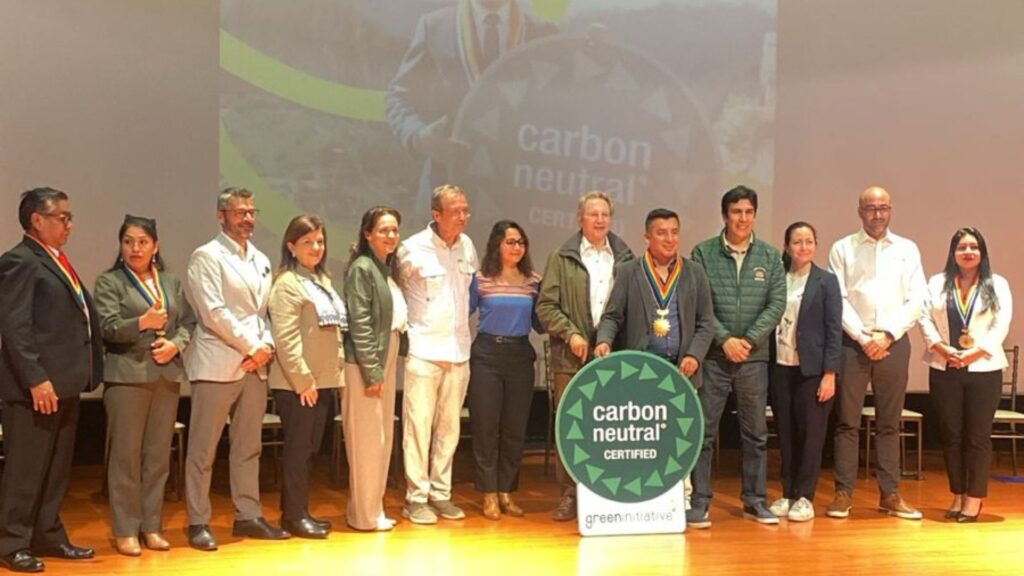
From the heart of the Andes, Machu Picchu once again makes history — not only as a symbol of world heritage, but as a living model of how tourism and climate action can move together toward a shared future. In 2025, the iconic destination achieved its third consecutive Carbon Neutral Certification, granted by Green Initiative, consolidating its leadership in the global movement for climate-positive and nature-positive tourism. A measurable path toward decarbonization Between 2019 and 2024, Machu Picchu achieved a 7.07% reduction in its carbon footprint per tourist, while increasing its carbon capture through reforestation and ecological restoration projects. These results are not symbolic — they are measurable, verifiable, and replicable, proving that the decarbonization of tourism is possible when data, science, and collaboration converge. Behind this achievement lies a rigorous process of measurement, reduction, and compensation aligned with international standards such as the GHG Protocol and IPCC Guidelines. Residual emissions were offset through the retirement of high-integrity carbon credits, ensuring climate integrity and transparency across all levels of reporting. A model built on collaboration The certification reflects four years of work led by the Municipality of Machu Picchu, in collaboration with PROMPERÚ, Inkaterra, AJE Group, BAM (Bosques Amazónicos), SERNANP, Ministry of Culture of Peru (Decentralized Directorate of Culture of Cusco), Tetra Pak, together with partners including CANATUR, LATAM Airlines, MSC, Inka Rail, Peru Rail, Belmond and World Xchange. The process also integrated technical cooperation with UN Tourism, UN Climate Change (UNFCCC), UNCTAD, the Peru Circular Tourism Initiative, the Consulate of the German Embassy in Peru, and the Spanish Agency for International Development Cooperation (AECID). It is a public-private and multilateral alliance that turned ambition into measurable action — a framework now inspiring similar transitions in destinations such as Cabo Blanco, Bonito, and Christ the Redeemer.    Why it matters now A decade after the Paris Agreement, and as the world looks toward COP30, Machu Picchu stands as tangible proof that climate ambition can translate into practical results. Its model merges circular economy practices — such as pyrolysis for biochar production, biodiesel generation from used oils, and recycling of PET plastics, packaging, and glass — with improvements in sustainable mobility through electric vehicles. The integration of these strategies enhances the destination’s resilience to climate change, strengthening its role as a benchmark for regenerative and low-carbon tourism. The entire process follows the principles of transparency and traceability promoted by the Circular Tourism Peru framework, under the commitments of the Glasgow Declaration for Climate Action in Tourism led by UN Tourism. Toward the world’s first Carbon Neutral Tourism Corridor Building on this success, Machu Picchu is now spearheading the creation of the World’s First Carbon Neutral Tourism Corridor, connecting district municipalities from Machu Picchu to Cusco, including Choquequirao. The initiative aims to reduce regional emissions, foster public and private investment, and promote sustainable mobility while creating a more inclusive and climate-smart visitor experience. At the same time, Machu Picchu is expanding its reach through international collaboration with other emblematic World Heritage sites such as Angkor Wat (Cambodia) and Petra (Jordan), to exchange best practices that accelerate the fulfillment of the Paris Agreement and Glasgow Declaration objectives. Voices that inspire global transformation “From the District Municipality of Machu Picchu, we remain committed to continuously monitoring our carbon footprint and promoting policies that foster a circular and regenerative economy in harmony with nature.”— Elvis La Torre, Mayor of Machu Picchu “Through public–private and multilateral collaboration, we can achieve remarkable results in decarbonizing the economy. The experience accumulated here — and that we aim to scale worldwide — shows that tourism and climate action must go hand in hand.” — Gustavo Santos, Regional Director for the Americas, UN Tourism “Machu Picchu’s leadership highlights the impact of years of scientific data collection and standardization. Climate action becomes tangible when grounded in science and collaboration.” — Daniel Galván Pérez, UN Climate Change “Machu Picchu not only represents the greatness of our history and culture, but also Peru’s commitment to a sustainable future. Being the first World Cultural Heritage Site to achieve carbon neutrality is a milestone that reflects how tourism can be a positive force for conservation and development. Today, travelers around the world seek experiences that connect with nature and respect the environment; Machu Picchu demonstrates that it is possible to experience cultural heritage in harmony with the planet. This achievement inspires us to continue promoting tourism that protects, values, and transforms.” — María del Sol Velásquez, Director of Tourism Promotion, PROMPERÚ “The certification of Machu Picchu as a carbon-neutral destination marked a milestone in the environmental management of Peruvian tourism. This achievement opens the opportunity to move toward a more ambitious model, where tourist destinations strengthen their resource efficiency, reduce their carbon footprint, foster innovation, and consolidate the participation of local communities. At MINCETUR, we work to ensure that this example inspires other destinations to advance on the path toward sustainability and resilience, in alignment with the country’s climate commitments.” — Sophia Dávila, Director of the Directorate of Environmental Tourism Affairs, MINCETUR. “Tourism does not only move economies — it moves memories, territories, and shared purpose. From CANATUR PERU, we promote a collaborative network within the sector that seeks to transform every destination into a node of sustainability, traceability, and resilience. Machu Picchu stands today as the living symbol of this transformation, reminding us that heritage is not simply preserved — it is managed with legitimacy, sensitivity, and a shared vision.” — Carlos Loayza, General Manager, CANATUR “The Carbon Neutral Certification symbolizes what happens when companies act with purpose. At AJE Group, we reaffirm our commitment to solutions that combine innovation, sustainability, and social well-being.” — Jorge Lopes-Dóriga, Director of Communication and Sustainability, AJE Group “For BAM, it is an honor to have contributed for the third consecutive year to the certification of Machu Picchu as a carbon-neutral destination, through the emission reductions generated by our REDD+ Castañeros project. This project protects more than 600,000 hectares of unique forests and directly benefits more than

Machu Picchu Leads Global Climate Action with Its Third Carbon Neutral Certification Read More »

Industrialization of Brazil’s Comparative Advantages: How Natural Capital Can Drive Inclusive and Sustainable Growth

Industrialization of Brazil’s Comparative Advantages: How Natural Capital Can Drive Inclusive and Sustainable Growth

How can emerging economies grow and foster development today, in a world where protectionism has become the norm, access to markets has narrowed, technology sharing has declined, and geopolitics has taken center stage? The strategies that propelled South Korea, Taiwan, China, Singapore, and others to success decades ago no longer deliver the same results. What, then, are the new pathways and opportunities? The answer lies in identifying and seizing the vast opportunities arising from climate transition, geopolitical realignment, and the quest for resilience in global value chains. These forces are revaluing geography as one of the most powerful drivers of business and investment. This is particularly true for much of Latin America, endowed with immense natural wealth and capital—renewable energy, bioeconomy resources, critical minerals, forests, carbon markets, water, and ecosystem services, among others. There are already unmistakable signs of a shift in relative prices in favor of these assets, which could reshape the global economic game and benefit emerging economies. To unlock this potential, however, countries must transform static comparative advantages into dynamic ones—in other words, industrialize their natural assets and add value to them. The moment is favorable, but the benefits are not automatic. 🎧 This is the central theme of the new podcast series launched by Imagine Brasil, “Industrialization of Brazil’s Comparative Advantages,” conducted by professors Aldemir Drummond and Jorge Arbache. In the first episode, Maria Netto, CEO of the Instituto Clima e Sociedade (iCS), offers an in-depth analysis of the global geopolitical and economic landscape, highlighting structural crises linked to energy, food, and climate change. She discusses Brazil’s challenges and opportunities in leveraging its clean energy matrix and abundant natural resources to generate innovation, added value, and long-term development. “Industrializing natural advantages is not only about economic transformation—it’s about shaping a new, inclusive model of prosperity for the twenty-first century,” emphasizes the Imagine Brasil initiative, created in collaboration with the Fundação Dom Cabral (FDC). 🔗 Listen to the first episode on Spotify: Industrialização das vantagens comparativas do Brasil – Conversa com Maria Netto (iCS) The new Imagine Brasil podcast, conducted by Jorge Arbache (Photo/ Green Initiative’s Scientific and Technical Advisory Council member) and Aldemir Drummond, explores how Brazil can transform its natural capital into engines of innovation, inclusive prosperity, and sustainable development through the industrialization of its comparative advantages.

Industrialization of Brazil’s Comparative Advantages: How Natural Capital Can Drive Inclusive and Sustainable Growth Read More »

Green Initiative Shines Bright with a Double Win at the Sustainable Company Awards 2025

Green Initiative Shines Bright with a Double Win at the Sustainable Company Awards 2025

Green Initiative is proud to announce an extraordinary milestone at this year’s Sustainable Company Awards 2025, hosted by Environmental Finance. We were honored with the award for Net Zero Progression of the Year, while our own Erika Rumiche Hernández was named Rising Star Under 30 — a remarkable double recognition that underscores both our organizational impact and the leadership of the new generation. The Sustainable Company Awards, held annually by Environmental Finance, stand among the most prestigious recognitions in the sustainability sector. They celebrate companies, leaders, and initiatives at the forefront of corporate sustainability, recognizing those that not only make commitments but also deliver measurable results in areas such as decarbonization, sustainable finance, climate innovation, and governance. Earning this distinction is an international seal of credibility, reaffirming the tangible impact of the strategies and actions honored. Net Zero Progression of the Year This award celebrates the innovative and results-driven strategies that Green Initiative has implemented to accelerate the global journey toward net zero. From helping businesses and destinations measure and reduce their carbon footprints, to developing scalable climate-positive and nature-positive frameworks, Green Initiative has demonstrated that climate action is not only possible but can be a powerful driver of competitiveness and resilience. Our projects in tourism, corporate sustainability, and ecosystem restoration are proof that measurable climate strategies can deliver tangible results across sectors. This recognition reinforces our commitment to setting new benchmarks for climate and nature positive action worldwide. Some of the key areas that stood out in the judges’ commentary include: Rising Star Under 30: Erika Rumiche Hernández The recognition of Erika Rumiche Hernández as Rising Star Under 30 is both an honor and an inspiration. Erika has been instrumental in advancing climate finance solutions within Green Initiative, bridging technical expertise with a bold vision for inclusive climate action. Her leadership demonstrates the power of youth-led innovation in shaping a sustainable future. By combining rigorous technical knowledge with passion for impact, Erika embodies the values of the Green Initiative and the promise of the next generation of sustainability leaders. Erika’s recognition as Rising Star Under 30 goes beyond energy and enthusiasm. Here are some of the qualities and achievements that made her stand out: A Double Recognition of Impact and Vision Together, these two awards represent more than recognition — they are a validation of our mission: to empower businesses, destinations, and communities worldwide to become climate positive and nature positive. As we look toward COP30 and beyond, this double win energizes our entire team, partners, and collaborators. It reminds us that systemic change is possible when vision meets action, and when innovation is paired with integrity. Thank You 💚 We share this success with our partners, clients, and allies around the world who trust and collaborate with us on this journey. From local communities to global institutions, this achievement belongs to everyone working tirelessly for a more sustainable and regenerative future. 🌍✨ The Green Initiative is not just progressing toward net zero — we are building the foundation for a climate and nature positive world. Related reading

Green Initiative Shines Bright with a Double Win at the Sustainable Company Awards 2025 Read More »

Ahead of COP30, UNESCO World Heritage Sites Unite for Climate Action at Machu Picchu

Ahead of COP30, UNESCO World Heritage Sites Unite for Climate Action at Machu Picchu

Tourism is responsible for nearly 8% of global greenhouse gas emissions, placing destinations under growing pressure to decarbonize and integrate circular economy practices. Within this context, UNESCO World Heritage Sites stand at a crossroads. Their cultural and natural value is irreplaceable, and their visibility to millions of visitors makes them powerful platforms to prove that climate action and heritage preservation can go hand in hand. In November 2025, just days before the world gathers in Brazil for COP30, Machu Picchu — one of the most iconic UNESCO World Heritage Sites — will host Climate Talks Machu Picchu 2025. This historic high-level event will unite leaders from tourism, culture, and climate action, positioning heritage destinations as active players in shaping global climate solutions. A Historic First for Global Heritage For the first time, cultural and natural heritage sites will step onto the global stage of climate diplomacy. By aligning their preservation mission with ambitious decarbonization goals, these sites are sending a clear message: heritage is not only about safeguarding the past, but about shaping a livable future. At Climate Talks Machu Picchu 2025, World Heritage leaders will: COP30 Momentum With COP30 in Belém do Pará just around the corner, this initiative aims to inject fresh urgency into international climate negotiations. By placing heritage at the center of the climate agenda, world-renowned destinations are transforming from symbols of history into agents of change, amplifying their moral authority to inspire governments, industries, and communities. Workshop Circular Tourism, sponsored by AECID / CANATUR PERU Workshop on Circular Tourism, organized by Turismo Circular Perú — a national project led by CANATUR in collaboration with AECID. The workshop, delivered with the technical support of Green Initiative, will focus on strengthening local capacities to streamline best practices in circularity and decarbonization. By supporting Machu Picchu’s public and private stakeholders to streamline sustainable practices, the program seeks to enhance efficiency, reduce environmental impacts, and reinforce the destination’s role as a global benchmark in climate-smart and circular tourism. Celebrating Climate Leadership As part of the program, Climate Talks Machu Picchu 2025 will also host the 3rd Ceremony for the Carbon Neutral Certification of Machu Picchu, reaffirming the destination’s pioneering role as a benchmark in sustainable tourism. The agenda includes technical visits to explore circular economy practices in Machu Picchu, knowledge-sharing panels with representatives from Angkor Wat, Petra, the Galápagos, Taj Mahal, Bonito, and Tikal, and the signature of a global Call to Action. This milestone gathering will not only strengthen local and international collaboration but also celebrate tangible progress, ensuring that heritage sites lead by example in advancing climate neutrality. A Global Engagement The initiative is convened by the Municipality of Machu Picchu, CANATUR, Inkaterra, and the Green Initiative, with support from the German Embassy in Peru, the Peruvian Embassy in India, SEVEA (Cambodia), Cristo Redentor (Rio de Janeiro), and SERNANP, in collaboration with UN Tourism and the UNESCO Country Offices. Pedro Andrade Corrêa de Brito, International Relations Coordinator of Santuário Cristo Redentor, emphasized:“Cristo Redentor is not only a symbol of faith and unity for Brazil and the world, it is also a call to collective responsibility. By joining forces with Machu Picchu and other heritage icons, we reaffirm that protecting our most cherished cultural and natural treasures requires urgent climate action.” Gustavo Santos, Director of UN Tourism for the Americas, added:“Our vision for a thriving tourism sector, aligned with the great challenges humanity must overcome, is clear: tourism development and decarbonization can — and must — go hand in hand.” José Koechlin, President of Inkaterra, concluded:“Heritage destinations like Machu Picchu remind us that protecting the past is inseparable from safeguarding the future. By leading through example and working together across borders, we can turn climate ambition into pragmatic action. This is the responsibility of all parts of society — and the opportunity before us.” By aligning culture, nature, and tourism with ambitious climate goals, World Heritage Sites are sending a powerful message to the world: protecting our heritage means protecting our future. Machu Picchu will serve as the stage where history, culture, and climate converge, demonstrating how iconic destinations can lead by example and inspire change on a global scale. 📩 Media Inquiries and Participation Journalists interested in covering Climate Talks Machu Picchu 2025 or requesting further information are warmly invited to contact us at contact@greeninitiative.eco. Our team will be glad to provide press materials, facilitate interviews, and support media participation. The Green Initiative Team

Ahead of COP30, UNESCO World Heritage Sites Unite for Climate Action at Machu Picchu Read More »

Green Initiative Welcomes Chipiliro Katundu as Director of Climate Finance for East and Southern Africa

Green Initiative Welcomes Chipiliro Katundu as Director of Climate Finance for East and Southern Africa

At Green Initiative, we believe that advancing a climate and nature positive future requires bold leadership, innovative finance, and deep local engagement. That is why we are proud to welcome Chipiliro Katundu as our new Director of Climate Finance for East and Southern Africa. A Visionary African Entrepreneur With more than 20 years of transformative leadership across the financial sector, Chipiliro has dedicated his career to advancing financial inclusion, innovation, and sustainable growth throughout Africa. He has served as a Bank CEO, held senior leadership roles across multiple countries, and contributed his expertise on bank boards, always driving strategies that expand opportunities for businesses and communities. His career reflects a powerful vision: building financial systems that not only deliver growth but also foster resilience and sustainability in a rapidly changing world. Innovation for Resilient Supply Chains As the Founder of Gigatt, a supply chain technology company, Chipiliro has pioneered solutions that help corporates and banks enhance efficiency, unlock liquidity, and promote sustainability. His work demonstrates how technology and finance can intersect to create resilient ecosystems, ensuring that businesses thrive while contributing to broader climate and social goals. This combination of finance, innovation, and sustainability uniquely positions him to lead climate finance strategies that will strengthen communities and unlock green opportunities across Africa. Driving Climate Finance in Africa In his role at Green Initiative, Chipiliro will focus on expanding access to climate finance solutions across East and Southern Africa. His mission is to empower local communities, SMEs, businesses, and governments with the resources and partnerships they need to accelerate climate resilience and inclusive green growth. Interview with Chipiliro Katundu To better understand his vision, we asked Chipiliro to share his insights on the future of climate finance in Africa: Africa is on the frontline of climate change, but we are also the frontier of climate solutions. We contribute less than 4% of global emissions, yet we bear the brunt of the impact. That challenge gives us a unique responsibility — and an unprecedented opportunity. With the youngest population on earth and vast renewable resources, Africa can leapfrog into inclusive, profitable green growth. But it will take bold partnerships. Corporates must rewire supply chains for sustainability, investing in clean energy, green logistics, and resilient communities. Financial institutions must channel capital into climate-smart SMEs and innovative projects, unlocking liquidity where it matters most. When business and finance align with Africa’s ingenuity, we don’t just solve today’s challenges — we design tomorrow’s economy. We create millions of green jobs, pioneer the industries of the future, and build resilience that strengthens not just Africa, but the entire planet. Africa’s role is not to follow — it is to lead, and to prove that the future of growth is green, inclusive, and African-led. For me, climate finance is not just about carbon — it is about competitiveness, resilience, and growth. SMEs are the backbone of Africa’s economies, but they are also the most vulnerable to climate shocks and the hardest hit by lack of liquidity. If we rethink the system, corporates can rewire supply chains by demanding and investing in sustainable practices — from clean energy in production to green logistics and resilient sourcing. At the same time, financial institutions must go beyond traditional lending and channel capital into climate-smart SMEs and innovative projects. That means unlocking liquidity where it matters most — in the small businesses creating jobs, innovating new solutions, and building stronger communities. When climate finance flows into SMEs, it does two things: it accelerates inclusive green growth today, and it lays the foundation for Africa to leapfrog into the sustainable industries of tomorrow.  Looking Ahead Chipiliro’s appointment marks a significant step in Green Initiative’s expansion in Africa. By combining financial expertise, digital innovation, and a strong commitment to sustainability, he will play a key role in mobilizing resources that drive climate-positive transformation across the continent. We are honored to have Chipiliro join our leadership team — and excited about the impact his vision will bring to our shared global mission. The Green Initiative Team

Green Initiative Welcomes Chipiliro Katundu as Director of Climate Finance for East and Southern Africa Read More »

Green Initiative’s Forest Friends Selected for the Economy of Francesco Extraordinary Ideas Global Call

Green Initiative’s Forest Friends Selected for the Economy of Francesco Extraordinary Ideas Global Call

We are proud to announce that our project Forest Friends: Catalyzing Social Change to Value, Conserve, and Restore Nature and Biodiversity has been officially selected for presentation at the Economy of Francesco Extraordinary Ideas for the Economy Global Event 2025. The call received many inspiring proposals from around the world, and our initiative stood out for its unique approach to connecting people everywhere with the positive impacts of ecosystem restoration, biodiversity protection, and climate action. About Forest Friends Forest Friends is an innovative web platform created by a multidisciplinary team at Green Initiative. It transforms environmental awareness into tangible regenerative action by allowing individuals, organizations, and students to: Forest Friends is proud to contribute to the global movement of the UN Decade on Ecosystem Restoration (2021–2030), which calls on everyone to prevent, halt, and reverse the degradation of ecosystems worldwide. By engaging individuals, organizations, and local communities in tangible restoration efforts, Forest Friends is turning this vision into measurable action — one tree, one project, and one partnership at a time. Our Gratitude to Partners This impact is possible thanks to strong partnerships. A heartfelt thank you to CEPA Study Abroad Programs, whose commitment has engaged students and university partners in planting over 9,900 native trees in Costa Rica’s Península de Osa. Through their support of student-led restoration with Fundación Saimiri and Green Initiative’s Forest Friends, CEPA is helping to regenerate one of the world’s most biodiverse regions, inspire the next generation of climate and nature stewards, and contribute directly to the goals of the UN Decade on Ecosystem Restoration. Likewise, we are deeply grateful to Tulu Travel, Swetours, Mapfre, WorldXChange, Luz del Sur, MSC Peru, Kuoda Travel, Inkaterra Hotels and Adidas Peru, that have suported tree-planting through Forest Friends, making ecological restoration a reality across Latin America. Their trust and commitment fuel our mission and impact. And a very special thank you goes to the individuals around the world who plant trees directly through forestfriends.eco. Together with our on-the-ground partners, these funders are helping regenerate biodiversity hotspots, empower local communities, and advance the goals of the UN Decade on Ecosystem Restoration, a global call to prevent, halt, and reverse ecosystem degradation.. Forest Friends also proudly collaborates with Inkaterra Asociación, advancing ecosystem restoration and biodiversity conservation in some of the world’s most important destinations, Peru. Together, we are building bridges between climate action, nature restoration, and community well-being. Global Recognition, Local Impact Being selected for the Economy of Francesco Extraordinary Ideas is more than recognition — it’s an opportunity to showcase Forest Friends before a global community of innovators, entrepreneurs, and changemakers who share a vision for a fairer, greener economy. This milestone strengthens our mission: to transform environmental awareness into measurable results that are climate positive, nature positive, and socially inclusive. What’s Next for Forest Friends Looking forward, Forest Friends will: 🌍✨ We believe that restoring nature means restoring hope. This achievement belongs to every partner, student, and supporter who has helped plant a tree, calculate a footprint, or shared our vision. 👉 Explore Forest Friends and join the movement: https://forestfriends.eco This article was written by Erika Rumiche from the Green Initiative team Related Reading

Green Initiative’s Forest Friends Selected for the Economy of Francesco Extraordinary Ideas Global Call Read More »

Green Initiative Welcomes Karla de Melo as Global Head of Reputation

Green Initiative Welcomes Karla de Melo as Global Head of Reputation

At Green Initiative, we are committed to building a global network of leaders who combine vision, expertise, and integrity to accelerate the transition to a climate and nature positive future. Today, we are honored to welcome Karla de Melo as our Global Head of Reputation. A Trailblazer in Reputation and ESG Karla’s career reflects more than two decades of leadership at the intersection of corporate reputation, communication, governance, and sustainability. A Public Relations professional with specialization in Sustainability by Fundação Dom Cabral (FDC), she has built a reputation for delivering measurable impact in reputation management, crisis governance, digital transformation, and organizational culture. She has held senior roles at some of Brazil’s most relevant organizations, including Vale, Casa da Moeda do Brasil, Firjan, and Caliber, a global reputation consultancy. In each role, she championed projects that combined strategic communication with ESG principles, creating value for companies, institutions, and society at large. Author, Advisor, and Mentor Beyond her executive career, Karla is a thought leader in ESG and reputation. She is coauthor of the books Mulheres ESG and Gestão da Reputação (Leader Publishing), and an advisory board member of Instituto Evolux. Her entrepreneurial and innovative mindset led her to invest in and advise Simplifica.CI, a startup later acquired by Prodigy. Today, she also serves as a consultant for We Plan Before, a strategic advisory firm with offices in Brazil and the UK, focusing on Reputation & ESG. Karla is also committed to sharing knowledge and shaping future leaders. She teaches at Escola Aberje, covering themes such as reputation, sustainability, and data-driven communication, and dedicates her time as a volunteer and mentor for NGOs Vai na Web and Gerando Falcões, empowering new generations with opportunities and guidance. Women’s Leadership in Reputation and Climate Action  Karla’s journey is also an inspiration for women in leadership. By combining expertise, resilience, and a global outlook, she embodies how women are reshaping corporate reputation and advancing climate action with purpose and impact. Her trajectory reinforces the role of diverse voices in building trust and credibility in organizations navigating the sustainability transition. Interview with Karla de Melo As part of her introduction to Green Initiative, we asked Karla to share her perspectives on her career and the role of women in ESG leadership: My journey in Corporate Reputation Management began over two decades ago, when I realized that reputation is not just about communication, but a core strategic asset that shapes trust, legitimacy, and long-term value. During my years at Vale, I led global projects and managed highly complex crises in Brazil, the republic of Guinea, west Africa and New Caledonia. Those experiences taught me how reputation can take decades to build, yet be tested in a single moment. What keeps me passionate today is the opportunity to connect reputation with sustainability and soft power, helping organizations and territories to position themselves not only through performance, but also through values, purpose, and positive impact. Over the years, my perspective has evolved from reacting in moments of crisis to shaping a positive, proactive agenda where reputation is built on purpose, leadership, and governance. With these pillars, companies can become true protagonists, advancing legitimate causes and “doing the right thing.” This is precisely why the Green Initiative is the perfect match for my career at this stage. Supporting projects such as the climate certification of Christ the Redeemer – following global landmarks like Machu Picchu – demonstrates how reputation can accelerate sustainability, strengthen cultural identity, and expand soft power for both organizations and nations. For me, reputation is ultimately about building bridges between what we deliver, what society expects, and what the future demands. Women leaders bring resilience, empathy, and systemic vision: qualities that are essential for both reputation management and climate leadership. Throughout my career, I have seen how women foster collaboration, coherence, and long-term thinking. Reputation is not only about image; it is about the consistency between what is promised and what is delivered. And women are often the ones who insist on this alignment, creating credibility and trust. In the context of global climate action, women also amplify soft power, the ability to influence through values, legitimacy, and culture. By occupying strategic positions in ESG, governance, and reputation, women help shift the paradigm from short-term goals to transformative and lasting impact. At Green Initiative, my role is precisely to integrate reputation, sustainability, and soft power as interconnected forces that position organizations and territories as leaders of a positive global agenda. I believe women will remain at the forefront of this transformation, shaping the future by turning purpose into action. Looking Ahead With Karla leading our global reputation efforts, Green Initiative strengthens its commitment to transparent communication, credible ESG leadership, and high-impact climate action. Her voice will be essential in ensuring that our certifications, advisory services, and restoration programs are recognized as models of integrity and innovation worldwide. We are proud to welcome Karla to the Green Initiative team — and look forward to the inspiration and leadership she will bring to our global mission. The Green Initiative Team

Green Initiative Welcomes Karla de Melo as Global Head of Reputation Read More »