Climate Action

Green Initiative Recognized on Standards Map

Climate Excellence Recognized: Green Initiative on Standards Map

Green Initiative has achieved a momentous milestone in a significant stride towards its commitment to environmental stewardship. Our organization has proudly secured a position on the esteemed Standards Map, a comprehensive online platform designed by the International Trade Centre (ITC) to facilitate easy access to vital information regarding environmental protection standards, labor rights, business ethics, due diligence, and traceability. A Recognition for Climate Action Excellence This inclusion on the Standards Map is a testament to Green Initiative’s dedication and adherence to stringent standards for certifying global climate and nature actions. It signifies a noteworthy recognition of our comprehensive approach and alignment with international benchmarks for sustainable practices. The Standards Map is not just an online tool; it’s a gateway to a wealth of insights and information. Its user-friendly interface empowers users to swiftly access critical data and comprehend prevailing trends across various domains crucial for sustainability. Green Initiative’s presence on this platform amplifies its visibility and credibility, showcasing its commitment to embracing and surpassing global climate action best practices. Partners’ Dedication Propels Green Initiative to Standards Map Recognition This achievement is a recognition to our partners, team, scientific and technical advisory council, and allies’ unwavering support and dedication. The continuous backing has been instrumental in propelling Green Initiative towards this commendable achievement. This recognition not only elevates the profile of the Green Initiative but also positions us as a critical partner for all those organizations that pursue the decarbonization of their processes and value chains. Being part of the Standards Map opens doors to expanded opportunities for collaboration in different sectors and industries, reinforcing our strategic role and commitment to fostering climate action on a global scale. Gratitude for Collective Support Green Initiative appreciates all partners and stakeholders for their enduring support. Together, this recognition marks a significant leap forward in the collective endeavor towards a more sustainable and environmentally conscious future. The journey toward climate and nature’s positive impacts is ongoing, and Green Initiative remains steadfast in its dedication to accelerating this transition. Thank you! The Green Initiative Team

Climate Excellence Recognized: Green Initiative on Standards Map Read More »

COP28 ended with an agreement: Carbon Calamity - The question now is about the speed & scale of implementation

COP28 ended with an agreement: Carbon Calamity – The question now is about the speed & scale of implementation

The urgency to address climate change has never been more evident, as highlighted by the recent conclusion of COP28. Amidst the agreements and discussions, the pivotal question is not just about what needs to be done but how swiftly and effectively these measures can be implemented. Science unequivocally emphasizes the necessity for a dual approach: the imperative to decarbonize economies and simultaneously seek ways to extract existing carbon from the atmosphere. However, the route to achieving the latter remains a spirited debate. Should we rely on nature-based solutions or pivot toward new technological innovations? This is where Brooklyn-based rapper Dex McBean steps onto the stage with a creative and thought-provoking rap battle. Dex McBean’s Rap Battle Sparks Dialogue on Nature vs. Tech Solutions Dex McBean, known for his lyrical prowess, took to the mic in an electrifying performance, exploring the arguments from both sides of the aisle. In a captivating display of wit and rhythm, he delved into the pros and cons of nature-based solutions and cutting-edge technologies, igniting a dialogue that resonates with the urgency of the climate crisis. The rap battle, an unconventional yet engaging medium, catalyzes discussion. It’s not merely entertainment; it’s a platform that invites individuals to delve deeper into the heart of the matter. Through Dex McBean’s verses, the dichotomy between harnessing the inherent power of nature and leveraging human ingenuity via technology comes alive. The dichotomy is more than just theoretical. It’s grounded in tangible reports and initiatives driving the conversation on climate action. The UNEP Emissions Gap Report 2023 underscores the critical need for comprehensive solutions. The UNEP State of Finance for Nature Report 2023 sheds light on the financial aspects, highlighting the significance of funding mechanisms for these solutions. Moreover, the UNEP/FAO Becoming #GenerationRestoration Report 2021 lays the groundwork for a global initiative emphasizing political support, research, and financial investments. The UN Decade on Ecosystem Restoration 2021-2030, led by the United Nations Environment Programme and the Food and Agriculture Organization of the United Nations, stands as a clarion call for collective action. This ambitious initiative aims to unite political will, scientific expertise, and financial resources to scale restoration efforts across terrestrial, coastal, and marine ecosystems. It’s a rallying cry to all, urging active participation to shape a more sustainable future. The Green Initiative Team Calls for Action: Join #GenerationRestoration in Climate Solutions Post-COP28 For those inspired by the rhythm of Dex McBean’s rap and motivated to contribute, the Green Initiative Team offers avenues for involvement. With hashtags like #GenerationRestoration, #GreenInitiative, and #ForestFriends, the movement gains momentum, fostering a community dedicated to restoring and preserving our natural world. The rap battle isn’t just about choosing sides; it’s about recognizing the synergy between nature’s resilience and human innovation. It prompts us to contemplate a future where nature-based solutions and technological advancements complement each other in the fight against climate change. As the curtains fall on COP28, the echoes of Dex McBean’s verses linger—a reminder that the battle against climate change demands not just action but a harmonious collaboration between nature’s forces and humanity’s ingenuity. It’s a challenge, an opportunity, and a call to arms for #GenerationRestoration. So, let’s embrace this creative take on climate solutions, dive into the rap battle, and explore the avenues that lead us toward a sustainable, restored planet.

COP28 ended with an agreement: Carbon Calamity – The question now is about the speed & scale of implementation Read More »

Weathering the Storm: How Homeowners Can Adapt and Thrive in a Changing Climate

Weathering the Storm: How Homeowners Can Adapt and Thrive in a Changing Climate

Homeownership brings both comfort and challenges and in an era of escalating climate change, those challenges are becoming increasingly daunting. As global temperatures continue to rise, the once-rare occurrences of extreme weather events have become unsettlingly frequent, leaving homeowners grappling with the aftermath of hurricanes, wildfires, heatwaves, and other natural disasters that can render homes damaged or uninhabitable. Depending on your geographical location, the threats can vary significantly. Coastal areas face rising floodwaters and the wrath of unpredictable weather patterns. At the same time, regions in arid climates battle relentless heat and the unexpected intrusion of pests seeking refuge from extreme conditions. It’s a daunting scenario, but amidst the chaos, there’s a glimmer of hope. Forward-thinking homeowners are taking proactive measures to fortify their homes against nature’s fury. They’re embracing resilient upgrades that bolster their homes’ defenses and contribute to a greener, more sustainable future. Picture robust storm doors engineered to withstand the force of hurricanes, roofs fortified to shrug off nature’s tantrums, and solar shading providing a cool reprieve during scorching days. These smart adaptations not only protect homes but also contribute to reducing energy consumption and reliance on traditional power sources. Considering these resilient features is paramount for those in the market for a new home. Alongside location, energy efficiency, landscaping, and construction materials should be weighed carefully. Being informed about the insurance landscape in high-risk zones is equally crucial, allowing homeowners to make informed decisions about their property’s protection. Yet, the scope extends beyond individual actions. Homeowners wield significant power in the global battle against climate change through eco-conscious decisions. From installing smart thermostats and using water-saving fixtures to harnessing rainwater for gardening or composting organic waste, every choice matters. Whether it’s supporting local farmers’ markets to reduce carbon emissions or retrofitting homes with better insulation and eco-friendly materials, these steps collectively form a powerful force against climate change. Even something as seemingly minor as opting for reusable products or participating in community clean-up initiatives can substantially impact the planet’s well-being. The road ahead might seem daunting, but homeowners are pivotal in shaping a more resilient and sustainable future. By fortifying their homes against environmental threats and embracing eco-friendly practices, they safeguard their properties and contribute positively to the broader fight against climate change. Together, these actions pave the way for a more resilient and environmentally conscious society that can weather the storms of a changing climate while thriving in harmony with the planet. This article was written in collaboration with Porch, founded in 2013 as a home services marketplace, which has evolved into a leading vertical software company partnering with over 11,000 home service businesses, aiming to simplify the homeowner experience from moving to maintenance, engaging with 2 out of every 3 U.S. homebuyers monthly.

Weathering the Storm: How Homeowners Can Adapt and Thrive in a Changing Climate Read More »

🌳Trees The Silent Guardians of Our Existence

🌳Trees: The Silent Guardians of Our Existence

In the bustling symphony of life, a quiet force exists that we often overlook – trees. They stand tall, breathing life into our planet, offering shade and shelter, and weaving a delicate harmony into the very fabric of our existence. These gentle giants are not mere bystanders but the custodians of our well-being. With each rustle of their leaves and each sway in the wind, trees whisper secrets of resilience and interconnectedness. They purify the air we breathe, bestow us with fruits of nourishment, and paint our world with vibrant hues that soothe the soul. Their roots delve deep into the earth, anchoring us to nature’s rhythm and reminding us of our profound bond with the environment. But beyond their ecological significance, trees carry history, culture, and spirituality stories. They’ve witnessed civilizations rise and fall, offering solace and wisdom to those who seek their silent counsel. Their presence in myths and folklore transcends time, embodying strength and serenity. At the heart of one of our missions lies the daily commitment to planting trees, for example, in the Peninsula de Osa, Costa Rica. Each day, our dedicated team works tirelessly to restore the rich biodiversity of this precious region. We aim to restore ecosystems, mitigate climate change, and preserve habitats for countless species. This daily endeavor is more than just planting; it’s a passionate dedication to nurturing the planet, one tree at a time. Your support enables us to continue this vital work, ensuring a greener, more sustainable future for the Peninsula de Osa and beyond. Deep gratitude extends to CEPA Customized Educational Programs Abroad, Swee Tours, and Tulu Travel for the unwavering commitment to the Green Initiative Forest Friends nature-positive actions with Fundación Saimiri in Costa Rica.  These vital harmonizers of our planet Let’s stand with them, nurture them, and understand that our destinies are entwined. Let’s ensure a future where the symphony of life continues to flourish, conducted by the graceful baton of these magnificent trees. Your support cultivates change; it’s the catalyst for lasting change. With your contribution, we transform lives, empower communities, and build a brighter future. Every action you take, whether big or small, creates ripples of impact, fostering resilience and hope where it’s needed most. Together, we can forge a path toward progress, making a tangible difference in the world. Thank you for being the driving force behind meaningful and lasting change. To support our Forest Friends initiative, please visit greeninitiative.eco/forest-friends

🌳Trees: The Silent Guardians of Our Existence Read More »

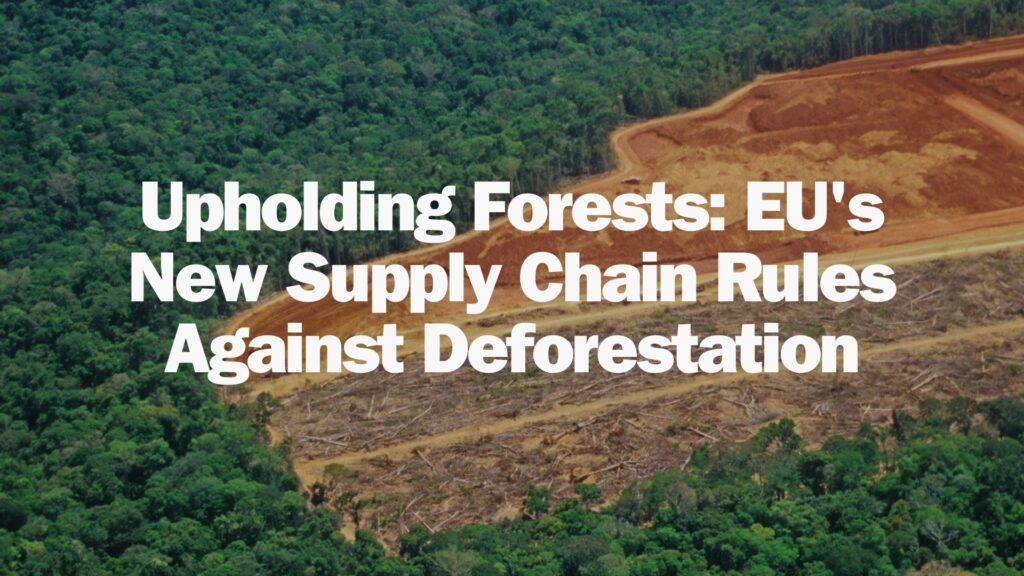
EU Implements Strict Measures to Ensure Deforestation-Free Supply Chains

EU Implements Strict Measures to Ensure Deforestation-Free Supply Chains

In the wake of environmental crises and the looming threat of deforestation, the European Union has taken a decisive step towards protecting global forests. The EU’s recent implementation of stringent regulations to prevent deforestation-linked supply chains marks a pivotal moment in sustainable trade practices. Under these new rules, companies and traders within the EU have been granted an 18-month transition period to comply. The regulations, sanctioned by the European Parliament and EU member nations, fundamentally aspire to eliminate goods from the EU market that contribute to deforestation and forest degradation, both within the EU and across the globe. Virginijus Sinkevičius, the Commissioner for the Environment, emphasized the broader impact of these regulations, stating, “This law will not only help protect forests worldwide but also increase the demand for products not linked to deforestation.” This directive offers an open market for all countries, provided they can substantiate their products’ deforestation-free status, encouraging collaboration with international partners to ensure effective implementation and success. This regulation’s heart lies in a concerted effort to combat climate change and preserve biodiversity. It places a binding duty of care on relevant companies placing specific goods on the EU market or exporting them outside the EU. This encompasses commodities like palm oil, beef, soy, coffee, cocoa, wood, rubber, and their derived products, identified as primary drivers of deforestation due to extensive agricultural expansion. The obligations thrust upon companies are rigorous. Operators and traders must unequivocally demonstrate that their products have no association with deforestation, including proof of being sourced from lands cleared before December 31, 2020, and compliance with all pertinent legislations in their country of origin. The mandate further requires these entities to meticulously document geographical specifics regarding the agricultural lands involved in production for verification purposes. Non-compliance with these regulations will not be tolerated lightly. Member States are mandated to enforce effective and dissuasive sanctions, ensuring adherence to the guidelines. Additionally, the list of monitored raw materials is subject to regular review and updates, reflecting any shifts in deforestation patterns or newly available data. Recognizing the varying capacities of businesses, smaller enterprises will benefit from an extended adjustment period to align with these regulations effectively. The European Commission will introduce a comparative assessment system, critically evaluating countries or regions based on their deforestation and forest degradation risk levels. This assessment will determine the extent of company obligations tailoring requirements to correspond with the assessed risk levels. Implementing these regulations signifies a monumental stride towards sustainable commerce, underscoring the EU’s commitment to combatting deforestation and its far-reaching implications. It reinforces environmental conservation efforts and sets a precedent for responsible global trade practices, fostering a future where economic progress harmonizes with ecological preservation. Source: European Commission Related Articles

EU Implements Strict Measures to Ensure Deforestation-Free Supply Chains Read More »

Restoring Mountain Ecosystems Lessons, Success, and Future Endeavors - Green Initiative Forest Friends

Restoring Mountain Ecosystems: Lessons, Success, and Future Endeavors

Often seen as majestic landscapes, mountains are crucial yet undervalued in our world’s ecological balance. As we commemorate International Mountain Day, the Food and Agriculture Organization (FAO) and the United Nations Environment Programme (UNEP) have unveiled a groundbreaking report. This collaborative publication stands as a beacon, shedding light on the often-neglected realm of mountain ecosystems and their imperative restoration. The report is a treasure trove of principles, success stories, and recommendations to revitalize these vital ecosystems. With a deep dive into lessons gleaned from esteemed projects across Uganda, Rwanda, Serbia, Kyrgyzstan, Nepal, and the Andes, it emphasizes the significance of mountains—homes to approximately one billion people and the lifeline for countless more who rely on them for sustenance and water resources. Despite their profound importance, mountains have historically been overlooked in restoration initiatives. However, this report serves as a testament to the burgeoning success of #GenerationRestoration in reviving these ecosystems. It showcases instances where dedicated efforts have reaped rewards, breathing life into these often-forgotten landscapes. In the heart of Lambayeque, nestled within the Chaparri Ecological Reserve, a crucial endeavor is underway: the restoration of ecosystems through tree planting. This region holds a special significance as it harbors the underrepresented dry forest ecosystems of the Peruvian Andes. Our concerted efforts focus on planting trees, a pivotal step towards rejuvenating and preserving these invaluable ecosystems. The Chaparri Ecological Reserve stands as a beacon for conservation, aiming to revive and protect the unique biodiversity found within the dry forests of the Peruvian Andes. By planting trees in this biodiverse haven, we aim not only to restore the ecosystem but also to bolster the resilience of this landscape, ensuring its sustainability for generations to come. Each tree planted in this underrepresented region contributes significantly to the restoration and preservation of the precious dry forest ecosystems of the Peruvian Andes. We are planting trees to restore ecosystems in the Chaparri Ecological Reserve at Lambayeque, a region with underrepresented dry forest ecosystems in the peruvian andes. To support this initiative click here. The report elucidates how the UN Decade’s Ten Principles for Ecosystem Restoration can be effectively applied to these unique terrains by analyzing various mountain ecosystem restoration projects. Furthermore, it celebrates the victories of initiatives chosen or shortlisted as the UN Decade’s World Restoration Flagships. These success stories not only inspire but also serve as guiding beacons for future endeavors in mountain restoration. As this year’s International Mountain Day centers on the theme of “Restoring Mountain Ecosystems,” this publication assumes profound significance. It highlights achievements, delineates challenges, presents compelling case studies, and offers pragmatic recommendations for implementing the UN Decade Principles for Mountain Ecosystem Restoration. Jointly developed by the Mountain Partnership Secretariat at FAO and UNEP, this report represents a collaborative effort uniting expertise and insights from diverse landscapes. Its comprehensive analysis and actionable recommendations are pivotal to the ongoing efforts to restore the delicate balance of mountain ecosystems. Moreover, this publication arrives at an opportune moment, coinciding with the celebration of Five Years of Action for the Development of Mountain Regions 2023–2027. It serves as a roadmap, guiding the trajectory of future actions and policies necessary for the sustainable development of these critical regions. In essence, this report serves as a rallying call to acknowledge the significance of mountains, celebrate the strides made in their restoration, and galvanize global action toward preserving and nurturing these vital ecosystems. The link to the publication promises a wealth of knowledge, offering insights into the challenges, triumphs, and the promising path forward for restoring mountain ecosystems. It beckons all stakeholders, from policymakers to environmental enthusiasts, to embark on a journey towards a more sustainable future where mountains thrive, providing for generations to come. As we commemorate International Mountain Day, let us heed this call, celebrate the progress, and recommit ourselves to preserving and restoring these awe-inspiring natural wonders. Download the report here. Source: UN Decade on Ecosystem Restoration – United Nations Environment Programme and Green initiative Forest Friends.

Restoring Mountain Ecosystems: Lessons, Success, and Future Endeavors Read More »

Breaking Ground The Inaugural Sustainable Transatlantic Flight - Pioneering Aviation's Environmental Shift

Breaking Ground: The Inaugural Sustainable Transatlantic Flight – Pioneering Aviation’s Environmental Shift

In a defining moment for the aviation industry, the inaugural sustainable transatlantic flight, VS100, has broken ground in pursuing eco-friendly air travel. Departing from London’s Heathrow Airport on November 28, 2023, this historic journey marked the first-ever transatlantic flight powered entirely by sustainable aviation fuel (SAF). The flight, operated by Virgin Atlantic and bolstered by UK government support, has ignited celebration and scrutiny across various spheres. A bold ambition lies at the heart of this groundbreaking flight: reducing net carbon emissions. Aviation, long criticized for its substantial environmental impact, faces a pivotal question: Could this pioneering flight hold the key to mitigating the industry’s environmental challenges? Traditionally, airlines have experimented with blends of up to 50% alternative fuels, termed SAF, but the VS100 flight stands out, using fuel derived predominantly from grease and other waste products. Its mission? To showcase a tangible path towards significantly slashing net carbon emissions associated with commercial flights. The significance of this feat hasn’t gone unnoticed. Mark Harper, UK Transport Secretary, who was on board the flight, emphasized its importance, envisioning a future where transportation undergoes a radical decarbonization, with a staggering 70% reduction in lifecycle emissions. Chancellor Rishi Sunak echoed these sentiments, recognizing the flight as a pivotal stride toward greener air travel and the crucial decarbonization of our skies. Such sentiments underscore the UK government’s commitment to the ‘jet zero’ objective—a concerted effort to minimize carbon emissions linked to aviation. Yet, alongside accolades, the journey towards sustainable aviation encounters substantial challenges. While Virgin Atlantic champions the safety and efficacy of SAF as a viable alternative to conventional kerosene, Sir Richard Branson, the airline’s founder, echoed a sentiment throughout history: ‘The world will always assume something cannot be done until you do it.’ Central to this initiative is using SAF, which airlines consider pivotal to curb net emissions. However, the current availability of such fuel remains relatively low compared to the global consumption of kerosene, posing a significant hurdle to widespread adoption. Shai Weiss, CEO of Virgin Atlantic, stressed the imperative of radical collaboration while acknowledging the stark reality: the inadequacy of current SAF production. To achieve large-scale viability, substantial investments must be made. Recognizing the pivotal role of sustainable aviation in the future landscape, the UK government has pledged ongoing support to the SAF industry. Efforts for job creation, economic growth, and the ambitious’ jet zero’ goal have been underscored. Plans to construct five SAF-dedicated plants by 2025 in the UK illustrate this commitment, despite the imported nature of the fuel used in the pioneering flight from the US and the EU. However, amidst industry and government commendations, environmental advocates remain skeptical. Critics highlight misleading assertions, especially regarding the Department of Transport’s claim that SAF will render guilt-free flying a reality. While the VS100 flight marks a crucial milestone in sustainable aviation, it also serves as a poignant reminder of the considerable challenges ahead. The road to widespread adoption of sustainable aviation fuel demands innovation and unprecedented collaboration and investment. As industry pioneers forge ahead, the balance between aspirations and realities will shape the future of eco-friendly aviation. Sources: Virgin.com, The Guardian, Gov.uk, Stakeholders.com Related Articles:

Breaking Ground: The Inaugural Sustainable Transatlantic Flight – Pioneering Aviation’s Environmental Shift Read More »

Green Initiative's Leadership in Climate-Smart Tourism at cop28

Green Initiative’s Leadership in Climate-Smart Tourism at COP28

In an era where environmental concerns are at the forefront of global discourse, the tourism sector is both a beacon of exploration and a contributor to carbon emissions. However, amid this duality, strides toward sustainable practices are being made, exemplified by the Glasgow Declaration and the dedicated efforts of organizations like the Green Initiative. As a signatory of the Glasgow Declaration, it is with immense pride and honor that Green Initiative announces its participation at COP28 in Dubai. Alongside UN Climate Change, on the 10th and 11th of December 2023, the exhibition booths nestled inside the Blue Zone. This presence shows our pivotal role in driving transformative change on the international platform. As a committed signatory of the Glasgow Declaration, Green Initiative has positioned itself as a catalyst for change, focusing on infusing climate action into the fabric of business models. Our unwavering commitment extends to guiding and empowering tourism entities worldwide to curb their carbon footprint and ultimately achieve net-zero emissions before 2050. The transformative journey of the tourism sector aligns harmoniously with the principles outlined in the Glasgow Declaration. This movement is underscored by the Green Initiative’s strategic development of the “Climate Action Guide for Tourism Businesses and Destinations.”  This comprehensive roadmap equips stakeholders with practical tools and real-life examples of successful climate mitigation efforts, featuring notable instances like Machu Picchu – The First Carbon Neutral Certified UNESCO Designated Site and Bonito – The First Carbon Neutral Ecotourism Destination in the World. Beyond mere carbon reduction, the Glasgow Declaration advocates adopting eco-friendly and regenerative practices in tourism. Green Initiative stands at the vanguard, actively collaborating with international tourism entities, agencies, and hospitality chains to integrate regenerative approaches. Notably, our initiatives align with the UN Decade for Ecosystem Restoration program, showcasing projects in Peninsula de la Osa, Costa Rica, and Madre de Dios, Peru, to restore 10 thousand hectares (100,000 trees) by 2030. At its core, Green Initiative’s leadership under the Glasgow Declaration embodies a commitment to climate-smart and regenerative tourism. From spearheading decarbonization efforts in renowned destinations to fostering collaborative ecosystem restoration projects in biodiversity hotspots, our endeavors radiate a dedication to promoting positive climate and environmental impacts within the tourism sector globally. Moreover, through initiatives like the “Climate Action Guide for Tourism Businesses and Destinations,” the Green Initiative facilitates a critical alignment between public and private investments with overarching global climate goals. This guide is a beacon for industry leaders and governments, empowering them to steer their efforts toward sustainable, climate-resilient tourism practices. In essence, Green Initiative’s unwavering dedication underscores the vital role of proactive collaboration and sustainable innovation in fostering a tourism landscape that mitigates its environmental impact and nurtures the natural world it so eagerly explores. As we continue to pave the way for climate-positive tourism, our commitment remains a testament to the transformative power of aligned action and conscientious stewardship in safeguarding our planet for future generations.

Green Initiative’s Leadership in Climate-Smart Tourism at COP28 Read More »

Paving the Way for Sustainable Agriculture Five Key Strategies

Paving the Way for Sustainable Agriculture: Five Key Strategies

The global landscape of agriculture is at a pivotal juncture, caught between the demands of a burgeoning population and the imperative to safeguard our environment. Conventional agricultural practices have long served as the backbone of food production, yet their impact on ecosystems and human health raises urgent concerns. In response, a clarion call for sustainable agriculture has emerged, propelled by the pressing need to ensure food security while preserving our planet’s delicate balance. The World Economic Forum underscores the critical role of the agricultural sector, contributing substantially to global economies while employing a significant portion of the world’s workforce. However, conventional methods, such as the heavy reliance on synthetic fertilizers and pesticides, monoculture, and large-scale industrial farming, have taken a toll on our environment and human well-being. Enter sustainable agriculture – a viable pathway offering resilience, equity, and environmental sustainability across the food system. Amidst escalating climate change effects, from soil degradation to dwindling water levels, sustainable agriculture stands as a beacon of hope, charting a course opposite to the detrimental effects of conventional farming practices. Outlined by the Food and Agriculture Organization (FAO) and championed by the World Economic Forum, five pivotal strategies pave the way for this transformative shift: The imperative to accelerate the transition to sustainable agricultural practices looms large. Embracing these strategies can herald a paradigm shift, ensuring food security, safeguarding the environment, and fostering a more resilient agricultural ecosystem. As stakeholders unite in this collective endeavor, the promise of a sustainable future for agriculture beckons on the horizon. If you’re seeking guidance or wish to delve deeper into these transformative strategies for sustainable agriculture, our team is here to assist you. Whether you’re a farmer eager to implement these practices, a stakeholder in the agricultural sector, or an enthusiast keen on contributing to a sustainable future, reach out to us for personalized advice and comprehensive support. Together, let’s embark on this journey toward a more resilient, equitable, and environmentally conscious agricultural landscape. Contact us today to join the movement shaping the future of agriculture. Related articles:

Paving the Way for Sustainable Agriculture: Five Key Strategies Read More »

Inter-American Development Bank Launches BID CLIMATE Program with Nine Partner Nations

Inter-American Development Bank Launches BID CLIMATE Program with Nine Partner Nations

In a groundbreaking move towards combating climate change, the Inter-American Development Bank (IDB) unveiled its pioneering initiative, the BID CLIMATE pilot program. This innovative financial endeavor aims to incentivize and support nations in their pursuit of environmental and climate-related goals. Announced on December 2, 2023, in Dubai, the IDB highlighted the participation of the first nine eligible projects as a significant milestone in the fight against climate challenges. The BID CLIMATE program marks a transformative approach in financial assistance, providing borrowers with a remarkable benefit: a 5% grant of the IDB loan principal. This strategic move aligns with the overarching goal of mobilizing resources for climate and nature-centric investments on a larger scale. Initially allocating a substantial $1 billion in loans, the program will kickstart ten pilot projects aimed at catalyzing sustainable initiatives. The President of the IDB, Ilan Goldfajn, expressed immense satisfaction with the enthusiastic response received at the United Nations Climate Change Conference, COP28. “The demand has exceeded our expectations, demonstrating a collective commitment to address climate and nature-related challenges. Our teams are actively collaborating with regional partners to initiate these transformative pilot projects,” Goldfajn remarked. To access this pivotal benefit, participating nations must meet three Key Performance Indicators (KPIs) specially designed to facilitate their engagement with green and thematic debt markets. These KPIs center around establishing ambitious environmental objectives, devising suitable policies and expenditures, and ensuring effective measurement and reporting mechanisms for their progress. The nine pioneering countries partaking in the BID CLIMATE program—Barbados, Belize, Brazil, Chile, Colombia, Paraguay, Dominican Republic, Suriname, and Uruguay—herald a collective commitment to proactively combat climate change and preserve nature’s integrity. Meanwhile, Latin America and the Caribbean stand prominently at COP28, contributing a multifaceted approach to tackle global climate challenges. The IDB’s Americas Pavilion serves as a pivotal platform, hosting over 30 events featuring global leaders and experts. These events span a wide spectrum, encompassing discussions on cutting-edge financial instruments, sustainable resource management, just economic transitions, and initiatives for preserving the Amazon rainforest. Journalists covering COP28 have open access to the pavilion’s events, facilitating comprehensive coverage of these critical discussions and initiatives. The IDB, established in 1959, remains committed to enhancing lives across Latin America and the Caribbean. Beyond financial assistance, the IDB spearheads research endeavors, offers policy recommendations, extends technical support, and provides training to both public and private entities throughout the region. Its unwavering dedication underscores a collective effort towards sustainable development. As the BID CLIMATE program takes flight, supported by nations committed to combating climate change, it marks a significant stride towards a more sustainable and resilient future for generations to come. For more information about the BID CLIMATE program contact Anspach,Raphael Philippe M. (raphaela@iadb.org) or Borges De Padua Goulart Janaina (janainag@iadb.org). You can also contact one of BID local offices. Source: BID

Inter-American Development Bank Launches BID CLIMATE Program with Nine Partner Nations Read More »