SUSTAINABILITY | CLIMATE ACTION | PROFESSIONAL EDUCATION
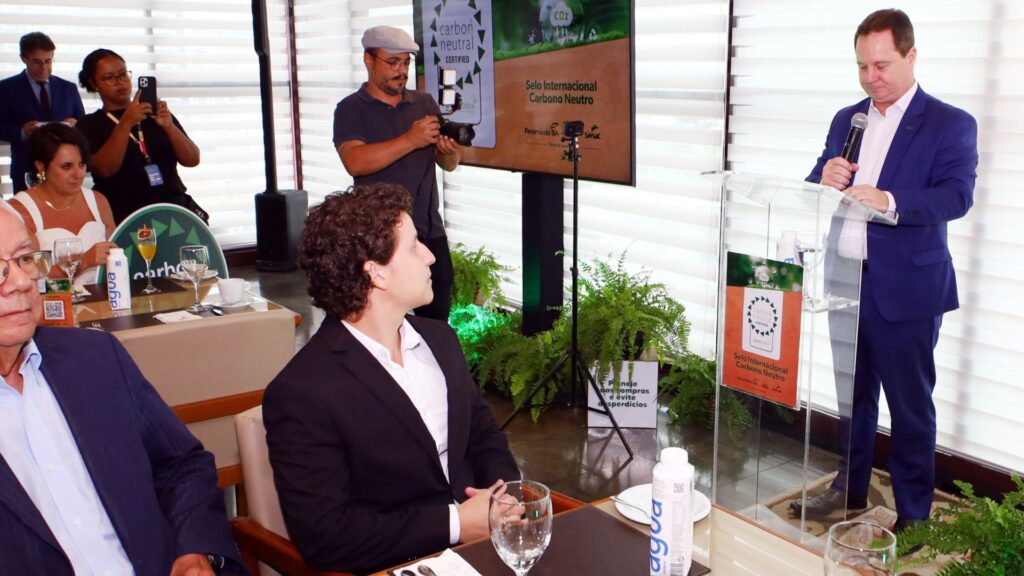
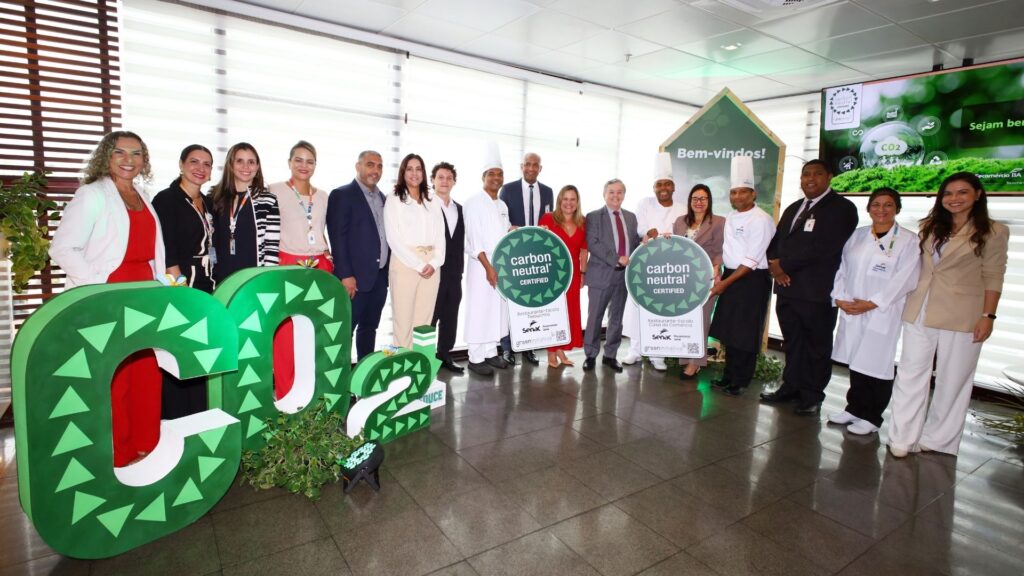
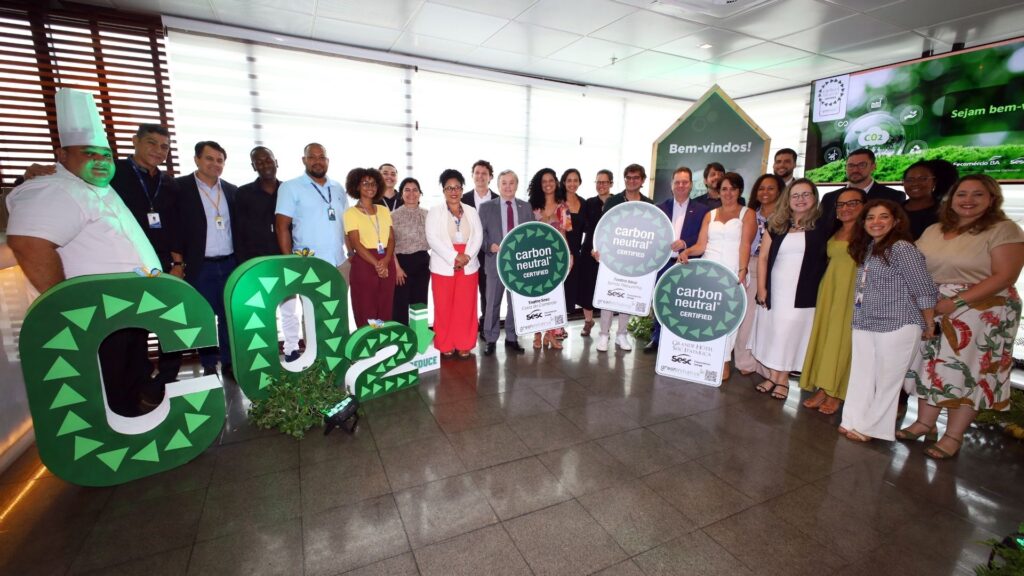
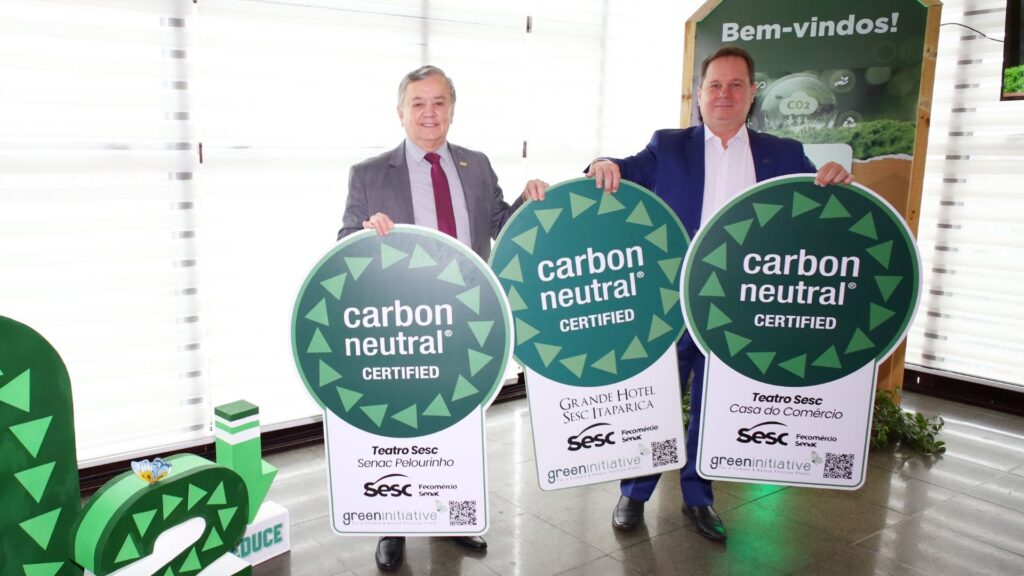
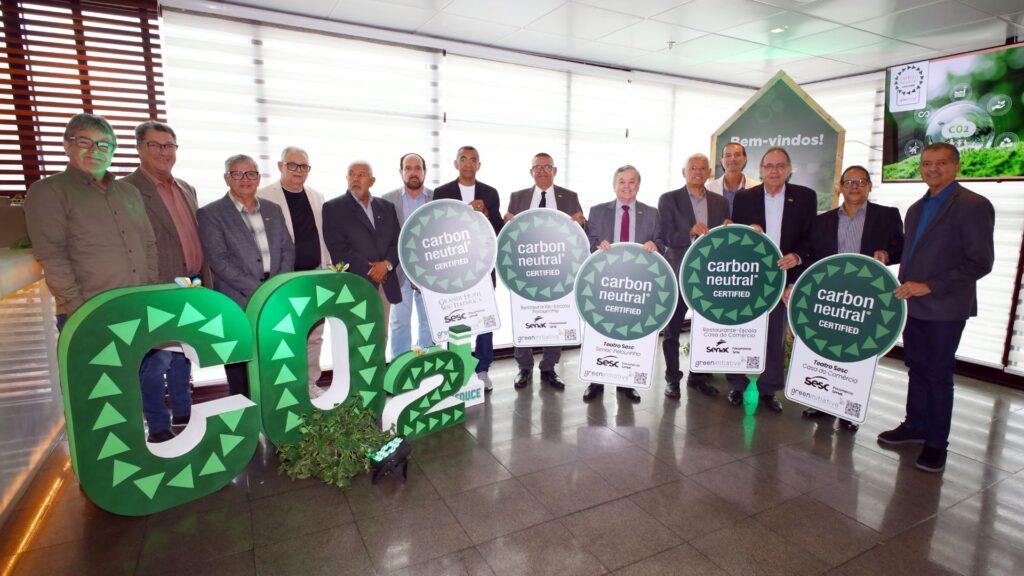
In January 2026, five units of SESC and SENAC Bahia received or renewed their Carbon Neutral certifications by GI International, consolidating the most comprehensive decarbonization project in the service and professional education sector in Brazil.
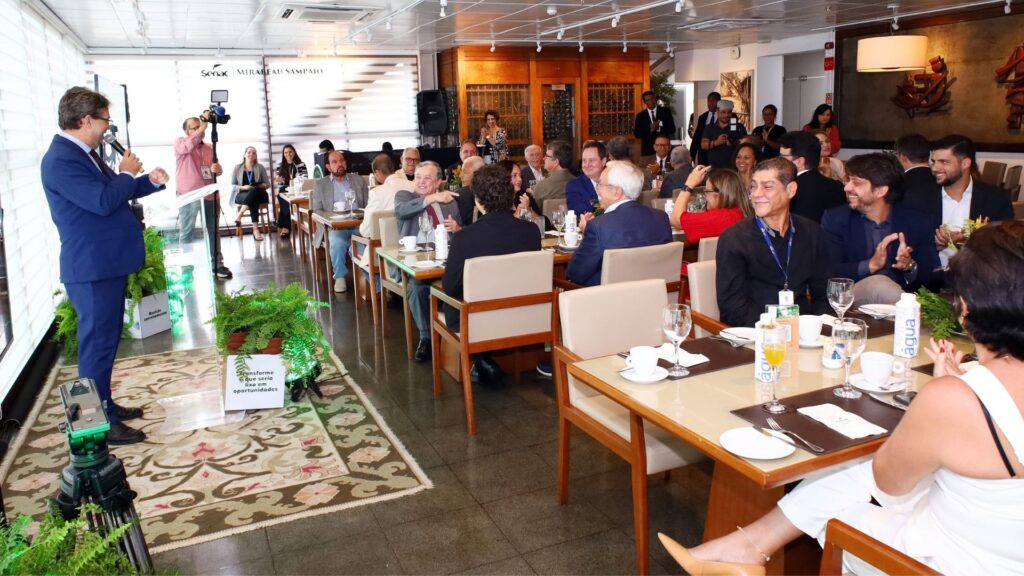
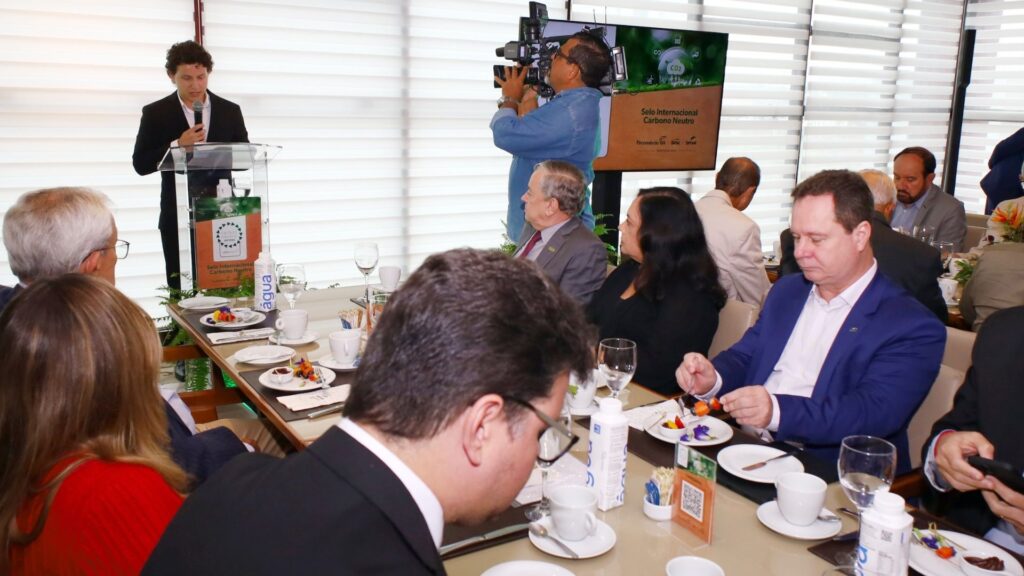
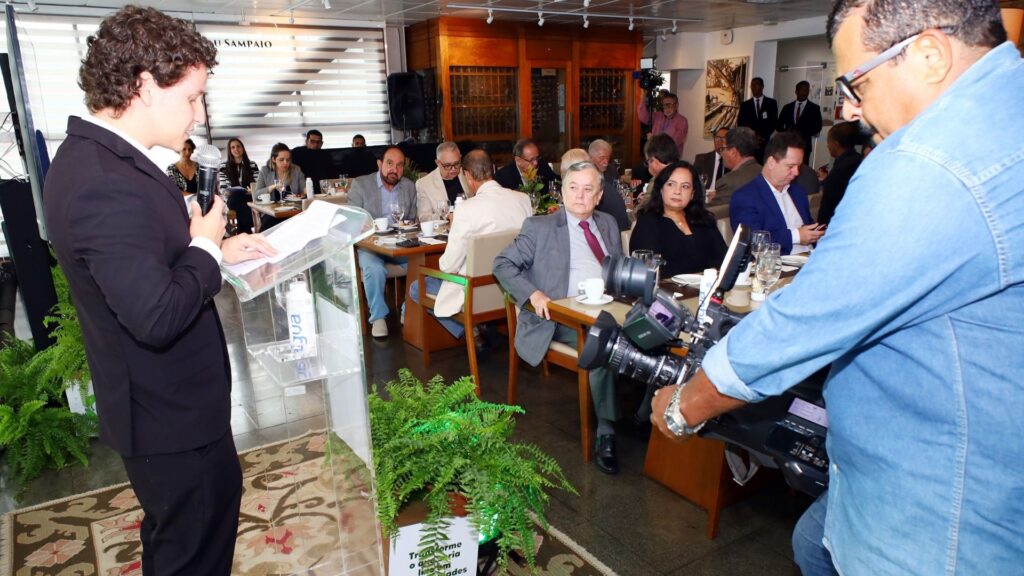
When, in 2022, the Senac Bahia Casa do Comércio Restaurant-School became the first Carbon Neutral certified restaurant in Brazil, the achievement sounded like a promise: that sustainability and operational excellence could go hand in hand. Three years later, that promise was not only fulfilled but multiplied. In January 2026, five units of the Sistema Comércio Bahia came together in a certification ceremony that marked a new chapter in the history of climate action in the country’s service sector.
The ceremony brought together two distinct but complementary processes. On one hand, the Carbon Neutral recertification of the Senac Bahia Casa do Comércio and Pelourinho Restaurant-Schools and the Grande Hotel Sesc Itaparica. On the other, the debut of two new spaces in this journey: the Sesc Casa do Comércio Theaters and the Sesc-Senac Pelourinho Theater, which achieved their first Carbon Neutral certification, expanding the scope of the project to the cultural and events sector.
The result is an unprecedented institutional climate action portfolio in Brazil: five certified units, covering gastronomy, hospitality, and culture, all operating in Salvador and the Baía de Todos os Santos, all committed to concrete decarbonization pathways through 2030.
The progress of the Restaurant-Schools: growing without compromising the climate
The Senac Bahia Casa do Comércio Restaurant-School completed in 2025 its third greenhouse gas inventory, referring to the year 2024, and the numbers tell a story of decoupling between growth and environmental impact, something rare and valuable in the gastronomic sector.
In 2024, the restaurant served 94,515 people, an increase of 23.2% compared to 2023. In contrast, absolute emissions increased only 10.9%, rising from 1,089.32 to 1,212.94 tons of CO2eq. What is most impressive, however, is the emissions intensity indicator per person served: 12.78 kgCO2eq per client, a reduction of 9.96% compared to 2023 and an expressive 26.7% compared to the base year of 2021.
This accumulated reduction of 26.7% in just three years is no coincidence. It results from strategic, consistent, and measurable decisions. The most impactful of these was the reformulation of the menu: emissions associated with beef and lamb per person served fell 26.13%, as a result of conscious substitution with lower environmental impact proteins, such as seafood, poultry, and pork. The purchase of 100% renewable energy through the free market completely eliminated emissions from electricity consumption (Category 2), an achievement that remains a pillar of the decarbonization strategy. The 90.44% reduction in paper consumption per person served also deserves attention, resulting from an operational transformation that goes beyond symbolism.
The most revealing result lies in the trajectory relative to the 2030 target. The restaurant had projected reaching 14.54 kgCO2eq per person as an intermediate benchmark in 2024. By achieving 12.78, it was approximately one to two years ahead of the planned schedule. This means that the target of a 50% reduction by 2030, starting from 17.44 kgCO2eq/person in the base year, is not only on the horizon but appears achievable ahead of schedule.
The Senac Bahia Pelourinho Restaurant-School, in turn, completed in 2024 its first year post-baseline, in an inaugural monitoring cycle. With a total footprint of 1,283.22 tCO2eq and an intensity indicator of 12.18 kgCO2eq per person served (calculated over 105,345 clients), Pelourinho establishes its starting line clearly. The first decarbonization cycles often present adjustment challenges, and Pelourinho was no exception: a 14.91% increase in absolute emissions alongside a 6.64% increase in audience signals the path still to be traveled. Even so, positive results are already emerging: solid waste decomposition fell 33.08% per person served, and employee commuting decreased 12.13%. The 50% reduction target by 2030, based on the 11.30 kgCO2eq/person indicator in 2023, is ambitious and achievable, especially with the implementation of the structured actions in the Climate Action Plan that will be put into practice starting in 2025.
Grande Hotel Sesc Itaparica: 41.48% reduction in emissions intensity
Among all the decarbonization stories celebrated in January 2026, that of the Grande Hotel Sesc Itaparica may be the most eloquent in numerical terms. In its second Carbon Neutral certification cycle, the hotel presented results that challenge the conventional logic that growth and emissions reduction are conflicting objectives.
In 2024, the hotel recorded a 13.84% increase in the number of overnight stays, rising from 38,447 to 43,767. Simultaneously, absolute emissions fell 33.38%, from 1,966.34 to 1,309.90 tCO2eq. The intensity indicator per overnight stay dropped from 51.14 to 29.93 kgCO2eq, a reduction of 41.48% in a single cycle. This result demonstrates real gains in carbon management efficiency and does not stem from a single isolated action, but from a set of operational transformations.
The transition to 100% renewable energy, with I-REC certification, completely eliminated emissions from electricity consumption, which in 2023 represented 38.61 tCO2eq. The production of raw materials and inputs, the main source of emissions in any hospitality operation, decreased 32.87% in absolute values and 41.03% in intensity. Employee commuting decreased 32.97% in absolute terms. Improved data collection on refrigerant gases, adopting a methodology based on primary replenishment data instead of estimates based on average rates, also contributed to more accurate and representative measurement of operational reality.
The Grande Hotel Sesc Itaparica concretely illustrates that sustainable tourism is not a niche or an aspiration: it is a viable business strategy that delivers economic and environmental value simultaneously. Located on the island of Itaparica, in the Baía de Todos os Santos, the hotel also carries the symbolic weight of protecting one of the richest marine ecosystems in the southern hemisphere.
Expansion into culture: the Sesc Theaters reach certification
The major new development in January 2026 was the incorporation of two theaters into Sesc Bahia’s Carbon Neutral portfolio. The Sesc Casa do Comércio Theater and the Sesc-Senac Pelourinho Theater conducted their first greenhouse gas inventories, referring to the year 2024, and immediately achieved Carbon Neutral certification. This expansion into the cultural sector inaugurates a new chapter: that of performing arts committed to climate responsibility.
The Sesc Casa do Comércio Theater recorded a total footprint of 150.75 tCO2e in 2024, with an intensity indicator of 2.71 kgCO2eq per client. Emissions are mainly concentrated in the production of raw materials and inputs (67.34 tCO2e, corresponding to 44.7% of the total), followed by air-conditioning systems (35.93 tCO2e) and audience transportation (29.36 tCO2e). One achievement already consolidated is the use of electricity from renewable sources, which completely eliminated Scope 2 emissions, positioning the theater ahead of most cultural venues in the country.
The Sesc-Senac Pelourinho Theater, in turn, presented a footprint of 66.12 tCO2eq, with an intensity indicator of 1.27 kgCO2eq per client. Pelourinho’s emissions profile is dominated by transportation of audience and staff, which together account for approximately 91% of the total footprint, 40.19 tCO2eq from the audience and 19.94 tCO2eq from staff. As in the Sesc Casa do Comércio Theater, electricity consumption has already been neutralized through the use of renewable sources.
For both theaters, the first inventory establishes the baseline from which reduction targets will be built. The Sesc Casa do Comércio Theater defined as its objective to reduce at least 30% of Scope 1 and 2 emissions by 2030, in addition to 10% in Scope 3. These targets, combined with full compensation of emissions via certified carbon credits, guaranteed Carbon Neutral certification in the first cycle, a demonstration of institutional commitment from the starting point.
National reference: what this set represents for Brazil
The importance of what was achieved by Sistema Comércio Bahia transcends technical reports and emission numbers. What is being built in Salvador is a model: the practical demonstration that service sector organizations, with diverse and complex operations, can integrate climate action as a strategic pillar aligned with growth, quality, and institutional mission.
In 2022, when the Senac Casa do Comércio Restaurant-School became the first Carbon Neutral certified restaurant in Brazil, the achievement was singular. In 2026, with five certified units covering three distinct sectors, gastronomy, hospitality, and culture, the project transforms into a system. And systems are more robust, more replicable, and more influential than isolated initiatives.
The methodology adopted in all inventories, based on ISO 14064-1:2018 standards and the GHG Protocol Corporate Standard, ensures technical rigor and comparability between cycles. This means that the progress recorded is not subjective perception, but measurable, verifiable, and auditable evidence. Every ton of CO2eq reduced is documented. Every strategic decision, from protein substitution on the menu to the adoption of renewable energy, can be traced in its real impact.
The multiplier potential of the project is equally significant. The Senac Bahia Restaurant-Schools train gastronomy professionals who carry with them, through daily practice, the understanding that climate sustainability is an inseparable part of professional excellence. Each graduate who implements low-carbon practices in other establishments amplifies the original impact beyond the physical boundaries of the certified units. Beyond the Grande Hotel Sesc Itaparica, working directly with sustainable tourism, the Sesc Bahia theaters, in turn, can use their cultural platform to raise awareness and educate the public about climate urgency, integrating the environmental dimension with the artistic dimension.
The challenges ahead and the vision for 2030
Celebrating progress does not mean minimizing challenges. The technical reports are explicit about this, and it is necessary to be equally direct. In all units, the largest concentration of emissions lies in what is called Scope 3, indirect emissions from the value chain: production of raw materials and inputs, supplier transportation, employee and audience commuting. In the case of the restaurants, this category represents more than 88% of the total footprint. At the Grande Hotel Sesc Itaparica, it exceeds 90%.
These emissions are, by nature, more difficult to control directly. They depend on third-party decisions, transformations in agricultural systems, changes in public behavior, and commitment from the supply chain. That is precisely why the next stages will require more strategic interventions: structured engagement of the supply chain, with suppliers being supported to measure and reduce their own emissions; deepening waste management practices, with implementation of composting and circularity; and consolidation of sustainable mobility programs for staff and audiences.
The accumulated advantage of the Senac Casa do Comércio Restaurant-School relative to its 2030 target, being approximately one to two years ahead of schedule, offers an important strategic margin. This margin is not a sign that efforts can be reduced, but rather that there is room to deepen interventions in more complex areas, such as supplier engagement and forest restoration as a complement to mitigation actions.
For the units at earlier stages of their journey, such as the Senac Pelourinho Restaurant and the two Sesc theaters, the perspective is one of acceleration starting in 2026. The Climate Action Plans are already established. The baselines are calculated. The targets are defined. What comes next is consistent implementation, cycle after cycle, with the same methodological rigor and institutional commitment that characterized the project’s pioneering spirit since its beginning.
Salvador, Bahia, and the low-carbon economy of tomorrow
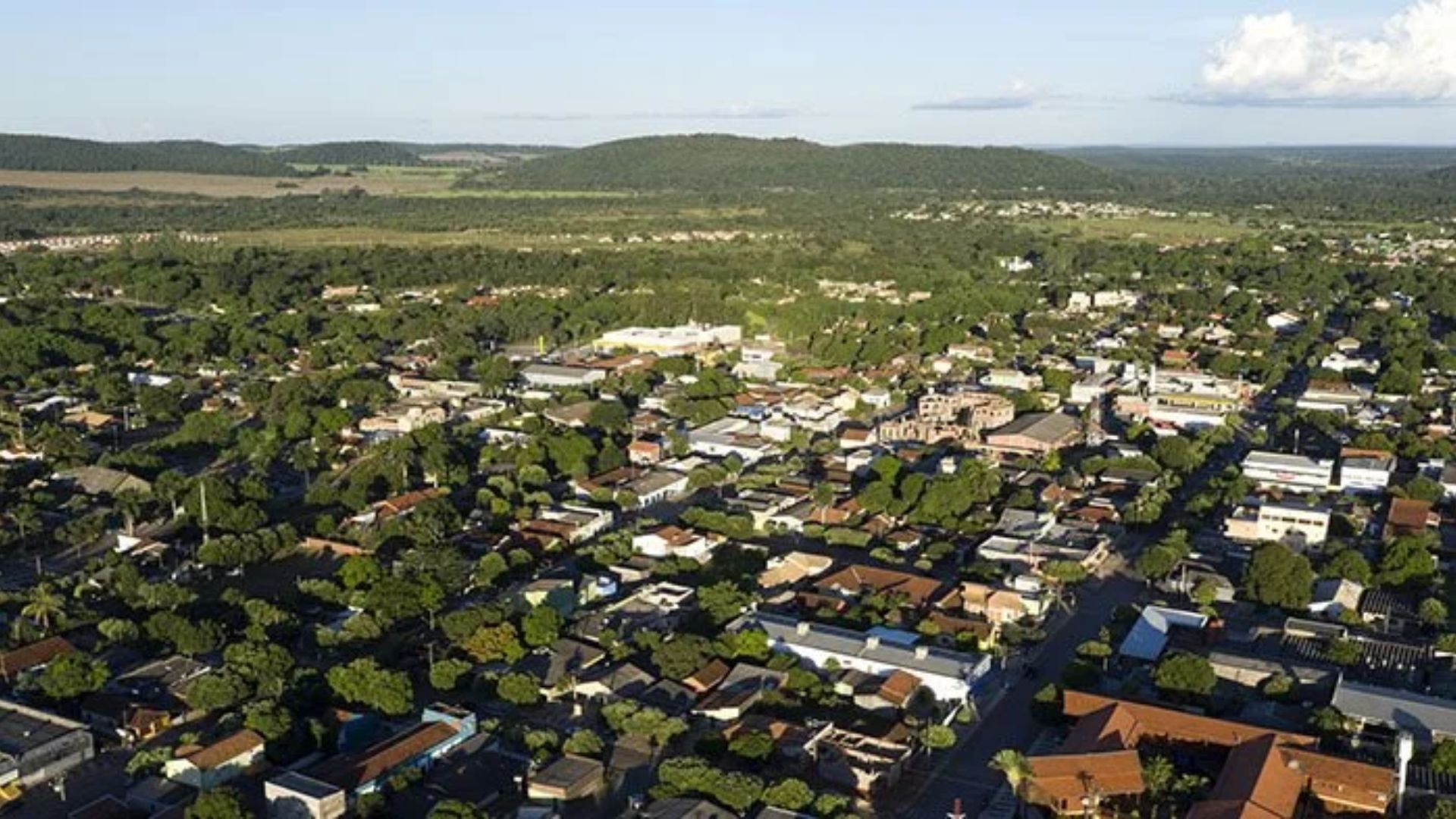
There is something profoundly symbolic in the fact that this project was born and developed in Bahia. Salvador, the founding city of Brazil, home to the country’s first Carbon Neutral certified restaurant, a city that hosts historic theaters and a hotel on the shores of the largest tropical bay in the world, is proving that the climate transition is not an issue restricted to wealthy countries or large global corporations. It is something that can and should be built here, with the institutions we have, with the communities that surround us, and with the culture that defines us.
Sesc and Senac Bahia have demonstrated that organizations with a clear social mission, long-term commitment, and willingness to measure, transparently and rigorously, their climate impacts, can transform themselves into effective agents of economic decarbonization. They did not wait for regulation to force them. They did not wait for technology to become cheaper. They did not wait for others to take the first step. They took the step themselves.
In 2030, when the target of a 50% reduction in emissions from the restaurant-schools is within reach, and when the theaters and the hotel have traveled their own decarbonization pathways, what will have been built will not be just a portfolio of certifications. It will be a legacy: proof that gastronomy can be sustainable without giving up flavor; that culture can be transformative without leaving unnecessary footprints; that tourism can enchant without harming the planet that sustains it.

This article was written by Matheus Mendes from the Green Initiative Team.



















Frequently Asked Questions (FAQ)
Carbon Neutral certification means that the organization has measured its greenhouse gas emissions using internationally recognized standards, implemented reduction strategies, and fully compensated remaining emissions through certified carbon credits. In this case, all five units followed ISO 14064-1:2018 and the GHG Protocol Corporate Standard, ensuring technical rigor, transparency, and auditability.
These categories classify greenhouse gas emissions:
Scope 1: Direct emissions from owned or controlled sources (e.g., fuel combustion, refrigerants).
Scope 2: Indirect emissions from purchased electricity.
Scope 3: Indirect emissions from the value chain (e.g., raw materials, supplier transport, employee commuting, audience transportation).
In the case of the restaurants and hotel, Scope 3 represents more than 88–90% of total emissions, making supply chain engagement essential.
The certified units demonstrated “decoupling” — increasing service capacity while reducing emissions intensity. This was achieved through:
– Transition to 100% renewable electricity
– Reformulation of menus with lower-impact proteins
– Reduction in paper consumption
– Improved waste management
– More efficient operational systems
– Data-driven carbon management
Growth and sustainability were aligned through strategic operational transformation.
Renewable energy was a major driver of emission reductions. By purchasing 100% renewable electricity (with I-REC certification), Scope 2 emissions were completely eliminated in several units. This significantly reduced overall carbon intensity and accelerated progress toward 2030 targets.
Scope 3 emissions come from the supply chain and public behavior — areas that organizations do not directly control. Reducing them requires:
– Supplier engagement and collaboration
– Sustainable procurement policies
– Waste circularity systems
– Public awareness and sustainable mobility strategies
This makes Scope 3 reduction more complex but also more transformative.
Key targets include:
– 50% reduction in emissions intensity for the restaurant-schools (from baseline levels)
– At least 30% reduction in Scope 1 and 2 emissions for the theaters
– 10% reduction in Scope 3 emissions in initial theater commitments
– Continued intensity reductions in hospitality operations
Some units are already one to two years ahead of schedule.
The project demonstrates that climate action can be integrated into gastronomy, hospitality, and cultural institutions without compromising operational excellence or growth. It provides a replicable model for other service organizations seeking to align sustainability with business strategy.
Salvador, home to the first Carbon Neutral certified restaurant in Brazil, is positioning itself as a national reference in low-carbon service operations. The initiative shows that climate leadership is not restricted to wealthy countries or global corporations — it can emerge from regional institutions with long-term vision and institutional commitment.
After reduction efforts, remaining emissions are offset through certified carbon credits that meet recognized verification standards. This ensures full carbon neutrality while reduction pathways continue toward long-term decarbonization goals.
Certification is not the final step. Each unit operates in multi-year cycles:
– Annual greenhouse gas inventories
– Continuous performance monitoring
– Implementation of Climate Action Plans
– Progressive reduction targets toward 2030
Carbon Neutral status is maintained through ongoing measurement, transparency, and improvement.