
UNESCO World Heritage Site

Machu Picchu Achieves Significant Reduction in Carbon Emissions Since 2021 Certification

Machu Picchu’s Journey to Carbon Neutrality: Acelerating public and private decarbonization investments

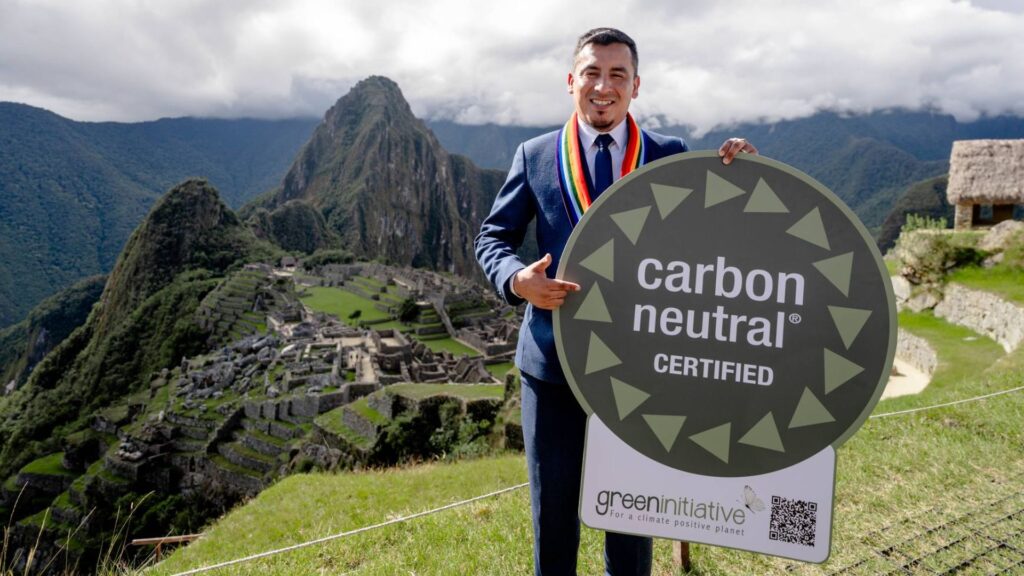
Machu Picchu, Peru – Leading Climate Action in Tourism Amidst the lush Peruvian Andes, Machu Picchu—one of the world’s most iconic cultural and natural landmarks—is redefining what it means to be a sustainable travel destination. With over 1.5 million visitors each year, the challenge was immense—but the will to act was even greater. In a recent interview for the Observatorio de Descarbonización y Economía Circular of the Cámara Nacional de Turismo (CANATUR), Elvis La Torre, Mayor of the District Municipality of Machu Picchu, shared the region’s ambitious climate goals, achievements to date, and critical lessons for the global tourism sector. A Bold Start: Why Machu Picchu Chose Decarbonization The decarbonization project officially began in 2021, led by the District Municipality of Machu Picchu, in collaboration with Inkaterra Asociación and Green Initiative. The decision was made in response to the urgent need to reduce the environmental impact of mass tourism and to shape a more resilient, sustainable development model following the COVID-19 crisis. Using 2019 as the baseline year, Machu Picchu began the Carbon Neutral Certification process and soon became the first UNESCO World Heritage Site to earn this recognition. In 2022, the destination became a signatory of the Glasgow Declaration on Climate Action in Tourism, further reinforcing its leadership in climate-smart tourism. “This certification, led by Green Initiative, gave us the opportunity to position Machu Picchu as a global leader in climate-intelligent tourism,” said Mayor La Torre in the CANATUR interview. Tangible Climate Results: From Waste to Regeneration To date, the outcomes have been remarkable: These milestones were achieved through robust collaboration among public and private stakeholders. Notably, Inkaterra, Grupo AJE, WorldXchange and Tetra Pak played key roles in implementing circular solutions. Luz del Sur provided technical assistance, while CANATUR offered strategic support, reinforcing strong climate governance. Additionally, Machu Picchu’s carbon footprint has been fully offset with 2,155 carbon credits from the REDD+ Brazil Nut Concessions project by Bosques Amazónicos (BAM), which protects over 600,000 hectares of megadiverse forests and supports more than 800 Amazon Brazil nut harvesting families in Madre de Dios, Peru. What’s Next: Scaling Impact and Inclusion Despite significant progress, major challenges remain. Chief among them is the need to expand both public and private financing to scale up the most impactful decarbonization initiatives—such as energy efficiency in tourism services and large-scale ecosystem restoration. Equally important is the continuous strengthening of existing programs, particularly those involving waste management through circular economy principles and the transition to clean energy. Most critically, there is a growing need to increase the active participation of local communities and businesses. Their involvement will be essential to ensure that this regenerative and carbon-neutral tourism model becomes permanent and self-sustaining. “The active participation of all stakeholders will be key to consolidating a regenerative and carbon-neutral tourism model that stands the test of time,” affirmed Mayor La Torre. A Model for the World Machu Picchu’s decarbonization journey is more than a local success story—it is a global call to action. As destinations worldwide face the escalating impacts of climate change, Machu Picchu proves that protecting heritage, supporting local livelihoods, and leading in climate action can go hand in hand. By embracing bold decisions, inclusive governance, and science-based climate solutions, Machu Picchu is charting a path toward a climate and nature-positive future—one that others can follow. 📌 Learn More & Get Involved Is your destination or organization ready to take the next step toward climate and nature-positive leadership? Discover how our certification and advisory services can help you generate measurable impact. 📩 Contact our team This article was written by Yves Hemelryck from the Green Initiative team Related Reading

Machu Picchu’s Journey to Carbon Neutrality: Acelerating public and private decarbonization investments Read More »

Rio de Janeiro's Cristo Redentor Launches Climate Certification A New Era for Sustainable Tourism and UNESCO World Heritage Sites

Rio de Janeiro’s Cristo Redentor Leads the Way for COP30: Climate Action in Tourism for a Resilient Future

Cristo Redentor Sanctuary, Rio Book, and Green Initiative Sign Collaboration Agreement to Launch Climate Certification of this Iconic UNESCO World Heritage Site Aligned with UN Tourism efforts to promote sustainable tourism best practices across the region, and inspired by the achievements of Machu Picchu, the Santuário Cristo Redentor, Rio Book, and Green Initiative have signed a collaboration agreement to launch the climate certification process of Cristo Redentor — an emblematic cultural and religious landmark recognized as a UNESCO World Heritage Site. “Our vision for a thriving tourism sector, aligned with the great challenges humanity must overcome, is clear: tourism development and decarbonization can — and must — go hand in hand. Through this initiative, leveraging the powerful symbolism of Cristo Redentor in Rio de Janeiro, we aim to carry this message not only to other destinations in the region but to the entire world.” — Gustavo Santos, UN Tourism Director for the Americas Located within the lush Tijuca Forest National Park in Rio de Janeiro, Cristo Redentor stands as a powerful symbol of the interconnection between culture, spirituality, and nature. The Sanctuary leads a robust environmental sustainability agenda through its institutions, such as the Instituto Redemptor and the Obra Social Leste Um, coordinated under the Consórcio Cristo Sustentável. Guided by the United Nations’ 2030 Agenda and the Sustainable Development Goals (SDGs), the Sanctuary is progressively internalizing best practices in environmental and social governance, aiming to generate a positive climate impact across all its activities. “Cristo Redentor, a universal symbol of welcome and inclusion, is on its way to its centenary in 2031, establishing itself as the first cultural and religious tourist destination in Brazil to achieve this level of commitment to climate sustainability in the management of its activities. Our strategic planning and governance are aimed at integrating the best environmental practices, with the goal of positioning our monument as a communicating agent that conveys the urgent need for the holistic care of our common home.”— Father Omar Raposo, Rector of the Santuário Cristo Redentor (Christ the Redeemer Sanctuary) On April 24th, during a historic event held in Belém do Pará, the Sanctuary signed two strategic agreements. First, a Protocol of Intentions with the Government of the State of Pará to jointly advance climate and sustainability agendas ahead of COP30. Second, a collaboration agreement with Rio Book and Green Initiative to initiate the climate certification process of Cristo Redentor’s management, with a progressive strategy towards achieving a positive climate impact. Through this collaboration, Cristo Redentor will undergo a comprehensive climate certification process aimed at assessing and mitigating its carbon footprint, integrating climate action at the core of its management model. “Being involved in the Cristo Carbono Neutral Certification process is a tremendous honor and pleasure. With the support from UN Tourism, along with support from public authorities and private sector institutions, we will have a unique project! In addition to Green Initiative’s work, we will mobilize talents to organize events, national and international photography exhibitions, concerts, documentaries… In short, a powerful network of communication and achievements worthy of this major project.” — Ricardo Amaral, Director of Rio Book “This collaboration reflects our commitment to positioning climate action as a central element of regenerative and sustainable tourism. At Green Initiative, we believe that iconic sites like Cristo Redentor have the power to inspire global change—not only through environmental leadership but by engaging communities, visitors, and partners in a collective journey toward a climate-positive future.” — Tatiana Otaviano, Relationship Manager at Green Initiative Importantly, through this process, Cristo Redentor will align its efforts with the Glasgow Declaration on Climate Action in Tourism. Launched at COP26 in 2021, the Glasgow Declaration has been endorsed by over 700 organizations worldwide and calls on tourism stakeholders to halve emissions by 2030 and achieve net zero by 2050. It outlines five pathways for action: Measure, Decarbonize, Regenerate, Collaborate, and Finance. By adhering to these principles through the certification process, Cristo Redentor will further strengthen its governance framework and serve as a model for UNESCO World Heritage Sites worldwide, illustrating how tourism, cultural heritage preservation, and climate action can be mutually reinforcing pillars for sustainable development. Grounded in international standards and Green Initiative’s approach, the overall goal of the project is to internalize climate mitigation action within the Sanctuary’s management practices. In doing so, the certification process will help reinforce ongoing social, cultural, and environmental initiatives led by the Sanctuary, while also identifying and making visible new opportunities for climate action, nature conservation, and community-based cultural programs. This integrated approach will contribute to amplifying the project’s impact and outreach, strengthening Cristo Redentor’s role as a catalyst for sustainable and inclusive development. The certification process will entail a full measurement and analysis of greenhouse gas emissions balance associated with site operations and activities. It will identify and reinforce existing mitigation efforts while exploring new opportunities for carbon capture and resource efficiency. It will culminate in the development of a Climate Action Plan covering the 2025–2030 period, designed to guide strategic investments, operational improvements, and long-term social, cultural and climate-related initiatives. A Strategic Step Toward COP30 The initiative comes at a crucial time, as Brazil prepares to host COP30 from November 10 to 21, 2025, in Belém do Pará — the first time a UN Climate Conference will be held in the Amazon region, a globally significant ecosystem for climate stability. Since the launch of the Glasgow Declaration, the tourism sector has been building a compelling case for its role in addressing the climate crisis. This momentum gained significant traction at COP29 in Baku, Azerbaijan, where tourism was celebrated through the inaugural Tourism and Climate Action Day, underscoring the sector’s growing recognition as a driver of climate solutions and nature-positive action. The climate certification of Cristo Redentor aligns with these global movements and serves as a strategic contribution to Brazil’s and the broader region’s efforts to demonstrate that tourism can be a powerful force for good. By positioning a UNESCO World Heritage Site as a leader in climate mitigation,

Rio de Janeiro’s Cristo Redentor Leads the Way for COP30: Climate Action in Tourism for a Resilient Future Read More »