Circular Economy

Five Years of Building Together: Green Initiative’s Contributions to Climate-Smart Tourism

Five Years of Building Together: Green Initiative’s Contributions to Climate-Smart Tourism

Over the past five years, Green Initiative has evolved from a technical partner into a catalyst for the global movement toward climate-smart tourism. By working alongside United Nations partners and aligning with the Glasgow Declaration on Climate Action in Tourism, we have helped reshape how the industry perceives its role in achieving the goals of the Paris Agreement. Our philosophy is simple: we don’t just provide solutions; we build the architecture for others to lead. A Shared Architecture: Democratizing Climate Knowledge Our approach has always centered on partnership over imposition. We believe that for climate action to be effective, it must be accessible. This commitment led to the development of frameworks and practical guides designed to help destinations and businesses measure, monitor, and reduce their carbon footprints. Catalyzing Local Leadership The true measure of our success is the independence and resilience of our partners. We provide the technical rigor, but the destinations, communities, and businesses remain the true architects of their transformation. Milestones in Climate Excellence Partner Achievement Machu Picchu, Peru Three consecutive Carbon Neutral recertifications. Bonito, Brazil Established as the world’s first Carbon Neutral ecotourism destination. National Frameworks Collaborative policy development with the Brazilian government. Private Sector Leaders Kuoda Travel, Rio da Prata Group, and Estância Mimosa achieving Climate Positive status. “Our comparative advantage lies in the balance of deep technical rigor and humble partnership. We don’t compete by keeping expertise proprietary; we contribute to the knowledge commons.” From Carbon Measurement to Systemic Transformation The next phase of Green Initiative’s work reflects a maturing understanding of climate action. Transformation cannot happen in isolation; it happens when frameworks are embedded into policy and when knowledge spreads across borders. Our evolution toward Circular Economy principles represents this holistic shift. By addressing waste reduction and resource efficiency alongside carbon measurement, we help tourism systems build long-term economic resilience and align with the UN Sustainable Development Goals (SDGs). A Global Model for Stewardship The model we have refined over the last half-decade transcends geography. Whether it is the ancient stones of Angkor Wat in Cambodia, the iconic Cristo Redentor in Brazil, or the desert landscapes of Petra in Jordan, the demand for science-based, transparent climate action is universal. These destinations are not seeking “green” labels for marketing; they are institutions committed to legacy and stewardship. The Path Ahead: Measuring Resilience As we look to the future, Green Initiative remains focused on supporting others to succeed. Our impact is not measured by the number of certificates issued, but by: Five years in, the architecture for a climate-responsible future is being built. The tourism sector is no longer just observing the transition—it is becoming the solution. For more information on our frameworks or to download our Climate Action Guides, visit the Green Initiative resources portal or get in touch. Prepared by Yves Hemelryck from the Green Initiative Team. Related Reading

Five Years of Building Together: Green Initiative’s Contributions to Climate-Smart Tourism Read More »

Peru First in Latin America to Enshrine Circular Economy Roadmap for Tourism

Sustainable Tourism: The First Mover

Peru has become the first country in Latin America to enshrine a circular-economy roadmap as part of its climate action in tourism national policy. On March 27th, by executive decree, Peru quietly made history. The government of José María Balcázar Zelada signed Decree Supreme N° 003-2026-MINCETUR, approving the Circular Economy Roadmap for Tourism to 2030 — the first legally binding instrument of its kind in Latin America. The timing was not accidental. With Peru`s tourism sector preparing for COP31 in Turkey, and the Glasgow Declaration on Climate Action in Tourism — the sector’s most ambitious collective climate commitment, with over 850 signatory organizations — advocating  for exactly this kind of national policy architecture, Peru stepped forward as the region’s standard-bearer. The declaration, launched at COP26, calls on all signatories to halve tourism emissions by 2030 and reach net zero before 2050. What had been a global pledge now has, for the first time in the Americas, a national legal framework behind it. The numbers attached to the roadmap outline a significant future opportunity. While circularity is not currently a major contributor to the tourism GDP, the government projects that by 2030, the implementation of these practices could inject 1.2 billion soles (roughly $345m) into the sector’s economy. Alongside this growth, nearly 31,000 new jobs are expected to be created in sustainable tourism activities along circular value chains. The environmental targets according to MINCETUR are equally ambitious: the mitigation of 74m tonnes of CO₂ equivalent and the restoration of more than 2m hectares of ecosystems and natural and cultural heritage. For Minister of Trade and Tourism José Reyes Llanos, the logic is straightforward. “Tourism is one of the activities with the greatest capacity to generate opportunity,” he said at the roadmap’s official launch. “But it also faces an obvious challenge: to grow without compromising the very resources that make its own development possible.” That tension — between growth and the environmental foundations that sustain it — is precisely what the roadmap is designed to manage. From Declaration to Decree The roadmap emerge from one year of technical and participatory work, bringing together public agencies, private operators, academia, civil society and communities. The legal architecture is equally robust: implementation is co-supervised by both MINCETUR and the Ministry of Environment (MINAM), with a built-in mechanism for periodic revision and a sectoral commission — designed to lock in multi-stakeholders’ governance platform. For the UN Tourism Office of the Americas, the significance of Peru’s move extends well beyond its borders. Heitor Kadri, the office’s regional representative, was unambiguous about what this moment represents for the global agenda: “We applaud Peru’s effort to position circularity as a strategy for climate action, sustainability, and competitiveness by translating its commitment into an actionable policy instrument, in line with the requirements of the Glasgow Declaration. For the Americas, this serves as a relevant reference that may inspire other countries in the region and globally. UN Tourism will continue to actively support Peru in implementation and in sharing its expertise.” — Heitor Kadri, UN Tourism Office Representative of the Americas Competitiveness, Not Just Compliance Sophia Dávila, Director of Environmental Tourism Affairs at MINCETUR, and the official who led the roadmap’s technical construction, is at pains to frame the instrument in competitive rather than regulatory terms: “This roadmap is the result of a wide participatory process. By 2030, Peru will not only be known for its wonders but for its circularity in tourism. We are transforming the entire value chain—from waste reduction to water efficiency, ensuring that every tourist’s visit leaves a positive footprint on our territory.” – Sophia Dávila, Director of Environmental Tourism Affairs, MINCETUR That framing reflects a deliberate strategic choice. In a region where private operators have long dismissed environmental mandates as sunk costs, Peru is anchoring its broader climate-action goals directly to the bottom line. Positioning circularity as a driver of business competitiveness, rather than a regulatory compliance burden, is the surest way to accelerate the industry investments in low-carbon business models. The Coalition Behind the Policy The roadmap’s journey from concept to decree was led by MINCETUR and supported by the Spanish Agency for International Development Cooperation (AECID) through the “Turismo Circular Perú” project — officially titled the Coalition for a Circular, Inclusive and Climate-Smart Tourism — which CANATUR, Peru’s national tourism chamber, led as its executing organization, with Green Initiative as its technical partner. Carlos Loayza, CANATUR’s General Manager, described the ambition behind the transformation the project seeks to drive: “We are looking to transform the sector with a new tourism model, where recycling, energy efficiency, sustainable design and climate commitment are part of the DNA of micro, small and medium-sized tourism enterprises. We believe there is enormous opportunity here, and this project will consolidate it ahead of 2030.” Within the Turismo Circular project specifically, technical execution relied on a strategic collaboration between MINCETUR, CANATUR and Green Initiative. Acting as a key advisory partner, Green Initiative supported core aspects of the process by providing the methodological frameworks required for consistent and well-informed decision-making. This advisory role is part of the firm’s broader commitment to support Peru’s climate action policy and practice, guiding circular and climate-smart tourism strategies across destinations including Machu Picchu, Ollantaytambo, Choquequirao and Cabo Blanco. The Road to Turkey With COP31 on the horizon and tourism now embedded in the global climate roadmap for the first time, the question is no longer whether the sector can contribute to climate action — but which countries will help define how. Peru’s accumulated expertise and recent policy commitments position it as a credible reference for the region, and potentially beyond, if ambition continues to translate into implementation. The circular-economy roadmap carries meaningful institutional weight: its targets are binding rather than aspirational, and its governance structure is built around a commission with a formal mandate rather than an advisory body. For a region that has historically struggled to convert environmental ambition into durable policy, that distinction matters — and is worth watching closely. Prepared by Yves

Sustainable Tourism: The First Mover Read More »

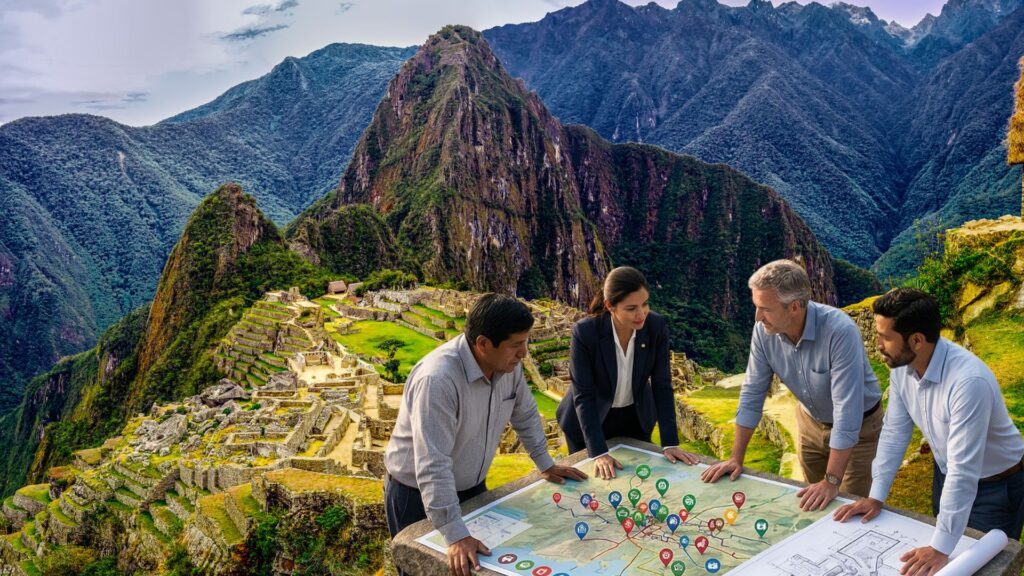
A diverse group of Destination Management Organization stakeholders analyzing sustainability maps and shared infrastructure blueprints at Machu Picchu, representing territory-wide climate action governance.

Destination-Level Climate Action: Governance Frameworks for Sustainable Tourism

Individual businesses like hotels and restaurants drive essential progress when they reduce their own footprints and implement sustainable practices. These small changes contribute directly to local conservation and set a high standard for service. However, the most significant impact occurs when an entire destination aligns under a unified sustainability vision. Strategic governance transforms these isolated successes into a territory-wide movement, ensuring that every participant works toward shared climate goals. The Foundation of Destination Sustainability Governance Governance in the context of sustainable tourism refers to the systems and processes used to make decisions and hold stakeholders accountable. A robust framework ensures that environmental goals do not conflict with economic growth. Instead, it integrates climate resilience into the core identity of the destination. The most effective models involve a centralized Destination Management Organization (DMO) that acts as a bridge between the public sector and private enterprises. This entity coordinates the implementation of climate strategies, ensuring that every participant—from large resorts to small tour operators—works toward the same carbon reduction targets. Essential Components of a Climate Action Roadmap Building a sustainable destination requires a phased approach that moves from initial assessment to long-term monitoring. Let’s take a look at Machu Picchu’s extraordinary case. Stakeholder Mapping and Engagement Identifying every actor in the tourism value chain is the first step. This includes local government agencies, transport providers, hospitality leaders, and the resident community. The Machu Picchu experience highlights the importance of multi-level collaboration, involving local, regional, national, and international sectors to drive change. Policy Alignment and Goal Setting Destinations must align their local sustainability targets with international standards, such as the Paris Agreement, Global Sustainable Tourism Council (GSTC) or the Glasgow Declaration on Climate Action in Tourism. Setting clear time-bound objectives for carbon neutrality or waste reduction provides a benchmark for success.  Monitoring and Data Collection  You cannot manage what you do not measure. Implementing destination-wide Monitoring, Reporting, and Verification (MRV) systems allows governance bodies to track progress in real-time. This data informs policy adjustments and proves the credibility of the destination’s climate claims to international investors and travelers. Machu Picchu demonstrates this through its consistent carbon footprint measurements since 2019, which led to its validation as the first carbon-neutral UNESCO site in the world. Fragmentation in Tourism Management Fragmentation is the primary barrier to destination-level success. When businesses act in isolation, they often duplicate efforts or overlook shared infrastructure needs. A governance framework solves this by creating “sustainability clusters” where resources are pooled for maximum efficiency. For example, a coordinated governance body can facilitate shared renewable energy projects or centralized waste-to-energy plants that a single SME could not afford alone. This collective approach reduces the cost of entry for smaller players and accelerates the entire territory’s transition to a low-carbon economy. A governance framework solves this by facilitating shared projects that a single business could not afford alone. Practical examples from the Machu Picchu model include: Driving Competitive Advantage Through Transparency Destinations that demonstrate strong climate governance attract a higher caliber of travelers and investors. Transparency in climate reporting builds trust and protects the destination from accusations of greenwashing. By establishing a clear governance structure, a region positions itself as a forward-thinking leader in the global tourism market. Destinations that demonstrate strong climate governance attract a higher caliber of travelers and investors. Transparency in climate reporting builds trust and protects the destination from accusations of greenwashing. By establishing a clear governance structure, a region positions itself as a forward-thinking leader in the global tourism market. Since 2021, Machu Picchu’s carbon-neutral status has generated an estimated $5 million to $12 million in reputational and ESG signaling value. Transparency in climate reporting builds trust and positions a region as a forward-thinking leader in the global tourism market.Learn more about managing complex destination relationships in our guide to Multi-Stakeholder Coordination for Destination Sustainability Initiatives. Ready to transition from isolated efforts to collective impact? Contact us to discover more about managing complex destination relationships and for expert advice. This article was written by Virna Chávez from the Green Initiative Team. FAQ: Understanding Destination Governance References Related Reading

Destination-Level Climate Action: Governance Frameworks for Sustainable Tourism Read More »

Circular Tourism Peru A Model for Climate & Nature Positive Destinations

Circular Tourism Peru: A Model for Climate & Nature Positive Destinations

The Circular Tourism Peru project, led by the National Chamber of Tourism of Peru (CANATUR), with the support of the Spanish Agency for International Development Cooperation (AECID), the European Union, and the technical partnership of Green Initiative, has emerged as a pioneering model for integrating circular economy principles, climate action, and sustainability into tourism. Cabo Blanco and Machu Picchu: Living Laboratories for Circular Tourism In emblematic destinations such as Cabo Blanco and Machu Picchu, the project has developed technical workshops, carbon footprint assessments, and capacity-building programs for public, private, and community stakeholders. These efforts aim to reduce environmental impacts, promote regenerative practices, and establish replicable models of low-emission, climate-smart tourism across Peru and beyond. Key achievements include: Technical Impacts: From Measurement to Action From a technical standpoint, the project has developed climate performance indicators to measure, reduce, and offset greenhouse gas emissions. It also introduced a methodological guide for circular tourism tailored to Peru’s coastal and marine ecosystems. Initiatives include the promotion of energy, water, and waste efficiency, alongside eco-design practices, material revalorization, and blue economy principles, reinforcing the sustainable tourism value chain across the region. Circular Economy and Sustainability: A New Paradigm for Tourism The circular economy framework seeks to keep resources in use for as long as possible, reduce waste, and regenerate natural systems — replacing the traditional linear model of “take–make–dispose.” Aligned with the principles of sustainability, this approach balances economic, social, and environmental well-being while ensuring resource conservation for future generations. It also strengthens climate action, advancing tangible solutions to mitigate emissions and enhance resilience to climate change. Multisectoral Collaboration: Connecting Tourism, Science, and Community At the heart of the project lies multisectoral collaboration, bringing together diverse actors to drive systemic change: Toward a Replicable Model for the Future of Tourism Circular Tourism Peru demonstrates that sustainability and profitability are not opposing goals, but complementary pillars of the tourism of the future. By integrating science, community, culture, and conservation, the project redefines how destinations engage with climate challenges. With Cabo Blanco and Machu Picchu as living examples, Peru is setting a precedent for climate- and nature-positive tourism — one that not only drives economic prosperity but also restores ecosystems and empowers people. This article was written by Tatiana Otaviano from the Green Initiative Team. Related Reading

Circular Tourism Peru: A Model for Climate & Nature Positive Destinations Read More »

Riding the Wave of Change: How Roberto Meza “Muelas” Is Mobilizing Peru’s Surf Industry Toward Innovative Climate- and Nature-Positive Action

Riding the Wave of Change: How Roberto Meza “Muelas” Is Mobilizing Peru’s Surf Industry Toward Innovative Climate- and Nature-Positive Action

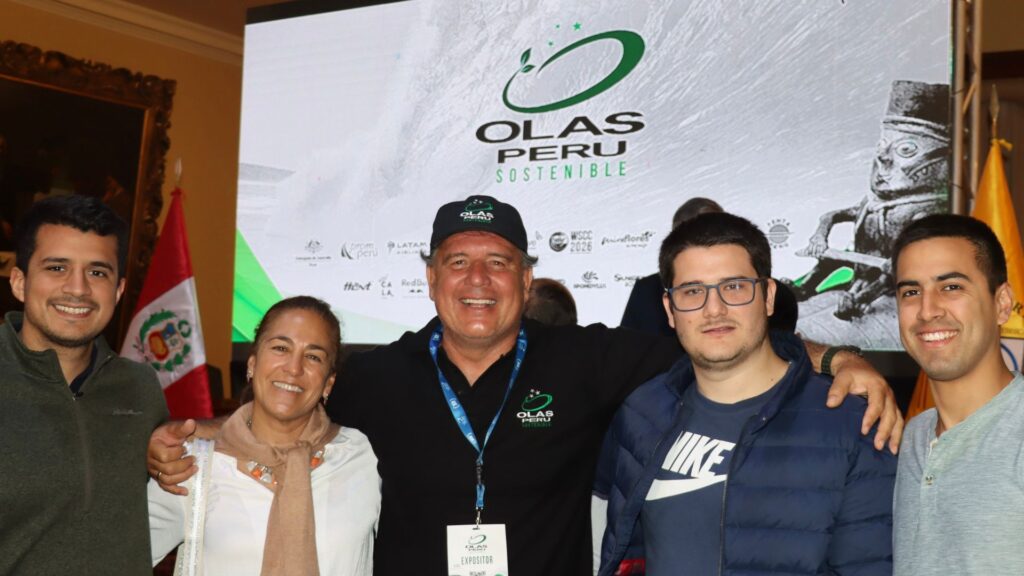
The ocean has always been Peru’s stage for surf legends. Today, it’s also becoming the frontier of climate leadership—thanks to visionaries like Roberto “Muelas” Meza, founder of Olas Perú and Global Ambassador of the World Surf Cities Network (WSCN). Earlier this month, Olas Perú officially launched its 2025–2028 Sustainability Plan at the Municipal Palace of Miraflores. The event marked a milestone not only for Peruvian surf culture but for global sustainability in sports. With this initiative, Olas Perú reaffirmed its role as the world’s first carbon-neutral surf school, setting the standard for surf communities everywhere. From Surfboards to Sustainability Boards Under the leadership of Meza and Director Silvana Pastorelli, Olas Perú’s new plan revolves around five strategic pillars: “This plan is not just a document—it’s our commitment to Peru, to the ocean, and to future generations,” said Pastorelli. “We invite everyone to paddle together toward a surf culture that inspires, regenerates, and transcends.” For Meza, sustainability isn’t an accessory—it’s the new wave that must carry the entire surf ecosystem forward. As an active voice within the WSCN, he has been instrumental in connecting surf cities like Miraflores and Cabo Blanco through shared goals of carbon neutrality, circular tourism, and climate-positive coastal management. Measuring Impact: From Commitment to Certification Olas Perú’s commitment to sustainability is backed by concrete results. In 2023, the organization conducted a rigorous carbon footprint measurement following ISO 14064-1:2018 and the Greenhouse Gas Protocol standards, covering all emission sources—from transportation to energy use and materials. These emissions were fully offset through Certified Emission Reductions (CERs) issued by the United Nations, derived from a renewable energy project in India, enabling Olas Perú to contribute to the global clean energy transition. This achievement positions Olas Perú not only as a pioneer in Latin America but as a model for surf schools worldwide, proving that sports can grow in harmony with the planet. The Power of Partnership The launch event brought together key partners and institutions shaping Peru’s green transition. Representatives from PromPerú, CANATUR, Hazla por tu Ola, LATAM Airlines, and the Municipality of Miraflores joined the discussion panel “Surf and Sustainability: Waves of Change for Peru.” Their collective message was clear: sustainability in sports thrives when public and private sectors paddle in the same direction. Olas Perú’s leadership was also recognized with the Marca Perú (Peru Brand) distinction, underscoring its role as an ambassador for responsible tourism and national pride. Miraflores and Cabo Blanco: Twin Beacons of Climate Action The Mayor of Miraflores, Carlos Canales, highlighted the district’s recognition as an official Surf City within the WSCN—thanks in large part to Olas Perú’s decades of work. Miraflores now stands beside other Peruvian coastal destinations like Cabo Blanco, which recently advanced its own sustainability agenda through the Turismo Circular Perú project, financed by AECID and the European Union and implemented with the Green Initiative. While Miraflores symbolizes the urban surf model of circular governance, Cabo Blanco represents the community-driven transformation of rural coastal tourism. Together, they embody Peru’s emerging identity as a global laboratory for climate and nature-positive development in surf cities. A Movement That Transcends the Ocean With over 33 years of history, Olas Perú continues to inspire athletes, educators, and policymakers to view surfing not only as a sport but as a vehicle for environmental restoration and social inclusion. By integrating education, circular economy principles, and ecosystem conservation into its operations, Olas Perú demonstrates how surf schools can become agents of decarbonization—turning every wave into a ripple of positive impact.Through the guidance of Roberto “Muelas” Meza and the support of partners like Green Initiative, PromPerú, and WSCN, the country is charting a new course: one where sustainability is as natural as the tide and where Peru’s surf cities ride together toward a climate-positive future. This article was written by Musye Lucen from the Green Initiative Team. Related Reading
Riding the Wave of Change: How Roberto Meza “Muelas” Is Mobilizing Peru’s Surf Industry Toward Innovative Climate- and Nature-Positive Action Read More »

Industrialization of Brazil’s Comparative Advantages: How Natural Capital Can Drive Inclusive and Sustainable Growth

Industrialization of Brazil’s Comparative Advantages: How Natural Capital Can Drive Inclusive and Sustainable Growth

How can emerging economies grow and foster development today, in a world where protectionism has become the norm, access to markets has narrowed, technology sharing has declined, and geopolitics has taken center stage? The strategies that propelled South Korea, Taiwan, China, Singapore, and others to success decades ago no longer deliver the same results. What, then, are the new pathways and opportunities? The answer lies in identifying and seizing the vast opportunities arising from climate transition, geopolitical realignment, and the quest for resilience in global value chains. These forces are revaluing geography as one of the most powerful drivers of business and investment. This is particularly true for much of Latin America, endowed with immense natural wealth and capital—renewable energy, bioeconomy resources, critical minerals, forests, carbon markets, water, and ecosystem services, among others. There are already unmistakable signs of a shift in relative prices in favor of these assets, which could reshape the global economic game and benefit emerging economies. To unlock this potential, however, countries must transform static comparative advantages into dynamic ones—in other words, industrialize their natural assets and add value to them. The moment is favorable, but the benefits are not automatic. 🎧 This is the central theme of the new podcast series launched by Imagine Brasil, “Industrialization of Brazil’s Comparative Advantages,” conducted by professors Aldemir Drummond and Jorge Arbache. In the first episode, Maria Netto, CEO of the Instituto Clima e Sociedade (iCS), offers an in-depth analysis of the global geopolitical and economic landscape, highlighting structural crises linked to energy, food, and climate change. She discusses Brazil’s challenges and opportunities in leveraging its clean energy matrix and abundant natural resources to generate innovation, added value, and long-term development. “Industrializing natural advantages is not only about economic transformation—it’s about shaping a new, inclusive model of prosperity for the twenty-first century,” emphasizes the Imagine Brasil initiative, created in collaboration with the Fundação Dom Cabral (FDC). 🔗 Listen to the first episode on Spotify: Industrialização das vantagens comparativas do Brasil – Conversa com Maria Netto (iCS) The new Imagine Brasil podcast, conducted by Jorge Arbache (Photo/ Green Initiative’s Scientific and Technical Advisory Council member) and Aldemir Drummond, explores how Brazil can transform its natural capital into engines of innovation, inclusive prosperity, and sustainable development through the industrialization of its comparative advantages.

Industrialization of Brazil’s Comparative Advantages: How Natural Capital Can Drive Inclusive and Sustainable Growth Read More »

Cabo Blanco Advances in Circularity and Decarbonization of Tourism in Peru

Cabo Blanco Advances in Circularity and Decarbonization of Tourism in Peru

On October 1, 2025, thanks to the Turismo Circular Peru project led by Canatur with the financing support of AECID – Agencia Española de Cooperación Internacional para el Desarrollo and the European Union, a workshop took place in El Alto, bringing together authorities, partner organizations, and local community representatives. The gathering marked the beginning of a historic process to position Cabo Blanco as an international reference for climate action and sustainable tourism through circularity. Building Circular Tourism in Cabo Blanco The workshop was led by the District Municipality of El Alto, in collaboration with CANATUR, Inkaterra, Olas Perú, and Turismo Circular Peru. Together, they explored how circular economy principles and decarbonization strategies can transform Cabo Blanco into a sustainable surf tourism hub. Participants emphasized the importance of reducing emissions, adopting circular business models, and creating local value chains that benefit the community. The event also demonstrated how the Circular Tourism Peru project strengthens local capacities, ensuring that sustainability is not only a vision but also a concrete, measurable practice. Insights and Contributions Key interventions during the workshop included: Through participatory dynamics, attendees worked on practical solutions for reducing waste, optimizing resources, and strengthening Cabo Blanco’s positioning within the International Surf Cities Network. Next Steps This workshop is the first in a cycle of activities outlined in the project agenda, which will include: These steps aim to consolidate Cabo Blanco as a national and international benchmark for sustainable, circular, and regenerative tourism. A Shared Commitment The Cabo Blanco Circular Tourism Project is made possible by the leadership of the District Municipality of El Alto and the commitment of partners including AECID, the European Union, CANATUR, Inkaterra, Olas Perú, and Turismo Circular Peru.While Green Initiative contributes with technical assistance, the driving force behind this transformation is the collective effort of partners and the local community, working hand in hand to build a more resilient, inclusive, and circular model of tourism in northern Peru. This article was written by Virna Chavez from the Green Initiative Team. Related Reading

Cabo Blanco Advances in Circularity and Decarbonization of Tourism in Peru Read More »

Machu Picchu’s Carbon-Neutral Pathway Transparent MRV for Climate and Tourism

Machu Picchu’s Carbon-Neutral Pathway: Transparent MRV for Climate and Tourism

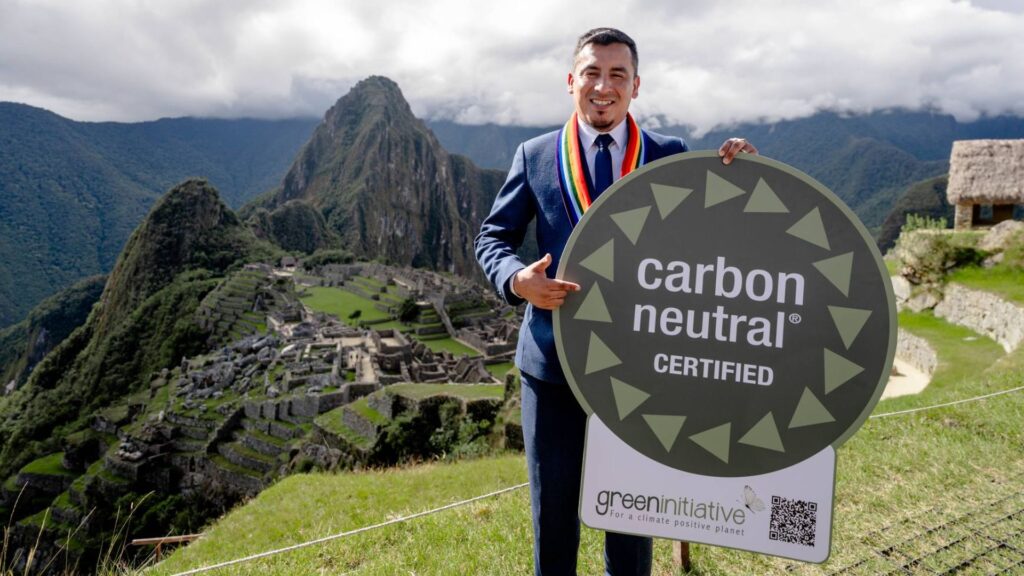
Machu Picchu, Peru’s iconic UNESCO World Heritage Site, became the world’s first carbon-neutral certified tourism destination. This case study examines how the District Municipality of Machu Picchu, in collaboration with Inkaterra and under the technical coordination of Green Initiative, implemented a transparent, science-based system to measure, capture, reduce, and avoid greenhouse gas (GHG) emissions. Supported by local authorities and private sector partners, the initiative has achieved an independently verified 18.77% reduction in emissions since its initial certification in 2021. Background and Challenges Machu Picchu – a UNESCO heritage site – is the most famous archaeological site in South America and a major international tourism destination. It faces significant environmental risks due to unsustainable tourism practices, climate change, inadequate infrastructure, and policy gaps. Its Andean cloud forest ecosystem – home to rare species such as the Andean spectacled bear and orchids – is threatened by habitat loss, erosion, and shifting climate patterns. Additionally, fossil fuel use, unmanaged waste, and deforestation contribute to emissions. Maintaining its carbon-neutral status requires transparent measurement, nature-based solutions, improved infrastructure, and long-term environmental stewardship. Governance and Strategy The success of Machu Picchu’s decarbonization strategy lies in a robust multi-stakeholder governance model. Led by the District Municipality of Machu Picchu, the initiative included Inkaterra, CANATUR, The National Authority for Forest Conservation (Sernanp), International Promotion Agency (PROMPERÚ), AJE Group, TetraPak and international bodies such as UN Tourism, UNFCCC and UNESCO. Green Initiative coordinated the certification process.The climate strategy follows a three-tiered approach: Destination-level emissions accounting and planning; Business-level sustainability integration; Tourist-level engagement in carbon offsetting and restoration. This model, featured by Green Initiative at Climate Action Guide for Tourism Businesses and Destinations, available at the One Planet Network, positions tourism as a regenerative force for both climate and biodiversity. https://www.oneplanetnetwork.org/knowledge-centre/resources/climate-action-guide-tourism-businesses-and-destinations Climate Actions, Results, and Innovation Since 2019, Machu Picchu has developed a comprehensive decarbonization strategy, achieving an 18.77% reduction in its greenhouse gas (GHG) emissions — from 8,761.89 tCO₂eq in 2019 to 7,117.55 tCO₂eq in 2022. This transformation has been made possible through the implementation of innovative solutions and concrete actions, articulated under a regenerative tourism model. The main mitigation measures include: Ecological restoration and reforestation with native species have been carried out across more than five hectares of the district, with a total of 6,596 trees planted. This intervention captured 5,055.17 tCO₂eq, divided between ecological zones (156 tCO₂eq) and historic-cultural zones linked to tourism (4,899.17 tCO₂eq). Circular solid waste management in Machu Picchu includes a pyrolysis plant that transforms organic waste into biochar and a biodiesel plant that reuses cooking oil. The district also has a PET compactor, glass crushers for construction reuse, and recycling bins distributed throughout the area. These actions enable waste valorization, reduce emissions, and promote good practices among residents and visitors.Sustainable transport initiatives include the use of electric vehicles for waste collection, reducing an additional 40.80 tCO₂eq. Emission measurement and management (Scopes 1, 2, and 3) are conducted using scientifically verifiable methodologies, with a focus on Scope 1 emissions, which account for 82.08% of the total, primarily from fossil fuel use in tourist trains, responsible for 63.49% of all emissions.Residual emissions were offset through the purchase of 2,155 carbon credits from the REDD+ Brazil Nut Concessions project in Madre de Dios, implemented by BAM. This project protects 600,000 hectares of forest and benefits over 800 families. These actions are complemented by awareness efforts targeting tourists and operators, the promotion of renewable energy, and the encouragement of sustainable tourism practices, positioning Machu Picchu as a pioneering low-carbon tourism model, recognized by the United Nations and recertified for climate performance in 2024. Impacts and Recognition Through public-private partnerships, emission reductions were complemented by strengthened governance, circular economy systems, and green infrastructure. Machu Picchu was presented at COP16 as a flagship for regenerative tourism, generating over $5 million in spontaneous media coverage and reaching more than 100 countries. It was awarded South America’s Leading Tourist Attraction 2024 and highlighted at the UN Biodiversity Conference.The initiative demonstrates double materiality – reducing climate risk while generating value for visitors, communities, and investors. As highlighted by the One Planet Network (2024), it also aligns with global frameworks like the Glasgow Declaration and Climate Neutral Now. The project seeks to attract climate finance and scale the model to other sites. Conclusion Machu Picchu shows that even fragile heritage sites can reconcile tourism with environmental protection. Its 18.77% verified emissions reduction, forest restoration, and innovations in waste and mobility position it as a global climate leader. Already inspiring similar actions in Cristo Redentor and the Taj Mahal, the initiative presents a replicable model for regenerative tourism.For policymakers, businesses, and communities, the case of Machu Picchu offers more than inspiration – it offers a call to action: to shift from extractive tourism to restorative, climate-responsible travel. This article was prepared by Erika Rumiche, Virna Chavez, Musye Lusen and Ella Baehringer from the Green Initiative team. Related Reading

Machu Picchu’s Carbon-Neutral Pathway: Transparent MRV for Climate and Tourism Read More »

Machu Picchu Achieves Significant Reduction in Carbon Emissions Since 2021 Certification

Machu Picchu’s Journey to Carbon Neutrality: Acelerating public and private decarbonization investments

Machu Picchu, Peru – Leading Climate Action in Tourism Amidst the lush Peruvian Andes, Machu Picchu—one of the world’s most iconic cultural and natural landmarks—is redefining what it means to be a sustainable travel destination. With over 1.5 million visitors each year, the challenge was immense—but the will to act was even greater. In a recent interview for the Observatorio de Descarbonización y Economía Circular of the Cámara Nacional de Turismo (CANATUR), Elvis La Torre, Mayor of the District Municipality of Machu Picchu, shared the region’s ambitious climate goals, achievements to date, and critical lessons for the global tourism sector. A Bold Start: Why Machu Picchu Chose Decarbonization The decarbonization project officially began in 2021, led by the District Municipality of Machu Picchu, in collaboration with Inkaterra Asociación and Green Initiative. The decision was made in response to the urgent need to reduce the environmental impact of mass tourism and to shape a more resilient, sustainable development model following the COVID-19 crisis. Using 2019 as the baseline year, Machu Picchu began the Carbon Neutral Certification process and soon became the first UNESCO World Heritage Site to earn this recognition. In 2022, the destination became a signatory of the Glasgow Declaration on Climate Action in Tourism, further reinforcing its leadership in climate-smart tourism. “This certification, led by Green Initiative, gave us the opportunity to position Machu Picchu as a global leader in climate-intelligent tourism,” said Mayor La Torre in the CANATUR interview. Tangible Climate Results: From Waste to Regeneration To date, the outcomes have been remarkable: These milestones were achieved through robust collaboration among public and private stakeholders. Notably, Inkaterra, Grupo AJE, WorldXchange and Tetra Pak played key roles in implementing circular solutions. Luz del Sur provided technical assistance, while CANATUR offered strategic support, reinforcing strong climate governance. Additionally, Machu Picchu’s carbon footprint has been fully offset with 2,155 carbon credits from the REDD+ Brazil Nut Concessions project by Bosques Amazónicos (BAM), which protects over 600,000 hectares of megadiverse forests and supports more than 800 Amazon Brazil nut harvesting families in Madre de Dios, Peru. What’s Next: Scaling Impact and Inclusion Despite significant progress, major challenges remain. Chief among them is the need to expand both public and private financing to scale up the most impactful decarbonization initiatives—such as energy efficiency in tourism services and large-scale ecosystem restoration. Equally important is the continuous strengthening of existing programs, particularly those involving waste management through circular economy principles and the transition to clean energy. Most critically, there is a growing need to increase the active participation of local communities and businesses. Their involvement will be essential to ensure that this regenerative and carbon-neutral tourism model becomes permanent and self-sustaining. “The active participation of all stakeholders will be key to consolidating a regenerative and carbon-neutral tourism model that stands the test of time,” affirmed Mayor La Torre. A Model for the World Machu Picchu’s decarbonization journey is more than a local success story—it is a global call to action. As destinations worldwide face the escalating impacts of climate change, Machu Picchu proves that protecting heritage, supporting local livelihoods, and leading in climate action can go hand in hand. By embracing bold decisions, inclusive governance, and science-based climate solutions, Machu Picchu is charting a path toward a climate and nature-positive future—one that others can follow. 📌 Learn More & Get Involved Is your destination or organization ready to take the next step toward climate and nature-positive leadership? Discover how our certification and advisory services can help you generate measurable impact. 📩 Contact our team This article was written by Yves Hemelryck from the Green Initiative team Related Reading

Machu Picchu’s Journey to Carbon Neutrality: Acelerating public and private decarbonization investments Read More »

CANATUR and AECID, leading Tourism Coalition for a Circular, Inclusive, and Climate-Smart Economy with the support of Green Initiative

CANATUR and AECID, leading Tourism Coalition for a Circular, Inclusive, and Climate-Smart Economy with the support of Green Initiative

Green Initiative, an entity recognized for its expertise in advising and certifying organizations that seek to mitigate their CO₂ emissions, is working as the technical supporting partner for the project entitled “Coalición Turística por una Economía Circular, Inclusiva y Climáticamente Inteligente” (Tourism Coalition for a Circular, Inclusive, and Climate-Smart Economy). This initiative represents a collaborative endeavor between CANATUR (National Chamber of Tourism of Peru) and AECID (Spanish Agency for International Development Cooperation), also funded by the European Union. The project is dedicated to fostering a more sustainable and low-carbon tourism model within Peru, thereby establishing itself as a crucial undertaking for the global climate agenda. This project arises in a context where the circular economy is recognized as a key tool contributing to global objectives associated with the current climate crisis. Following the signing of the Paris Agreement in 2015 by 195 countries, including Peru, a new paradigm of production and consumption was generated. The main commitment is to reduce greenhouse gas emissions and curb global warming. For the tourism sector, this represents a great opportunity and a challenge to incorporate reuse, recovery, recycling, and maximizing resource efficiency, getting the sector to incorporate these practices into its operations. The Significance of the Climate Agenda for Tourist Destinations in Peru and Globally Peru, home to iconic destinations such as Machu Picchu and Cabo Blanco, holds a prominent position in global tourism. However, in common with other international destinations, the nation faces challenges related to climate change, which exert an impact on the environment, the local economy, and communities. The reduction of greenhouse gas (GHG) emissions, particularly CO2, is of fundamental importance for the protection of these destinations and to ensure their preservation for future generations. Peru, alongside the other 195 signatory nations of the Paris Agreement, is committed to substantially reducing its GHG emissions to mitigate global warming. The Circular Economy as a Key Tool Within this context, the circular economy emerges as a potent instrument for achieving these objectives. The transition from a linear model of production and consumption, characterized by “produce and discard,” to a circular model, which prioritizes the reuse, recovery, and recycling of resources, is essential for both environmental integrity and sustainable economic growth. The general objective of the project is to implement a circular development model centered on an economy where reuse, recovery, recycling, extending useful life, and reducing the carbon footprint in the tourism sector prevail, while also boosting innovation and competitiveness fairly and equitably. The Role of Green Initiative Green Initiative has established itself as a global benchmark in providing advisory services to tourist destinations, assisting them in the implementation of sustainable practices and the attainment of climate-smart management practices. The selection of the company was predicated upon its extensive experience and recognized achievements in collaborating with tourist destinations worldwide, facilitating the integration of circular economy practices and the reduction of their CO2 emissions. Green Initiative’s mission transcends the implementation of environmental policies; the organization is dedicated to transforming the operational modalities of the tourism sector, promoting climate change mitigation in an integrated manner across the entire value chain. Project Scope and Expected Results The collaboration with CANATUR and AECID presents an opportunity to disseminate this knowledge within Peru. The project aims to implement a management model based on innovative circular economy practices in 2 tourist destinations for carbon emission mitigation. Additionally, it will promote the creation of a Sectorial Commission for Circular Economy in Tourism to implement a Roadmap and flagship actions, and strengthen the capacities of tourism system actors on climate action and cleaner, circular production. The initial intervention regions are Lima, Cusco, Piura, and San Martín, although the project will have a national impact. This tourism coalition project will yield a series of deliverables that are critical for the implementation of the transition towards a more circular and sustainable tourism sector. Green Initiative will be responsible for ensuring that these deliverables are executed with the utmost quality and efficiency. Activities will include workshops, training sessions, webinars, an international conference, and the implementation of flagship actions in tourist destinations. The project aligns with global sustainable development objectives, including the Sustainable Development Goals (SDGs) such as SDG 13 (Climate Action), SDG 12 (Responsible Consumption and Production), and SDG 11 (Sustainable Cities and Communities). With the circular economy gaining increasing prominence, a unique opportunity exists to transform the tourism sector into an engine for sustainable development, generating new employment opportunities and fostering an inclusive, low-carbon economy. Active participation from stakeholders and allies is sought through backing (R) the sectoral committee, synergy (S) in activities by contributing experience and resources, and dissemination (D) of project progress. Conclusion Sustainable tourism transcends the notion of doing good; it constitutes an urgent necessity in the face of prevailing global climate challenges. Green Initiative, in conjunction with CANATUR and AECID, is at the forefront of this transformative process in Peru, assisting tourist destinations in the adoption of circular economy practices and carbon mitigation strategies. Consequently, beyond the preservation of natural splendors such as Machu Picchu and Cabo Blanco, this collaboration contributes to a more balanced and sustainable future for all stakeholders. Green Initiative, with its demonstrated expertise and leadership, will be instrumental in enabling significant Peruvian tourist destinations to progress towards a more sustainable future. This article was written by Tatiana Otaviano from the Green Initiative Team. Related reading

CANATUR and AECID, leading Tourism Coalition for a Circular, Inclusive, and Climate-Smart Economy with the support of Green Initiative Read More »