Carbon Neutral

19-04-23 Green Initiative Post The importance of investing in carbon capture technologies

The Importance of Investing in Carbon Capture Technologies

The Earth’s natural carbon sinks: Understanding their vital role in climate change The Earth has a remarkable ability to naturally sequester carbon, through a variety of processes that occur in ecosystems including forests, grasslands, wetlands, soils, and oceans. These natural processes, also known as “sinks,” play a crucial role in removing carbon dioxide, a major greenhouse gas, from the atmosphere and storing it in the Earth’s ecosystems. Although, recent studies suggest significant carbon sinks such as the Amazonia, may no longer be capturing as much carbon as they release. (Denning, 2020) The Impacts of Climate Change on Natural Carbon Sequestration Processes: Disruptions and Consequences Rising temperatures, changing precipitation patterns, and altered ecosystems due to climate change have disrupted natural carbon sequestration processes. For example, climate-induced disturbances such as wildfires, droughts, and floods can disrupt ecosystems, leading to changes in vegetation growth, carbon storage in soils, and oceanic carbon uptake. These combined impacts of climate change and human activities are reducing the Earth’s ability to naturally sequester carbon, contributing to the increase of atmospheric carbon dioxide levels and exacerbating climate change. Exploring the Potential and Limitations of Forest Regeneration as a Climate Mitigation Strategy To counteract the negative effects associated with increasing atmospheric carbon dioxide levels, climate certification and advisory companies most commonly employ the method of forest regeneration. This method is preferred due to the limited amount of required monitoring and maintenance, the added benefits to biodiversity and soil conservation, and its cost-effectiveness. Scientists estimate forest regeneration has the potential to store an equivalent of 25% of the atmospheric carbon pool (Bastin et al., 2019). However, forest regeneration is a time-consuming process and requires large areas of land, often resulting in land-use conflicts. Furthermore, considering the UN’s ambitious goal to reach carbon neutrality by 2050, it is unreasonable to hypothesize all the carbon mitigation will occur through forest regeneration. Carbon Capture and Storage (CCS) and Bioenergy with Carbon Capture and Storage (BECCS): Potential, Limitations, and the Need for Investment Decarbonization can also take place through Carbon Capture and Storage (CCS) and Bioenergy with Carbon Capture and Storage (BECCS). These emerging technologies have the potential to help mitigate the relatively large carbon footprint of aviation, maritime, and heavy industries that are considered hard to abate, as they have limited low-carbon alternatives currently available. For example, estimates suggest that CCS has the potential to capture and store up to 45% of the CO2 emissions from industrial processes. Even in the most conservative scenarios, these technologies are expected to scale up in demand enough to remove at least 2 gigatons per annum (GTPA) of carbon dioxide by 2050. However, we are still at the very beginning of development, with CCS and BECCS requiring large amounts of energy to operate and thus, having a limited carbon capture efficiency. Analyst estimates suggest a 120-fold increase in carbon uptake needs to occur for these technologies to be viable to achieve climate goals by 2050 (McKinsey, 2022) Therefore, private investment in these technologies is essential to achieve global decarbonization as it is only through advancements in material science, manufacturing, and engineering optimizations that we achieve technological improvements. Join the Climate Champions: Partner with Green Initiative for Sustainable Solutions At Green Initiative, we strive to help our clients stay up to date with the latest developments in climate action and provide our clients with the necessary tools and knowledge to set a plan to achieve decarbonization, reduce their carbon footprint, and contribute to a sustainable future. Contact us to learn more and become a part of our climate champions! This article was writen by Marc Tristant, from the Green Inititative team. References: Bastin, J., Finegold, Y., Garcia, C., Mollicone, D., Rezende, M., Routh, D., Zohner, C. M., & Crowther, T. W. (2019). The global tree restoration potential. Science, 365(6448), 76–79. https://doi.org/10.1126/science.aax0848 Denning, A. S. (2021). Southeast Amazonia is no longer a carbon sink. Nature, 595(7867), 354–355. https://doi.org/10.1038/d41586-021-01871-6 Scaling the CCUS industry to achieve net-zero emissions. (2022, October 28). McKinsey & Company. https://www.mckinsey.com/industries/oil-and-gas/our-insights/scaling-the-ccus-industry-to-achieve-net-zero-emissions

The Importance of Investing in Carbon Capture Technologies Read More »

29-03-23 From Fast Fashion to Sustainable Style The Urgent Need to Decarbonize the Fashion Industry - img blog post

From Fast Fashion to Sustainable Style: The Urgent Need to Decarbonize the Fashion Industry

Fashion Industry Valued at Over $2.5 Trillion, but will it remain competitive? The global fashion industry was valued at over $2.5 trillion in 2020 and is projected to grow to $3.3 trillion by 2025. However, the industry’s rapid growth has come at a cost to the environment. According to data, the fashion industry accounts for 10% of global carbon emissions and is the second-largest consumer of water worldwide. Climate Change’s Economic Toll: Fashion Industry Loses Over $4 Billion in 2019 The economic cost of climate change is significant and affects many industries, including fashion. Extreme weather events, such as floods and droughts, disrupt global supply chains, affecting the production and transportation of goods. In 2019, the fashion industry suffered losses of over $4 billion due to the impact of climate change on cotton production. Climate Change Sparks Rise in Sustainable Fashion Market, Valued at $9.81 Billion by 2025 Rising temperatures can also significantly impact fashion customers’ behavior, which in turn can affect the fashion industry’s bottom line. According to a survey by McKinsey & Company, 66% of global consumers are willing to pay more for sustainable products, including clothing. This shift towards sustainability is also reflected in the growth of the global sustainable fashion market, which is projected to reach $9.81 billion by 2025. Transforming the Fashion Industry: Climate Action as a Key Business Strategy to Reduce Environmental Impact Although the fashion industry’s environmental impact is significant, from the production of synthetic fibers to the use of toxic chemicals in textile manufacturing, not to mention that the industry is also known for its high-water consumption, with an estimated 2,700 liters of water required to produce one cotton shirt, introducing climate action at the core of the industry business model, would reduce its carbon footprint, water consumption, and waste generation. Climate Inaction Could Cost Fashion Industry’s Financial and Reputational Losses One compelling argument for the fashion industry to engage in climate action is that failure could lead to significant financial and reputational risks. As climate change becomes an increasingly pressing issue for consumers, investors, and regulators, fashion companies that do not take action to reduce their environmental impact may face negative consequences such as consumer boycotts, regulatory penalties, and decreased investor confidence. Leading Fashion Brands Take Action to Mitigate Environmental Impact and Reap Long-Term Benefits In contrast, companies that take proactive steps to mitigate their environmental impact and demonstrate a commitment to sustainability are more likely to attract consumers and investors who value responsible business practices, potentially leading to long-term financial and reputational benefits.Here are a few recommendations and examples of how lead fashion brands are progressively engaging in serious decarbonization: Overall, strong market arguments exist for the fashion industry to shift towards low carbon emissions and sustainable fashion. By doing so, fashion brands can reduce their environmental impact and appeal to consumers, mitigate risks, improve their reputation, and realize cost savings. Green Initiative Empowers the Fashion Industry to Embrace Sustainability, Mitigate Risks, and Save Costs At Green Initiative, we are working with the Fashion and Textile industry to support them in adopting climate-action best practices that are helping them adapt to intense climate regulation and a net-zero emissions economy. Click here to contact our team of experts and find out how we can help empower your fashion business.

From Fast Fashion to Sustainable Style: The Urgent Need to Decarbonize the Fashion Industry Read More »

Why should the Wine Industry in Latin America Integrate Climate Action at the core of their business models?

Why should the Wine Industry in Latin America Integrate Climate Action at the core of their business models?

The wine industry is one of Latin America’s most important export sectors, especially for countries like Argentina, Chile, and Uruguay. Wine production in Latin America has grown rapidly over the past few decades, accounting for a significant share of global wine production. For example, in 2019, Argentina was the fifth largest wine-producing country in the world, with a production of over 14 million hectoliters, while Chile was the ninth largest, with a production of over 10 million hectoliters (OIV, 2020). On the other hand, Uruguay is a small but significant player in the premium wine market, focusing on high-quality wines (Uruguay XXI, 2021). The Economic Impact of the Wine Industry in Latin America: Job Creation, Tourism, and Export Growth According to a report by the Inter-American Development Bank (IDB), the wine industry in Latin America is an important driver of economic growth, generating jobs and income for rural communities and contributing to the development of the local economy (IDB, 2019). In Argentina, for example, the wine industry generates over 20,000 jobs and contributes to the country’s tourism industry (Wines of Argentina, 2021). In Chile, the wine industry is a significant source of exports, accounting for over 2% of the country’s total exports (Chilean Wine, 2021). Similarly, in Uruguay, the wine industry contributes to the country’s exports and tourism industry, focusing on high-end wines (Uruguay XXI, 2021). Challenges and Opportunities: Why Integrating Climate Action is Essential for the Future of the Wine Industry in Latin America The wine industry in Latin America is facing significant challenges due to climate change. As a result, grape yields, quality, and the industry’s overall sustainability are being affected. In order to address these challenges, it is essential for the wine industry in Latin America to integrate climate action and promote sustainability. In addition to the environmental and social benefits, integrating climate action in the wine industry in Latin America can have economic benefits.  By integrating climate action at the core of their business models, Latin American wine producers can mitigate climate risk and benefit from opportunities to reduce costs, increase efficiency, promote product innovation, and tap into emerging net-zero emissions value chains. EU’s Carbon Border Adjustment Mechanism and Its Implications for the Wine Industry in Latin America The European Union has introduced the Carbon Border Adjustment Mechanism (CBAM) to ensure that imported goods meet the same environmental standards as those produced within the EU. The CBAM is expected to significantly impact the wine industry in Latin America, as it will require exporters from Latin America to pay a carbon price based on the carbon footprint of the exported product. This mechanism will encourage exporters to reduce their carbon footprint and ensure that companies that take proactive measures to reduce their emissions and promote sustainability are more likely to succeed in the European market. Green Initiative: Partnering with Latin American Wine Producers to Implement Climate-Smart Business Strategies Latin American wine producers seeking to integrate climate action into their business models can benefit from expert guidance and support from Green Initiative. Green Initiative’s advisory services specialize in helping companies develop and implement climate action strategies that reduce their carbon footprint, promote climate-smart practices, and connect to emerging net-zero emissions value chains. Through a comprehensive approach that includes science-based carbon footprint assessments, strategy development, and implementation support, Green Initiative can help Latin American wine producers navigate the complex landscape of climate action and take concrete steps to achieve their decarbonization goals. Are you a wine producer in Latin America looking to reduce your carbon footprint and promote climate-smart practices? Contact Green Initiative today and benefit from our expert advisory services. Our team of experienced climate advisors can help you develop and implement customized climate action strategies that meet your business needs and align with emerging net-zero emissions value chains. Take the first step towards a sustainable future – contact us now to learn more!

Why should the Wine Industry in Latin America Integrate Climate Action at the core of their business models? Read More »

Why Logistics Companies Should Provide Climate Smart Services and Gain Competitive Advantages

Why Logistics Companies Should Provide Climate Smart Services and Gain Competitive Advantages

The logistics industry is a vital component of the global economy, responsible for transporting goods and materials worldwide. However, it is also a significant contributor to greenhouse gas emissions and climate change. According to the International Energy Agency (IEA), the transportation sector accounted for 24% of global energy-related CO2 emissions in 2019. As a result, logistics companies are increasingly looking for ways to reduce their environmental impact and promote sustainability. Going Green: Climate-Smart Services in Logistics for a Sustainable Future Climate-smart services are transportation and logistics solutions designed to minimize environmental impact. These services can take many forms, including carbon-neutral shipping, electric or hybrid vehicles, and efficient routing and packaging.Logistics companies can lower their operational costs and improve their bottom line by reducing energy consumption and greenhouse gas emissions. In addition, by promoting sustainable practices throughout the supply chain, logistics companies can help reduce the industry’s overall carbon footprint and contribute to global efforts to combat climate change. Urgent Need for Logistics Companies to Prioritize Climate Action for Sustainable Supply Chains Logistics companies must adopt climate action at the core of their business model to effectively provide climate-smart services. These include investing in fuel-efficient vehicles, optimizing routes, reducing packaging waste, and collaborating with suppliers and customers to promote sustainable practices throughout the supply chain. Green Initiative: Empowering Logistics Companies to Achieve Climate Goals with Advisory and Certification Services Green Initiative’s climate advisory and certification services can help logistics companies achieve these goals. For example, Green Initiative can conduct a carbon footprint assessment to identify areas for improvement, guide high-impact climate action, and offer carbon offsetting programs to help companies mitigate their carbon footprint. Governments and international organizations also implement policies and regulations to promote climate-smart logistics. For example, the International Maritime Organization (IMO) has set targets to reduce carbon emissions from the shipping sector by at least 50% by 2050. The European Union is promoting low-emission vehicles and alternative fuels in transport through initiatives like the Green Deal and the Sustainable and Smart Mobility Strategy. In summary, sustainable logistics is crucial to addressing climate change. Companies and organizations can help build more sustainable logistics systems that benefit both the environment and global trade by employing various strategies to reduce emissions, optimize supply chains, and leverage digital technologies. By partnering with Green Initiative, logistics companies can take a proactive approach to climate action, reduce their environmental impact, and help address the urgent challenge of climate change. Click here to contact us.

Why Logistics Companies Should Provide Climate Smart Services and Gain Competitive Advantages Read More »

15-03-23 Latin American Exporters Worried About Impacts of EU's Carbon Border Adjustment Mechanism on Agricultural and Food Trade

The Potential Impact of EU’s Carbon Border Adjustment Mechanism on Latin American Food Producers: Mitigation Actions and Support from Green Initiative

Latin American Food Exporters Worried About Impacts of EU’s Carbon Border Adjustment Mechanism on Agricultural and Food Trade The European Union’s Carbon Border Adjustment Mechanism (CBAM) has been a hot topic of discussion lately, especially for developing countries that export to the EU. The CBAM aims to prevent carbon leakage by requiring importers to pay a carbon price equivalent to that paid by EU producers, creating a level playing field for trade. However, Latin American exporters are concerned that this could put them at a disadvantage. According to a report by the Inter-American Institute for Cooperation on Agriculture (IICA), the CBAM could have significant impacts on agricultural and food trade in Latin America and the Caribbean. It could increase production costs for exporters and make their products less competitive in the EU market, potentially leading to a decline in exports and income for Latin American farmers and producers. In addition, Latin American countries are also worried about the environmental effects of the CBAM. The World Bank Group’s report on the CBAM notes that some Latin American countries are among the most vulnerable to climate change and are already experiencing its effects. Climate Mitigation Actions Latin American Food Producers Can Take to Mitigate the Impact of EU’s CBAM To help mitigate mitigate the impact of the CBAM and address the urgent need to reduce greenhouse gas emissions, food producers in Latin America can take a number of climate mitigation actions. These include: By taking these climate mitigation actions, food producers in Latin America can reduce their carbon footprint, improve the sustainability of their production practices, and prepare for the potential impacts of the CBAM. In addition, these actions can help reduce costs, increase efficiency, and enhance the resilience of food production systems in the face of climate change. Green Initiative Offers Climate Certification and Advisory Services to Help Latin American Food Producers Navigate the CBAM and Reduce their Carbon Footprint Green Initiative offers climate certification and advisory services for climate action to support Latin American food producers in reducing their carbon footprint and complying with potential future policies such as the CBAM. Their services can help identify areas where emissions can be reduced, develop strategies to implement sustainable farming practices, and implement renewable energy solutions. Additionally, their supply chain analysis services can help identify opportunities to improve supply chain efficiency and reduce carbon footprint. By working with Green Initiative, Latin American food producers can receive expert guidance to navigate the complex landscape of climate policy and sustainability standards, and position themselves for success in a rapidly changing market.

The Potential Impact of EU’s Carbon Border Adjustment Mechanism on Latin American Food Producers: Mitigation Actions and Support from Green Initiative Read More »

03-03-23 Carbon emission sanctions and rewards understanding the future of climate policies

Carbon emission sanctions and rewards: understanding the future of climate policies

How to take advantage of the emerging carbon emission policies What are carbon sanctions/rewards As the world becomes increasingly aware of the negative impact of carbon emissions on the environment, governments and corporations alike are facing mounting pressure to take action to reduce their carbon footprints. One way this has begun to be addressed is through the implementation of sanctions and rewards for carbon emissions. Sanctions for carbon emissions involve penalties for companies or countries that exceed a certain threshold of carbon emissions. These penalties could take the form of fines or restrictions on activities, and would serve as a disincentive for businesses and nations to continue emitting high levels of carbon. On the other hand, bonuses for carbon emissions would offer rewards for companies or nations that make significant strides in reducing their carbon emissions. Thus, reducing the financial burden of investing in novel, green technologies that often require an elevated initial investment. The importance of carbon sanction/rewards in the upcoming years Several governments have already implemented such policies. For example, the European Union’s Emissions Trading System (ETS) imposes a cap on carbon emissions from power plants, factories, and other industrial sectors. Companies are required to purchase permits to emit carbon, and those that exceed their allotted emissions must purchase additional permits or face fines. Conversely, companies that emit less than their allotted amount can sell their excess permits for a profit. Similarly, China’s carbon trading system, which began operating in 2017, covers the energy and industrial sectors and is designed to help the country meet its goal of peaking carbon emissions by 2030. Companies that reduce their emissions below their allotted cap can sell excess permits to those that exceed their limits, creating a financial incentive for companies to reduce their carbon footprints. In addition to these policies, governments are also offering rewards for companies and nations that make significant progress in reducing their carbon emissions. For example, Sweden offers rebates on the purchase of electric cars, while Norway has set a goal of having all new cars sold be electric by 2025. In the United States, the state of New York offers incentives for the installation of solar panels, while California offers rebates for the purchase of energy-efficient appliances. In essence, the implementation of sanctions and rewards for carbon emissions is one potential solution that could help to incentivize the changes necessary to reach a climate positive economy. Governments from around the globe have only just begun to implement climate action into their policies and given the alarming state of the warming climate, they are not likely to stop anytime soon. How can you take advantage of the new sanctions/rewards on carbon emissions As the world continues to grapple with the effects of climate change, it is becoming increasingly clear that we need to take decisive action to reduce our carbon emissions. At Green Initiative, we offer a range of services that can help your company take advantage of carbon emission rewards and avoid current and future carbon emission sanctions. Whether you need help identifying the sources of your emissions, developing a carbon reduction strategy, or implementing energy-efficient solutions, we are here to help you and your company get a head start on climate action. Reach out to contact@greeninitiative.eco and become a part of our climate champions!

Carbon emission sanctions and rewards: understanding the future of climate policies Read More »

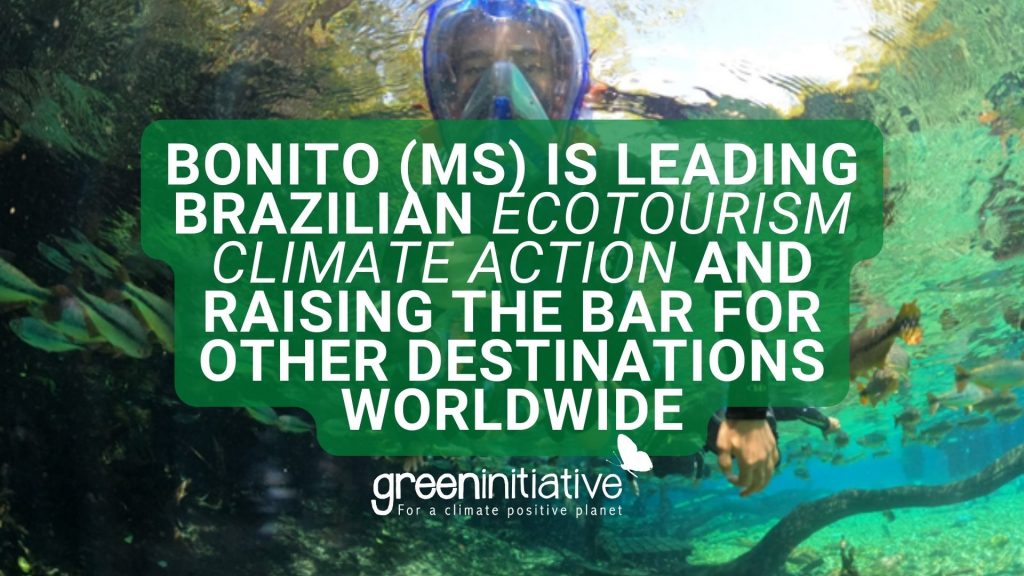
Bonito (MS) is Leading Brazilian ecotourism Climate Action and raising the bar for other destinations worldwide

Bonito: How a Brazilian ecotourism destination is leading climate action by example

As the world recovers from the shock of the COVID-19 pandemic, rebuilding a more sustainable tourism sector remains a shared responsibility of tourism firms and destinations. Amid mounting evidence of severe climate change, points that the window of opportunity to rapidly reduce greenhouse gas (GHG) emissions and avoid a climate disaster is rapidly narrowing. Atmospheric temperatures have already increased by about 1⁰ Celsius from preindustrial levels, and keeping that increase to less than 1.5⁰ through 2050 will require intense efforts by the public and private sectors. At the COP26 conference in November 2021, the UN World Tourism Organization (UNWTO), the United Nations Environment Program (UNEP) and their partners issued the Glasgow Declaration for Tourism and Climate, which calls on all tourism stakeholders to demonstrate a shared commitment to mitigating greenhouse gas (GHG) emissions by integrating climate action into the core of tourism business models and management tools. Brazil’s ecotourism industry relies on landscapes with extraordinary biodiversity and vibrant ecosystems that provide food and shelter for native species. One of Brazil’s key ecotourism centers is Bonito, a fantastic destination in Mato Grosso do Sul that rests atop the Guarani Aquifer, the second largest source of freshwater on earth. Bonito’s efforts to achieve carbon-neutral certification are based on over two decades of implementing sustainable tourism management practices. As early as 1995, Bonito created a Tourism Voucher system that is designed to control the number of tourists per attraction based on a scientific reference point for tourist capacity, and Bonito has since emerged as one of the most lauded ecotourism destinations in the country. After Bonito received the WTN Global Responsible Tourism Award in 2013 (London), government authorities launched a public-private destination governance body – FUNDTUR, which plays a key role in promoting sustainable tourism development best practices for Bonito. The carbon neutral certification process led by Green Initiative, was initiated with the signing of the Glasgow Declaration by FUNDTUR, in coordination with the Bonito municipal government and the state secretariats for the environment, tourism, and economic development. The carbon-neutral certification cycle requires an accurate assessment of the destination’s carbon footprint. This footprint establishes the baseline for reducing Bonito’s carbon emissions, which will need to fall by 45% by 2030 and reach net zero by 2050, in accordance with the guidelines of the Paris Agreement. The certification process also includes an assessment of the GHG capture and storage capacity of local forests, which include eight of Bonito’s main ecotourism attractions spread over 5,000 hectares. According to the carbon-footprint assessment, the main GHG emission sources are fuel consumption by vehicles (52,36% of total emissions), followed by the decomposition of solid waste (22,64%). The mitigation plan will focus first on solid-waste management (including food waste), reducing methane emissions at landfills by channeling organic waste to appropriate sites through governmental and community programs. In addition to reducing GHG emissions, the proper treatment of organic waste can provide opportunities to produce valuable products such as biochar, compost, biogas, and organic fertilizers. Local farmers can use organic fertilizers as a substitute for nitrogen-based fertilizers, further slashing GHG emissions from agriculture while complementing ecosystem restoration and reforestation projects currently underway. Reducing the carbon footprint of cars, trucks, and motorcycles will be vital to achieve Bonito’s climate targets. Vehicle emissions pose an especially complex challenge, and emissions reduction will require sustained investments in electric mobility. By developing the capacity to measure and monitor its climate performance, Bonito is raising the bar in climate action for ecotourism destinations world-wide, leading the way to new destination management practices, that should mainstream climate action as a significantly relevant aspect for long-term prosperity for any destination. This article for Transforming One Planet Vision into Action has been prepared by FUNDTUR, Mato Grosso do Sul Destination Management Organization. For more information visit Green Initiative website. Green Initiative, a leading sustainable certification company, is proud to announce that it has partnered with the UNWTO and the Travel Foundation to support the Glasgow Declaration Capacity Building Working Group. ENGAGE NOW Commit to a new level of leadership and competitiveness in the tourism industry by introducing climate action at the core of your business model, and become Climate Positive, Carbon Neutral and /or Carbon Measured certified. Click here to learn more about Green Initiative Certifications and Climate Action Solutions for Tourism.

Bonito: How a Brazilian ecotourism destination is leading climate action by example Read More »

19-01-23 Global Risks Report 2023 Navigating the Converging Crises of the Decade Ahead

Global Risks Report 2023: Navigating the Converging Crises of the Decade Ahead

The past years of this decade have marked a significant period of disruption in human history. The return to a “new normal” post-COVID-19 pandemic was short-lived as the outbreak of war in Ukraine brought about fresh crises in food and energy, reviving problems that had been previously addressed. As 2023 begins, the world faces risks that are both unprecedented and familiar. Familiar risks such as inflation, cost-of-living issues, trade wars, and nuclear warfare have resurfaced, while new developments such as unsustainable debt, low global investment, and the pressure of climate change are amplifying these risks. These risks are converging to shape a unique, uncertain, and turbulent decade ahead. The Global Risks Report 2023 presents the findings of the latest Global Risks Perception Survey. The report examines global risks using three time frames: current crises, short-term risks, and long-term risks. It also explores the potential for these risks to converge into a “polycrisis” centered around natural resource shortages by 2030 and assesses preparedness for these risks and potential solutions for a more resilient future. Click here to download the Global Risks Report 2023. ENGAGE YOUR BUSINESS INTO A NEW LEVEL Learn how to engage your Business into a New Level of Leadership and Competitiveness by becoming Climate Positive, Climate Neutral and Climate Measured certified here.

Global Risks Report 2023: Navigating the Converging Crises of the Decade Ahead Read More »

Building Tourism Back Better

A Climate Action Guide For Tourism Businesses and Destinations

As the world continues to recover from the unprecedented shock of the COVID-19 pandemic, rebuilding a sustainable tourism sector remains a shared responsibility for tourism organizations worldwide. Amid mounting evidence of severe climate change, the window of opportunity for swiftly reducing greenhouse gas (GHG) emissions is rapidly narrowing. In November 2021 The UN World Tourism Organization (UNWTO) and the UN Environment Programme (UNEP), in collaboration with the Travel Foundation, launched the Glasgow Declaration for Climate Action in Tourism at the climate-change conference COP26. The declaration calls on all tourism stakeholders to publicly demonstrate a joint commitment towards GHG reduction and climate resilience. In the wake of the Glasgow Declaration, the tourism industry is striving to embrace the challenges posedby climate change. Reaching a broad consensus on how to address climate change would be of utmost importance, impacting tourism industry developments and performance in the years to come. Since 2014 Green Initiative has been working alongside tourism businesses and destinations worldwide, introducing best climate action practices leading to efficient processes, access to climate financing, cost reductions, compliance with ESG standards, and international climate leadership. As part of our continuous support to accelerate the decarbonization of global tourism, a Climate Action Guide for Tourism Businesses and Destinations was prepared by Green Initiative and technically reviewed by the staff of the United Nations Environment Programme (UNEP), United Nations World Tourism Organization (UNWTO), United Nations Climate Change (UNFCCC) and United Nations Conference on Trade and Development (UNCTAD). Forthcoming at COP 27th At Sharm El-Sheikh, Egypt, the guide provides a practical roadmap to define baseline emissions, monitor carbon footprint changes, set emissions targets, evaluate progress, and publicize climate commitments and successes. At Green Initiative, we believe that unsustainable business-as-usual models will lose competitiveness and disappear. It’s time to reinforce collaborative processes and work together, “Building Tourism Back Better”. Please click here to download the Climate Action Guide For Tourism Businesses and Destinations.

A Climate Action Guide For Tourism Businesses and Destinations Read More »

The Green Logistics Revolution

The Green Logistics Revolution

Logistics companies achieve Carbon Neutral certification and take the lead in climate action transport services sector. The companies DELFIN GROUP, an international cargo agent; and DELFIN LOGISTICS, the transportation arm of the DELFIN group, were granted the Carbon Neutral certification, issued by the GREEN INITIATIVE, complying with global standards validated by the United Nations. The companies, part of the CIMC CHINA holding company, achieved this certification by successfully completing the process of measuring and offsetting their carbon footprint, with high standards of transparency. These companies are leading the way in the logistics sector, in terms of responsibility and climate action; assuming specific commitments within its Action Plans for 2023-2025, specifically referring to 1) the reduction of greenhouse gas (GHG) emissions in its operations, and 2) innovation in climate-smart services. “We decided to incorporate climate action into our business model, because we are convinced that international trade can be part of the solution and not part of the problem of global warming. We want to lead this great ‘green logistics revolution’ in Peru, developing the necessary capacities that allow us to be the first option in carbon neutral logistics services”. Felipe Lopez, general manager of DELFIN LOGISTICS. For his part, Herbert Saco-Vertiz, commercial manager of DELFIN GROUP, added that “The climate agenda is a priority in all economic segments, including international trade. We are going to support our clients to reduce their carbon emissions and generate a positive impact on the climate, through climate-smart logistics services. The “green logistics revolution” is a call for innovation and Peru, as a leading exporting country in many sectors, must anticipate it in order not to lose competitiveness. At Delfin Group, we will be helping exporters meet their climate goals.” Herbert Saco-Vertiz, commercial manager of DELFIN GROUP Both executives agreed that their great task is to assume leadership and internalize climate action within the company and among their stakeholders, so that the positive impact of their climate actions generate value for their clients, who will also benefit from climate smart logistical services. Also, both executives have something in common when it comes to relationship building with suppliers: they consider them to be a fundamental part of their carbon footprint mitigation strategy, in order to progressively reduce GHG emissions from their operations. To achieve Carbon Neutral certification, the companies of the DELFIN group engaged into detailed and transparent measurement of its corporate carbon footprint and mitigation action, there results were reviewed and are available at Green Initiative – Impact webpage. Engage your business into a New Level Learn how to engage your Business into a New Level of Leadership and Competitiveness by becoming Climate Positive, Climate Neutral and Climate Measured certified here.

The Green Logistics Revolution Read More »