Clean mobility, tourism, and investment are behind the project seeking to transform the urban coastline of the Peruvian capital.
For decades, Lima maintained a distant relationship with the ocean that defines its geography. The Peruvian capital extends over cliffs up to 80 meters high facing the Pacific, creating a physical, cultural, and urban separation between the city and its beaches. Despite having one of the most extensive urban coastlines in Latin America, accessing the sea in districts like Miraflores, Barranco, San Isidro, or San Miguel remains a logistical challenge for much of the population.
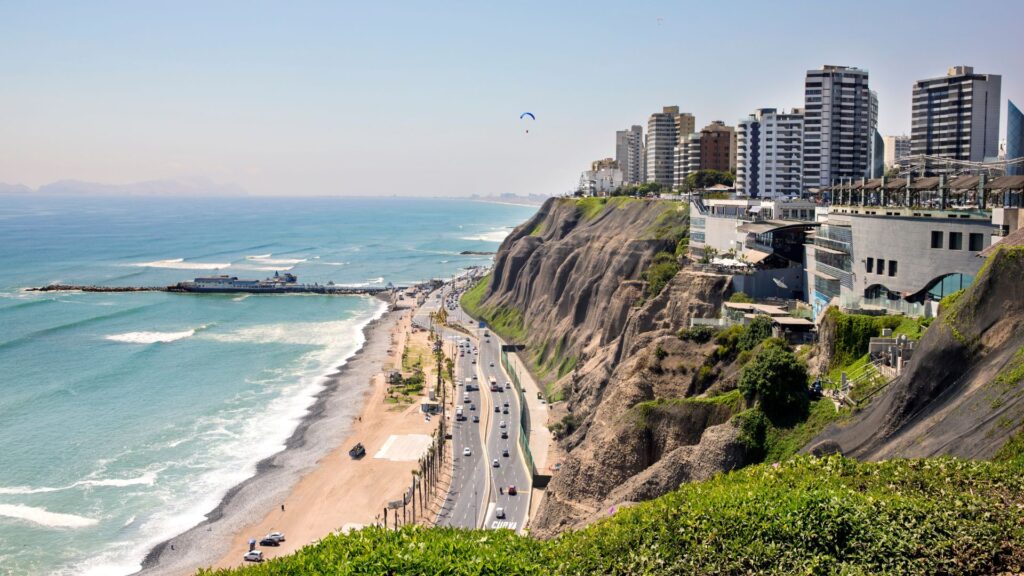
For millions of Lima residents, the beach represents an occasional destination reached primarily by car, involving congestion, limited parking, and demanding pedestrian access via steep, high-gradient stairs. That scenario is beginning to change.
In the coming weeks, Miraflores will put into operation the “Vaivén Miraflores,” (@vaiventeleferico) the first urban tourist cable car in Metropolitan Lima. This clean-energy electric mobility system will connect the district’s boardwalk with Redondo Beach in just three minutes. The project involves an investment of nearly US$10 million and utilizes technology from the Austrian company Doppelmayr, a global leader in cable transport systems.
The relevance of the project goes far beyond mobility between two points separated by 310 meters. The Vaivén represents a new stage in the relationship between Lima and its coastline and strengthens the consolidation of Miraflores as the main urban tourist destination of the Peruvian capital. The district concentrates a significant portion of Lima’s hotel, gastronomic, cultural, and recreational offerings, alongside a permanent dynamic of private investment linked to tourism and services. Improved accessibility to the Costa Verde significantly expands the economic, social, and recreational potential of the coastal edge, breathing life into this underutilized space.
Clean Mobility and Climate Commitment
The project also introduces a dimension that is increasingly relevant in global urban and tourist development: the decarbonization of mobility. In a city where much of the beach access depends on private cars, the Vaivén Miraflores incorporates a low-emission electric system that will contribute directly to reducing the carbon footprint associated with traveling to the coast.
The initiative aligns with Miraflores’ objectives as a member of the international Surf Cities network, a platform that promotes coastal cities linked to sports, sustainability, and the protection of marine ecosystems.
The comprehensive emissions management of the project and its Carbon Neutral climate certification are the responsibility of Green Initiative, an organization internationally recognized for its leadership in climate certifications applied to the tourism sector and sustainable destinations.
The integration of urban infrastructure, clean mobility, and climate management positions the Vaivén Miraflores among the most innovative urban tourism projects in Latin America.
The integration of urban infrastructure, clean mobility, and climate management positions the Vaivén Miraflores among the most innovative urban tourism projects in Latin America.
A Catalyst for Urban Transformation
International experience shows that this type of infrastructure often becomes an urban catalyst. Cities like Medellín, La Paz, and Mexico City have incorporated cable transport systems that boosted real estate appreciation, territorial integration, urban regeneration, and new economic dynamics around the connected corridors. In coastal cities, where topography has historically limited access to the sea, the impact can be even more transformative.
In the case of Miraflores, the Vaivén articulates tourism, quality of life, and sustainable mobility in a single infrastructure. The system will facilitate access for residents, tourists, cyclists, and surfers to the Costa Verde through accessible cabins equipped for bicycles and surfboards.
The increase in pedestrian and recreational connectivity can progressively transform the economic dynamics of the coast, expanding opportunities for:
- Cafés and restaurants
- Local commerce
- Cultural activities
- Services linked to sports and entertainment
The revitalization of the coastal edge also strengthens incentives for new public and private investments in urban spaces, security, landscaping, and tourist equipment. This is especially relevant for Lima, where several coastal districts concentrate hundreds of thousands of inhabitants and a growing urban economy.
The Lima coast possesses extraordinary comparative advantages that remained partially disconnected from the city’s daily life for decades. The Vaivén Miraflores may mark the beginning of a broader transformation: a new urban vision where the coastline stops being primarily a vehicular corridor and becomes an integrated space for well-being, tourism, sports, and economic development.
Perhaps therein lies the true scope of the project. More than just connecting the boardwalk to the beach, the Vaivén Miraflores has the potential to transform how Lima relates to its coast, finally integrating the ocean into the economic, social, and urban dynamics of a city built facing the Pacific.