Energy consumption represents one of the most significant operational costs for hotel owners and managers. Within a typical property, lighting and HVAC (Heating, Ventilation, and Air Conditioning) systems account for the vast majority of electricity use. Implementing targeted optimizations in these two areas provides immediate financial relief and serves as a foundational step toward broader decarbonization. This guide focuses on high-impact “quick wins” that deliver measurable results with minimal operational disruption.
Implementing these quick wins is the first phase of a larger Complete Hotel Energy Transition Roadmap.
The Financial Case for Rapid Energy Optimization
Rising energy prices and increasing guest expectations for sustainable operations make efficiency a business imperative. Traditional lighting and unoptimized climate control systems waste significant resources through heating or cooling unoccupied spaces and using outdated technology. By focusing on lighting and HVAC, hotel operators can often see energy savings of 20% to 40% in these specific systems. These savings directly improve the property’s Net Operating Income (NOI) and increase overall asset value.
These efficiency measures align with the broader Net Zero Roadmap for Travel & Tourism, providing a structured path toward total operational sustainability.
Lighting Optimization: Illumination with Efficiency
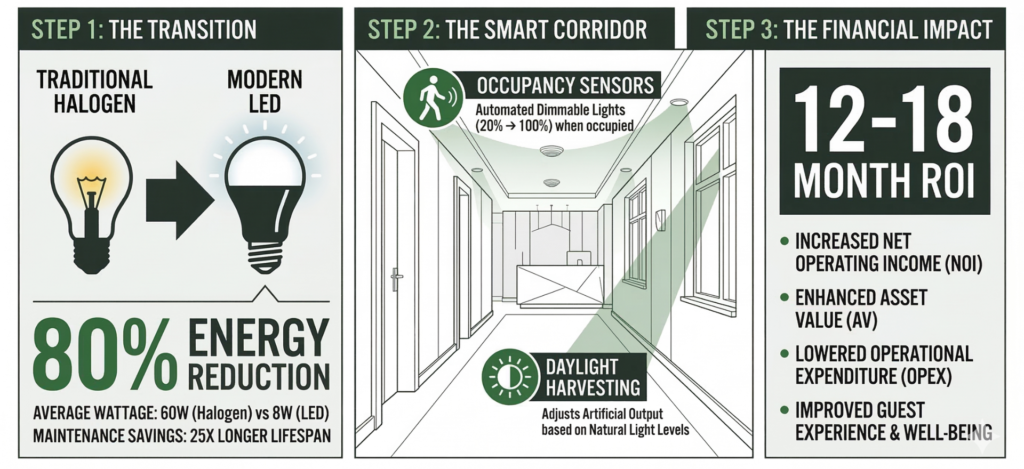
Lighting is often the most accessible area for rapid energy reduction. The transition to modern technology goes beyond simply changing bulbs; it involves intelligent control of the hotel’s environment.
LED Retrofitting
Replacing all incandescent, halogen, and fluorescent lamps with high-efficiency LED technology is the single most effective lighting intervention.
- Operational Longevity: LEDs last up to 25 times longer than traditional bulbs, significantly reducing maintenance labor and replacement costs.
- Heat Reduction: Unlike incandescent bulbs, which release 90% of their energy as heat, LEDs remain cool, which indirectly reduces the load on the hotel’s cooling systems.
Smart Controls and Automation
Energy is frequently wasted in “back-of-house” areas and guest corridors that remain fully lit while empty.
- Occupancy Sensors: Installing infrared or ultrasonic sensors in restrooms, storage areas, and offices ensures lights remain active only when needed.
- Daylight Harvesting: For lobbies and common areas with ample natural light, photocells can automatically dim electric lighting during daylight hours to maintain consistent levels without over-consuming energy.
HVAC Optimization: Precision Climate Control
HVAC systems are typically the largest energy consumers in any accommodation facility. Because these systems are complex, many hotels operate them inefficiently by default.
Smart Thermostats and Occupancy Integration
Heating or cooling a vacant guest room is a primary source of energy waste.
- PMS Integration: Linking the hotel’s Property Management System (PMS) to the HVAC controls allows the system to enter a “setback” mode automatically upon guest check-out.
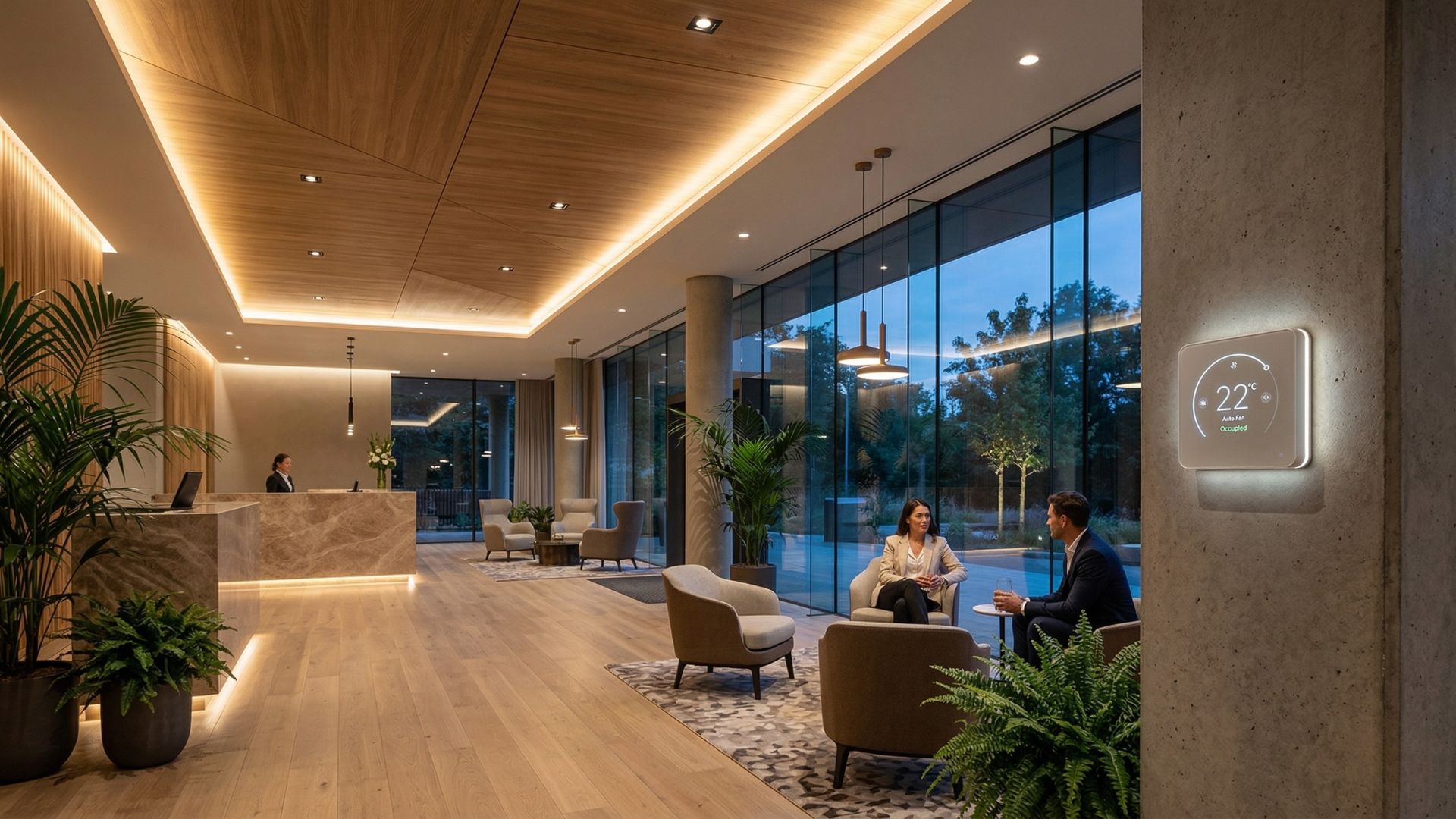
- Presence Detection: Modern smart thermostats use door-contact sensors and motion detectors to adjust temperatures based on guest presence, ensuring comfort while the guest is in the room and efficiency while they are out.
Preventative Maintenance as an Efficiency Strategy
A poorly maintained HVAC system can consume up to 30% more energy to provide the same level of comfort.
- Regular Filter Replacement: Clogged filters restrict airflow, forcing fans to work harder and consume more power.
- Condenser Coil Cleaning: For outdoor units, dirt and debris buildup prevents efficient heat exchange, leading to longer run times and increased wear on compressors.
Measuring Success and ROI
The success of these “quick wins” is measured through utility bill reduction and improved equipment lifespans. Operators should establish a baseline of energy use per occupied room to track the specific impact of lighting and HVAC upgrades. These metrics are essential for demonstrating the value of efficiency projects to owners and investors.
The potential for impact is significant; for instance, the Grande Hotel Sesc Itaparica efficiency results showed a 41.48% reduction in emissions intensity through strategic energy decisions.
Ready to identify the specific savings available at your property? Book a Hotel Energy Efficiency Assessment with our technical team today.

This article was written by Musye Lucen from the Green Initiative Team.
Frequently Asked Questions: Hotel Energy Optimization
Lighting and HVAC systems account for the vast majority of electricity use within a typical property. Optimizing these two areas offers immediate financial relief and serves as a foundational step toward broader decarbonization.
Beyond reducing monthly utility bills, these optimizations can lead to energy savings of 20% to 40% in specific systems. This directly improves the property’s Net Operating Income (NOI) and increases the overall asset value.
LEDs last up to 25 times longer than traditional incandescent or halogen bulbs, which significantly lowers maintenance labor and replacement costs. Additionally, because LEDs release very little heat, they reduce the indirect cooling load on the hotel’s HVAC system.
Linking the PMS to HVAC controls allows the system to automatically enter a “setback” mode when a guest checks out. This prevents the common waste of heating or cooling vacant rooms while ensuring guest comfort upon arrival.
A system that is not properly maintained can consume up to 30% more energy to provide the same level of comfort. Simple actions like regular filter replacements and cleaning condenser coils prevent fans and compressors from overworking.
Success is measured through utility bill reduction and improved equipment lifespans. Operators should establish a baseline of energy use per occupied room to track the specific impact of upgrades and demonstrate value to investors.