
The hospitality industry stands at a defining crossroads where economic growth must reconcile with the preservation of the ecosystems that sustain it. For hotels and accommodation providers, the energy transition represents the most significant opportunity to reduce operational costs while responding to a global demand for transparency and positive climate impacts. This roadmap provides a comprehensive strategic framework to transition from fossil-fuel dependency to climate-positive operations, utilizing the specialized guidelines established for the tourism sector.
The Strategic Imperative for Hotel Decarbonization
Decarbonizing the tourism sector is not merely a reputational exercise; it is a central dimension of modern industrial competitiveness. Accommodation providers face unique vulnerabilities to climate change, including extreme weather events that can damage infrastructure and disrupt service delivery.
Economic Advantages and Risk Mitigation
Transitioning to low-carbon models allows hotels to:
- Reduce Operational Costs: Implementing energy efficiency and renewable alternatives directly lowers utility expenses.
- Access Climate Finance: Verified carbon management opens doors to green investment funds, fiscal incentives, and preferential interest rates.
- Future-Proof Assets: Aligning with the Paris Agreement and national goals ensures compliance with evolving environmental regulations.
Market Positioning and Guest Expectations
Modern travelers increasingly prefer “climatically intelligent” options that reflect responsible practices. Demonstrating a verified commitment to action—such as through Carbon Neutral or Climate Positive certifications—provides a significant comparative advantage in international markets.
Phase 1: Establishing the Carbon Baseline
A credible energy transition begins with data. You must establish a rigorous Line Base of Emissions to quantify the impact of your operations.
The Technical Audit Process
Following international standards like ISO 14064-1 and the GHG Protocol, hotels must categorize emissions into three scopes:
- Scope 1 (Direct Emissions): These occur from sources owned or controlled by the hotel, such as fuel for heating, cooking, or company-owned vehicle fleets.
- Scope 2 (Indirect Energy Emissions): These result from the generation of purchased electricity, steam, or cooling consumed on-site.
- Scope 3 (Value Chain Emissions): These include emissions from purchased goods, services, and guest transportation.
Measuring Methodology
Quantification combines activity data (e.g., kWh consumed or liters of fuel) with emission factors—coefficients that estimate the total gases emitted per unit of activity. These calculations must include all primary greenhouse gases, primarily CO2, CH4, and N2O, expressed as CO2 equivalent (tCO2eq) for standardization.
Phase 2: The Efficiency-First Framework
Efficiency is the most cost-effective way to begin the transition. In the hospitality sector, the Accommodation category is a primary driver of emissions, largely due to electricity and heating requirements.
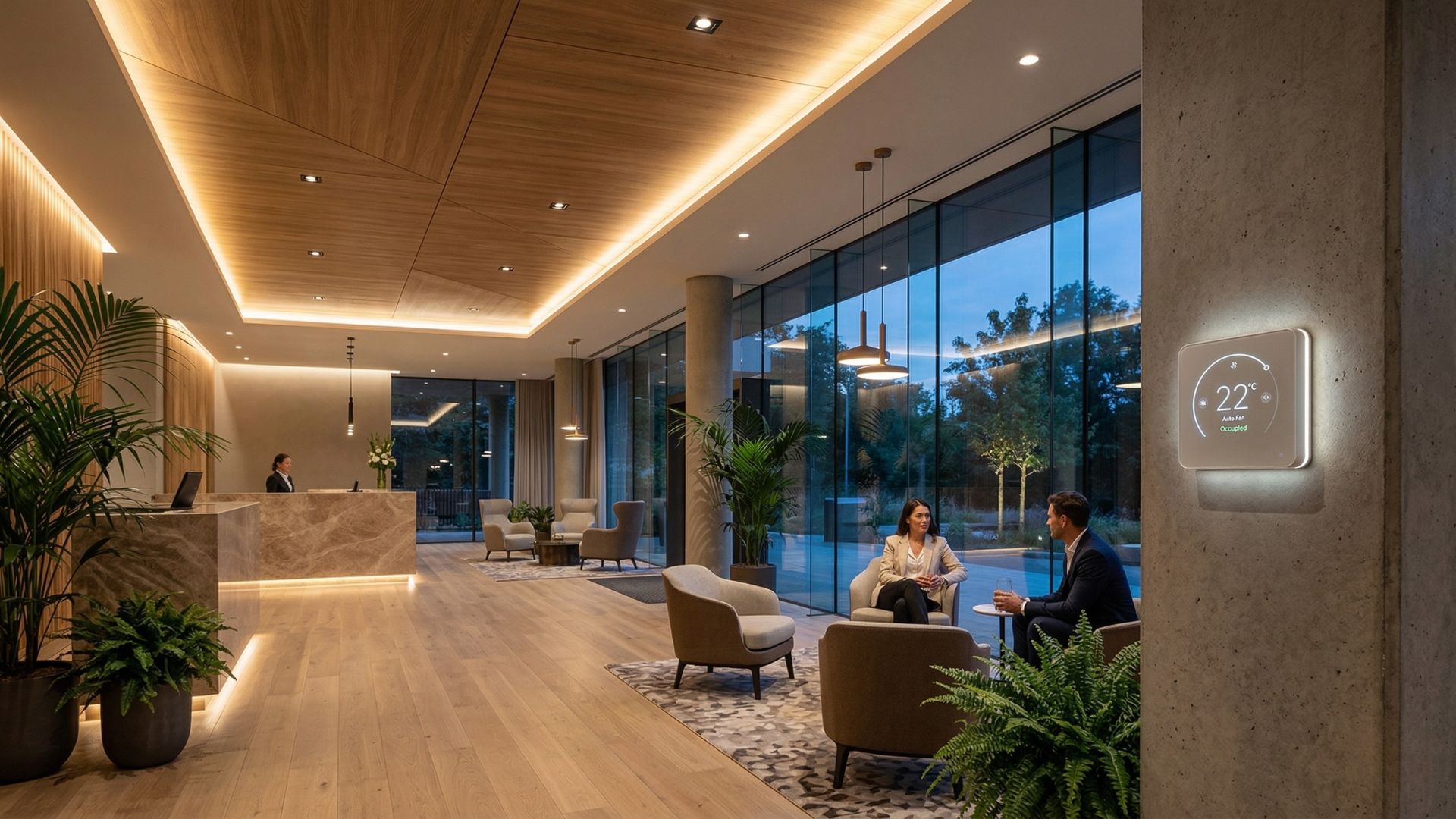
Key immediate actions include optimizing HVAC systems and upgrading to LED lighting with motion sensors to achieve rapid energy reduction.
HVAC and Building Optimization
Heating, ventilation, and air conditioning systems are high-consumption areas.
- Lighting Upgrades: Transitioning to LED bulbs and installing motion sensors provides immediate reductions in electricity use with modest initial costs.
- Equipment Efficiency: Using water-saving technologies like low-flow faucets and high-efficiency toilets prevents indirect emissions associated with water processing and heating.
- HFC Management: Proper maintenance of refrigeration units is critical, as refrigerant gases (HFCs) are thousands of times more potent than CO2.
Phase 3: Implementing Circularity in Energy and Materials

The energy transition is more effective when integrated with Circular Economy principles. Circularity moves away from the “extract-produce-discard” linear model to create resilient, closed-loop systems.
The 10R Strategy for Hotels
Hotels can apply the 10R Framework to minimize resource pressure:
- Refuse: Avoid non-sustainable products or single-use plastics that carry high embedded carbon.
- Reduce: Minimize the consumption of natural resources and energy from the design phase.
- Repurpose/Recondition: Give new functions to old materials, such as converting discarded wood into furniture.
- Recycle: Treat materials like glass or paper as valuable secondary inputs rather than waste.
Case Study: Circularity in Peru
Machu Picchu became a global reference by implementing an integrated circular architecture. Key interventions included:
- Biodiesel Production: Converting used cooking oil from local hotels and restaurants into clean energy, preventing water contamination and reducing fossil fuel use.
- Organic Waste Valorization: Transforming organic waste into biochar (biocarbon), a fertilizer that enriches soil while acting as a long-term carbon sink.
Phase 4: Electrification and Renewable Energy
Once efficiency is maximized, the remaining load should transition to clean energy sources.
Phasing Out Fossil Fuels
Direct emissions can be lowered by switching from carbon-intensive cooking fuels to cleaner alternatives like natural gas or, ideally, full electrification. While electrification often produces the greatest net reduction, the local grid’s carbon content must be considered.
Renewable Integration
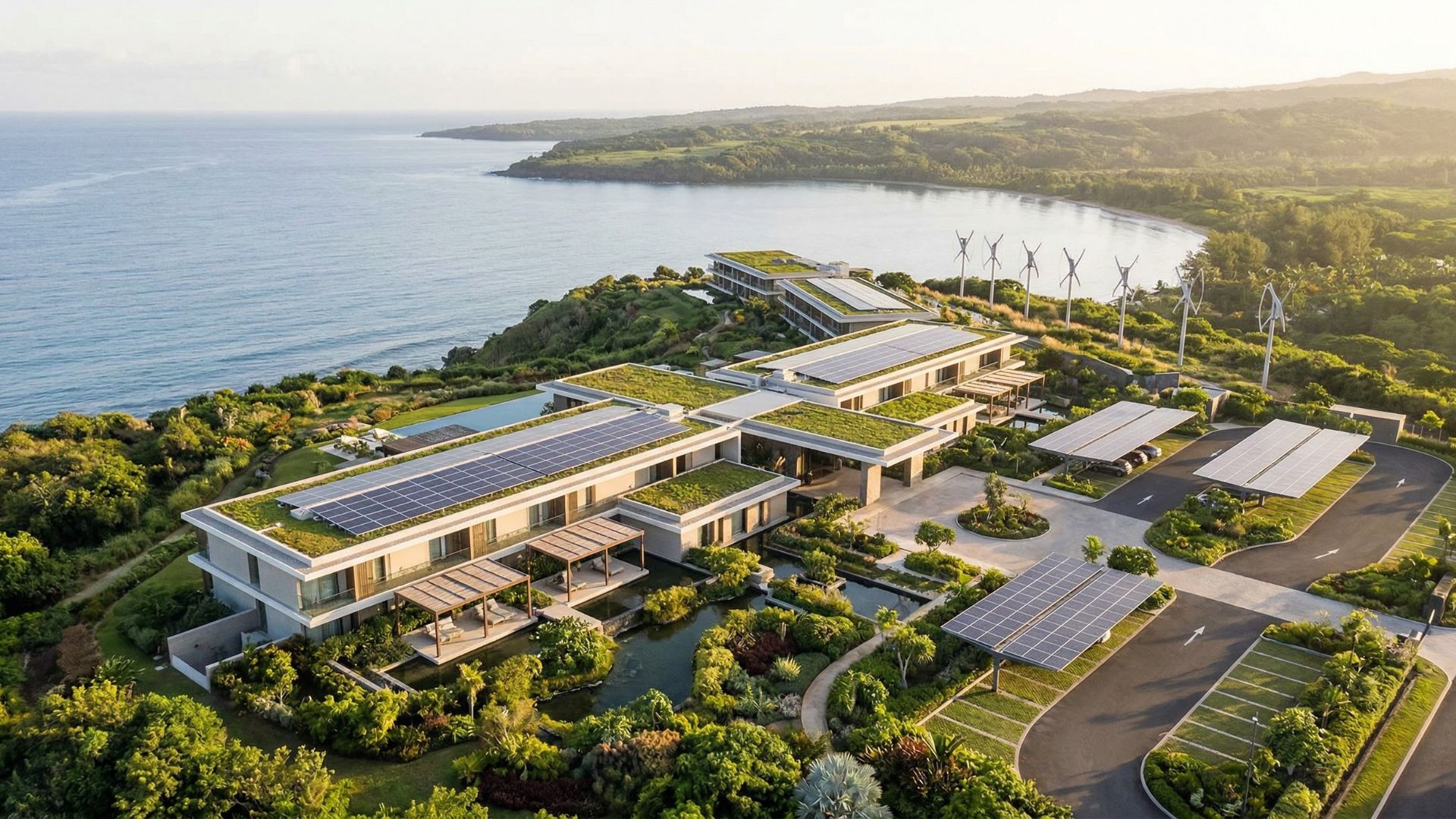
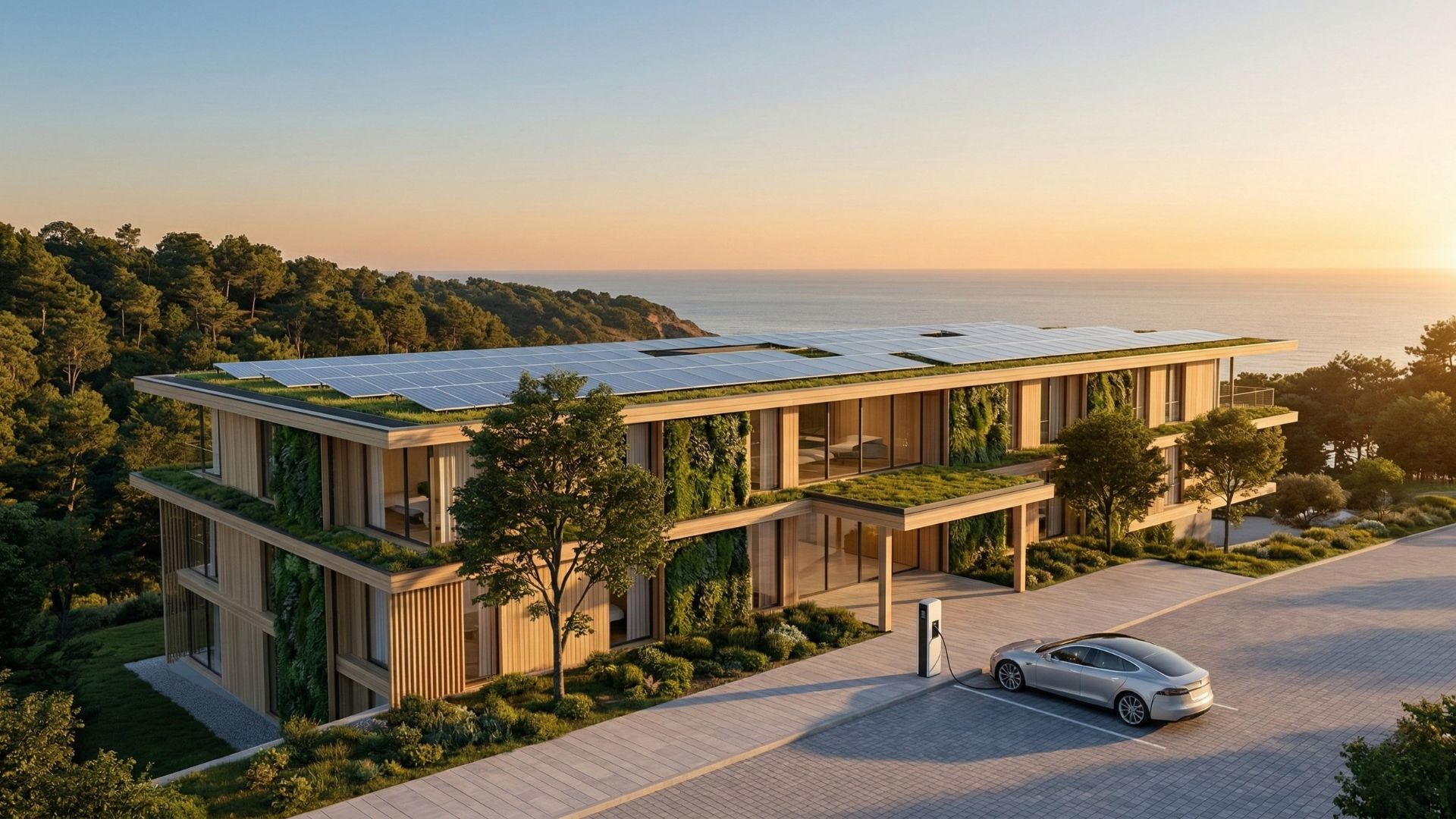
- On-Site Generation: Installing solar panels on rooftops is a strategic investment that stabilizes electricity costs and drastically cuts emissions.
- Third-Party Procurement: Hotels can choose transport and energy providers that utilize low-emission technologies or electric vehicle (EV) fleets.
Phase 5: Monitoring, Reporting, and Verification (MRV)
The transition is a continuous process of improvement. Reporting and diffusion of good practices generate the true value of climate investments.
Principles of Reliable Reporting
To ensure transparency and access to green finance, hotel reports must follow these principles:
- Consistency: Use standard analytical processes that allow for comparisons over time.
- Accuracy: Ensure data is measured with technical rigor to support sound decision-making.
- Transparency: Disclose all methods, data sources, and assumptions clearly.
Maturity Levels
Hotels can track their progress using the Climate Maturity Level (NM) framework:
- NM 1 (Measurement): The hotel begins measuring its footprint and reporting results.
- NM 2 (Direct Operations): Implementation of efficiency and decarbonization within internal management.
- NM 3 (Leadership): Extending commitments to the entire value chain and influencing the wider sector.


This article was written by Musye Lucen from the Green Initiative Team.
Hotel Energy Transition FAQ
In accordance with international standards like ISO 14064-1, hotel emissions are categorized into:
Scope 1 (Direct): Emissions from sources owned or controlled by the hotel, such as boilers, kitchen fuels, and vehicle fleets.
Scope 2 (Indirect Energy): Emissions from purchased electricity, steam, or cooling used on-site.
Scope 3 (Value Chain): Indirect emissions from the supply chain, including purchased goods and guest transportation.
The 10R framework moves hotels away from a linear “extract-produce-discard” model toward a circular economy. By implementing strategies such as Refuse (avoiding single-use plastics), Reduce (minimizing resource consumption), and Recover (turning organic waste into energy or biochar), hotels can significantly lower their carbon footprint while reducing operational costs.
Following an “Efficiency-First” framework is the most cost-effective starting point. Key immediate actions include optimizing HVAC systems, upgrading to LED lighting with motion sensors, and implementing water-saving technologies to reduce the energy required for water heating.
Hotels track progress through three defined levels:
NM 1 (Measurement): The hotel establishes a baseline and begins reporting its carbon footprint.
NM 2 (Direct Operations): The hotel implements efficiency and decarbonization within its internal management.
NM 3 (Leadership): The hotel extends its climate commitments to its entire value chain and influences the broader industry.
A credible energy transition must begin with a rigorous Line Base of Emissions. This data-driven approach allows hotels to quantify their current impact using activity data and emission factors, which is essential for accessing green investment funds and ensuring transparency in climate reporting.