
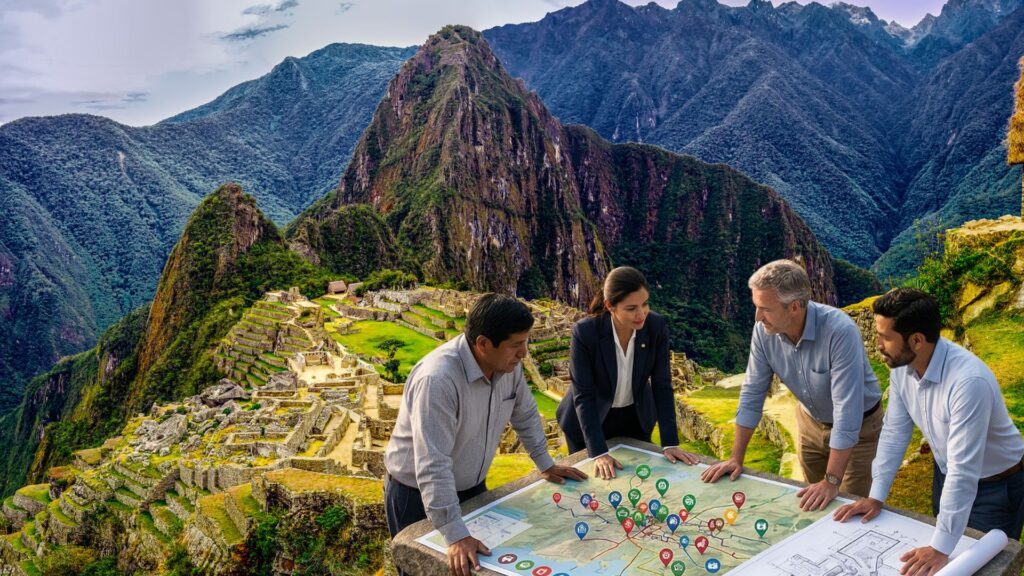
Machu Picchu carbon neutral

World Heritage Sites Call to Net for Climate Action in Tourism

Machu Picchu and Christ the Redeemer Lead Global Call to Climate Action in Tourism

A New Boost to Global Collaboration among World Heritage Sites Inspired by Machu Picchu — and a Call for More to Join Machu Picchu, the world’s most iconic mountain sanctuary, has once again become a source of inspiration for global climate action in tourism. During the celebration of its third consecutive Carbon Neutral Certification, leaders and representatives from emblematic heritage destinations gathered to reaffirm a shared commitment to sustainability and climate responsibility. Inspired by the words and vision of Gustavo Santos, Regional Director for the Americas at UN Tourism, and guided by the transformative energy felt in Machu Picchu, the historic “World Heritage Sites: Call to Net for Climate Action in Tourism” was signed — a collective declaration by heritage destinations determined to accelerate measurable and impactful climate action through tourism. Heritage as a Living Force for Change Heritage sites are more than cultural or natural landmarks — they are living symbols of ecological richness and human achievement. Every day, they welcome thousands of visitors, offering a powerful platform to influence awareness, behavior, and policy implementation on a global scale. Far from being passive backdrops for tourism, heritage sites are active agents of change. Many of the civilizations that built them once thrived in harmony with nature, but the absence of preservation and adaptation over time led to deterioration and loss. Today, these places remind us that preserving heritage is preserving humanity itself — and that climate action in tourism is one of the most effective ways to ensure their protection for generations to come. The Call to Net: From Heritage to Hope The World Heritage Sites: Call to Net for Climate Action in Tourism, supported by Green Initiative, brings together managers and stakeholders from emblematic destinations in a global call to action. As sites of exceptional cultural and natural value, these destinations hold a unique position to demonstrate that tourism can be both a source of economic vitality and a driver of climate- and nature-positive transformation. The initiative aligns with the principles of the UN Tourism Glasgow Declaration, advancing measurable climate strategies that integrate low-emission operations, ecosystem conservation, community engagement, and visitor education across participating sites. The first signatories include representatives of Machu Picchu (Peru), Tikal (Guatemala), the Galápagos Islands (Ecuador), Foz do Iguaçu, Bonito, the Pantanal and Christ the Redeemer (Brazil), along with delegations from Belize, UN Tourism and UNCTAD, marking the beginning of a powerful movement for climate action in tourism. Networking together — by sharing best practices, engaging local communities, and amplifying visible climate action — the initiative aims to catalyze a broader shift across the tourism industry, moving from isolated sustainability efforts to coordinated and large-scale mitigation and preservation strategies. This network is conceived as a grassroots movement led by the Global South, grounded in equity, transparency, and the collective urgency to respond to the climate crisis. And it is open for more heritage sites worldwide to join — from the Andes to Angkor, from Petra to Patagonia — amplifying the shared mission of transforming tourism into a true force for regeneration. Scaling Climate Action Through Tourism As Gustavo Santos emphasized: “This achievement demonstrates that through public–private and multilateral collaboration we can achieve remarkable results in decarbonizing the economy, moving closer to the climate goals humanity must reach. The certification experience accumulated here — and which we seek to scale across the Americas and worldwide — shows that tourism and climate action can and must go hand in hand.” Through collaboration among governments, private organizations, and local communities, the Call to Net sets a roadmap for transformative action — one where heritage destinations become living laboratories for sustainable development and climate innovation. A Pathway to Achieving National Climate Goals This initiative extends beyond the tourism sector. It represents a scalable model for countries striving to meet their Nationally Determined Contributions (NDCs) under the Paris Agreement. By measuring and reducing emissions, restoring ecosystems, and promoting circular economy solutions, heritage destinations can contribute directly to national and global climate targets while enhancing local livelihoods and resilience. A Legacy for the Planet From the heart of the Andes, Machu Picchu demonstrates that heritage preservation and climate action are deeply intertwined — two sides of the same mission to protect our planet and our shared future. As this movement expands, each participating destination adds its voice, its innovation, and its hope — proving that the places that defined our past can also lead the way toward a climate-positive future. 🌍 The Call to Net is open — heritage sites worldwide are invited to join. 📍 Machu Picchu, November 6, 2025 🔗 Read the full declaration: World Heritage Sites: Call to Net for Climate Action in Tourism This article was written by Tatiana Otaviano from the Green Initiative Team. Related Reading

Machu Picchu and Christ the Redeemer Lead Global Call to Climate Action in Tourism Read More »

Inkaterra: 50 Years of Pioneering Sustainable Tourism and Global Climate Action

Inkaterra: 50 Years of Pioneering Sustainable Tourism and Global Climate Action

Few organizations have done as much to redefine the future of tourism as Inkaterra, a true pioneer in sustainability, Peru ecotourism, and biodiversity conservation across Latin America. This year, as Inkaterra celebrates its 50th anniversary, the Green Initiative team is honored to recognize and celebrate our partner’s extraordinary journey — one that has transformed not only the way we experience travel, but also the way we connect with nature and contribute to a more climate positive and nature positive future. Joe Koechlin: A Visionary Behind Inkaterra’s 50 Years At the heart of Inkaterra’s 50-year journey is Joe Koechlin, its founder and driving force. Since establishing Inkaterra in 1975, Koechlin has redefined what tourism can mean for both travelers and the planet. His conviction was clear from the start: hospitality must be inseparable from conservation, scientific research, and cultural preservation. Guided by this vision, Koechlin transformed Inkaterra into one of the world’s most respected models of sustainable hotels and regenerative tourism. Under his leadership: Koechlin’s work has also had profound international resonance. His voice has been instrumental in showing how the private sector can align with global climate goals while delivering unforgettable travel experiences. With Inkaterra soon reaching its 50th anniversary in 2025, his leadership continues to inspire new generations of hoteliers, conservationists, and travelers committed to a climate and nature positive future. Inkaterra: A Legacy of Conservation and Innovation Since its founding in 1975, Inkaterra has been at the forefront of ecotourism and environmental preservation. Through scientific research, reforestation, and community engagement, the organization has created a model where hospitality, ecotourism, and conservation walk hand in hand. Over the decades, their projects have become international milestones, showing the world that protecting biodiversity and generating social value are not only possible, but essential. The August edition of Inkaterra’s newsletter highlights this remarkable legacy in the article “Inkaterra 50th Anniversary Milestones”, celebrating half a century of achievements in protecting Peru’s natural and cultural heritage. From pioneering sustainable tourism in the Amazon to creating conservation projects in Cusco and Cabo Blanco, Inkaterra continues to inspire destinations worldwide. A Strategic Alliance for a Climate Positive Future Our collaboration with Inkaterra is built on a shared vision: that the tourism industry can be a driver of climate action and ecosystem regeneration. Together, we have celebrated achievements that resonated across the globe: Forest Friends at the Economy of Francesco We are deeply grateful to Inkaterra for highlighting our project Forest Friends in their newsletter article “INKATERRA AND GREEN INITIATIVE: GLOBAL RECOGNITION FOR ECOSYSTEM RESTORATION”. Forest Friends was recently selected to be showcased at the Economy of Francesco Extraordinary Ideas Global Event 2025, a gathering inspired by Pope Francis that brings together leaders, entrepreneurs, and changemakers to build a new economy rooted in social justice, environmental sustainability, and the common good. This recognition is not just about our work — it is a testament to a shared commitment with Inkaterra: proving that tourism can be a powerful tool for climate and nature positive transformation. Facilitate your businesses journey towards value-driven climate and nature positive impacts with Forest Friends. Through Forest Friends, individuals, companies, and institutions can calculate and offset their carbon footprint by planting native trees, protecting biodiversity, and generating social benefits in regions of high ecological importance such as the Osa Peninsula (Costa Rica), Madre de Dios (Peru), and beyond. Looking Ahead: A Shared Path Toward 2050 As Inkaterra steps into its next 50 years, we celebrate their pioneering role in uniting science, tourism, and conservation. Together, we are building replicable models for sustainable tourism that inspire global action and directly support the goals of the UN Decade on Ecosystem Restoration. On behalf of the Green Initiative and our global Forest Friends community, we congratulate Inkaterra on this historic milestone. May the next decades bring even greater achievements in climate action, biodiversity conservation, and regenerative tourism — for Peru, Latin America, and the world. This article was written by Yves Hemelryck from the Green Initiative team

Inkaterra: 50 Years of Pioneering Sustainable Tourism and Global Climate Action Read More »

Sustainability Week 2025: Green Initiative Presents Landmark Cases of Climate-Responsible Tourism

Sustainability Week 2025: Green Initiative Presents Landmark Cases of Climate-Responsible Tourism

From May 26 to June 1, Latin America celebrates the first-ever Sustainability Week (SxS), an initiative set to mark a turning point on the path toward more conscious, regenerative tourism aligned with the climate challenges of our time. At Green Initiative, we join this coalition—led by Turtech, Plan 21, and Preferred by Nature—as strategic partners, actively participating with three unique climate certification case studies: Machu Picchu (Peru), Bonito (Brazil), and the newly announced Christ the Redeemer (Brazil). A Regional Movement Toward Regenerative Tourism Sustainability Week was born from a collaborative process with more than 50 Latin American companies that highlighted the urgent need to: Throughout these seven days, SxS will roll out a strategy of environmental education, mentorship programs, collaborative campaigns, webinars, and a digital showcase promoting sustainable tourism experiences in Latin America. Green Initiative: Track Record and Climate Action As a leading authority in climate certification for tourism, Green Initiative will present three impactful cases during SxS that demonstrate how tourism, beyond reducing its footprint, can become a regenerative force: 1. Machu Picchu – First Carbon Neutral Wonder of the World In partnership with Inkaterra, Grupo AJE, the Municipal Government of Machu Picchu, and SERNANP, Green Initiative certified Machu Picchu as the first carbon-neutral Wonder of the World. This process included: 📖 Read the full Machu Picchu case study here:https://greeninitiative.eco/2022/10/10/machu-picchu-carbono-neutral/ 2. Bonito – First Carbon Neutral Ecotourism Destination in the World Located in Mato Grosso do Sul, Brazil, Bonito pioneered integrating climate action into its core tourism strategy. In 2022, it became the world’s first certified carbon-neutral ecotourism destination after a rigorous evaluation of its carbon footprint and forest absorption capacity. Bonito’s action plan includes: 📖 Discover how Bonito is inspiring other destinations:https://greeninitiative.eco/2023/06/21/bonito-carbono-neutral/ ✝️ Christ the Redeemer – Global Icon on the Path to Carbon Neutral Certification In May 2025, the Christ the Redeemer Sanctuary officially began its climate certification process with Green Initiative. This historic alliance aims to position the UNESCO World Heritage Site as a leader in sustainable tourism ahead of COP30 in Brazil. The climate certification of Christ the Redeemer is a milestone that brings together faith, culture, conservation, and climate action. Its goal: to be a beacon of hope in times of planetary emergency. 📰 Learn more about this initiative in outlets such as Globo.com, G1, Folha PE, MSN, and Agenda do Poder. How to Participate in Sustainability Week? SxS is open to all organizations across the tourism ecosystem that want to: Participation includes visibility in digital campaigns, presence in the marketplace, access to performance metrics, and direct connection with conscious travelers. Download the Portuguese and Spanish press releases. 🎯 Learn more or join at: https://sxs.turtech.travel A Week That Can Change the Course of Tourism In a world where tourism accounts for up to 8% of global carbon emissions, Sustainability Week is more than just an event—it’s an urgent call to collective action. At Green Initiative, we reaffirm our commitment to lead by example, provide practical tools, and support destinations, businesses, and communities on their journey toward climate-smart and regenerative tourism. This article was written by Ella Baehringer from the Green Initiative team Related reading

Sustainability Week 2025: Green Initiative Presents Landmark Cases of Climate-Responsible Tourism Read More »

The Leadership Behind Machu Picchu's Carbon-Neutral Success A Model for Sustainable Tourism - Green Initiative

The Leadership Behind Machu Picchu’s Carbon Neutral Success: A Model for Sustainable Tourism

Machu Picchu, one of the world’s most iconic tourist destinations, has become a global leader in sustainability. Thanks to the visionary leadership of Mayor Elvis Lexin La Torre Uñaccori, this UNESCO World Heritage Site has not only achieved carbon-neutral certification but has successfully renewed it for a second time. His remarkable work in implementing sustainable practices, forging key partnerships, and aligning with global climate and nature positive initiatives inspires tourism leaders worldwide. Pioneering Climate and Nature Positive Tourism As the mayor of Machu Picchu Pueblo, Mayor La Torre has taken bold steps to address the environmental challenges posed by millions of annual visitors. Central to his approach has been adopting climate- and nature-positive strategies, including: These strategies have drastically reduced the town’s environmental footprint, setting a precedent for regenerative tourism—an approach that restores ecosystems while benefiting local communities. Collaborative Leadership with Key Partners Machu Picchu’s success in achieving and maintaining carbon-neutral status showcases the power of collaboration. Under Mayor La Torre’s leadership, the municipality has partnered with prominent organizations to drive impactful initiatives: These partnerships, facilitated by Green Initiative, have helped Machu Picchu achieve a remarkable 18.77% reduction in carbon emissions compared to its 2019 baseline, demonstrating the potential of public-private collaboration in achieving sustainability goals. Commitment to Global Climate and Tourism Frameworks Mayor La Torre has aligned Machu Picchu’s sustainability efforts with key international frameworks, ensuring the site remains a leader in global climate action: These commitments reflect the site’s dedication to fostering a sustainable future for tourism while combating climate change. An Honorable Legacy of Leadership Mayor La Torre’s leadership exemplifies how local governments can drive meaningful change. By integrating climate-positive policies and regenerative practices, he has transformed Machu Picchu into a beacon of sustainable tourism. “Leadership is about action. Let us lead with the purpose of leaving our world better than we found it,” Mayor La Torre has stated. His work safeguards Machu Picchu’s ancient legacy and establishes it as a symbol of hope and resilience for future generations. A Call to Action for Global Tourism Leaders Mayor La Torre’s visionary approach provides a compelling roadmap for leaders of other tourism-dependent regions. By prioritizing regenerative tourism, fostering collaborations with key partners, and committing to international climate goals, mayors and municipal teams can create destinations that thrive economically while preserving their natural and cultural heritage. Machu Picchu’s achievements prove that bold, collaborative leadership can leave a lasting positive impact on the planet. As the world grapples with the effects of climate change, the work of Mayor Elvis Lexin La Torre Uñaccori serves as a testament to what’s possible when we lead with purpose and innovation. Make your destination Climate and Nature Positive, contact us at Green Initiative to learn how we can help your city or region achieve sustainability goals, implement regenerative tourism strategies, and align with global climate frameworks like the Glasgow Declaration. Together, we can build a future where tourism regenerates nature and communities thrive. 🌍

The Leadership Behind Machu Picchu’s Carbon Neutral Success: A Model for Sustainable Tourism Read More »