Forest Friends

Celebrating World Tourism Day with a Global Milestone Green Initiative Wins as World's Leading Sustainable Organisation

Celebrating World Tourism Day with a Global Milestone: Green Initiative Wins as World’s Leading Sustainable Organisation

On this World Tourism Day, Green Initiative is honored to share a significant achievement: winning as the World’s Leading Sustainable Organisation at the 2024 World Sustainable Travel & Hospitality Awards! This recognition underscores our commitment to a greener, more sustainable tourism industry that regenerates rather than depletes. We extend our deepest gratitude to everyone who voted for us and supported our mission to lead the way in sustainable tourism, climate, and nature positive business. This achievement is as much yours as it is ours!” A Legacy of Impactful Tourism Green Initiative has always believed that tourism can be a driving force for good. We’ve pioneered sustainable tourism practices that balance business competitiveness with ecological preservation through our work with partners like Inkaterra Hotels, WorldXchange, and CEPA (Customized Educational Programs Abroad). What It Means to Be the World’s Leading Sustainable Organisation Winning this prestigious award is more than a recognition—it’s a reminder of our responsibility. From reducing the carbon footprints of our certified businesses to pioneering regenerative tourism models, we’ve made great strides in proving that tourism can benefit both people and the planet. Our Ongoing Commitment As we celebrate this milestone, we reaffirm our dedication to continuing our work with partners and clients worldwide to reduce emissions, restore ecosystems, and create sustainable livelihoods for local communities. As we mark World Tourism Day and celebrate this momentous win, we invite you to be part of this journey. Let’s work together to make travel sustainable, responsible, and regenerative—so that future generations can continue to explore the world while preserving its natural beauty. Designated Sites are Integrating Climate Action UNESCO-designated sites like Bonito and Machu Picchu are leading the way in integrating climate action into tourism through innovative practices such as carbon measurement, ecosystem restoration, and waste management solutions. By adopting climate-smart approaches, these destinations are not only reducing emissions but also enhancing community resilience and attracting eco-conscious travelers. Green Initiative’s collaboration with these iconic sites showcases how tourism can actively contribute to global climate goals and serve as a model for sustainable tourism worldwide. Explore our full article to learn how UNESCO Sites Are Pioneering Climate Action in Sustainable Tourism, and leading by example here. We highly recommend downloading Green Initiative’s Climate Action Guide for Tourism Destinations. This essential resource offers practical tools for reducing emissions, improving resource efficiency, and aligning with global climate goals. By following the guide, destinations can enhance resilience, attract eco-conscious travelers, and lead in sustainable tourism. It’s a must-have for those committed to making a positive impact. Contact us to learn more about our projects, certifications, and how we’re working with companies globally to shape a sustainable tourism industry.

Celebrating World Tourism Day with a Global Milestone: Green Initiative Wins as World’s Leading Sustainable Organisation Read More »

What Are Green Bonds and Why Are Prices So Low - Green Initiative

What Are Green Bonds and Why Are Prices So Low?

In recent years, green bonds have become a powerful financial instrument, playing a key role in addressing the global challenge of climate change and funding sustainability projects. These bonds support environmentally beneficial initiatives such as renewable energy, biodiversity conservation, and sustainable infrastructure, offering both financial returns and a tangible positive impact on the environment. Despite the promise they hold, green bond prices have been lower than expected due to several market factors. However, the future of green bonds is incredibly bright, with a growing alignment between investor demand and sustainability objectives. Understanding Green Bonds Green bonds operate like traditional bonds but serve a higher purpose—financing projects dedicated to environmental sustainability. Governments, corporations, and institutions issue these bonds to fund projects such as renewable energy development, energy efficiency improvements, and biodiversity conservation initiatives. Green bonds provide an innovative solution to global environmental issues, allowing investors to support the transition to a low-carbon economy while securing returns. Moreover, the market for green bonds is expanding rapidly. With governments and corporations pledging to meet net-zero emissions targets, the demand for green financing climate and nature positive instruments is expected to continue accelerating. Green bonds are thus well-positioned to become a mainstream financial tool for a sustainable future. Why Are Green Bond Prices So Low? Several factors explain why green bond prices have been lower recently: Increasing Supply of Green Bonds As the issuance of green bonds has surged globally, supply now outpaces demand in certain markets. However, this increase in supply is a positive sign that sustainability-focused financing is becoming mainstream. As more investors adopt ESG (Environmental, Social, and Governance) strategies, demand for green bonds is expected to catch up, potentially driving prices higher in the future. Rising Interest Rates Like all fixed-income instruments, green bonds are affected by interest rates. In a rising rate environment, newly issued bonds offer higher yields, making older green bonds less attractive. However, this is a temporary challenge. As central banks stabilize interest rates, green bonds—especially those tied to long-term climate and nature positive environmental projects—will regain their appeal. Perceived Risk of Green Projects While some green bonds finance projects in emerging sectors or developing regions, where risks may be perceived as higher, this is also an opportunity. Investors who understand the long-term potential of green technologies and climate and nature positive sustainability initiatives recognize that these bonds support transformative projects that can generate both environmental and economic returns. Greenium and Market Maturity The concept of greenium, or the premium investors have historically paid for green bonds, is evolving. As the green bond market matures and expands, greenium has diminished, making these bonds more accessible. This signals a healthy market transition, where green bonds no longer command higher prices but instead offer competitive returns, aligning with the expectations of mainstream investors. Greenium and ESG Investment Strategies Green bonds are increasingly attractive to investors seeking to align their portfolios with ESG goals. The diminishing greenium, while lowering bond premiums, actually enhances the accessibility of green bonds, offering competitive returns without sacrificing sustainability. As the market for green finance grows, companies with high ESG commitments, particularly climate and nature positive, are likely to attract more capital, driving even more innovation and positive environmental impact. For investors with a long-term view, green bonds provide a unique opportunity to support projects with positive externalities while maintaining attractive returns. This alignment of financial and environmental performance makes green bonds a compelling part of any sustainable investment strategy. A Quote on Brazil’s Green Bond Market Green bonds have emerged as an essential tool for financing sustainable projects, significantly contributing to the transition to a low-carbon economy. In Brazil, the green bond market is still in its growth phase but already shows enormous potential. Since the first issuance in 2015, the country has accumulated around USD 11.2 billion in issuances. The growth of this market in Brazil is driven by the increasing demand for sustainable investments, both from institutional investors and individuals concerned about the environmental impact of their investments. Additionally, the greenium, which is the price premium that investors are willing to pay for green bonds, is directly related to the supply and, more importantly, the demand for these bonds. This phenomenon is reinforced by the commitments made by large asset managers and financial institutions to direct resources towards projects that promote sustainability. With the growing awareness of climate change and the need for concrete actions, the green bond market in Brazil has significant room for growth. The expectation is that, with favorable public policies and the continuous engagement of the private sector, we will see a substantial increase in green bond issuances in the coming years, contributing to a more sustainable and resilient future. Quotes Marcos Lima, ESG Finance and Investment Banking – Lecturer at FEBRABAN and Coordinator of Sustainable & Climate Finance at BV Bank. A Bright Future for Green Bonds Looking ahead, the future of green bonds is incredibly promising. Several factors will fuel their growth: Increasing Regulatory Support Governments are implementing policies to promote sustainable finance, including green bonds. The European Union’s Green Bond Standard is setting the stage for stronger frameworks that ensure the transparency and integrity of green bonds. These regulations will encourage more issuers to enter the market and provide investors with confidence in the impact of their investments. Climate Commitments and Global Demand With global climate commitments like the Paris Agreement pushing governments and corporations to reduce carbon emissions, the demand for green finance will only grow. Green bonds are at the forefront of financing this transition, offering an efficient way to raise capital for large-scale environmental projects. Investor Appetite for Sustainable Assets As more investors integrate sustainability into their strategies, green bonds will continue to be a key part of the solution. The narrowing greenium makes these bonds more attractive to a broad range of investors, enabling green bonds to move from a niche product to a mainstream asset class. This growing demand, coupled with an increase in green bond issuance, is expected

What Are Green Bonds and Why Are Prices So Low? Read More »

Setting Climate and Nature Positive Goals A Pathway for Sustainable Business Leadership - Forest Friends Green Initiative

Setting Climate and Nature Positive Goals: A Pathway for Sustainable Business Leadership

In today’s corporate landscape, companies are increasingly adopting climate and nature positive goals to ensure that their business activities reduce environmental harm and contribute to the restoration and preservation of ecosystems. Achieving such goals requires combining strategic planning, emission reduction, and ecosystem restoration. Since our founding, Green Initiative has been helping businesses across various sectors work toward climate positive, carbon neutral, and carbon measured certifications. These certifications enhance organizations’ environmental responsibility and strengthen their market positioning in an era when sustainability is key. What Does It Mean to Be Climate Positive? A climate positive company goes beyond net-zero emissions by actively removing more carbon dioxide from the atmosphere than it emits. This involves efforts such as reducing operational emissions, switching to renewable energy, and supporting nature-based solutions like reforestation and habitat restoration. Achieving climate positive status requires companies to go beyond simply offsetting their carbon footprint. They must engage in activities that directly benefit the environment, ensuring a net positive impact on ecosystems and biodiversity. Certification Pathways: Climate Positive, Carbon Neutral, and Carbon Measured The Green Initiative certification programs provide structured pathways for businesses to reduce their environmental impact and work toward positive outcomes for both the climate and nature: Why Climate Positive Goals Matter? Climate and nature positive goals ensure businesses contribute positively to the planet rather than simply minimizing harm. These goals align with global climate action efforts, such as the Paris Agreement, and support biodiversity preservation under the Convention on Biological Diversity. For businesses, these certifications provide reputational advantages, foster customer loyalty, and attract investment from stakeholders who value sustainability. Companies that achieve climate positive status also position themselves as leaders in the transition to a low-carbon economy. Examples of Companies Setting Climate Positive Goals Here are some examples of businesses that have successfully integrated climate and nature positive goals into their operations through partnerships with Green Initiative: 1. WorldXchange: Pioneering Climate Positive Leadership in Currency Exchange WorldXchange, the first Climate Positive Certified currency exchange company, has set new standards in the financial sector by reducing its carbon footprint by 16% between 2021 and 2023. Furthermore, WorldXchange has gone beyond emissions reductions by planting over 300 trees in Madre de Dios, Peru, and is committed to planting more than 15,000 trees, reaching Forest Friends Accelerator certified partner status. Their efforts, which contribute to carbon sequestration and global climate awareness, position WorldXchange as a forward-thinking leader in integrating sustainability into the financial services sector. 2. Estância Mimosa Ecoturismo: A Leader in Ecotourism and Conservation Located in the heart of Brazil’s Pantanal region, Estância Mimosa Ecoturismo has adopted climate and nature-positive goals to protect the unique ecosystems surrounding its operations. The company has actively reduced its carbon footprint by reforestation projects, sustainable tourism practices, and biodiversity preservation efforts while promoting responsible ecotourism. Their ongoing conservation efforts help offset emissions and contribute to the long-term health of local ecosystems, making them a model for sustainable tourism. 3. Bio-Amayu – AJE Group: Combining Business Growth with Conservation Bio-Amayu, part of the AJE Group, focuses on producing sustainable beverages while protecting the ecosystems in the Amazon Rainforest. By using responsibly sourced ingredients and supporting reforestation projects, Bio-Amayu has made strides toward achieving climate positive goals. In collaboration with Green Initiative, the company is dedicated to reducing its carbon footprint while also investing in the regeneration of Amazonian forests. Their efforts contribute significantly to carbon sequestration and biodiversity protection, exemplifying how businesses can balance economic growth with ecological preservation. 4. Inkaterra Hotels: Regenerative Tourism at Its Best A pioneer in sustainable luxury tourism, Inkaterra Hotels is a shining example of how businesses can align luxury with environmental responsibility. With operations located in some of Peru’s most biodiverse areas, Inkaterra is deeply committed to environmental conservation, scientific research, and the empowerment of local communities. By achieving climate positive certification, Inkaterra supports reforestation and biodiversity conservation projects in the Peruvian Amazon and Andes regions. These efforts are aimed at both offsetting emissions from their hotel operations and contributing to the long-term preservation of Peru’s natural heritage. 5. Kuoda Travel: Promoting Responsible and Sustainable Travel Kuoda Travel, a leading luxury travel company in Peru, has embraced climate positive goals by offering sustainable travel experiences that minimize environmental impact. By partnering with Green Initiative, Kuoda ensures its carbon neutral operations and actively supports conservation efforts through nature-based solutions. Their commitment to reducing the carbon footprint of travel while supporting local conservation projects makes them a leader in the responsible travel sector, ensuring that tourism benefits both people and the planet. How Businesses Can Set and Achieve Climate Positive Goals? For companies aspiring to be climate positive, the Green Initiative certification process provides a roadmap: The Business Case for Climate Positive Goals Businesses that achieve climate positive certification contribute to global climate action and gain a competitive advantage. These companies are well-positioned to adapt to future regulatory changes, attract eco-conscious consumers, and foster greater brand loyalty. Additionally, companies that invest in ecosystem restoration and biodiversity conservation create long-term value for the planet, ensuring that it remains resilient to environmental challenges. Conclusion: Leading the Way Toward a Climate Positive Future The path to becoming climate positive is both an environmental and business imperative. By pursuing certifications through Green Initiative, companies like WorldXchange, Estância Mimosa Ecoturismo, Bio-Amayu – AJE Group, Inkaterra Hotels, and Kuoda Travel are leading the charge in creating a sustainable future. These companies demonstrate that integrating climate and nature positive goals is achievable and essential for long-term business success. By taking proactive steps to reduce emissions and restore ecosystems, businesses can ensure they contribute positively to the environment while benefiting from the growing market demand for sustainability. Now is the time for companies to set ambitious goals and take meaningful action toward building a more resilient, sustainable world. Contact us for expert advice on implementing climate and nature positive strategies in your business.

Setting Climate and Nature Positive Goals: A Pathway for Sustainable Business Leadership Read More »

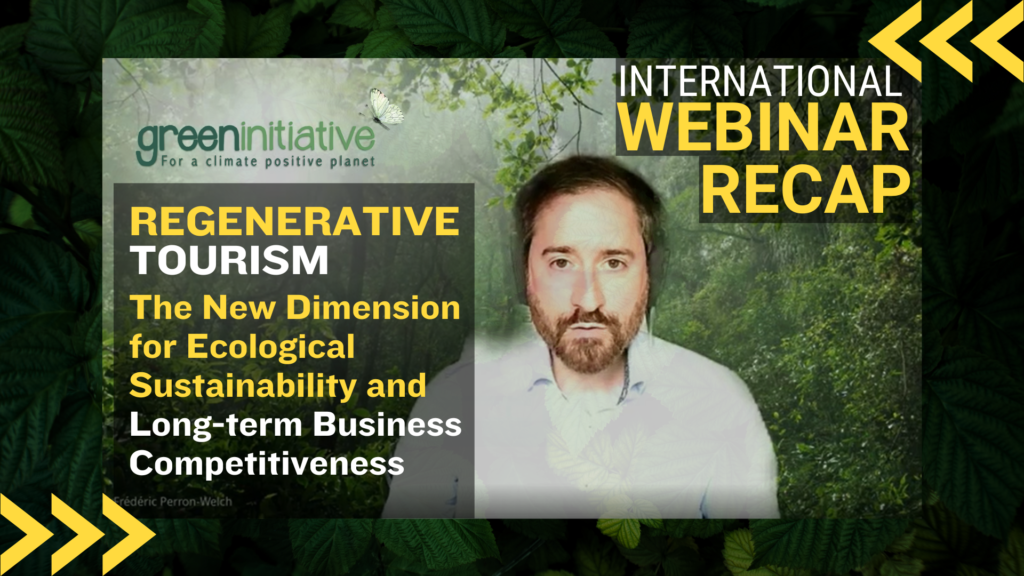
Recap - Webinar on Regenerative Tourism: The Key Dimension for Ecological Sustainability and Business Competitiveness

Recap – Webinar on Regenerative Tourism: The Key Dimension for Ecological Sustainability and Business Competitiveness

On August 28, 2024, the Green Initiative hosted an exceptional international webinar titled “Regenerative Tourism: The New Dimension for Ecological Sustainability and Long-Term Business Competitiveness.” The event brought together a diverse group of experts, industry professionals, and global stakeholders to discuss the transformative potential of regenerative tourism. The webinar provided attendees with invaluable insights into how regenerative tourism practices are not only reshaping the future of travel but also contributing to global sustainability goals. Frédéric Perron-Welch, Head of Climate and Nature Policy at Green Initiative, kicked off the webinar with a warm welcome. “Regenerative tourism is not just about sustainability; it’s about restoring and enhancing the ecosystems and communities that make tourism possible,” said Perron-Welch, emphasizing the core philosophy of the event. Keynote Presentations Marcos Vaena – Senior Executive at IFC Marcos Vaena provided a comprehensive overview of the International Finance Corporation’s (IFC) Environmental and Social Performance Standards, illustrating how they align with the principles of regenerative tourism. He highlighted the synergies between green finance and regenerative practices, particularly in emerging markets. “In today’s world, going beyond sustainability is crucial for destinations that want to differentiate themselves in a competitive marketplace. Regenerative tourism offers a blueprint for long-term success by ensuring that tourism projects do not adversely impact the natural assets that these countries possess,” Vaena stated. He also discussed how IFC’s performance standards, which include guidelines on labor conditions, community health, and biodiversity conservation, are critical in boosting competitiveness in the tourism sector. Virginia Fernandez-Trapa – Programme Coordinator, UN World Tourism Organization Virginia Fernandez-Trapa presented a compelling discussion on the “Regenerate Pathway” of The Glasgow Declaration. She emphasized that concept challenges conventional tourism practices by focusing on not only preserving but actively restoring ecosystems. “The regenerate pathway challenges us to go beyond conventional practices, focusing on restoring ecosystems and supporting nature’s ability to draw down carbon”, said Fernandez-Trapa She highlighted how the regenerate pathway is central to the goals of the Glasgow Declaration and emphasized the need for a balanced approach that incorporates environmental, social, and economic pillars of sustainable development. “At present and in alignment with the Glasgow Declaration pathways for us is clear, that regenerative can certainly play a role in accelerating the pace of change towards the needed balance, so that we can ultimately ensure sustainable development of our societies, and we need to integrate those regenerative arteries and policies and actions”, she added. Tenisha Brown-Williams – Senior Tourism Specialist, Inter-American Development Bank Tenisha Brown-Williams captivated the audience with compelling case studies from Barbados and Brazil, showcasing how regenerative tourism can lead to transformative change. She shared the story of Walker’s Reserve in Barbados, a former quarry transformed into a thriving ecotourism destination, and the IDB‘s Salvador program in Brazil, which empowers Afro-Brazilian communities through regenerative tourism. “I want to bring us all to one common point of agreement. We can all agree that in spite of the debates around sustainable turism and regenerative…. I think we could agree that given the climate crisis and other pressing vulnerabilities the global tourism industry must embrace in a new approach, so it is imperative for all stakeholders within the tourism value chain to adopt, what is called a transformative mindset, and this shift really involves moving beyond purely economic objectives to embrace the holistic reflections, which I have highlighted… On some rhetorical questions, we need to ponder: it’s tourism a benefit to the people at the destination or to the tourists?, said Brown-Williams. “I want to propose that a mind cannot be transformed without visible proof of change and tangible evidence of its impact. So the IDB’S Tourism sector framework has a line of action which deals with original knowledge agenda for the tourism sector that covers important issues for which there is a lack of information. We also need to continue to inspire by sharing examples which strengthen community based tourism enterprises such as the examples shared in Belize, the Bahamas and Dominica, with elements of regenerative tourism at it’s core”, she added. “I propose that the future of regenerative tourism hinges on our collective recognition that it is a mindset shift, brought to life through strategic policies and programs, and fully realized through robust partnerships across the entire tourism value chain. It is in this unified understanding and collaborative effort that we will shape a truly regenerated future for the global tourism industry. As we face unprecedented challenges, regenerative tourism offers a path forward that benefits both people and the planet. By fostering inclusive, community-driven initiatives, we can ensure that tourism serves as a powerful tool for positive change and long-term resilience,” she concluded. In closing, Tenisha Brown-Williams emphasized the critical importance of regenerative tourism as a transformative force within the industry. She called on all stakeholders to embrace this new approach, which prioritizes not only environmental sustainability but also social equity and cultural preservation. Inspiring Case Studies Gabriel Meseth – Project Manager, Inkaterra Hotels Gabriel Meseth presented Inkaterra’s pioneering efforts in ecotourism and sustainable development in Peru, focusing on their initiatives in the Amazon rainforest and the Machu Picchu cloud forest. He highlighted the successful restoration of these areas and the innovative waste management strategies that have made Machu Picchu the first carbon-neutral UNESCO Designated Site. “Inkaterra’s approach to regenerative tourism is deeply rooted in scientific research and community engagement. By restoring ecosystems and empowering local communities, we are not only preserving Peru’s natural heritage but also setting new standards for sustainable tourism worldwide,” Meseth explained. He also discussed the importance of public-private partnerships in achieving these ambitious goals, citing the collaboration between Inkaterra, the Green Initiative, and local communities as a model for other regions. André Fortunato – Program Manager, CEPA (Customized Educational Programs Abroad) André Fortunato shared CEPA’s innovative approach to regenerative tourism through their study abroad programs in Costa Rica and Guatemala. He emphasized the importance of service learning and climate-positive actions in educating students and supporting local communities. “Through our programs, students not only learn about sustainability but actively contribute

Recap – Webinar on Regenerative Tourism: The Key Dimension for Ecological Sustainability and Business Competitiveness Read More »

Kuoda Travel Obtains Climate Positive Certification, Reaffirming Its Leadership in Sustainable Tourism

Kuoda Travel Obtains Climate Positive Certification, Reaffirming Its Leadership in Sustainable Tourism

Kuoda Travel, a leading travel agency specializing in creating personalized experiences in South America, has achieved the prestigious Climate Positive certification by Green Initiative. This recognition goes beyond carbon-neutral status and positions the company as a pioneer in sustainable tourism in the region. Since 2014, Kuoda Travel has worked closely with Green Initiative to measure and manage its carbon footprint. This involves a comprehensive assessment of all the emissions generated by its operations, including transportation, accommodations, and activities. Furthermore, engaging in initiatives to offset and mitigate these emissions, such as supporting reforestation projects and investing in renewable energy. The agency had previously obtained Carbon Neutral certification after meticulously measuring and offsetting its carbon footprint through sustainable regional projects. With the recent attainment of the Climate Positive certification, Kuoda neutralizes its greenhouse gas emissions and creates a positive impact on the environment. The Climate Positive certification was obtained after measuring and offsetting 100% of the emissions generated in 2023, with the additional contribution of tree planting in critical areas for ecosystem restoration, such as in Madre de Dios, Peru. This achievement reflects Kuoda Travel’s unwavering commitment to protecting the natural environment and its long-term vision to drive positive change in the tourism industry. “At Kuoda Travel, we have always believed in the importance of traveling consciously, respecting, and preserving the natural wonders we explore with our clients” said Mery Calderón, founder and director of Kuoda Travel. “This commitment is reflected in our tourism operations and the events and activities we organize. By becoming a Climate Positive company, we are not only maintaining our commitment to carbon neutrality but also striving to create a real and lasting impact for future generations.“ Kuoda Travel continues solidifying its leadership in sustainable tourism with a range of initiatives. These include ecosystem restoration projects, supporting renewable energy projects by purchasing carbon credits, promoting regenerative tourism that benefits local communities and the environment, and implementing responsible practices in its operations, such as waste reduction and energy efficiency measures. These initiatives are part of their ongoing commitment to sustainability and belief that responsible tourism can make a positive impact on the world. About Kuoda Travel Founded in 2008, Kuoda Travel is a luxury travel agency based in Cusco, Peru, specializing in designing unique and personalized experiences in South America. The name Kuoda evokes expansion, improvement, learning, and growth, values that guide the company in its meticulous approach to attention to detail and sustainability. Over the years, they have been recognized for excellence in service and unwavering commitment to responsible tourism practices. This commitment has led them to set new standards in the industry, ensuring a responsible and sustainable travel experience for their clients. Their recent achievement of the Climate Positive certification is a testament to this commitment and long-term vision to drive positive change in the tourism industry.For more information, visit https://www.kuodatravel.com/about-us/. Written by Virna Chávez, from the Green Initiative Team.

Kuoda Travel Obtains Climate Positive Certification, Reaffirming Its Leadership in Sustainable Tourism Read More »

Green Initiative Regenerative Tourism International Webinar The New Dimension for Ecological Sustainability and Long-term Business Competitiveness

Reimagine Tourism: Register Now for the International Webinar ‘Regenerative Tourism – The New Dimension for Ecological Sustainability and Long-Term Business Competitiveness’

Hosted by leaders in sustainable tourism and environmental restoration, this webinar is your opportunity to dive deep into the principles and practices that are shaping a new era of tourism—one that not only sustains but regenerates the planet. Why Attend? Event Details Date: Wednesday, 28th AugustTime: 10:00 AM EDT / 16:00 CESTPlatform: Google MeetRegistration is FREE! Secure your spot now and join the movement towards a sustainable and regenerative future. 👉 Register Here This is your chance to connect with leading experts and discover how you can contribute to a tourism industry that regenerates the planet and remains competitive. By attending, you’ll take a significant step towards our planet’s protection and future. Let’s make a difference—together.

Reimagine Tourism: Register Now for the International Webinar ‘Regenerative Tourism – The New Dimension for Ecological Sustainability and Long-Term Business Competitiveness’ Read More »

'Orchids of Machu Picchu' Exhibition in Singapore

Inkaterra: Pioneering Orchid Conservation with Blockchain Technology

Nestled in the lush, verdant paradise of the Peruvian Andes, Inkaterra Machu Picchu Pueblo Hotel has always been a beacon for nature lovers and conservationists. The hotel, renowned for its stunning gardens and commitment to ecological preservation, recently achieved a groundbreaking milestone that marries ancient botanical wonders with cutting-edge technology. Inkaterra Asociación and Blockchain Certification Inkaterra Asociación, a sister entity dedicated to scientific research and conservation, announced a revolutionary step in its mission: using blockchain technology to certify the origin and traceability of 26 newly discovered orchid species. This advancement secures the authenticity of these delicate blooms and showcases Inkaterra’s innovative spirit in blending tradition with modernity. A Milestone in Digital Transformation José Koechlin, a visionary behind Inkaterra, pridefully shared this monumental achievement. “We are proud to announce the implementation of blockchain technology to certify the 26 species new to science found at Inkaterra Machu Picchu Pueblo Hotel. Today, thanks to our alliance with Seven Star Internazionale and this innovative certification, we reached a new milestone for our research initiatives in native orchids,” he commented, highlighting the significance of this digital transformation. Preserving Biodiversity for Over 40 Years For over forty years, Inkaterra Asociación has been at the forefront of scientific research in Peru, mainly focusing on the conservation of native orchids. Their meticulous efforts have culminated in preserving 372 species of native orchids within the gardens of Inkaterra Machu Picchu Pueblo Hotel. This impressive collection, recognized by the American Orchid Society as the largest in the world, underscores Inkaterra’s dedication to biodiversity. Global Recognition and Holistic Hospitality The hotel’s accolades speak volumes about its excellence. Named the third-best hotel brand globally in 2018 by Travel + Leisure and recognized by the United Nations as the world’s first Climate Positive hotel brand, Inkaterra has consistently demonstrated a holistic approach to hospitality. The synergy between luxury and environmental stewardship is at the heart of their ethos, and the integration of blockchain technology is a testament to their forward-thinking philosophy. Credibility and Security Through Blockchain Massimiliano Nicastro, CEO of Seven Star Internazionale, elaborated on the benefits of this innovative leap. “This marks an important milestone as Inkaterra launches the world’s first blockchain-certified Peruvian orchids, offering a means of credibility and validation of scientific studies and image registration. Furthermore, Inkaterra Asociación will use the blockchain for the pre-sale and delivery of its books worldwide through NFTs, with maximum security and transparency,” he explained. The move ensures that every orchid and scientific study associated with Inkaterra carries a seal of authenticity that is virtually unbreakable. A Global Crusade for Conservation Fernando Patrón, the commercial director of Seven Star Internazionale, added, “We are joining efforts to show the world the new fruits of Peru and its businessmen, great managers of the country that are now consolidated worldwide thanks to disruptive technology, with blockchain being the most important ally for this great crusade. On this occasion, Inkaterra’s orchids will reach Singapore and the world with blockchain technology through the management of SSI and the MinaSmart technology platform.” ‘Orchids of Machu Picchu’ Exhibition in Singapore In 2023, Inkaterra, celebrating 45 years of scientific research, inaugurated the international exhibition ‘Orchids of Machu Picchu‘ in the renowned Cloud Forest dome of Singapore’s Gardens by the Bay. This groundbreaking event, produced in collaboration with Gardens by the Bay and the Embassy of Peru in Singapore, showcases 87 native orchid species from Machu Picchu, meticulously preserved by Inkaterra through an exceptional technique that maintains their natural shape and color. First International Display of Peruvian Orchids This marks the first time this exquisite collection has been displayed abroad, capturing the intricate beauty and delicate details of Peru’s orchids. Complementing the orchid display was a scale model of the Machu Picchu Historic Sanctuary and various Peruvian orchid species and hybrids cultivated at Gardens by the Bay. An Inca-Inspired Journey Inspired by the Inca Trail, the exhibition featured a replica of the Inti Punku (Sun Gate) and a selection of artifacts from Peru’s ancient cultures, offering visitors a unique journey through history and biodiversity. The opening ceremony, attended by Singaporean authorities and dignitaries, including 16 ambassadors and Ms. Indranee Rajah, Minister of the Office of the Prime Minister, highlighted the extraordinary significance of orchids in Machu Picchu’s biodiversity. Curated by biologist Benjamín Collantes, the exhibition drew hundreds of thousands of visitors during its six-month run, fostering a deeper appreciation for the conservation of orchid species worldwide. Conclusion The alliance between Inkaterra and Seven Star Internazionale signifies more than a technological upgrade; it symbolizes Peru’s rich heritage meeting the future. As the 26 new orchid species journey across the globe, each carries a story of scientific dedication, ecological harmony, and digital innovation. Inkaterra’s pioneering spirit, coupled with its unwavering commitment to nature, sets a precedent for how traditional practices can seamlessly integrate with modern technology. The world watches as these blockchain-certified orchids bloom, not just in the gardens of Machu Picchu but in the global consciousness, reminding us of the beauty that can be achieved when the past and future converge.

Inkaterra: Pioneering Orchid Conservation with Blockchain Technology Read More »

The Role Of Satellite Data And Analytics In Monitoring The Restoration Of Degraded Forests - Green Initiative

The Role Of Satellite Data And Analytics In Monitoring The Restoration Of Degraded Forests

The more forests we lose every year, the more we recognize their importance in different industries and daily routines. Awakened by the threat of climate change and alarming forest loss, modern businesses that are in any way connected to forestry start recognizing the need for related mitigation activities. The umbrella term for them is forest restoration — a crucial initiative aimed at reviving degraded ecosystems, enhancing biodiversity, and increasing resilience to climate change. The process involves replanting native trees to restore soil health and revitalize habitats for wildlife. Luckily, there is an innovative technology to help with all this. This article focuses on satellite data analytics — an invaluable tool in restoration efforts. By offering a comprehensive view of forest conditions and changes, free high-resolution satellite imagery allows for more precise and effective restoration strategies, paving the way for a healthier and more resilient planet. But before we jump into more details, let’s discuss why it’s even important. Why Care About Forest Ecosystems It’s common knowledge that trees are pillars holding the Earth’s environmental balance by acting as carbon sinks and absorbing vast amounts of carbon dioxide from the atmosphere. But, as we’ve mentioned in the beginning, their role stretches beyond that. Forests also regulate water cycles, maintain soil health, and provide habitat for a multitude of species. And it works both ways. For example, healthy soil supports tree growth — tree roots support soil health. However, deforestation and forest degradation, driven by logging, agriculture, urban expansion, and aridification have led to significant losses of forest cover globally. Restoring these forest is essential to sustaining ecosystem services and ensuring ecological stability. Satellite Data and Analytics in Forest Monitoring There is no doubt that technology has become a powerful ally in the realm of forest conservation and restoration. One of the most transformative advancements is the use of satellite data and analytics in forest monitoring. With the ability to get access to high-resolution satellite images, scientists and environmentalists can now observe and analyze vast expanses of forest in unprecedented detail. Such an approach not only enhances our understanding of forest dynamics but also provides critical insights for effective management and conservation strategies. By harnessing the power of satellite tech, we can better protect our precious green landscapes and ensure their health and sustainability for future generations. Let’s see how it works for exact purposes. Deforestation Detection By leveraging advanced satellite technologies, we can monitor vast forested areas with remarkable precision and timeliness. This method allows for the detection of deforestation events in near real-time, identifying even subtle changes in forest cover that might go unnoticed be it any other way of observation. High-resolution satellite images provide detailed visual data, enabling researchers to pinpoint the exact locations and extent of forest loss. This kind of knowledge is vital for policymakers and conservationists, enabling them to respond swiftly and effectively to illegal logging activities, desertification, and other threats to forest ecosystems. Monitoring Reforestation Projects For the reforestation to be effective, there has to be proper forest management: one that caters to specific goals, such as recovery from deforestation, harvesting, or wildfires. The choice of trees varies with these goals: some species excel in carbon absorption, while others grow quickly. Restoring ecosystems depends on planting diverse species. Monoculture forests are vulnerable to disease, whereas polyculture forests enhance biodiversity and resilience. Techniques like clearcuts or prescribed fires can accelerate natural restoration. Remote sensing simplifies reforestation management, especially in inaccessible areas. High-resolution satellite imagery provides early insights into progress and detects problems promptly. Vegetation indices help foresters identify and address unhealthy areas, ensuring successful reforestation. Assessing Forest Health A powerful tool here is utilizing vegetation indices, such as the Normalized Difference Vegetation Index (NDVI). This way researchers can evaluate the vitality of forests with remarkable accuracy. NDVI values, derived from high-quality satellite images, depict the difference between visible and near-infrared light reflected by vegetation, providing insights into plant health, biomass, and productivity. These indices highlight areas of vegetation stress or disease, allowing for early detection of issues that could escalate into significant problems. Satellite imagery enables continuous monitoring over large areas, ensuring that even remote or inaccessible forests are included in health assessments. This technology equips environmentalists and policymakers with the data needed to make informed decisions, implement timely interventions, and develop strategies for sustainable forest management. Carbon Sequestration Measurement By utilizing satellite data, experts can accurately estimate the carbon content stored in forests through detailed measurements of tree biomass and growth rates. This advanced technology enables them to quantify the impact of restoration projects on mitigating climate change, providing valuable insights into how effectively these efforts are reducing atmospheric carbon levels. Through such precise monitoring, we can better understand and enhance the role of forests in our global climate strategy. Planning And Tracking Afforestation To ensure successful afforestation and sustainable forest plantations, precise monitoring is key. This is achieved by using data from various satellites like Sentinel-1 and Sentinel-2, and the power of machine learning to compile bi-weekly forest cover data. Choosing the right tree species is also crucial. Analyzing local forest inventories helps select species that thrive, ensuring a positive impact on the ecosystem. Historical satellite imagery can help track regrowth, and combined with spatial analysis, provides a comprehensive view of forest dynamics. This aids in managing tree loss and replanting efforts quite effectively. Benefits of Remote Sensing Remote sensing offers numerous benefits for forest monitoring. It provides an enhanced spatial representation of the monitored area and covers large geographical regions systematically. Non-intrusive and systematic data collection methods ensure minimal disruption to the environment. Increased data frequency allows for more accurate observations, enabling rapid decision-making. Additionally, remote sensing can acquire information in challenging or inaccessible areas, potentially reducing the costs of monitoring programs. At Green Initiative, we utilize high-resolution satellite data for various applications. Over longer periods (e.g. above 3 years) we monitor the abundance of vegetation in our restoration sites by measuring the change in NDVI over time. The results of these

The Role Of Satellite Data And Analytics In Monitoring The Restoration Of Degraded Forests Read More »

World Environment Day 2024 - Green Initiative

Celebrating World Environment Day 2024: Honoring Our Planet’s Biomes

June 5, World Environment Day 2024 On this World Environment Day, we celebrate and commit to protecting the incredible diversity of life on our planet. Each biome plays a crucial role in maintaining Earth’s ecological balance and sustaining life. This year, we are digging deep into land restoration, desertification, and drought resilience under the UN Environment Programme slogan “Our land. Our future. We are #GenerationRestoration.” The Vital Role of Biomes Tropical Rainforests Tropical rainforests, like the Amazon and the Congo Basin, are the lungs of our planet. They are teeming with biodiversity and are vital for regulating the global climate. These irreplaceable treasures support countless species and are essential for our planet’s health. Let’s commit to preserving these lush, vibrant ecosystems. Fun Fact: A single hectare of rainforest can contain over 750 types of trees and 1,500 species of higher plants. Savannas Savannas, spanning Africa, South America, and Australia, support a rich variety of wildlife and ecosystems. These grasslands, with their seasonal rains, remind us of nature’s resilience and the importance of sustainable land use. Protecting savannas ensures the survival of the diverse species that inhabit them. Fun Fact: The Serengeti in Africa hosts the largest terrestrial mammal migration in the world, with over 1.5 million wildebeest and 200,000 zebras making their annual trek. Deserts Deserts, such as the Sahara and the Gobi, teach us about survival and adaptation in the harshest conditions. Despite their arid nature, deserts are teeming with life uniquely adapted to thrive where water is scarce. Protecting these fragile ecosystems is crucial for maintaining their delicate balance. The Great Green Wall initiative, aiming to restore 100 million hectares of land in Africa, exemplifies efforts to combat desertification and promote land restoration. Fun Fact: The Sahara Desert, the largest hot desert in the world, spans 9.4 million square kilometers—about the size of Canada. It is home to over 500 plant species and 90 different species of birds. Diverse Biomes and Their Unique Contributions Temperate Forests Temperate forests, found in North America, Europe, and Asia, enchant us with their changing seasons and diverse flora and fauna. These forests are essential for carbon storage, soil conservation, and providing habitat for countless species. Ensuring these woodlands remain vibrant and healthy is crucial for future generations. Fun Fact: The oldest known tree in the world, a bristlecone pine named Methuselah, is located in California’s White Mountains and is over 4,800 years old. Taiga (Boreal Forest) The Taiga, or Boreal Forest, stretches across Canada, Russia, and Scandinavia, forming the largest terrestrial biome on Earth. These coniferous forests are crucial carbon sinks and home to species uniquely adapted to cold climates. Preserving the Taiga helps combat climate change and supports biodiversity. Fun Fact: The Taiga represents about 30% of the world’s forest cover, playing a significant role in absorbing carbon dioxide from the atmosphere. Tundra The Tundra, with its cold, treeless plains and permafrost, is a reminder of nature’s extremes and the fragility of life in harsh environments. Found in Arctic regions and high mountains, the Tundra is vital in regulating global temperatures and supporting unique wildlife. Fun Fact: The Arctic Tundra is home to the largest and most successful land predator, the polar bear, which can travel over 30 kilometers a day in search of food. Marine Biomes Marine biomes, covering about 70% of Earth’s surface, include oceans, coral reefs, and estuaries. They support an immense variety of life and are crucial for global climate regulation. Protecting our oceans is essential for maintaining the planet’s health. Fun Fact: The Great Barrier Reef in Australia is the largest coral reef system in the world, spanning over 2,300 kilometers and hosting over 1,500 species of fish. Freshwater Biomes Freshwater biomes, such as rivers, lakes, and wetlands, provide habitat for diverse species and are vital for human survival. Lakes, rivers, and wetlands hold 20-30% of global carbon despite occupying only 5-8% of the land surface. The Nile River, widely regarded as the world’s longest waterway, exemplifies the critical importance of freshwater ecosystems. Fun Fact: The Nile River, widely regarded as the world’s longest waterway, flows through 11 different countries and stretches 6,695 kilometers. Terrestrial and Land-Based Ecosystems Soil and Water Soil is the planet’s most biodiverse habitat, with almost 60% of all species living in it. Healthy soils store massive amounts of carbon, which, if released, would cause a huge spike in planetary warming. Only 0.5% of water on Earth is usable and available freshwater, and climate change is dangerously affecting this supply. Over the past two decades, land-based water storage—including soil moisture, snow, and ice—has dropped at a rate of 1 centimeter per year, severely impacting water security and food production. Drylands Drylands cover 41% of the Earth’s land surface and 78% of the world’s rangelands. They generate 44% of global crops, provide feed for half of the world’s livestock, and support the lives and livelihoods of over 2 billion people. Despite their arid conditions, drylands are home to more than a quarter of the world’s forests and a third of global biodiversity hotspots. Protecting drylands is essential for sustaining the ecosystems and communities that depend on them. Farmlands and Urban Ecosystems Farmlands Farmlands are crucial for global food production, yet they face significant challenges. Every five seconds, the equivalent of one football pitch of soil is eroded. It takes 1,000 years to generate just 3 centimeters of topsoil, and every year, more than 24 billion tonnes of priceless topsoil are washed or blown away worldwide. Agricultural expansion continues to threaten forests and biodiversity. The world will need to raise its food production by 60–70% to feed a projected human population of 9 billion by 2050. Close to 75% of the world’s fruit and seed crops depend on pollinators like bees, which contribute to 35% of the world’s total crop production. Despite their importance, pollinators are in serious decline due to intensive agricultural practices, pesticide use, invasive species, diseases, and climate change. Globally, at least 2 billion people depend on the agriculture sector


Celebrating World Environment Day 2024: Honoring Our Planet’s Biomes Read More »

WorldXchange's Climate Positive Leadership Elevating Standards in Tourism and Currency Exchange - Green Initiative

WorldXchange’s Climate Positive Leadership: Elevating Standards in Tourism and Currency Exchange

The tourism sector, crucial for global economic vitality and responsible for approximately 10% of global GDP, also contributes significantly to global greenhouse gas emissions. This dual role positions the industry uniquely both as a contributor to and a potential leader in climate change mitigation. With the direct impact of climate change threatening everything from natural landscapes to historical sites, the need for sustainable practices has never been more urgent. WorldXchange, is exemplifying this leadership. Since achieving Carbon Neutral Certification in 2023, WorldXchange has expanded its sustainability initiatives, setting new standards for environmental stewardship within the currency exchange market. These efforts not only highlight its commitment to reducing its own carbon footprint but also demonstrate the potential for industry-wide impact. By leading the charge towards a climate-positive future, WorldXchange not only enhances its operational efficiency and customer appeal but also inspires other businesses within the tourism and financial sectors to follow suit, proving that sustainable practices can coexist with business growth and innovation. This proactive approach is not just about adapting to change—it’s about driving it, ensuring a healthier planet and a more resilient global economy. Continued Leadership in Sustainable Practices WorldXchange has achieved a remarkable 16% reduction in its carbon footprint from 2021 to 2023, underscoring its commitment to operational excellence and eco-friendly practices. This significant decrease highlights the company’s rigorous efforts to innovate and implement efficiency solutions across its operations. Commitment to Biodiversity and Reforestation In an ambitious move to support biodiversity, WorldXchange is committing to plant 15,000 native trees in Madre de Dios, a critical ecosystem in the heart of the Amazon. With over 300 trees planted since 2023, this project not only aids in carbon sequestration but also preserves the habitat for countless species, underscoring the company’s interest in supporting the enhancement of nature´s positive impacts. Educating and Engaging the Public WorldXchange’s impact extends beyond environmental actions. Through comprehensive awareness-raising activities, the company has enlightened over 80,000 individuals about the intricacies of climate mitigation, emphasizing the significant role that both individuals and corporations play in this global fight. Setting a New Benchmark: Climate Positive Certification Achieving the status of the first Climate Positive Certified currency exchange company globally marks WorldXchange as a pioneer in the market. This accolade is a testament to the company’s unwavering commitment to support and actively engage in the environmental standards promoted by LAP (Lima Airport Partners), inspiring others to follow suit. The Urgent Need for Decarbonization in Tourism Supported by the Glasgow Declaration on Climate Action in Tourism, WorldXchange’s initiatives are a response to the critical need for robust climate action within the sector. Aimed at halving emissions by 2030 and achieving net zero by 2050, these efforts align with global strategies for rapid climate mitigation, as highlighted in key reports by entities like the UNWTO and McKinsey & Company. As WorldXchange continues to integrate climate action into every facet of its operations, the path forward is clear—sustainability is not just a goal but a guiding principle for its business model. For further insights into WorldXchange journey and the challenges, visit the original article here. Written by the Green Initiative team.

WorldXchange’s Climate Positive Leadership: Elevating Standards in Tourism and Currency Exchange Read More »