
environmental sustainability

Rio de Janeiro's Cristo Redentor Launches Climate Certification A New Era for Sustainable Tourism and UNESCO World Heritage Sites

Rio de Janeiro’s Cristo Redentor Leads the Way for COP30: Climate Action in Tourism for a Resilient Future

Cristo Redentor Sanctuary, Rio Book, and Green Initiative Sign Collaboration Agreement to Launch Climate Certification of this Iconic UNESCO World Heritage Site Aligned with UN Tourism efforts to promote sustainable tourism best practices across the region, and inspired by the achievements of Machu Picchu, the Santuário Cristo Redentor, Rio Book, and Green Initiative have signed a collaboration agreement to launch the climate certification process of Cristo Redentor — an emblematic cultural and religious landmark recognized as a UNESCO World Heritage Site. “Our vision for a thriving tourism sector, aligned with the great challenges humanity must overcome, is clear: tourism development and decarbonization can — and must — go hand in hand. Through this initiative, leveraging the powerful symbolism of Cristo Redentor in Rio de Janeiro, we aim to carry this message not only to other destinations in the region but to the entire world.” — Gustavo Santos, UN Tourism Director for the Americas Located within the lush Tijuca Forest National Park in Rio de Janeiro, Cristo Redentor stands as a powerful symbol of the interconnection between culture, spirituality, and nature. The Sanctuary leads a robust environmental sustainability agenda through its institutions, such as the Instituto Redemptor and the Obra Social Leste Um, coordinated under the Consórcio Cristo Sustentável. Guided by the United Nations’ 2030 Agenda and the Sustainable Development Goals (SDGs), the Sanctuary is progressively internalizing best practices in environmental and social governance, aiming to generate a positive climate impact across all its activities. “Cristo Redentor, a universal symbol of welcome and inclusion, is on its way to its centenary in 2031, establishing itself as the first cultural and religious tourist destination in Brazil to achieve this level of commitment to climate sustainability in the management of its activities. Our strategic planning and governance are aimed at integrating the best environmental practices, with the goal of positioning our monument as a communicating agent that conveys the urgent need for the holistic care of our common home.”— Father Omar Raposo, Rector of the Santuário Cristo Redentor (Christ the Redeemer Sanctuary) On April 24th, during a historic event held in Belém do Pará, the Sanctuary signed two strategic agreements. First, a Protocol of Intentions with the Government of the State of Pará to jointly advance climate and sustainability agendas ahead of COP30. Second, a collaboration agreement with Rio Book and Green Initiative to initiate the climate certification process of Cristo Redentor’s management, with a progressive strategy towards achieving a positive climate impact. Through this collaboration, Cristo Redentor will undergo a comprehensive climate certification process aimed at assessing and mitigating its carbon footprint, integrating climate action at the core of its management model. “Being involved in the Cristo Carbono Neutral Certification process is a tremendous honor and pleasure. With the support from UN Tourism, along with support from public authorities and private sector institutions, we will have a unique project! In addition to Green Initiative’s work, we will mobilize talents to organize events, national and international photography exhibitions, concerts, documentaries… In short, a powerful network of communication and achievements worthy of this major project.” — Ricardo Amaral, Director of Rio Book “This collaboration reflects our commitment to positioning climate action as a central element of regenerative and sustainable tourism. At Green Initiative, we believe that iconic sites like Cristo Redentor have the power to inspire global change—not only through environmental leadership but by engaging communities, visitors, and partners in a collective journey toward a climate-positive future.” — Tatiana Otaviano, Relationship Manager at Green Initiative Importantly, through this process, Cristo Redentor will align its efforts with the Glasgow Declaration on Climate Action in Tourism. Launched at COP26 in 2021, the Glasgow Declaration has been endorsed by over 700 organizations worldwide and calls on tourism stakeholders to halve emissions by 2030 and achieve net zero by 2050. It outlines five pathways for action: Measure, Decarbonize, Regenerate, Collaborate, and Finance. By adhering to these principles through the certification process, Cristo Redentor will further strengthen its governance framework and serve as a model for UNESCO World Heritage Sites worldwide, illustrating how tourism, cultural heritage preservation, and climate action can be mutually reinforcing pillars for sustainable development. Grounded in international standards and Green Initiative’s approach, the overall goal of the project is to internalize climate mitigation action within the Sanctuary’s management practices. In doing so, the certification process will help reinforce ongoing social, cultural, and environmental initiatives led by the Sanctuary, while also identifying and making visible new opportunities for climate action, nature conservation, and community-based cultural programs. This integrated approach will contribute to amplifying the project’s impact and outreach, strengthening Cristo Redentor’s role as a catalyst for sustainable and inclusive development. The certification process will entail a full measurement and analysis of greenhouse gas emissions balance associated with site operations and activities. It will identify and reinforce existing mitigation efforts while exploring new opportunities for carbon capture and resource efficiency. It will culminate in the development of a Climate Action Plan covering the 2025–2030 period, designed to guide strategic investments, operational improvements, and long-term social, cultural and climate-related initiatives. A Strategic Step Toward COP30 The initiative comes at a crucial time, as Brazil prepares to host COP30 from November 10 to 21, 2025, in Belém do Pará — the first time a UN Climate Conference will be held in the Amazon region, a globally significant ecosystem for climate stability. Since the launch of the Glasgow Declaration, the tourism sector has been building a compelling case for its role in addressing the climate crisis. This momentum gained significant traction at COP29 in Baku, Azerbaijan, where tourism was celebrated through the inaugural Tourism and Climate Action Day, underscoring the sector’s growing recognition as a driver of climate solutions and nature-positive action. The climate certification of Cristo Redentor aligns with these global movements and serves as a strategic contribution to Brazil’s and the broader region’s efforts to demonstrate that tourism can be a powerful force for good. By positioning a UNESCO World Heritage Site as a leader in climate mitigation,
Rio de Janeiro’s Cristo Redentor Leads the Way for COP30: Climate Action in Tourism for a Resilient Future Read More »

Success Story_ How Instituto Recicleiros is Transforming Recycling in Brazil

Success Story: How Instituto Recicleiros is Transforming Recycling in Brazil

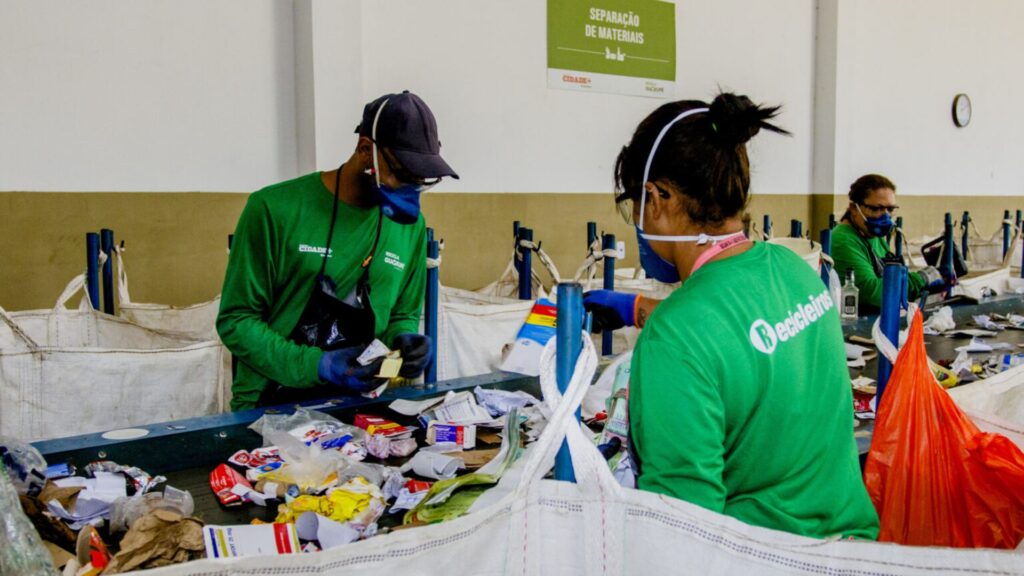
Recycling in Brazil has advanced significantly in recent years, and one of the key drivers of this transformation is the Instituto Recicleiros. As a non-profit organization, Recicleiros has stood out for its innovative approach, promoting technological and social solutions to enable an ethical recycling chain in Brazilian municipalities. The Role of Recycling in Combating Climate Change Recycling is not just a waste management solution; it is also a fundamental strategy for mitigating the impacts of climate change. Currently, around 4% of greenhouse gas (GHG) emissions in Brazil come from the solid waste sector. Of these, 64.1% result from improper waste disposal in open dumps, controlled landfills, and sanitary landfills. The adoption of sustainable and integrated waste management practices, such as recycling and the circular economy, can significantly reduce these emissions. Materials like plastic, glass, paper, metal, and cooking oil, when recycled, prevent the release of methane—a gas 82.5 times more impactful than carbon dioxide (CO₂) over a 20-year period. The Recicleiros Model: Integration and Sustainability The major differentiator of Instituto Recicleiros is its ability to integrate various stakeholders in the recycling chain, including municipal governments, companies, and waste pickers, ensuring a sustainable, inclusive, and economically viable system. Through the Recicleiros Cidades Program, the organization helps municipalities implement a structured selective collection and recycling system, from waste management to training public managers and waste pickers. With a focus on efficiency, the program provides technical support for the creation of Recyclable Material Processing Units (UPMRs). These units are designed to ensure safety, ergonomics, and efficiency in waste sorting and processing, providing better working conditions for waste pickers and increasing the profitability of recycling. The Urgency of Collective Action For recycling to have a significant impact, active participation from governments, industries, and citizens is essential. Instituto Recicleiros plays a crucial role in this context, acting as a bridge between municipalities, businesses, and waste pickers. The organization trains public managers to implement efficient recycling policies, supports the development of recycling cooperatives, and carries out socio-environmental education initiatives, fostering a more engaged and efficient recycling chain. Currently, Recicleiros is present in 14 municipalities across Brazil’s five regions, including cities such as Guaxupé (MG), Naviraí (MS), Caldas Novas (GO), Serra Talhada (PE), São José do Rio Pardo (SP), and Campo Largo (PR). Conclusion Instituto Recicleiros exemplifies how the combination of innovation, technology, and social inclusion can transform waste management in Brazil. Its circular approach not only promotes environmental sustainability but also generates a significant social impact, creating job opportunities and improving the quality of life for communities across the country. The future of our planet depends on the choices we make today. Recycling is not just an economic process; it is a powerful tool against climate change. Governments, businesses, and citizens all have an essential role in building an efficient and sustainable recycling system. If you want to learn more about Recicleiros’ initiatives or contribute to this transformation, visit the official website: https://recicleiros.org.br.Together, we can make recycling in Brazil a true success story! This article was written in collaboration with Janayna Rodrigues from Instituto Recicleiros.

Success Story: How Instituto Recicleiros is Transforming Recycling in Brazil Read More »

Internet, ecology and environmental sustainability 2

Internet, ecology and environmental sustainability

What Global Internet Users Need to Know About Eco-Sustainability The concept of eco-sustainability is one that most people can get behind. It’s about living in harmony with nature, and ensuring we don’t use more than what the earth provides for us as humans on her surface! Eco-sustainability is a must if you want to survive. The earth provides us with everything from food and water, to the air we breathe – but it won’t be there forever! But in return, humans continue their pillaging of nature without replenishing them. One day will come, and all these resources will go completely exploited and will have reached even greater depths than before. This means life on this planet could become impossible for YOU or your children (or grandchildren). In addition to that, there are Eco sensitizers that help protect what little bit remains. With that, no matter how many people come along afterward, they’ll still find some place safe. How does the internet affect eco-sustainability, and what can we do about it? The internet has had a profound impact on eco-sustainability. Pushed by the growth of online shopping and the increase in the amount of data being stored and shared online. As a result, the demand for energy to power the internet is growing exponentially. Thus, internet usage now consumes more than 10% of all global electricity, and if the current trends continue, it could use up to 20% by 2025. This increased demand for energy has a direct impact on climate change, as well as other environmental issues such as air pollution and water shortages. According to World Population Review’s research, here are the ten countries with the highest number of Internet users: The things we can do to reduce the internet’s impact on the environment ● Choose sustainable energy sources for your internet usage, such as using wind or solar power instead of coal-generated electricity. ● When shopping online, choose eco-friendly shipping options and retailers whenever possible. This includes green packaging alternatives that are available in some sellers. ● Make an effort to reduce your digital footprint by unsubscribing from unwanted emails. It also can be possibly done using ad blockers and utilizing social media responsibly. ● Another way is to use energy-efficient devices, such as laptops over desktop computers, and energy-saving settings on our devices. Be mindful of the energy consumption of your devices. When not in use, unplug them or power them down completely to conserve electricity. ● Reducing our use of streaming services, downloading files, and compressing videos or images before sending them are all easy ways to help reduce our internet footprint. ● Video streaming is a huge part of our internet usage, and it’s important to remember that video isn’t just limited to Netflix. Try cutting back on how much time you spend watching videos online. But if your favorite shows require higher resolution, then enjoy them in lower quality instead! ● Join the movement to make internet browsing more sustainable. ● It is also important to teach your kids about positive and healthy screentime. Finally, when you see companies or individuals engaging in practices that are harmful to the environment, speak up. We all have responsibilities as citizens of this world. Future generations depend on us for protection from pollution so they can enjoy clean water sources too! Take Away It’s easy to reduce your environmental footprint when using the internet. Some tips include choosing more sustainable energy sources, shopping consciously for eco-friendly products, and reducing our digital footprints by compressing videos before sending them across platforms like Facebook or Instagram! You can also get devices that are both efficient with resources and environmentally friendly. By participating in all these things, you will also take apart the reduction of the damage that humans do to nature while scrolling through social media feeds, watching movies, and doing some downloads. Author’s Bio Ronie Salazar is from Veed. He’s an energetic content marketer with extensive experience in the digital realm. His curiosity and enthusiasm resulted in an ever-growing portfolio that encompasses anything from video editing jobs to distributing his creative work to top-notch websites. Do you have a business? Go Green. Engage! Learn about how to engage your Business into a New Level of Leadership and Competitiveness with Green Initiative. Become Climate Positive, Climate Neutral and Climate Measured certified here.

Internet, ecology and environmental sustainability Read More »