
climate governance

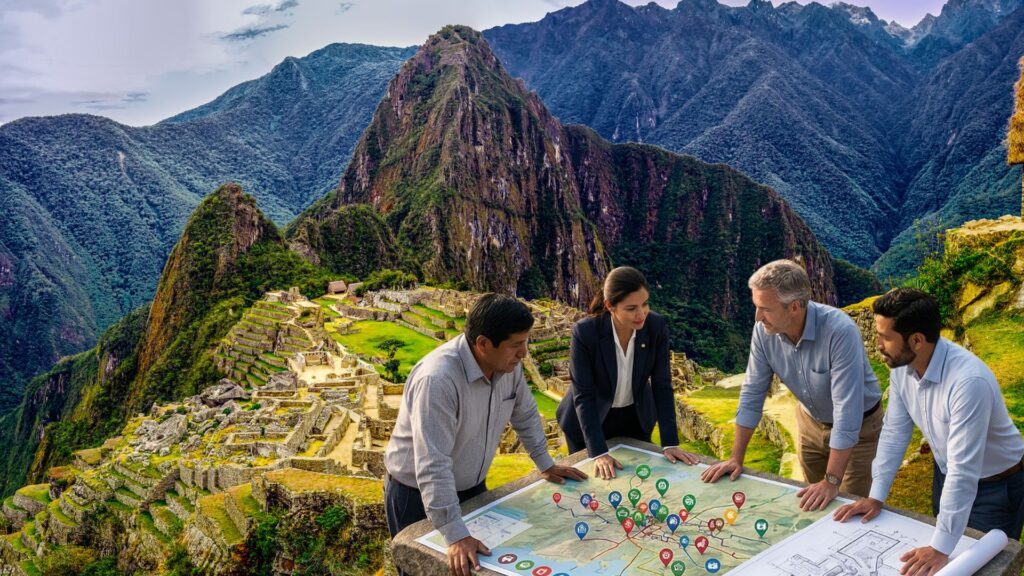
A diverse group of Destination Management Organization stakeholders analyzing sustainability maps and shared infrastructure blueprints at Machu Picchu, representing territory-wide climate action governance.

Destination-Level Climate Action: Governance Frameworks for Sustainable Tourism

Individual businesses like hotels and restaurants drive essential progress when they reduce their own footprints and implement sustainable practices. These small changes contribute directly to local conservation and set a high standard for service. However, the most significant impact occurs when an entire destination aligns under a unified sustainability vision. Strategic governance transforms these isolated successes into a territory-wide movement, ensuring that every participant works toward shared climate goals. The Foundation of Destination Sustainability Governance Governance in the context of sustainable tourism refers to the systems and processes used to make decisions and hold stakeholders accountable. A robust framework ensures that environmental goals do not conflict with economic growth. Instead, it integrates climate resilience into the core identity of the destination. The most effective models involve a centralized Destination Management Organization (DMO) that acts as a bridge between the public sector and private enterprises. This entity coordinates the implementation of climate strategies, ensuring that every participant—from large resorts to small tour operators—works toward the same carbon reduction targets. Essential Components of a Climate Action Roadmap Building a sustainable destination requires a phased approach that moves from initial assessment to long-term monitoring. Let’s take a look at Machu Picchu’s extraordinary case. Stakeholder Mapping and Engagement Identifying every actor in the tourism value chain is the first step. This includes local government agencies, transport providers, hospitality leaders, and the resident community. The Machu Picchu experience highlights the importance of multi-level collaboration, involving local, regional, national, and international sectors to drive change. Policy Alignment and Goal Setting Destinations must align their local sustainability targets with international standards, such as the Paris Agreement, Global Sustainable Tourism Council (GSTC) or the Glasgow Declaration on Climate Action in Tourism. Setting clear time-bound objectives for carbon neutrality or waste reduction provides a benchmark for success.  Monitoring and Data Collection  You cannot manage what you do not measure. Implementing destination-wide Monitoring, Reporting, and Verification (MRV) systems allows governance bodies to track progress in real-time. This data informs policy adjustments and proves the credibility of the destination’s climate claims to international investors and travelers. Machu Picchu demonstrates this through its consistent carbon footprint measurements since 2019, which led to its validation as the first carbon-neutral UNESCO site in the world. Fragmentation in Tourism Management Fragmentation is the primary barrier to destination-level success. When businesses act in isolation, they often duplicate efforts or overlook shared infrastructure needs. A governance framework solves this by creating “sustainability clusters” where resources are pooled for maximum efficiency. For example, a coordinated governance body can facilitate shared renewable energy projects or centralized waste-to-energy plants that a single SME could not afford alone. This collective approach reduces the cost of entry for smaller players and accelerates the entire territory’s transition to a low-carbon economy. A governance framework solves this by facilitating shared projects that a single business could not afford alone. Practical examples from the Machu Picchu model include: Driving Competitive Advantage Through Transparency Destinations that demonstrate strong climate governance attract a higher caliber of travelers and investors. Transparency in climate reporting builds trust and protects the destination from accusations of greenwashing. By establishing a clear governance structure, a region positions itself as a forward-thinking leader in the global tourism market. Destinations that demonstrate strong climate governance attract a higher caliber of travelers and investors. Transparency in climate reporting builds trust and protects the destination from accusations of greenwashing. By establishing a clear governance structure, a region positions itself as a forward-thinking leader in the global tourism market. Since 2021, Machu Picchu’s carbon-neutral status has generated an estimated $5 million to $12 million in reputational and ESG signaling value. Transparency in climate reporting builds trust and positions a region as a forward-thinking leader in the global tourism market.Learn more about managing complex destination relationships in our guide to Multi-Stakeholder Coordination for Destination Sustainability Initiatives. Ready to transition from isolated efforts to collective impact? Contact us to discover more about managing complex destination relationships and for expert advice. This article was written by Virna Chávez from the Green Initiative Team. FAQ: Understanding Destination Governance References Related Reading

Destination-Level Climate Action: Governance Frameworks for Sustainable Tourism Read More »

Climate & Nature Positive Peru_ Green Initiative + BAM REDD+

Green Initiative and Peru’s Amazon: Advancing Global Climate-Positive and Nature-Positive Action with BAM and the REDD+ Castañeros Project

Peru stands as one of the world’s most strategic regions for implementing climate-positive and nature-positive solutions. Across its iconic landscapes— from Machu Picchu to Madre de Dios— the country is redefining how territories can integrate science, governance, community leadership, and verified impact to protect ecosystems while generating sustainable development. At the center of this transformation is Green Initiative, whose international climate governance model is being adopted by governments, destinations, and conservation partners throughout Peru. A key pillar of this effort is the alliance with Bosques Amazónicos (BAM) and its internationally recognized conservation program: the REDD+ Castañeros Project, one of the most relevant private REDD+ initiatives worldwide for climate and social impact. Together, these organizations are demonstrating how Peru can convert climate ambition into real, verifiable, and community-led implementation. Peru as a Global Model for Climate & Nature Positive Implementation Green Initiative works across multiple ecosystems and governance levels to accelerate: This integrated approach positions Peru as a global reference for implementation, not only commitment. The REDD+ Castañeros Project: A Cornerstone of Amazonian Conservation Developed by BAM in collaboration with more than 800 Brazil nut–harvesting families, the REDD+ Castañeros project protects over 600,000 hectares of unique and megadiverse Brazil nut forests in Madre de Dios. For more than 15 years, this alliance has safeguarded ecosystems of extraordinary importance while strengthening local livelihoods. This model directly supports Green Initiative’s mission:evidence-based climate action, measurable biodiversity protection, and community-centered development. 🌍 1. Climate-Positive Impact Through avoided deforestation and strengthened forest governance, the REDD+ Castañeros project generates high-integrity carbon credits with global relevance. Key climate outcomes: These achievements align with Green Initiative’s standards for traceability, transparency, and MRV integrity across territories. 👨‍👩‍👦 2. Community Impact & Inclusive Development The project’s social dimension is one of its greatest strengths. BAM works side by side with families that have protected Brazil nut forests for generations, providing incentives, tools, and opportunities for sustainable development. Social impact highlights: This mirrors Green Initiative’s philosophy: climate solutions must empower people first. 🐾 3. Biodiversity Protection & Scientific Innovation The REDD+ Castañeros territory is among the most biologically rich regions on Earth. Outstanding biodiversity contributions: These efforts strengthen the nature-positive goals that Green Initiative promotes globally:conservation based on science, technology, and local knowledge. Why This Alliance Matters for Peru and the World Global demand for high-integrity climate solutions is rapidly expanding. Territories that can demonstrate: are becoming the most attractive for climate finance, regenerative tourism, and international investment. The alliance between Green Initiative, BAM, and the REDD+ Castañeros community places Peru at the forefront of this movement, proving that real climate action must reconnect people, forests, and economic opportunity. From the Amazon to the World: Implementation That Sets a Benchmark Through this partnership, Peru advances: This is the pathway from ambition to implementation — and from implementation to global leadership. About Green Initiative Green Initiative is an international platform dedicated to climate governance, decarbonization pathways, nature-positive implementation, and ecosystem restoration, working with governments, World Heritage sites, conservation programs, and local communities. Its portfolio spans iconic destinations from Machu Picchu to Bonito, Cristo Redentor, Cabo Blanco, Angkor Wat, and the Galápagos, supporting them in achieving real, verifiable, and community-centered climate impact. REDD+ Castañeros in Focus: A Photographic Story by Walter H. Wust This article was written by Virna Chávez from the Green Initiative Team. Related Reading

Green Initiative and Peru’s Amazon: Advancing Global Climate-Positive and Nature-Positive Action with BAM and the REDD+ Castañeros Project Read More »

Green Initiative Spotlights Exploring Nature, Climate & Land Through International Law and Public Policy

Green Initiative Spotlights: Advancing Climate Action Through International Law and Public Policy

The intersection of nature, climate, and land governance is a critical focus in today’s global sustainability discourse. The upcoming Nature, Climate & Land: International Law & Public Policy Roundtable promises to be a pivotal event in addressing these pressing concerns. Scheduled for Thursday, February 6, 2025, at 2:00 PM, this event will take place at The Finley Library within The Lauterpacht Centre for International Law. A Platform for Climate Action, Law, and Governance Organized by Climate Law and Governance, the roundtable will serve as a hub for discussions on how international law and public policy can better address environmental challenges and drive effective climate action. As climate change intensifies, legal and policy frameworks must evolve to protect natural ecosystems, mitigate climate risks, and ensure equitable land management practices. Key Topics and Discussions The roundtable will convene leading experts, policymakers, and academics to delve into critical topics, including: Why This Event Matters for Climate Action This roundtable is an opportunity for stakeholders across industries to gain insights into the legal and policy solutions driving sustainability and climate action efforts. By bridging law, policy, and climate science, the event will catalyze new approaches to managing environmental challenges on a global scale. Attending this roundtable will be particularly beneficial for: Join the Conversation With global environmental challenges demanding urgent and coordinated climate action, this event provides an excellent opportunity to engage in meaningful dialogue and influence the future of climate law and governance. For more information and to register, visit the event page.

Green Initiative Spotlights: Advancing Climate Action Through International Law and Public Policy Read More »