Circular Economy

Peru First in Latin America to Enshrine Circular Economy Roadmap for Tourism

Sustainable Tourism: The First Mover

Peru has become the first country in Latin America to enshrine a circular-economy roadmap as part of its climate action in tourism national policy. On March 27th, by executive decree, Peru quietly made history. The government of José María Balcázar Zelada signed Decree Supreme N° 003-2026-MINCETUR, approving the Circular Economy Roadmap for Tourism to 2030 — the first legally binding instrument of its kind in Latin America. The timing was not accidental. With Peru`s tourism sector preparing for COP31 in Turkey, and the Glasgow Declaration on Climate Action in Tourism — the sector’s most ambitious collective climate commitment, with over 850 signatory organizations — advocating  for exactly this kind of national policy architecture, Peru stepped forward as the region’s standard-bearer. The declaration, launched at COP26, calls on all signatories to halve tourism emissions by 2030 and reach net zero before 2050. What had been a global pledge now has, for the first time in the Americas, a national legal framework behind it. The numbers attached to the roadmap outline a significant future opportunity. While circularity is not currently a major contributor to the tourism GDP, the government projects that by 2030, the implementation of these practices could inject 1.2 billion soles (roughly $345m) into the sector’s economy. Alongside this growth, nearly 31,000 new jobs are expected to be created in sustainable tourism activities along circular value chains. The environmental targets according to MINCETUR are equally ambitious: the mitigation of 74m tonnes of CO₂ equivalent and the restoration of more than 2m hectares of ecosystems and natural and cultural heritage. For Minister of Trade and Tourism José Reyes Llanos, the logic is straightforward. “Tourism is one of the activities with the greatest capacity to generate opportunity,” he said at the roadmap’s official launch. “But it also faces an obvious challenge: to grow without compromising the very resources that make its own development possible.” That tension — between growth and the environmental foundations that sustain it — is precisely what the roadmap is designed to manage. From Declaration to Decree The roadmap emerge from one year of technical and participatory work, bringing together public agencies, private operators, academia, civil society and communities. The legal architecture is equally robust: implementation is co-supervised by both MINCETUR and the Ministry of Environment (MINAM), with a built-in mechanism for periodic revision and a sectoral commission — designed to lock in multi-stakeholders’ governance platform. For the UN Tourism Office of the Americas, the significance of Peru’s move extends well beyond its borders. Heitor Kadri, the office’s regional representative, was unambiguous about what this moment represents for the global agenda: “We applaud Peru’s effort to position circularity as a strategy for climate action, sustainability, and competitiveness by translating its commitment into an actionable policy instrument, in line with the requirements of the Glasgow Declaration. For the Americas, this serves as a relevant reference that may inspire other countries in the region and globally. UN Tourism will continue to actively support Peru in implementation and in sharing its expertise.” — Heitor Kadri, UN Tourism Office Representative of the Americas Competitiveness, Not Just Compliance Sophia Dávila, Director of Environmental Tourism Affairs at MINCETUR, and the official who led the roadmap’s technical construction, is at pains to frame the instrument in competitive rather than regulatory terms: “This roadmap is the result of a wide participatory process. By 2030, Peru will not only be known for its wonders but for its circularity in tourism. We are transforming the entire value chain—from waste reduction to water efficiency, ensuring that every tourist’s visit leaves a positive footprint on our territory.” – Sophia Dávila, Director of Environmental Tourism Affairs, MINCETUR That framing reflects a deliberate strategic choice. In a region where private operators have long dismissed environmental mandates as sunk costs, Peru is anchoring its broader climate-action goals directly to the bottom line. Positioning circularity as a driver of business competitiveness, rather than a regulatory compliance burden, is the surest way to accelerate the industry investments in low-carbon business models. The Coalition Behind the Policy The roadmap’s journey from concept to decree was led by MINCETUR and supported by the Spanish Agency for International Development Cooperation (AECID) through the “Turismo Circular Perú” project — officially titled the Coalition for a Circular, Inclusive and Climate-Smart Tourism — which CANATUR, Peru’s national tourism chamber, led as its executing organization, with Green Initiative as its technical partner. Carlos Loayza, CANATUR’s General Manager, described the ambition behind the transformation the project seeks to drive: “We are looking to transform the sector with a new tourism model, where recycling, energy efficiency, sustainable design and climate commitment are part of the DNA of micro, small and medium-sized tourism enterprises. We believe there is enormous opportunity here, and this project will consolidate it ahead of 2030.” Within the Turismo Circular project specifically, technical execution relied on a strategic collaboration between MINCETUR, CANATUR and Green Initiative. Acting as a key advisory partner, Green Initiative supported core aspects of the process by providing the methodological frameworks required for consistent and well-informed decision-making. This advisory role is part of the firm’s broader commitment to support Peru’s climate action policy and practice, guiding circular and climate-smart tourism strategies across destinations including Machu Picchu, Ollantaytambo, Choquequirao and Cabo Blanco. The Road to Turkey With COP31 on the horizon and tourism now embedded in the global climate roadmap for the first time, the question is no longer whether the sector can contribute to climate action — but which countries will help define how. Peru’s accumulated expertise and recent policy commitments position it as a credible reference for the region, and potentially beyond, if ambition continues to translate into implementation. The circular-economy roadmap carries meaningful institutional weight: its targets are binding rather than aspirational, and its governance structure is built around a commission with a formal mandate rather than an advisory body. For a region that has historically struggled to convert environmental ambition into durable policy, that distinction matters — and is worth watching closely. Prepared by Yves

Sustainable Tourism: The First Mover Read More »

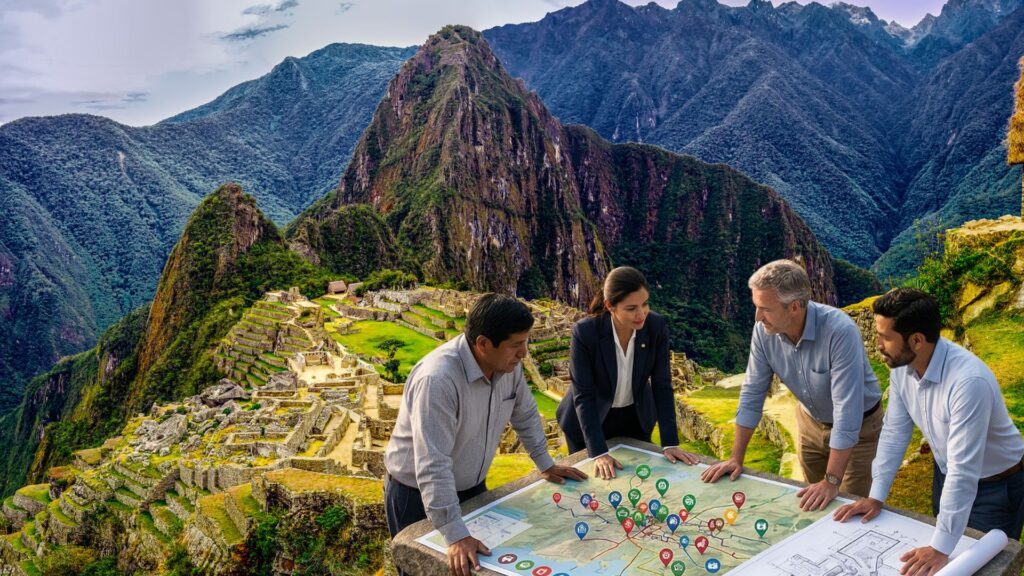
A diverse group of Destination Management Organization stakeholders analyzing sustainability maps and shared infrastructure blueprints at Machu Picchu, representing territory-wide climate action governance.

Destination-Level Climate Action: Governance Frameworks for Sustainable Tourism

Individual businesses like hotels and restaurants drive essential progress when they reduce their own footprints and implement sustainable practices. These small changes contribute directly to local conservation and set a high standard for service. However, the most significant impact occurs when an entire destination aligns under a unified sustainability vision. Strategic governance transforms these isolated successes into a territory-wide movement, ensuring that every participant works toward shared climate goals. The Foundation of Destination Sustainability Governance Governance in the context of sustainable tourism refers to the systems and processes used to make decisions and hold stakeholders accountable. A robust framework ensures that environmental goals do not conflict with economic growth. Instead, it integrates climate resilience into the core identity of the destination. The most effective models involve a centralized Destination Management Organization (DMO) that acts as a bridge between the public sector and private enterprises. This entity coordinates the implementation of climate strategies, ensuring that every participant—from large resorts to small tour operators—works toward the same carbon reduction targets. Essential Components of a Climate Action Roadmap Building a sustainable destination requires a phased approach that moves from initial assessment to long-term monitoring. Let’s take a look at Machu Picchu’s extraordinary case. Stakeholder Mapping and Engagement Identifying every actor in the tourism value chain is the first step. This includes local government agencies, transport providers, hospitality leaders, and the resident community. The Machu Picchu experience highlights the importance of multi-level collaboration, involving local, regional, national, and international sectors to drive change. Policy Alignment and Goal Setting Destinations must align their local sustainability targets with international standards, such as the Paris Agreement, Global Sustainable Tourism Council (GSTC) or the Glasgow Declaration on Climate Action in Tourism. Setting clear time-bound objectives for carbon neutrality or waste reduction provides a benchmark for success.  Monitoring and Data Collection  You cannot manage what you do not measure. Implementing destination-wide Monitoring, Reporting, and Verification (MRV) systems allows governance bodies to track progress in real-time. This data informs policy adjustments and proves the credibility of the destination’s climate claims to international investors and travelers. Machu Picchu demonstrates this through its consistent carbon footprint measurements since 2019, which led to its validation as the first carbon-neutral UNESCO site in the world. Fragmentation in Tourism Management Fragmentation is the primary barrier to destination-level success. When businesses act in isolation, they often duplicate efforts or overlook shared infrastructure needs. A governance framework solves this by creating “sustainability clusters” where resources are pooled for maximum efficiency. For example, a coordinated governance body can facilitate shared renewable energy projects or centralized waste-to-energy plants that a single SME could not afford alone. This collective approach reduces the cost of entry for smaller players and accelerates the entire territory’s transition to a low-carbon economy. A governance framework solves this by facilitating shared projects that a single business could not afford alone. Practical examples from the Machu Picchu model include: Driving Competitive Advantage Through Transparency Destinations that demonstrate strong climate governance attract a higher caliber of travelers and investors. Transparency in climate reporting builds trust and protects the destination from accusations of greenwashing. By establishing a clear governance structure, a region positions itself as a forward-thinking leader in the global tourism market. Destinations that demonstrate strong climate governance attract a higher caliber of travelers and investors. Transparency in climate reporting builds trust and protects the destination from accusations of greenwashing. By establishing a clear governance structure, a region positions itself as a forward-thinking leader in the global tourism market. Since 2021, Machu Picchu’s carbon-neutral status has generated an estimated $5 million to $12 million in reputational and ESG signaling value. Transparency in climate reporting builds trust and positions a region as a forward-thinking leader in the global tourism market.Learn more about managing complex destination relationships in our guide to Multi-Stakeholder Coordination for Destination Sustainability Initiatives. Ready to transition from isolated efforts to collective impact? Contact us to discover more about managing complex destination relationships and for expert advice. This article was written by Virna Chávez from the Green Initiative Team. FAQ: Understanding Destination Governance References Related Reading

Destination-Level Climate Action: Governance Frameworks for Sustainable Tourism Read More »

Master the hotel energy transition with solar, wind, and hybrid systems. Learn how to integrate renewable energy into your property for cost savings and resilience.

Renewable Energy Integration for Hotels: Solar, Wind, and Hybrid Systems

For the hospitality sector, the transition to renewable energy is the most visible signal of climate leadership. While energy efficiency reduces the load, renewable integration eliminates the carbon intensity of the remaining energy demand. However, hotels face unique spatial and aesthetic challenges when deploying these technologies. This guide analyzes how to integrate solar, wind, and hybrid systems into hotel infrastructure to achieve energy independence and long-term cost stability. The Strategic Shift to On-Site Generation Modern hotels are no longer just energy consumers; they are becoming “prosumers”—entities that both consume and produce energy. Integrating renewable systems protects the property from the volatility of fossil fuel prices and grid instability. For example, for destinations in Peru, ranging from the Andean highlands to the Amazonian basin, decentralized renewable energy is often more reliable and cost-effective than traditional grid extensions. Financial and Regulatory Incentives Many jurisdictions offer accelerated depreciation, tax credits, or net-metering schemes for hotels that export excess renewable energy back to the grid. These financial mechanisms, combined with the plummeting cost of photovoltaic (PV) hardware, have brought the Return on Investment (ROI) for many hotel solar projects down to 4 to 6 years. Solar Energy: The Foundation of Hotel Renewables Solar Photovoltaic (PV) technology is the most common renewable choice for hotels due to its scalability and low maintenance requirements. Rooftop and Building-Integrated Photovoltaics (BIPV) Solar Thermal for Hot Water While PV generates electricity, solar thermal systems use the sun’s heat directly to warm water for guest rooms, laundries, and swimming pools. Solar thermal is significantly more efficient per square meter than PV for heating applications, making it a “quick win” for high-occupancy resorts. Wind Energy: Specialized Applications Wind energy is less common in urban hospitality but highly effective for coastal or remote highland properties with consistent wind profiles. Micro-Wind Turbines Unlike the massive turbines seen in industrial wind farms, micro-wind turbines are designed for building integration. Vertical Axis Wind Turbines (VAWTs) are quieter and can capture wind from any direction, making them suitable for coastal resorts where sea breezes are constant. Site Assessment Requirements Wind projects require at least 12 months of localized anemometer data to ensure viability. Because of the potential for noise and vibration, turbines must be strategically placed away from guest quiet zones. Hybrid Systems and Energy Storage The primary challenge of renewable energy is intermittency—solar does not work at night, and wind is variable. Hybrid systems solve this by combining multiple energy sources and storage. Solar-Wind Hybrids By combining solar and wind, hotels can achieve a more balanced generation profile. In many regions, wind speeds are higher at night or during cloudy days when solar production is low. Battery Energy Storage Systems (BESS) To achieve true energy independence or “Peak Shaving,” hotels are increasingly installing lithium-ion or flow batteries. Overcoming Implementation Barriers Aesthetic Integration Luxury hotels often hesitate to install renewables for fear of disrupting the “guest experience.” Modern design solves this by hiding panels behind parapet walls or using colored solar glass that mimics traditional building materials. Is your property suitable for solar or wind? Request a Renewable Energy Feasibility Study from Green Initiative’s technical experts. This article was written by Musye Lucen from the Green Initiative Team. Frequently Asked Questions (FAQ) for Hotel Renewable Energy Integration Related Reading

Renewable Energy Integration for Hotels: Solar, Wind, and Hybrid Systems Read More »

Modern luxury hotel lobby featuring energy-efficient LED lighting and a smart thermostat interface on a concrete pillar.

Hotel Lighting and HVAC Optimization: Quick Wins for Energy Reduction

Energy consumption represents one of the most significant operational costs for hotel owners and managers. Within a typical property, lighting and HVAC (Heating, Ventilation, and Air Conditioning) systems account for the vast majority of electricity use. Implementing targeted optimizations in these two areas provides immediate financial relief and serves as a foundational step toward broader decarbonization. This guide focuses on high-impact “quick wins” that deliver measurable results with minimal operational disruption. Implementing these quick wins is the first phase of a larger Complete Hotel Energy Transition Roadmap. The Financial Case for Rapid Energy Optimization Rising energy prices and increasing guest expectations for sustainable operations make efficiency a business imperative. Traditional lighting and unoptimized climate control systems waste significant resources through heating or cooling unoccupied spaces and using outdated technology. By focusing on lighting and HVAC, hotel operators can often see energy savings of 20% to 40% in these specific systems. These savings directly improve the property’s Net Operating Income (NOI) and increase overall asset value. These efficiency measures align with the broader Net Zero Roadmap for Travel & Tourism, providing a structured path toward total operational sustainability. Lighting Optimization: Illumination with Efficiency Lighting is often the most accessible area for rapid energy reduction. The transition to modern technology goes beyond simply changing bulbs; it involves intelligent control of the hotel’s environment. LED Retrofitting Replacing all incandescent, halogen, and fluorescent lamps with high-efficiency LED technology is the single most effective lighting intervention. Smart Controls and Automation Energy is frequently wasted in “back-of-house” areas and guest corridors that remain fully lit while empty. HVAC Optimization: Precision Climate Control HVAC systems are typically the largest energy consumers in any accommodation facility. Because these systems are complex, many hotels operate them inefficiently by default. Smart Thermostats and Occupancy Integration Heating or cooling a vacant guest room is a primary source of energy waste. Preventative Maintenance as an Efficiency Strategy A poorly maintained HVAC system can consume up to 30% more energy to provide the same level of comfort. Measuring Success and ROI The success of these “quick wins” is measured through utility bill reduction and improved equipment lifespans. Operators should establish a baseline of energy use per occupied room to track the specific impact of lighting and HVAC upgrades. These metrics are essential for demonstrating the value of efficiency projects to owners and investors. The potential for impact is significant; for instance, the Grande Hotel Sesc Itaparica efficiency results showed a 41.48% reduction in emissions intensity through strategic energy decisions. Ready to identify the specific savings available at your property? Book a Hotel Energy Efficiency Assessment with our technical team today. This article was written by Musye Lucen from the Green Initiative Team. Frequently Asked Questions: Hotel Energy Optimization Related Reading

Hotel Lighting and HVAC Optimization: Quick Wins for Energy Reduction Read More »

A modern eco-friendly hotel with rooftop solar panels, vertical green walls, and an electric vehicle charging station at sunset, illustrating the hospitality energy transition.A modern eco-friendly hotel with rooftop solar panels, vertical green walls, and an electric vehicle charging station at sunset, illustrating the hospitality energy transition.

Hotel Energy Transition: The Complete Decarbonization Roadmap for Accommodation Providers

The hospitality industry stands at a defining crossroads where economic growth must reconcile with the preservation of the ecosystems that sustain it. For hotels and accommodation providers, the energy transition represents the most significant opportunity to reduce operational costs while responding to a global demand for transparency and positive climate impacts. This roadmap provides a comprehensive strategic framework to transition from fossil-fuel dependency to climate-positive operations, utilizing the specialized guidelines established for the tourism sector. The Strategic Imperative for Hotel Decarbonization Decarbonizing the tourism sector is not merely a reputational exercise; it is a central dimension of modern industrial competitiveness. Accommodation providers face unique vulnerabilities to climate change, including extreme weather events that can damage infrastructure and disrupt service delivery. Economic Advantages and Risk Mitigation Transitioning to low-carbon models allows hotels to: Market Positioning and Guest Expectations Modern travelers increasingly prefer “climatically intelligent” options that reflect responsible practices. Demonstrating a verified commitment to action—such as through Carbon Neutral or Climate Positive certifications—provides a significant comparative advantage in international markets. Phase 1: Establishing the Carbon Baseline A credible energy transition begins with data. You must establish a rigorous Line Base of Emissions to quantify the impact of your operations. The Technical Audit Process Following international standards like ISO 14064-1 and the GHG Protocol, hotels must categorize emissions into three scopes: Measuring Methodology Quantification combines activity data (e.g., kWh consumed or liters of fuel) with emission factors—coefficients that estimate the total gases emitted per unit of activity. These calculations must include all primary greenhouse gases, primarily CO2, CH4, and N2O, expressed as CO2 equivalent (tCO2eq) for standardization. Phase 2: The Efficiency-First Framework Efficiency is the most cost-effective way to begin the transition. In the hospitality sector, the Accommodation category is a primary driver of emissions, largely due to electricity and heating requirements. Key immediate actions include optimizing HVAC systems and upgrading to LED lighting with motion sensors to achieve rapid energy reduction. HVAC and Building Optimization Heating, ventilation, and air conditioning systems are high-consumption areas. Phase 3: Implementing Circularity in Energy and Materials The energy transition is more effective when integrated with Circular Economy principles. Circularity moves away from the “extract-produce-discard” linear model to create resilient, closed-loop systems. The 10R Strategy for Hotels Hotels can apply the 10R Framework to minimize resource pressure: Case Study: Circularity in Peru Machu Picchu became a global reference by implementing an integrated circular architecture. Key interventions included: Phase 4: Electrification and Renewable Energy Once efficiency is maximized, the remaining load should transition to clean energy sources. Phasing Out Fossil Fuels Direct emissions can be lowered by switching from carbon-intensive cooking fuels to cleaner alternatives like natural gas or, ideally, full electrification. While electrification often produces the greatest net reduction, the local grid’s carbon content must be considered. Renewable Integration Phase 5: Monitoring, Reporting, and Verification (MRV) The transition is a continuous process of improvement. Reporting and diffusion of good practices generate the true value of climate investments. Principles of Reliable Reporting To ensure transparency and access to green finance, hotel reports must follow these principles: Maturity Levels Hotels can track their progress using the Climate Maturity Level (NM) framework: This article was written by Musye Lucen from the Green Initiative Team. Hotel Energy Transition FAQ Related Reading

Hotel Energy Transition: The Complete Decarbonization Roadmap for Accommodation Providers Read More »

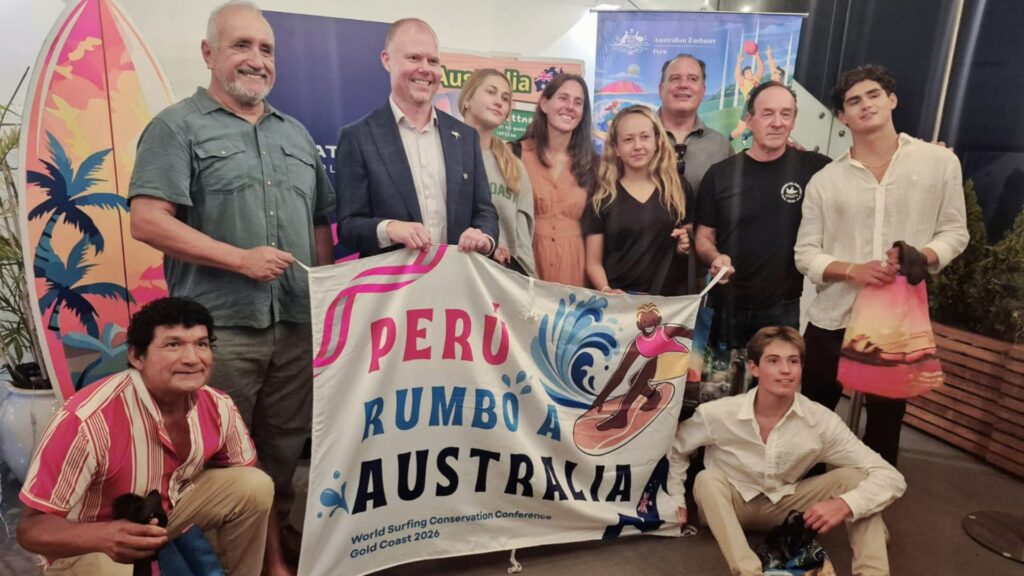
Peruvian delegation with official banner for the World Surfing Conservation Conference 2026.

WSCC 2026: A Global Summit for Ocean Protection and Surf Culture

In February 2026, the global surfing community and leading ocean conservationists will descend upon Australia’s Gold Coast for a landmark event: the World Surfing Conservation Conference (WSCC 2026). Hosted by the Gold Coast World Surfing Reserve (GCWSR) and Southern Cross University, this four-day inaugural event aims to unite science, culture, and sport to safeguard the world’s waves for future generations. A World-First Milestone: Olas Perú and Carbon Neutrality The conference will showcase a global-first for the surfing industry: the participation of Roberto “Muelas” Meza and his school, Olas Perú, the first surf school in the world to be Carbon Neutral Certified. As a legendary coach and eight-time national champion, Meza is leading a delegation of students to the Gold Coast to demonstrate how the next generation of “semilleros” can balance high-performance sport with rigorous environmental standards. By achieving certification through the Green Initiative and following international ISO standards, Olas Perú provides a strategic blueprint for how surf businesses can actively measure and offset their carbon footprint. History in the Making: The San Bartolo Club Arrives The Peruvian presence at the conference is further bolstered by the arrival of the San Bartolo Club from Punta Hermosa, who recently landed on the Gold Coast to make sporting history. While veteran leaders like Muelas (Roberto Meza) and Magoo de la Rosa are returning to Australian shores, the delegation includes a talented group of “groms”—Catalina, Brianna, Alejandro, and Bastian—marking their very first visit to the region. This group is set to become the first-ever South American team to compete in the World Club Championship at Snapper Rocks, a milestone that perfectly complements the conference’s mission of fostering global surfing heritage and youth leadership. A Legacy of Champions: Felipe Pomar at Kirra The momentum for the Peruvian delegation is at an all-time high following an inspiring morning at Kirra with Felipe Pomar, Peru’s first World Champion (1965). At 82 years old, Pomar continues to be a global ambassador for the “surfing for life” philosophy, recently appearing on the Today TV morning show to discuss his enduring connection to the ocean. His presence provides a legendary backdrop for the San Bartolo Club as they prepare for their historic debut at Snapper Rocks. Event Overview A Convergence of Legends and Experts The conference features a “stacked” lineup of over 100 speakers from 20 countries. Attendees will hear from icons like seven-time World Champion Layne Beachley AO, three-time Pipe Master Tom Carroll, and surfing pioneer Wayne “Rabbit” Bartholomew. Beyond the professional athletes, the stage will be shared with world-class coastal engineers, climate scientists, and representatives from global NGOs like Save The Waves Coalition, Surfrider Foundation, and Surfers for Climate. Key Themes and Highlights WSCC 2026 isn’t just an academic gathering; it’s a movement that blends rigorous research with cultural celebration. Key topics include: Immersive Experiences The event is designed to be as vibrant as the coast itself: How to Get Involved Whether you are a researcher, a student, a professional surfer, or an ocean advocate, WSCC 2026 offers a unique platform to exchange ideas and find workable solutions for the future of our coastlines. Registration is now open. Early bird rates are available, and attendees have the chance to win prizes, including surf trips to Fiji and Indonesia. Visit wscc2026.com.au to secure your spot, view the full program, or inquire about sponsorship opportunities. Join the movement to ensure that the waves we love today are still breaking for the surfers of tomorrow. This article was prepared by the Green Initiative Team. Related Reading

WSCC 2026: A Global Summit for Ocean Protection and Surf Culture Read More »

Machu Picchu: Restoring Nature, Inspiring Sustainability, and Leading a New Era of Climate-Positive World Heritage Tourism

Machu Picchu: Restoring Nature, Inspiring Sustainability, and Leading a New Era of Climate-Positive World Heritage Tourism

As the world seeks models for regenerative tourism and effective climate action, Machu Picchu continues to stand as a living testament to how cultural heritage and nature can be protected together. Since earning its first Carbon Neutral Certification, the Historic Sanctuary has advanced a long-term vision where conservation, ecological restoration, and sustainable tourism reinforce one another. This article presents both an analytical overview of the sanctuary’s progress and a special Q&A with Mrs. Ruth Saire, Administrator of the Machupicchu National Historic Sanctuary, whose insights highlight the strategies, values, and collaborations behind Machu Picchu’s leadership in sustainability within Peru and across the region. Restoring Degraded Areas: A Commitment That Grows Stronger Every Year The first Carbon Neutral certification represented not only a milestone but also a renewed obligation to protect and restore one of the world’s most iconic landscapes. Since then, Machu Picchu has implemented substantial ecological restoration actions: These interventions have increased vegetation cover, improved soil stability, and enhanced the sanctuary’s carbon-capture capacity, ensuring tangible progress toward its sustainability goals. A Living Classroom: How Machu Picchu Teaches Sustainability to the World Machu Picchu is more than a historical marvel—it is a dynamic space for environmental education. Through the lens of Andean cosmovisión, the sanctuary communicates values of reciprocity, respect, and balance with nature. Visitors learn sustainability through: Thus, each visit becomes an opportunity for personal and collective awareness, promoting sustainable practices far beyond Peru’s borders. A Beacon for Other Iconic Sites: Tikal, Cristo Redentor, Galápagos, and More Machu Picchu has become an influential reference point for other renowned natural and cultural destinations. Delegations from Tikal (Guatemala), Cristo Redentor (Brazil), and the Galápagos Islands (Ecuador) frequently visit to study its conservation model and sustainable tourism management. This growing exchange opens the possibility of developing a regional network of sustainable destinations, strengthening collaboration through: Such cooperation would reinforce the region’s leadership in heritage conservation and climate action. Q&A With Ruth Saire – Administradora del Santuario Histórico Nacional de Machupicchu In this interview, Ruth Saire reflects on the ecological progress achieved within the sanctuary, Machu Picchu’s impact on visitors, and the importance of collaboration with other emblematic destinations. 1. What concrete advances have been achieved in restoring degraded areas since Machu Picchu’s first Carbon Neutral certification? “Since the first certification, it has represented both recognition and continuity in our commitment to preserve and strengthen the ecological restoration of the Machupicchu National Historic Sanctuary for the world. We have reforested critical areas with native species, restored eroded zones using bioengineering techniques, controlled invasive species, and strengthened the monitoring of natural regeneration. These actions have increased vegetation cover, improved soil stability, and enhanced the Sanctuary’s capacity to capture carbon, directly contributing to our sustainability goals.” 2. From the cultural perspective, how does Machu Picchu inspire and educate visitors to adopt more sustainable habits? “From a cultural perspective, we believe that Machu Picchu is a living example of sustainability. The Andean cosmovision expressed here teaches respect, reciprocity, and harmony with nature. Visitors learn by observing how the Incas built by integrating themselves into the environment rather than against it. In addition, the interpretive signage and the work of the Historic Sanctuary’s staff reinforce messages about conservation, responsible waste management, respect for wildlife, and fire prevention. All of this inspires visitors to adopt more conscious and sustainable practices.” 3. How do you perceive the growing interest from other destinations—such as Tikal, Cristo Redentor, or Galápagos—that visit Machu Picchu to learn from its experience? What actions are needed to strengthen collaboration? “The Historic Sanctuary of Machu Picchu is often compared with destinations such as Tikal, Christ the Redeemer, or the Galápagos, and in those comparisons our image is highly positive. These destinations see us as an international benchmark in the integrated and sustainable management of cultural and natural heritage, which opens opportunities for mutual learning and technical collaboration. To strengthen this relationship, we propose establishing a permanent network of sustainable destinations, promoting exchanges among specialists, harmonizing good environmental management practices, and developing joint projects in restoration, carbon neutrality, and responsible tourism management.” Conclusion: A Legacy of Stewardship for the Planet Machu Picchu’s leadership demonstrates how ancient knowledge, scientific rigor, cultural stewardship, and international cooperation can converge into a powerful model for climate-positive world heritage tourism. With champions like Ruth Saire guiding conservation and sustainable management efforts, the sanctuary continues to protect biodiversity, inspire global travelers, and collaborate with peer destinations—helping shape a future where culture, nature, and climate action thrive together. This article was written by Musye Lucen from the Green Initiative Team. Related Reading

Machu Picchu: Restoring Nature, Inspiring Sustainability, and Leading a New Era of Climate-Positive World Heritage Tourism Read More »

Community Update: Social Engagement in Cabo Blanco, Peru

Community Update: Social Engagement in Cabo Blanco, Peru

Listening, Learning, and Co-Creating a Regenerative Future for an Iconic Coastal Community Over the past few months, and with financing from IDB Invest, the Tamesis Impact team—in alliance with Green Initiative (GI International)—carried out an in-depth social engagement process in Cabo Blanco, Piura. This iconic coastal community, celebrated for its artisanal fishing heritage and cultural identity, is entering a defining moment as it explores new pathways for sustainable development, inclusive governance, and regenerative tourism. The purpose of this process was clear: to listen to Cabo Blanco’s residents, understand their priorities, and work collaboratively to envision a development model that honors their history while creating long-term social, economic, and environmental benefits. Building Trust Through Dialogue and Participation The engagement process included interviews with local authorities, community visits, and four thematic participatory workshops designed to encourage reflection, dialogue, and collective planning. We met with fishers, women leaders, youth groups, tourism stakeholders, and civil society organizations—each contributing essential perspectives. Key insights that emerged from these exchanges: 1. Openness to sustainable and regenerative tourism Residents show strong interest in tourism models that respect local traditions, protect marine and coastal ecosystems, and reinforce the cultural identity that defines Cabo Blanco. 2. Women and youth as leaders of transformation Throughout the process, women and young people demonstrated creativity, leadership, and a deep sense of commitment to their community’s future. 3. Need for integrated and inclusive governance The community expressed the importance of coordinated action among authorities, civil society, private actors, and community organizations to ensure coherent planning and equitable development. 4. Identity as the foundation of future development A recurring message across all workshops: Cabo Blanco’s greatest asset is its people—their resilience, pride, and strong connection to the sea. Why Cabo Blanco Can Become a Regenerative Tourism Model Cabo Blanco is far more than a destination. It is a living cultural landscape shaped by its fishing identity, its relationship with the ocean, and its place in Peru’s coastal history—from artisanal fishing traditions to its international recognition. This combination of heritage, identity, and community cohesion creates exceptional potential to develop a high-integrity regenerative tourism model, one capable of: A Shared Vision for Transformative and Responsible Development The alliance between Tamesis Impact, Green Initiative, and IDB Invest reinforces a commitment to responsible investment, social inclusion, and climate-resilient planning rooted in community voice. As emphasized by Joaquín Daly, Managing Partner at Tamesis Impact, the moment is both unique and urgent: “Cabo Blanco is at a turning point where identity, community engagement, and responsible investment can come together to shape a new development model for Peru’s coastal territories. At Tamesis Impact, we believe that real transformation begins by listening to people—understanding their values, their aspirations, and the heritage they want to protect. Working in alliance with Green Initiative and with financing from IDB Invest, we are helping co-create a regenerative vision that strengthens local leadership and ensures long-term social and environmental resilience.”— Joaquín Daly, Managing Partner, Tamesis Impacthttp://tamesis.com.pe/ Next Steps: Co-Designing a Community-Led Path Forward As Cabo Blanco embraces new opportunities, the priority remains the same: development shaped by and for the community. The insights gathered through this engagement process will inform the next phases of planning, technical analysis, and capacity building, ensuring that every step forward aligns with community values, territorial identity, and long-term sustainability. Cabo Blanco now stands at the threshold of becoming a flagship example of regenerative coastal development in Latin America, showing how communities, institutions, and responsible investors can work together to build a future rooted in identity, resilience, and shared prosperity. This article was written by Yves Hemelryck from the GI International Team. Related reading

Community Update: Social Engagement in Cabo Blanco, Peru Read More »

Climate & Nature Positive Peru_ Green Initiative + BAM REDD+

Green Initiative and Peru’s Amazon: Advancing Global Climate-Positive and Nature-Positive Action with BAM and the REDD+ Castañeros Project

Peru stands as one of the world’s most strategic regions for implementing climate-positive and nature-positive solutions. Across its iconic landscapes— from Machu Picchu to Madre de Dios— the country is redefining how territories can integrate science, governance, community leadership, and verified impact to protect ecosystems while generating sustainable development. At the center of this transformation is Green Initiative, whose international climate governance model is being adopted by governments, destinations, and conservation partners throughout Peru. A key pillar of this effort is the alliance with Bosques Amazónicos (BAM) and its internationally recognized conservation program: the REDD+ Castañeros Project, one of the most relevant private REDD+ initiatives worldwide for climate and social impact. Together, these organizations are demonstrating how Peru can convert climate ambition into real, verifiable, and community-led implementation. Peru as a Global Model for Climate & Nature Positive Implementation Green Initiative works across multiple ecosystems and governance levels to accelerate: This integrated approach positions Peru as a global reference for implementation, not only commitment. The REDD+ Castañeros Project: A Cornerstone of Amazonian Conservation Developed by BAM in collaboration with more than 800 Brazil nut–harvesting families, the REDD+ Castañeros project protects over 600,000 hectares of unique and megadiverse Brazil nut forests in Madre de Dios. For more than 15 years, this alliance has safeguarded ecosystems of extraordinary importance while strengthening local livelihoods. This model directly supports Green Initiative’s mission:evidence-based climate action, measurable biodiversity protection, and community-centered development. 🌍 1. Climate-Positive Impact Through avoided deforestation and strengthened forest governance, the REDD+ Castañeros project generates high-integrity carbon credits with global relevance. Key climate outcomes: These achievements align with Green Initiative’s standards for traceability, transparency, and MRV integrity across territories. 👨‍👩‍👦 2. Community Impact & Inclusive Development The project’s social dimension is one of its greatest strengths. BAM works side by side with families that have protected Brazil nut forests for generations, providing incentives, tools, and opportunities for sustainable development. Social impact highlights: This mirrors Green Initiative’s philosophy: climate solutions must empower people first. 🐾 3. Biodiversity Protection & Scientific Innovation The REDD+ Castañeros territory is among the most biologically rich regions on Earth. Outstanding biodiversity contributions: These efforts strengthen the nature-positive goals that Green Initiative promotes globally:conservation based on science, technology, and local knowledge. Why This Alliance Matters for Peru and the World Global demand for high-integrity climate solutions is rapidly expanding. Territories that can demonstrate: are becoming the most attractive for climate finance, regenerative tourism, and international investment. The alliance between Green Initiative, BAM, and the REDD+ Castañeros community places Peru at the forefront of this movement, proving that real climate action must reconnect people, forests, and economic opportunity. From the Amazon to the World: Implementation That Sets a Benchmark Through this partnership, Peru advances: This is the pathway from ambition to implementation — and from implementation to global leadership. About Green Initiative Green Initiative is an international platform dedicated to climate governance, decarbonization pathways, nature-positive implementation, and ecosystem restoration, working with governments, World Heritage sites, conservation programs, and local communities. Its portfolio spans iconic destinations from Machu Picchu to Bonito, Cristo Redentor, Cabo Blanco, Angkor Wat, and the Galápagos, supporting them in achieving real, verifiable, and community-centered climate impact. REDD+ Castañeros in Focus: A Photographic Story by Walter H. Wust This article was written by Virna Chávez from the Green Initiative Team. Related Reading

Green Initiative and Peru’s Amazon: Advancing Global Climate-Positive and Nature-Positive Action with BAM and the REDD+ Castañeros Project Read More »

Machu Picchu Leads Global Climate Action with Its Third Carbon Neutral Certification

Machu Picchu Leads Global Climate Action with Its Third Carbon Neutral Certification

From the heart of the Andes, Machu Picchu once again makes history — not only as a symbol of world heritage, but as a living model of how tourism and climate action can move together toward a shared future. In 2025, the iconic destination achieved its third consecutive Carbon Neutral Certification, granted by Green Initiative, consolidating its leadership in the global movement for climate-positive and nature-positive tourism. A measurable path toward decarbonization Between 2019 and 2024, Machu Picchu achieved a 7.26% reduction in its carbon footprint per tourist, while increasing its carbon capture through reforestation and ecological restoration projects. These results are not symbolic — they are measurable, verifiable, and replicable, proving that the decarbonization of tourism is possible when data, science, and collaboration converge. Behind this achievement lies a rigorous process of measurement, reduction, and compensation aligned with international standards such as the GHG Protocol and IPCC Guidelines. Residual emissions were offset through the retirement of high-integrity carbon credits, ensuring climate integrity and transparency across all levels of reporting. A model built on collaboration The certification reflects four years of work led by the Municipality of Machu Picchu, in collaboration with PROMPERÚ, Inkaterra, AJE Group, BAM (Bosques Amazónicos), SERNANP, Ministry of Culture of Peru (Decentralized Directorate of Culture of Cusco), Tetra Pak, together with partners including CANATUR, LATAM Airlines, MSC, Inka Rail, Peru Rail, Belmond and World Xchange. The process also integrated technical cooperation with UN Tourism, UN Climate Change (UNFCCC), UNCTAD, the Peru Circular Tourism Initiative, the Consulate of the German Embassy in Peru, and the Spanish Agency for International Development Cooperation (AECID). It is a public-private and multilateral alliance that turned ambition into measurable action — a framework now inspiring similar transitions in destinations such as Cabo Blanco, Bonito, and Christ the Redeemer.    Why it matters now A decade after the Paris Agreement, and as the world looks toward COP30, Machu Picchu stands as tangible proof that climate ambition can translate into practical results. Its model merges circular economy practices — such as pyrolysis for biochar production, biodiesel generation from used oils, and recycling of PET plastics, packaging, and glass — with improvements in sustainable mobility through electric vehicles. The integration of these strategies enhances the destination’s resilience to climate change, strengthening its role as a benchmark for regenerative and low-carbon tourism. The entire process follows the principles of transparency and traceability promoted by the Circular Tourism Peru framework, under the commitments of the Glasgow Declaration for Climate Action in Tourism led by UN Tourism. Toward the world’s first Carbon Neutral Tourism Corridor Building on this success, Machu Picchu is now spearheading the creation of the World’s First Carbon Neutral Tourism Corridor, connecting district municipalities from Machu Picchu to Cusco, including Choquequirao. The initiative aims to reduce regional emissions, foster public and private investment, and promote sustainable mobility while creating a more inclusive and climate-smart visitor experience. At the same time, Machu Picchu is expanding its reach through international collaboration with other emblematic World Heritage sites such as Angkor Wat (Cambodia) and Petra (Jordan), to exchange best practices that accelerate the fulfillment of the Paris Agreement and Glasgow Declaration objectives. Voices that inspire global transformation “From the District Municipality of Machu Picchu, we remain committed to continuously monitoring our carbon footprint and promoting policies that foster a circular and regenerative economy in harmony with nature.”— Elvis La Torre, Mayor of Machu Picchu “Through public–private and multilateral collaboration, we can achieve remarkable results in decarbonizing the economy. The experience accumulated here — and that we aim to scale worldwide — shows that tourism and climate action must go hand in hand.” — Gustavo Santos, Regional Director for the Americas, UN Tourism “Machu Picchu’s leadership highlights the impact of years of scientific data collection and standardization. Climate action becomes tangible when grounded in science and collaboration.” — Daniel Galván Pérez, UN Climate Change “Machu Picchu not only represents the greatness of our history and culture, but also Peru’s commitment to a sustainable future. Being the first World Cultural Heritage Site to achieve carbon neutrality is a milestone that reflects how tourism can be a positive force for conservation and development. Today, travelers around the world seek experiences that connect with nature and respect the environment; Machu Picchu demonstrates that it is possible to experience cultural heritage in harmony with the planet. This achievement inspires us to continue promoting tourism that protects, values, and transforms.” — María del Sol Velásquez, Director of Tourism Promotion, PROMPERÚ “The certification of Machu Picchu as a carbon-neutral destination marked a milestone in the environmental management of Peruvian tourism. This achievement opens the opportunity to move toward a more ambitious model, where tourist destinations strengthen their resource efficiency, reduce their carbon footprint, foster innovation, and consolidate the participation of local communities. At MINCETUR, we work to ensure that this example inspires other destinations to advance on the path toward sustainability and resilience, in alignment with the country’s climate commitments.” — Sophia Dávila, Director of the Directorate of Environmental Tourism Affairs, MINCETUR. “Tourism drives growth in many developing countries, but its future must be sustainable. Machu Picchu’s Carbon Neutral Certification is an example that it is possible to align decarbonization goals with economic development, making the sector a true ally of climate action.” — Claudia Contreras, Economic Affairs Officer, UNCTAD “Tourism does not only move economies — it moves memories, territories, and shared purpose. From CANATUR PERU, we promote a collaborative network within the sector that seeks to transform every destination into a node of sustainability, traceability, and resilience. Machu Picchu stands today as the living symbol of this transformation, reminding us that heritage is not simply preserved — it is managed with legitimacy, sensitivity, and a shared vision.” — Carlos Loayza, General Manager, CANATUR “The Carbon Neutral Certification symbolizes what happens when companies act with purpose. At AJE Group, we reaffirm our commitment to solutions that combine innovation, sustainability, and social well-being.” — Jorge Lopes-Dóriga, Director of Communication and Sustainability, AJE Group “For

Machu Picchu Leads Global Climate Action with Its Third Carbon Neutral Certification Read More »