
For the hospitality sector, the transition to renewable energy is the most visible signal of climate leadership. While energy efficiency reduces the load, renewable integration eliminates the carbon intensity of the remaining energy demand. However, hotels face unique spatial and aesthetic challenges when deploying these technologies. This guide analyzes how to integrate solar, wind, and hybrid systems into hotel infrastructure to achieve energy independence and long-term cost stability.
The Strategic Shift to On-Site Generation

Modern hotels are no longer just energy consumers; they are becoming “prosumers”—entities that both consume and produce energy. Integrating renewable systems protects the property from the volatility of fossil fuel prices and grid instability. For example, for destinations in Peru, ranging from the Andean highlands to the Amazonian basin, decentralized renewable energy is often more reliable and cost-effective than traditional grid extensions.
Financial and Regulatory Incentives
Many jurisdictions offer accelerated depreciation, tax credits, or net-metering schemes for hotels that export excess renewable energy back to the grid. These financial mechanisms, combined with the plummeting cost of photovoltaic (PV) hardware, have brought the Return on Investment (ROI) for many hotel solar projects down to 4 to 6 years.
Solar Energy: The Foundation of Hotel Renewables
Solar Photovoltaic (PV) technology is the most common renewable choice for hotels due to its scalability and low maintenance requirements.
Rooftop and Building-Integrated Photovoltaics (BIPV)
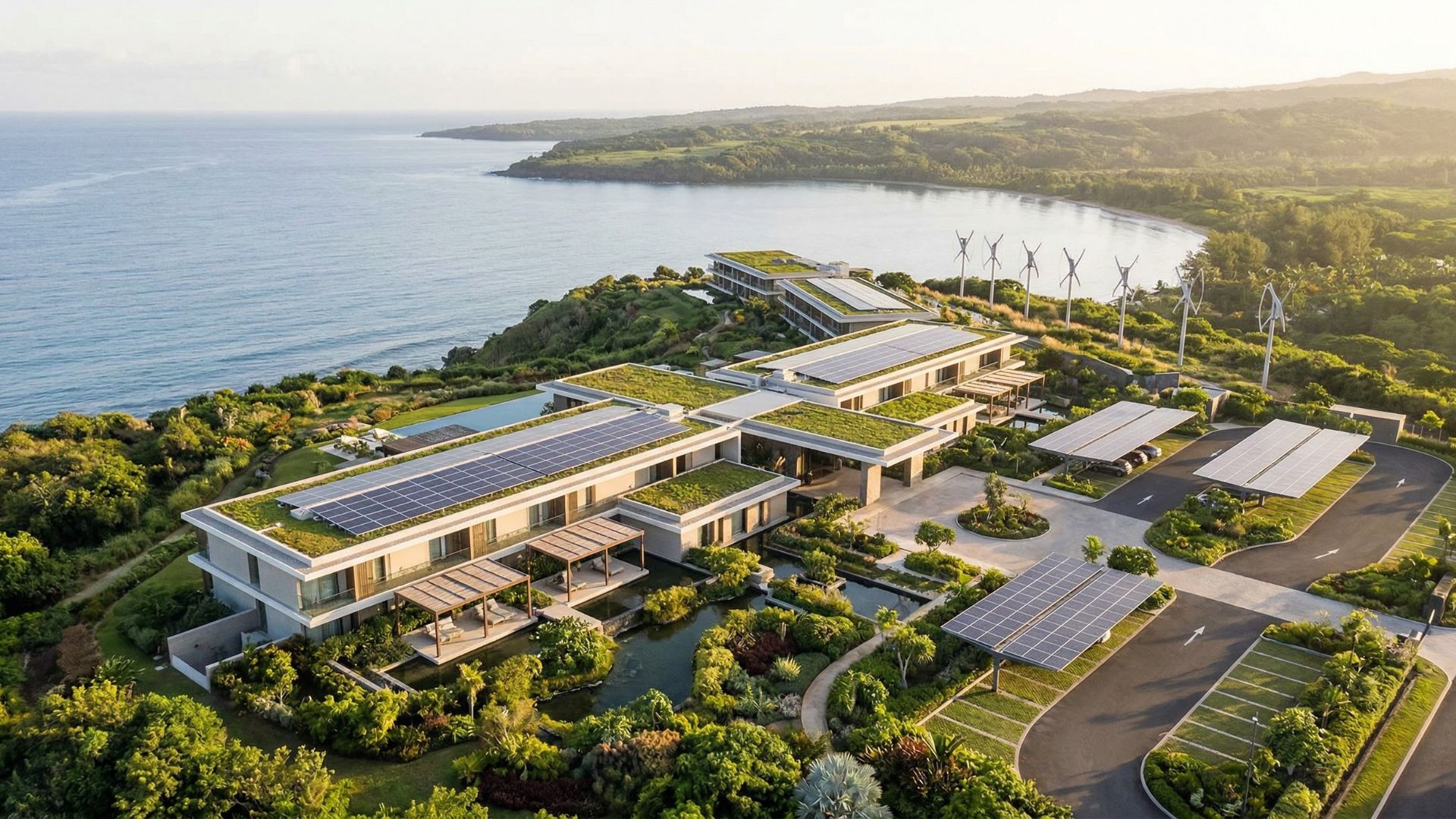
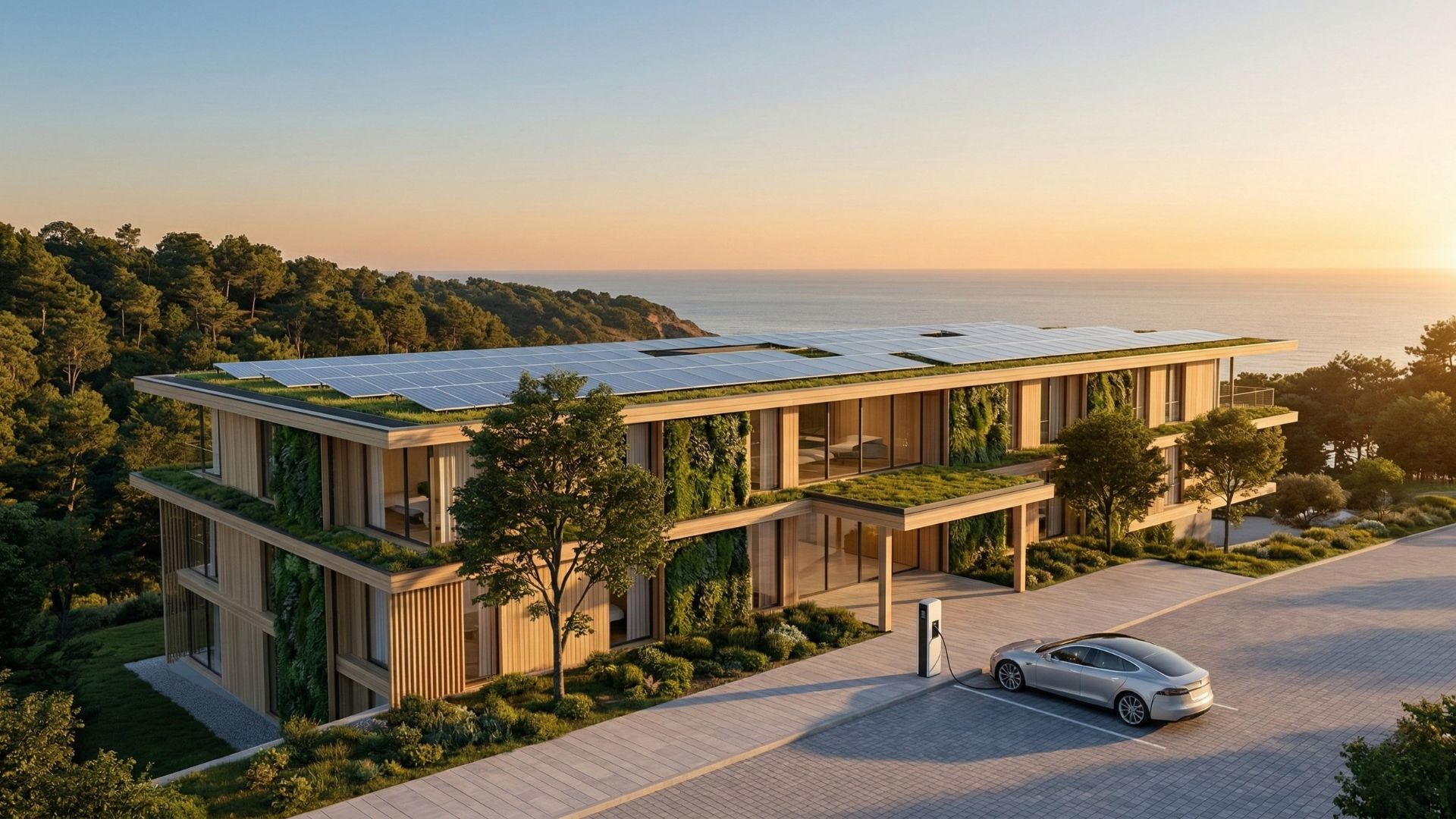
- Standard Rooftop Arrays: Ideal for properties with large, flat roof surfaces. These systems are non-intrusive and utilize otherwise dead space.
- Solar Pergolas and Carports: For hotels with limited roof space, solar panels can be integrated into guest parking areas or outdoor terraces. This provides shade for vehicles while generating clean power.
- BIPV: Emerging technologies allow solar cells to be integrated directly into windows or facade panels, maintaining the architectural integrity of luxury properties.
Solar Thermal for Hot Water
While PV generates electricity, solar thermal systems use the sun’s heat directly to warm water for guest rooms, laundries, and swimming pools. Solar thermal is significantly more efficient per square meter than PV for heating applications, making it a “quick win” for high-occupancy resorts.
Wind Energy: Specialized Applications
Wind energy is less common in urban hospitality but highly effective for coastal or remote highland properties with consistent wind profiles.
Micro-Wind Turbines
Unlike the massive turbines seen in industrial wind farms, micro-wind turbines are designed for building integration. Vertical Axis Wind Turbines (VAWTs) are quieter and can capture wind from any direction, making them suitable for coastal resorts where sea breezes are constant.
Site Assessment Requirements
Wind projects require at least 12 months of localized anemometer data to ensure viability. Because of the potential for noise and vibration, turbines must be strategically placed away from guest quiet zones.
Hybrid Systems and Energy Storage
The primary challenge of renewable energy is intermittency—solar does not work at night, and wind is variable. Hybrid systems solve this by combining multiple energy sources and storage.
Solar-Wind Hybrids
By combining solar and wind, hotels can achieve a more balanced generation profile. In many regions, wind speeds are higher at night or during cloudy days when solar production is low.
Battery Energy Storage Systems (BESS)
To achieve true energy independence or “Peak Shaving,” hotels are increasingly installing lithium-ion or flow batteries.
- Peak Shaving: Using stored battery power during peak tariff hours to avoid high utility charges.
- Resilience: Providing a clean alternative to diesel generators during grid outages, ensuring guest comfort remains uninterrupted.
Overcoming Implementation Barriers
Aesthetic Integration
Luxury hotels often hesitate to install renewables for fear of disrupting the “guest experience.” Modern design solves this by hiding panels behind parapet walls or using colored solar glass that mimics traditional building materials.
Is your property suitable for solar or wind? Request a Renewable Energy Feasibility Study from Green Initiative’s technical experts.

This article was written by Musye Lucen from the Green Initiative Team.
Frequently Asked Questions (FAQ) for Hotel Renewable Energy Integration
Beyond the environmental benefits, transitioning to on-site renewable energy (solar, wind, or hybrid systems) is a strategic move for long-term financial stability. It transforms your hotel into a “prosumer”—one that both consumes and produces energy. This protects your property from volatile fossil fuel prices and grid instability, ensuring a more reliable power supply, especially in remote or decentralized areas.
Solar Photovoltaic (PV) is the most common and scalable choice for hotels. Modern designs address aesthetic concerns by integrating panels discreetly on flat roofs, using them as shade carports for guest parking, or employing advanced Building-Integrated Photovoltaics (BIPV) where solar cells are part of window panes or façade panels. For high-occupancy resorts, Solar Thermal is also highly recommended; it is exceptionally efficient for heating guest water and swimming pools.
Yes, but their application is more specialized. While traditional wind farms are disruptive, Micro-Wind Turbines are designed for urban and building integration. Vertical Axis Wind Turbines (VAWTs) are quieter, capture wind from any direction, and are well-suited for coastal or highland resorts where sea breezes are constant. A comprehensive 12-month site assessment is essential to ensure viability and quiet operation, away from guest zones.
The main challenge with renewables is intermittency (solar requires daylight, wind varies). Hybrid systems solve this by combining multiple sources, such as solar and wind, and pairing them with Battery Energy Storage Systems (BESS). BESS allows a hotel to achieve true energy independence. They capture excess power and redistribute it during peak tariff hours (peak shaving) or serve as a clean alternative to diesel generators during grid outages.
While financial mechanisms vary by location, many jurisdictions offer incentives like accelerated depreciation, tax credits, or net-metering (where you export excess energy back to the grid for credit). Combined with the plummeting cost of PV hardware, these incentives can bring the ROI down significantly. A detailed, realistic analysis showed some hotels achieving a strong return in 4 to 6 years for their solar projects.