
Net-zero alignment represents the highest level of climate ambition for modern organizations. While many firms start with incremental improvements, leading enterprises adopt a strategic methodology known as backcasting. This approach starts with a vision of a decarbonized future and works backward to identify the necessary steps to reach that goal today. For financial institutions, backcasting serves as the primary tool for identifying borrowers who are truly committed to long-term sustainability and systemic change.
Traditional business planning often relies on forecasting, which projects future performance based on current trends and historical data. While useful for short-term operations, forecasting often fails to account for the radical shifts required by the global energy transition. Backcasting solves this problem by centering the planning process on a fixed, science-based destination, such as achieving net-zero emissions by 2050. This approach ensures that every interim milestone contributes directly to the final objective.
Why Backcasting Matters for Climate Finance

The backcasting climate methodology is essential for mitigating transition risks within a financial portfolio. As global regulations tighten and carbon prices rise, businesses that rely on incremental forecasting risk becoming stranded assets. Backcasting forces an organization to confront the structural changes needed for survival in a low-carbon economy.
Financial institutions use this methodology to verify the “Net-Zero ambition” of their largest clients. It provides a rigorous framework to ensure that a company’s long-term goals are more than mere marketing claims. By demanding science-based ambition, lenders protect their capital from the volatility of the fossil fuel phase-out.
How to Implement the Backcasting Process
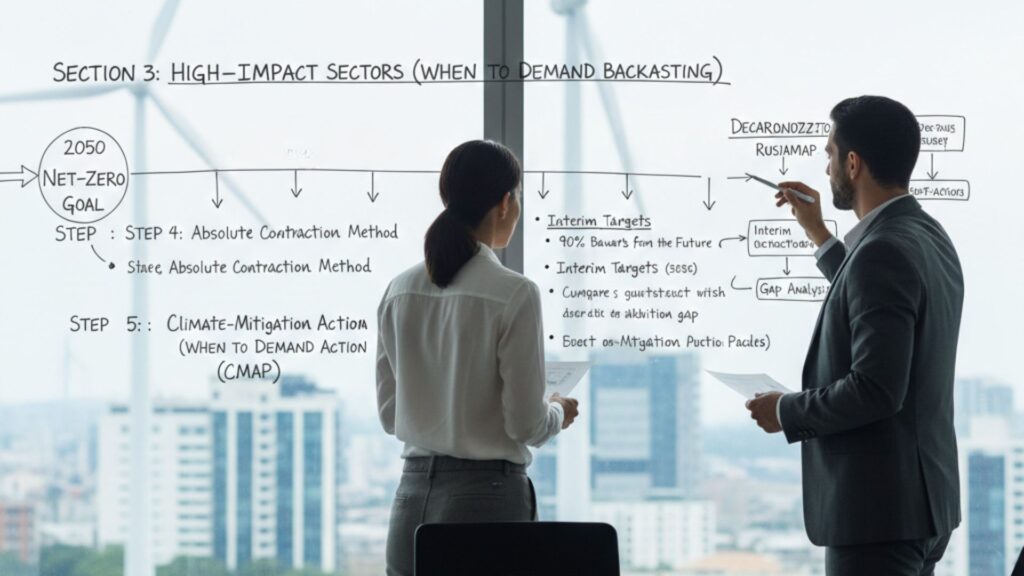
Implementing a backcasting framework requires a shift in organizational mindset from “what is likely” to “what is necessary.” Lenders should look for the following five steps in a borrower’s strategic plan.
Step 1: Define the Desired Future State
The process begins with a clear, time-bound definition of success. For most organizations, this is a state where GHG emissions are reduced to the absolute minimum, with any residual emissions neutralized through high-quality carbon removals. The borrower must specify the target year, typically 2040 or 2050, in alignment with the Paris Agreement.
Step 2: Characterize the Decarbonized Business Model
The organization must describe how it will operate in the target year. This includes identifying the primary energy sources, the level of energy efficiency achieved, and the technological innovations required. A manufacturer, for example, might envision a future state where 100% of process heat comes from green hydrogen.
Step 3: Work Backward to Identify Strategic Milestones
Once the destination is clear, the organization works backward to set interim targets. These milestones act as “checkpoints” to ensure the company remains on the science-based pathway. Common intervals include 5-year and 10-year targets that satisfy the requirements of the absolute contraction method.
Step 4: Conduct a Gap Analysis
By comparing the future state with the current operational baseline, the borrower identifies the “innovation gap.” This step highlights the specific areas where the business requires new technology, policy changes, or significant capital investment. Identifying these gaps early allows financial institutions to structure the appropriate climate finance products to bridge them.
Step 5: Develop the Immediate Action Plan
The final step is translating the long-term vision into immediate operational tasks. This results in a Climate-Mitigation Action Plan (CMAP) that outlines the specific investments needed over the next 12 to 36 months. This plan must align with the broader Science-Based Target Setting Methodologies.
When to Demand Backcasting from Borrowers

While the Forward-looking methodology is suitable for many SMEs, certain scenarios require the more rigorous backcasting approach. Lenders should prioritize backcasting in the following situations:
- High-Impact Sectors: Industries such as cement, steel, heavy transport, and energy production have massive carbon footprints and must show clear alignment with systemic transitions.
- Large Corporate Borrowers: Multinational corporations possess the technical and financial capacity to conduct deep backcasting and are often subject to stricter reporting mandates.
- Long-Term Infrastructure Financing: Projects with lifespans exceeding 20 years must be “future-proofed” against a net-zero world to avoid early obsolescence.
- Green Bond and Sustainability-Linked Bond Issuers: To maintain investor confidence and avoid greenwashing risks, issuers must demonstrate that their targets are scientifically grounded.
Risk Mitigation Benefits for Financial Institutions
Demanding science-based ambition through backcasting provides three critical benefits to a lender’s portfolio:
- Regulatory Preparedness: Borrowers using backcasting are better prepared for sudden changes in carbon taxes, emissions caps, and mandatory disclosure laws.
- Technological Leadership: This methodology encourages early adoption of low-carbon technologies, often resulting in lower operational costs over the project lifecycle.
- Enhanced Credit Quality: Organizations with a clear, science-based roadmap show superior strategic management and long-term viability, which reduces the overall credit risk for the financial institution.
Conclusion
The backcasting climate methodology is the gold standard for organizations aiming for Net-Zero leadership. By starting with the end in mind, businesses move beyond incrementalism and begin the deep work of transformation. For financial institutions, verifying this ambition is the most effective way to align portfolios with the global climate transition and secure long-term financial performance.

This article was written by Matheus Mendes from the Green Initiative Team.