
Sustainability

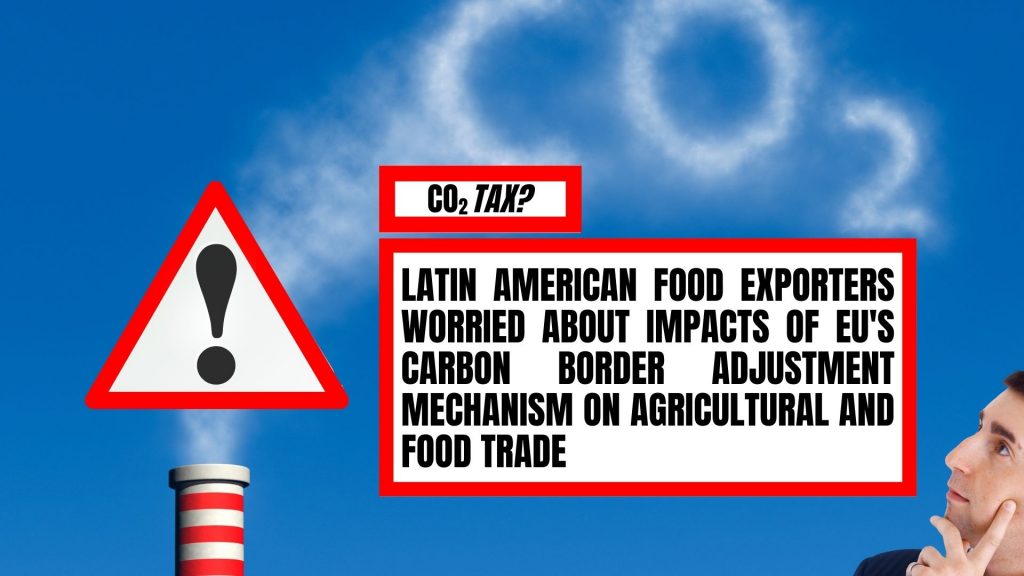
15-03-23 Latin American Exporters Worried About Impacts of EU's Carbon Border Adjustment Mechanism on Agricultural and Food Trade

The Potential Impact of EU’s Carbon Border Adjustment Mechanism on Latin American Food Producers: Mitigation Actions and Support from Green Initiative

Latin American Food Exporters Worried About Impacts of EU’s Carbon Border Adjustment Mechanism on Agricultural and Food Trade The European Union’s Carbon Border Adjustment Mechanism (CBAM) has been a hot topic of discussion lately, especially for developing countries that export to the EU. The CBAM aims to prevent carbon leakage by requiring importers to pay a carbon price equivalent to that paid by EU producers, creating a level playing field for trade. However, Latin American exporters are concerned that this could put them at a disadvantage. According to a report by the Inter-American Institute for Cooperation on Agriculture (IICA), the CBAM could have significant impacts on agricultural and food trade in Latin America and the Caribbean. It could increase production costs for exporters and make their products less competitive in the EU market, potentially leading to a decline in exports and income for Latin American farmers and producers. In addition, Latin American countries are also worried about the environmental effects of the CBAM. The World Bank Group’s report on the CBAM notes that some Latin American countries are among the most vulnerable to climate change and are already experiencing its effects. Climate Mitigation Actions Latin American Food Producers Can Take to Mitigate the Impact of EU’s CBAM To help mitigate mitigate the impact of the CBAM and address the urgent need to reduce greenhouse gas emissions, food producers in Latin America can take a number of climate mitigation actions. These include: By taking these climate mitigation actions, food producers in Latin America can reduce their carbon footprint, improve the sustainability of their production practices, and prepare for the potential impacts of the CBAM. In addition, these actions can help reduce costs, increase efficiency, and enhance the resilience of food production systems in the face of climate change. Green Initiative Offers Climate Certification and Advisory Services to Help Latin American Food Producers Navigate the CBAM and Reduce their Carbon Footprint Green Initiative offers climate certification and advisory services for climate action to support Latin American food producers in reducing their carbon footprint and complying with potential future policies such as the CBAM. Their services can help identify areas where emissions can be reduced, develop strategies to implement sustainable farming practices, and implement renewable energy solutions. Additionally, their supply chain analysis services can help identify opportunities to improve supply chain efficiency and reduce carbon footprint. By working with Green Initiative, Latin American food producers can receive expert guidance to navigate the complex landscape of climate policy and sustainability standards, and position themselves for success in a rapidly changing market.

The Potential Impact of EU’s Carbon Border Adjustment Mechanism on Latin American Food Producers: Mitigation Actions and Support from Green Initiative Read More »

08-3-2023 final GI article

The Impact of ASCART: How Sustainable Agriculture Can Support Climate Goals in the Amazon

ASCART, a Conservation Association of Amazon Chestnut Producers, Safeguarding 39,765 Hectares of Biodiverse Forest in Peru’s Tambopata National Reserve ASCART, the “Association of Amazon Chestnut Producers at the Tambopata National Reserve (TNR) – Peru” has over 12 members, who are responsible for the conservation and management of 39,765 hectares of tropical forest. The TNR in southeastern Peru is an incredibly biodiverse area that is home to over 10,000 species of plants, 600 species of birds, and 200 species of mammals. It plays a crucial role in protecting the Amazon rainforest and maintaining the global climate. The reserve is also significant culturally, as it is home to indigenous communities who have lived in harmony with the rainforest for centuries. The Amazon Rainforest is now Emitting More CO2 than it Absorbs, Says Recent Study – Urgent Action Needed to Combat Climate Change and Deforestation However, the Amazon rainforest is facing significant threats from climate change, deforestation, and other environmental pressures. According to a recent study, the Amazon rainforest is now emitting more carbon dioxide than it is absorbing due to increased deforestation and forest degradation (Gatti et al., 2021). This is a concerning trend that underscores the urgent need for action to address the underlying causes of climate change and preserve the rainforest’s ecosystem. Amazon Nut Production: A Key Driver of Sustainable Forest Management and Livelihoods in the Region, but with Challenges to Sustainability and Pollinator Dependence The production of Amazon chestnuts is significant in the region as it provides income and employment opportunities for local communities, and helps to promote sustainable forest management practices. However, Amazon chestnut harvesting is a complex and labor-intensive process, and it requires careful management to ensure the long-term sustainability of the industry and the surrounding ecosystem. In addition, the Amazon chestnut tree is dependent on a specific group of pollinators, making it particularly vulnerable to habitat loss and other environmental pressures. For ASCART, the production of Amazon chestnut in Madre de Dios involves a complex supply chain, with different actors involved in harvesting, processing, and trading the nuts. The chestnuts are harvested from the wild in a sustainable manner by indigenous communities and small-scale farmers, who are associates of ASCART. The chestnuts are then transported to processing plants, where they are shelled, sorted, and packaged for export. ASCART’s Complex Supply Chain for Sustainable Amazon Chestnut Production: From Harvesting by Indigenous Communities to Export ASCART has made a significant commitment to addressing climate change and promoting sustainable practices in the Amazon chestnut industry. The efforts of ASCART towards climate neutrality, which started in 2020, earned them a competitive fund “ProCompite“ from the regional government of Tambopata valued at $45,000 thousand dollars. In 2021, ASCART introduced climate action as a key aspect of its business model, with the technical assistance of Green Initiative. As part of this process, the climate positive effect of the conservation efforts of ASCART were measured, making it visible that ASCART’s best practices were supporting the carbon capture of 29 tons of CO2 per year. ASCART Leads the Way in Climate-Smart Agriculture: Using Biodiesel and Regenerative Practices to Decarbonize its Value Chain and Support Global Climate Goals The climate smart agricultural practices applied by ASCART make this association a live example of how climate smart agriculture can support the global fight for the decarbonization of the economy. ASCART’s climate action commitment has taken them to the production of biofuels, from the chestnuts shell remainders, and the development of other regenerative practices that are decarbonizing its value chain CO2 emissions. Through the Climate Pledge signed in 2022, ASCART is now formally committed to a decarbonization agenda, with clear goals, making this association a consistent supporter of the SDGs goal 13 and the Paris Climate Agreement strategic vision. ASCART’s Sustainable Practices and Climate Neutrality Commitment – A Model for Organizations to Preserve the Amazon and Build a Sustainable Future ASCART’s commitment to decarbonization and sustainable practices is a model for other organizations to follow. By promoting sustainable forest management practices, supporting local communities, and working towards climate neutrality, ASCART is playing a critical role in preserving the biodiversity of the TNR and ensuring the long-term viability of the Amazon chestnut industry. With their ongoing efforts towards climate neutrality and decarbonization, ASCART is helping to build a more resilient and sustainable future for the Amazon. This article was prepared by Marc Tristant, from The Green Initiative Team.

The Impact of ASCART: How Sustainable Agriculture Can Support Climate Goals in the Amazon Read More »

28-02-23 Why Climate Engagement is Key

Why Climate Engagement is Key

Strengthening Your Company’s Organizational Culture through Climate Action The world is facing a climate crisis, and businesses have a critical role to play in mitigating its impact. As the urgency of climate action continues to grow, companies are increasingly recognizing the need to incorporate sustainability and responsible environmental stewardship into their organizational culture. By prioritizing climate action, companies can not only reduce their environmental impact but also reinforce their organizational culture and values. The importance of Organizational Culture in Driving Sustainable Practices and Climate Action in Companies Organizational culture refers to the shared values, beliefs, and behaviors that define how a company operates and interacts with stakeholders. A strong organizational culture that prioritizes sustainability and responsible environmental stewardship can help ensure that climate action is integrated into all areas of a company’s operations, from decision-making processes to resource management practices. There are several ways in which climate action can help to enforce a company’s organizational culture. First, climate action requires companies to set ambitious sustainability goals and work collaboratively to achieve them. This process of goal-setting and collaboration can help promote transparency, accountability, and teamwork. By involving all employees in the process of setting and achieving sustainability goals, companies can create a sense of shared purpose and commitment to responsible behavior. Second, climate action requires companies to adopt sustainable practices and technologies that align with their values. For example, if a company values innovation and creativity, it may choose to invest in new technologies that promote sustainability and reduce its environmental impact. By aligning those, companies can reinforce their commitment and demonstrate that sustainability is not just a side project but a core component of their business strategy. Third, climate action requires companies to engage with stakeholders, including employees, customers, and the broader community, to promote sustainability and responsible environmental stewardship. By engaging with stakeholders in this way, companies can reinforce their commitment to building long-term relationships based on trust, transparency, and shared values. For example, a company that values community engagement and social responsibility may choose to work with local organizations to promote sustainability and environmental awareness. Key Strategies for Companies to Demonstrate Commitment to Responsible Environmental Stewardship and Reinforce Organizational Culture In conclusion, by setting ambitious sustainability goals, adopting sustainable practices and technologies, engaging with stakeholders, and embracing a culture of learning and improvement, companies can demonstrate their commitment to responsible environmental stewardship and reinforce their organizational culture and values. As the urgency of climate action continues to grow, companies must rise to the challenge and become part of the solution. Want to know more about how climate action can be a solution to your business? Reach out to contact@greeninitiative.eco and become a part of our climate champions.

Why Climate Engagement is Key Read More »