Decarbonization

Charting a Course Towards Sustainable and Resilient Prosperity in Fisheries and Aquaculture

Charting a Course Towards Sustainable and Resilient Prosperity in Fisheries and Aquaculture

The resilience and prosperity of the region’s small-scale fisheries are crucial, as they are the main source of livelihood for fishers in the sector. The recent impact of Hurricane Beryl on Grenada, Saint Vincent and the Grenadines, Jamaica, and Barbados has highlighted the urgent need to protect and modernize this critical sector. The storm, a clear indication of climate change, has shown the potential devastation that rapidly forming hurricanes can bring to communities and livelihoods. In response to these challenges, the Caribbean Regional Fisheries Mechanism (CRFM) is promoting sustainable fishery practices and resilience. Its initiatives, which include decarbonizing the sector, enhancing marine habitat restoration, and securing financial resources for adaptation and mitigation, are crucial. However, international support is also needed to ensure a resilient future for the region’s fisheries and aquaculture industries. Read the full article here. Useful reports here.

Charting a Course Towards Sustainable and Resilient Prosperity in Fisheries and Aquaculture Read More »

How UNESCO Heritage Sites are Integrating Climate Action - Green Initiative

How UNESCO Designated Sites are Integrating Climate Action

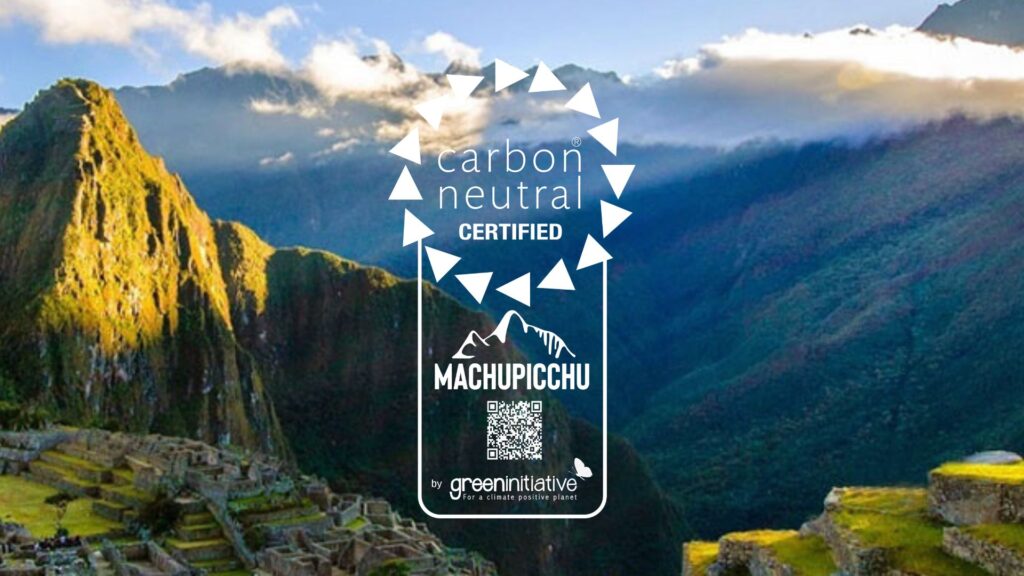
Bonito and Machu Picchu: The Power of Twin UNESCO Designated Sites Pioneering Climate Action in Tourism In a time where climate change poses significant challenges to our planet, the tourism industry is stepping up to play a crucial role in mitigating its impact through the Glasgow Declaration for Climate Action in Tourism. In this context, two iconic cultural and ecotourism destinations are leading the way in climate action in tourism. Bonito, located in the Brazilian Pantanal and recognized as a UNESCO Biosphere Reserve, and Machu Picchu, situated in the Peruvian Andes and recognized as a UNESCO Mixed World Heritage Site, integrate climate mitigation best practices into their tourism development models. The results achieved so far, through the climate certification of both destinations, have consistently showcased that through well-informed and pragmatic action, the development of tourism in UNESCO Biosphere Reserves and Mixed World Heritage Sites can go hand in hand with the decarbonization of tourism destinations, generating positive impacts on both the local economy and the climate. Bonito and Machu Picchu: Laboratories for Climate Mitigation Action and Expertise Development Bonito, located in Mato Grosso do Sul, Brazil, was designated a UNESCO Biosphere Reserve in 2000. Bonito has long been a reference for sustainable tourism, known for its crystal-clear rivers, stunning waterfalls, and rich biodiversity. Similarly, Machu Picchu, the ancient Incan citadel nestled in the Andes Mountains of Peru, was declared a UNESCO Mixed World Heritage Site in 1983. In collaboration with the Green Initiative, both UNESCO destinations, Bonito and Machu Picchu, have embarked on a transformative journey to net-zero emissions through a rigorous climate-certification process that involves: In 2021, the tourism destination of Bonito had a total of 17,829.42 tCO2eq emissions. Around 51% of its footprint was related to the consumption of fuels by ground mobile sources, such as cars and buses used by tourists in their visits. The second largest emission was the decomposition of solid residues (22.32%), followed by electricity consumption (6.02%). In the development of Bonito’s Climate Action Plan, several actions were defined to address these core emissions, such as stimulating the use of biofuels, conversion and availability of electric vehicles, waste management improvements in the public system, community engagement in the circular economy, and carbon capture enhancements by promoting ecosystems restorations. On the other hand, in 2022, Machu Picchu successfully reduced its emissions to 7,117.55 tCO2eq, an 18.77% decrease from the 2019 base year. Four processes were implemented to reuse recoverable waste: Additionally, electric vehicles were introduced to transport the generated waste, and waste segregation points were established throughout the district, among other actions. The new waste management processes significantly reduced 40.80 tCO2eq, 2.5 times more than in 2019. Carbon capture from ecological restoration, where 6,596 native trees were planted in degraded areas, capturing 5,055.17 tCO2eq, led to a net emission balance of 2,062.38 tCO2eq. Machu Picchu’s carbon footprint has been fully offset with 2,155 carbon credits from the REDD+ Brazil Nut Concessions project by Bosques Amazónicos (BAM), which protects over 600,000 hectares of megadiverse forests and supports more than 800 Amazon Brazil nut harvesting families in Madre de Dios, Peru. By integrating climate action into their core business models, these destinations are setting new standards for sustainable tourism at UNESCO heritage sites. As Jose Salazar Ríos, Coordinator of the Culture Sector at UNESCO Peru, highlights: “Machu Picchu, one of the 13 World Heritage sites that Peru has, is an inspiring example of how tourism can be integrated with climate action, thus contributing to the sustainability and conservation of World Heritage.“ The Glasgow Declaration on Climate Action in Tourism The Glasgow Declaration on Climate Action in Tourism is a pivotal framework for mobilizing the tourism sector to act decisively on climate change. Launched at the UN Climate Change Conference (COP26) in Glasgow, the Declaration commits signatories to halve emissions by 2030 and achieve net zero by 2050 at the latest. By aligning with the pathways to the Paris Agreement, the Declaration provides a clear roadmap for tourism stakeholders to integrate climate action into their business models. It encourages collaboration across the industry, promoting the sharing of best practices, resources, and innovative solutions to accelerate decarbonization. Bonito and Machu Picchu are exemplary participants in this global movement, demonstrating how UNESCO heritage sites can lead by example in integrating comprehensive climate strategies into their tourism operations. Through initiatives such as these, the Glasgow Declaration aims to unify the tourism industry in the fight against climate change, fostering a collective effort to protect our planet for future generations. The Power of Twin UNESCO Designated Sites in Climate Mitigation The collaboration between Bonito and Machu Picchu, as climate-smart twin cities, holds immense potential for climate mitigation and expertise development worldwide. By sharing best practices, resources, and innovative solutions, they can amplify their impact on reducing tourism-related emissions and serve as a reference for other UNESCO Designated Sites worldwide. According to Sofia Gutierrez, Deputy Director of Sustainable Tourism at UN Tourism: “The experience of Machu Picchu as a signatory of the Glasgow Declaration can be a reference for other tourist destinations in Peru and around the world. In addition to being a natural and cultural treasure, Machu Picchu is also an inspiring example of how the growth of tourism and decarbonization can and should go hand in hand.“ Emerging Opportunities Final Reflections Bonito, as a UNESCO Biosphere Reserve, and Machu Picchu, as a UNESCO Mixed World Heritage Site, both as Carbon Neutral destinations, can provide the tourism industry significant insights into the fight against climate change. Their reinforcement of bilateral collaboration as climate-smart twin cities holds the potential to drive substantial progress in decarbonizing tourism and promoting sustainable development both locally and worldwide. By working together, they can inspire other destinations to follow suit, creating a ripple effect that contributes to a more sustainable and resilient planet. As we look to the future, Bonito’s and Machu Picchu’s partnership serves as a testament to the power of collaboration in addressing the pressing challenges of climate change. Together, they are preserving their natural and cultural


How UNESCO Designated Sites are Integrating Climate Action Read More »

Machu Picchu - Reduce Carbon Emission Footprint - Carbon Neutral Climate Certification - Green Initiative

Machu Picchu Achieves Significant Reduction in Carbon Emissions Since 2021 Certification

Lima, June 2024 – Machu Picchu has renewed its certification as the First Carbon Neutral UNESCO Designated Site. This prestigious certification, awarded by Green Initiative, underscores Machu Picchu’s commitment to sustainability and decarbonization. Originally certified in 2021, Machu Picchu continues to lead in sustainable tourism through innovative environmental initiatives and collaborative efforts. Significant Reductions in Carbon Emissions Since its initial certification in 2021, Machu Picchu has made substantial progress in reducing carbon emissions. The total carbon footprint for 2022 was 7,117.55 tCO2eq, representing an 18.77% reduction compared to the 2019 baseline. This impressive reduction was achieved through several key strategies: Decarbonization Strategies, Innovative Waste Management and Circular Economy, and Nature Positive Initiatives Machu Picchu’s approach to waste management and circular economy has been integral to maintaining its carbon-neutral status. The renewal of Machu Picchu’s carbon-neutral certification highlights the success of various decarbonization strategies. These include: These measures have substantially reduced Machu Picchu’s carbon footprint, making it a model for sustainable tourism worldwide. Key Highlights: Collaborative Efforts for Sustainability This achievement was made possible through the collaboration of various stakeholders, including the Municipality of Machu Picchu, Grupo AJE, Inkaterra, and Tetra Pak. Support also came from World Xchange, Luz del Sur, Bosques Amazónicos (BAM), Latam, PROMPERÚ, and the National Chamber of Tourism of Peru (CANATUR). “We are proud to announce that Machupicchu renews its ‘First Carbon Neutral’ certificate. This achievement represents a significant milestone in our effort to promote circular economy models and sustainable cities, where for example, we give new life to bottles, such as Cielo Alcalina which is made 100% from recycled bottles,” says Jorge López-Doriga, Chief Communications and Sustentability Officer in AJE Group. “As a pioneer of regenerative tourism in Peru, Inkaterra is committed to conserving the natural heritage of Machupicchu,” states José Koechlin, founding president of Inkaterra. “This alliance is a success story about the goals that can be achieved when public and private sectors work hand in hand. With the support of the local community, the first destination in Latin America with a circular economy has been achieved. We Peruvians enjoy the privilege of having this cultural and natural heritage of humanity, which entails the great responsibility of caring for it for future generations.” “The result achieved in Machupicchu is the result of significant collaborative effort; however, it is necessary to attract more financial and intellectual capital, with the help of national and international actors, to expand and scale up the accumulated experience. The world needs references in climate action in tourism, and Machupicchu can be a great laboratory for climate action and circular economy of global interest,” states Tatiana Otaviano, Head of Relationship Management at Green Initiative. Mónica Montes, Sustainability Manager of Tetra Pak Andina, specifies the valuable role that the actors in the recycling chain in the country have played in achieving such an important achievement. “At Tetra Pak, we firmly believe in shared responsibility, so the contribution of major allies such as AJE, Inkaterra, the State, among others, allows the renewal of the certification of Machupicchu as a Carbon Neutral Destination to be a testimony of success. From Tetra Pak, we will continue with the commitment to make our packaging contribute to the circular economy and significantly reduce our carbon footprint, thus contributing to a better future,” commented the executive. Global Recognition and Future Goals Machu Picchu’s renewed carbon-neutral certification has received international recognition from UN Tourism, UNESCO, and UN Climate Change. Publications like Lonely Planet have also highlighted this achievement, naming Machu Picchu as one of the ‘Top 10 Best World Tourism News’ in 2021. The ongoing efforts to maintain and enhance Machu Picchu’s sustainability practices demonstrate a broader commitment to combating climate change. This milestone serves as an inspiration for other tourist destinations worldwide, showcasing the benefits of integrating climate action into tourism. As we celebrate this achievement, it is essential to continue fostering public and private partnerships and securing investments to sustain and expand these efforts. Machu Picchu’s journey towards a fully decarbonized future is a beacon of hope and a blueprint for sustainable tourism globally.

Machu Picchu Achieves Significant Reduction in Carbon Emissions Since 2021 Certification Read More »

Join the 2º Climate Action in Tourism Seminar Financing Perspectives for Sustainable Decarbonization Bonito Mato Grosso do Sul Brasil Green Initiative

(updated) Join the 2º Climate Action in Tourism Seminar: Financing Perspectives for Sustainable Decarbonization

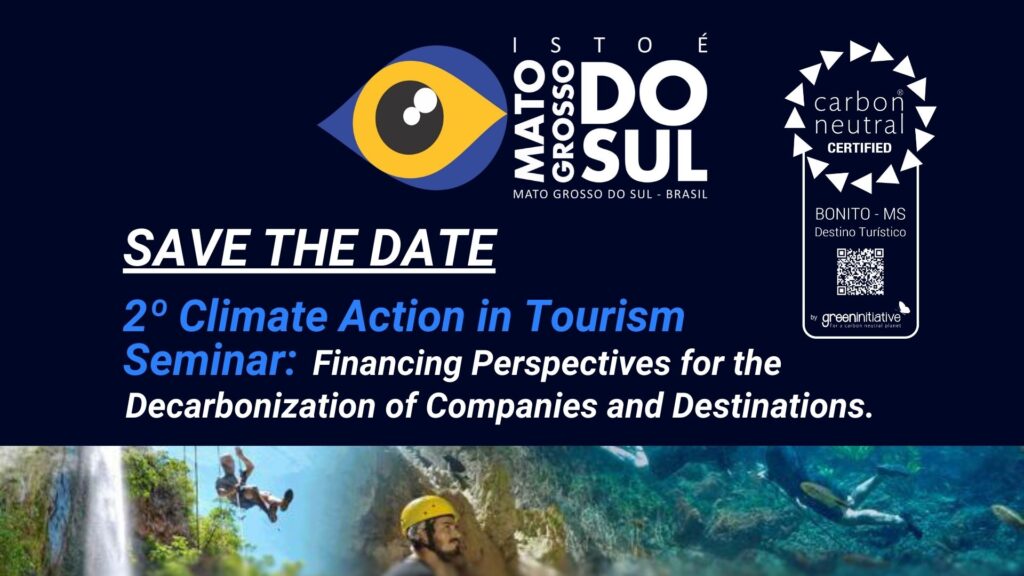
Are you ready to take meaningful steps towards decarbonizing the tourism sector? Don’t miss the opportunity to participate in the 2º Climate Action in Tourism Seminar, focusing on Financing Perspectives for the Decarbonization of Companies and Destinations. Post Event: Watch The Seminar Here Grupo Rio da Prata ecotourism receives the Climate Positive Certification from Green Initiative at the seminar. Registration Closed! You Can Still Participate Online What to Expect? This seminar is promoted by the Mato Grosso do Sul Tourism Foundation (FUNDTUR) and Green Initiative and offers a comprehensive overview of commitments and trends in decarbonizing the tourism industry, specifically tailored to the Brazilian context. Join us to explore: Why Participate? By joining this seminar, you’ll gain: Event Details: Seats are limited, so secure your spot now! (registration for in person participation closed, join online here) Agenda and Registration: Click here to view the complete agenda for the event and register for in-person participation. Take advantage of this unique opportunity to contribute to the decarbonization of the tourism sector. Your participation will be instrumental in shaping a more sustainable future for tourism. Let’s work together towards a greener, more resilient tourism industry. See media repercussions here; quick links below

(updated) Join the 2º Climate Action in Tourism Seminar: Financing Perspectives for Sustainable Decarbonization Read More »